
Can Allergies Cause a Dog to Cough? What Border Collie Owners Should Know

A dog can cough because of allergies, but allergies are not the most common reason a dog coughs. That matters, because a cough can also point to kennel cough, heart disease, pneumonia, collapsing trachea, heartworms, or another airway problem that needs different treatment.
The practical question is not just “can allergies cause it?” but “does this cough fit an allergy pattern, or does it look more serious?” That’s the decision that helps you avoid both overreacting and waiting too long.
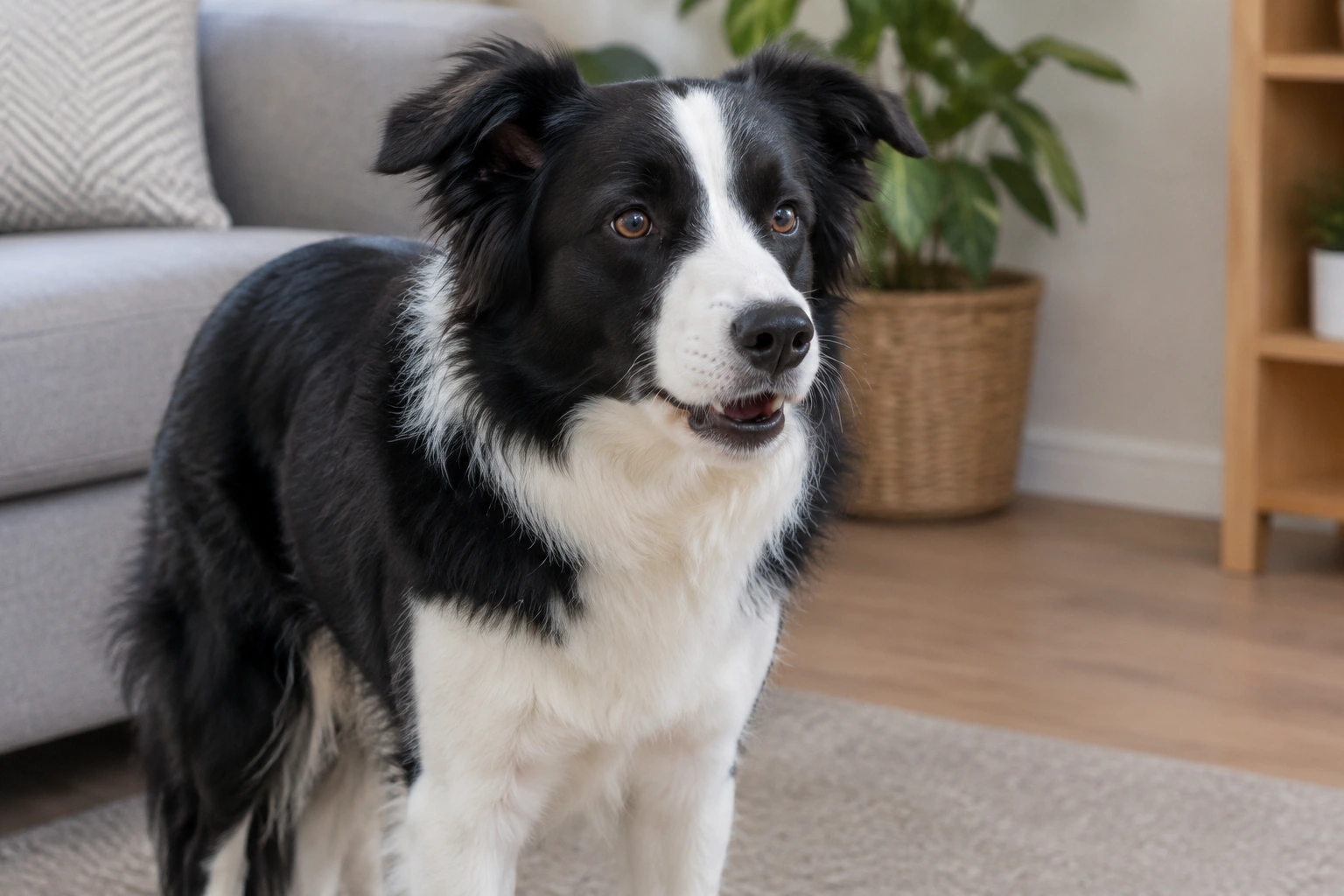
For Border Collie owners, this comes up often because active dogs spend more time outdoors and are exposed to pollen, dust, grass, mud, smoke, and other irritants during exercise. A dog that starts coughing after a windy walk or during high-pollen days may be reacting to something in the environment. But if the cough is wet, worsening, or paired with low energy, the safer assumption is that something else is going on until a vet says otherwise.
Can allergies actually cause a dog to cough?
Yes, they can. Allergies may irritate the nose, throat, or lower airways enough to trigger coughing. In dogs with allergic bronchitis, coughing can flare when the offending allergen is higher than usual, which is one reason symptoms may seem seasonal or tied to certain places.
That said, coughing is not one of the main allergy signs most dog owners notice first. Skin problems are usually more typical: chewing, biting, rubbing, scratching, licking, inflamed skin, ear infections, sneezing, eye discharge, and hair loss are all more common allergy clues than coughing.
So the rule of thumb is simple:
- Coughing can happen with allergies
- Coughing alone is not enough to assume allergies
- Coughing plus itchiness, sneezing, or watery eyes makes allergies more plausible
If your dog only coughs, and especially if the cough is persistent, you should think beyond allergies.
Where the cough seems to come from: nose, throat, airways, or lungs
One of the most useful owner observations is not just what the cough sounds like, but where it seems to start.
- Nose or upper nose area: more likely to look like sneezing, snorting, or reverse sneezing, sometimes with nasal discharge. The dog may seem to “pull air in” noisily rather than cough from the chest.
- Throat: often sounds like throat clearing, gagging, or a dry hack. The dog may stretch the neck, swallow repeatedly, or seem irritated by collar pressure.
- Airways: usually a repetitive dry cough or honking cough, often worse with excitement, exercise, or pulling on a leash.
- Lungs: more concerning if the cough is wet, deeper, or paired with breathing effort, lethargy, fever, or poor stamina.
A practical clue: if the dog looks like it is trying to bring something up, that can point more toward gagging or throat irritation. If it is snorting and inhaling in short bursts, that is more like reverse sneezing. If the cough comes from the chest and repeats in a hacking pattern, the airways or lungs may be involved.
A video of the episode is often more helpful than a written description.
What an allergy-related cough in dogs usually sounds like
Allergy-related coughing is often a dry cough or a mild, repetitive throat-clearing cough. It may happen after exposure to dust, pollen, smoke, mold, or other airborne triggers. Some dogs cough more after exercise or when they come indoors from an irritating environment.
What owners often misread is the sound itself. A dog may seem to be coughing when it is actually:
- Gagging: often looks like the dog is trying to bring something up
- Retching: more forceful, with abdominal effort
- Reverse sneezing: a snorting, honking inhale, usually brief and dramatic
- Wheezing: a lower, musical sound that suggests narrowed airways
- Throat clearing: short, repeated cough-like sounds
A useful test is to watch the whole episode. A true cough usually comes from the chest or throat and pushes air out. Reverse sneezing pulls air in and often looks much more alarming than it is. If you can, record a video before the episode ends. That one clip can save a lot of guesswork at the vet.
Allergy cough versus more common causes of coughing
This is where careful comparison helps. The same cough sound can mean very different things.
| Possible cause | Typical sound | Common extra signs | How urgent? |
|---|---|---|---|
| Allergies | Dry, mild, repetitive throat-clearing or cough | Itching, sneezing, watery eyes, ear issues, seasonal pattern | Usually non-emergency, but persistent cough needs a vet visit |
| Kennel cough | Dry, honking, hacking cough | Often worse after excitement or pressure on the neck | Vet visit recommended, especially if contagious exposure is possible |
| Reverse sneezing | Snorting, inhaling, gag-like episodes | Brief episodes, often after excitement or irritation | Usually not urgent unless frequent or severe |
| Collapsed trachea | Harsh, honking cough | Worse with excitement, pulling on leash, or pressure on neck | Vet evaluation needed |
| Heart disease | Cough that may worsen at night or with exercise | Exercise intolerance, lethargy, breathing changes | Prompt vet visit |
| Pneumonia | Often wet or productive cough | Fever, low energy, poor appetite, breathing effort | Urgent vet care |
| Other respiratory illness | Variable | Sneezing, nasal discharge, fever, poor appetite | Vet visit recommended |
A key trade-off here is this: if you assume “allergies” too quickly, you may miss a contagious or serious condition. If you assume “something terrible” every time, you may overreact to a mild irritation. The middle ground is to watch the pattern and the dog’s overall condition.
A cough that is wet, painful, frequent, or worsening deserves more concern than a brief dry cough that happens only after known exposure.
Environmental allergies versus food allergies: which is more likely to cause coughing?
Environmental allergies are more likely to cause respiratory signs than food allergies. Airborne triggers such as pollen, dust, mold, and smoke can irritate the nose and airways, which makes coughing more believable as an allergy symptom.
Food allergies, by contrast, more often show up as skin and ear problems. Itching, chronic ear infections, licking paws, and digestive upset are more typical than coughing. That does not mean food allergies can never be part of the picture, but if coughing is the main symptom, food is usually lower on the list.
A practical way to think about it:
- If coughing follows outdoor exposure, dusty rooms, smoke, or seasonal changes, think environmental first
- If the dog mainly has itchy skin, recurring ear infections, or stomach issues, food allergy becomes more plausible
- If the dog only coughs and has no other allergy signs, don’t jump to food as the answer
This matters because the next step differs. Environmental triggers may improve with exposure control. Food allergy workups are slower and usually require a structured diet trial, not guesswork.
Signs that point toward allergies rather than infection or heart disease
Allergies become more plausible when the cough comes with several of these clues:
- Sneezing
- Watery or red eyes
- Itchy skin or paws
- Ear infections
- Reverse sneezing
- Symptoms that seem seasonal
- Coughing after pollen-heavy walks, dusty rooms, or smoke exposure
- Otherwise normal energy and appetite
A Border Collie that coughs after a windy run and also rubs at the face, licks the paws, and sneezes is giving you a different picture from a dog that coughs at night, tires easily, and breathes harder than usual.
The strongest clue is the whole pattern, not one symptom. Allergies tend to create a cluster of irritation signs. Serious heart or lung disease tends to create cough plus reduced stamina, breathing changes, or decline in general condition.
When a coughing dog needs a veterinarian right away
Do not try to “wait it out” if you see any of these:
- Trouble breathing
- Blue or gray gums
- Collapse or fainting
- Fever
- Lethargy
- Loss of appetite
- A wet, productive cough
- Rapid worsening
- Coughing that keeps the dog from resting
- Signs of pain or distress
A cough that seems mild at first can still be the first sign of pneumonia, heart disease, or another problem that needs treatment. If your dog is young, active, and still bright, you may have more room to monitor briefly. But if the dog looks unwell, the decision is easier: get veterinary help.
If the cough is persistent, repeated, or lasts more than a few days, that also deserves a vet visit even if there are no emergency signs. Allergies are possible, but they are not a diagnosis you should make from the couch.
How veterinarians figure out the cause of a dog’s cough
A good vet visit is usually practical and stepwise. The goal is to rule out the dangerous and common causes first.
Expect some combination of:
-
History and symptom review
The vet will ask when the cough started, what it sounds like, whether it is dry or wet, and whether exercise, excitement, or neck pressure makes it worse. -
Physical exam
This includes listening to the chest, checking the nose and throat, and looking for signs of infection, heart problems, or airway irritation. -
Chest imaging if needed
X-rays can help identify pneumonia, heart enlargement, airway changes, or other structural problems. -
Selective testing
Depending on the case, the vet may recommend heartworm testing, infectious disease testing, or other diagnostics. -
Allergy-focused evaluation
If the pattern fits allergies and more serious causes are ruled out, the vet may discuss environmental control, symptom relief, or allergy testing in selected cases.
More specifically, a vet may use the exam and X-rays to help separate allergic rhinitis or upper-airway irritation from lower-airway disease. Upper-airway problems are more likely to come with sneezing, nasal discharge, snorting, or reverse sneezing, while lower-airway disease may cause a deeper cough, exercise intolerance, or abnormal chest sounds. If the picture is still unclear, the vet may recommend additional testing rather than guessing.
This is why self-diagnosis is risky. A cough can sound “allergy-like” and still be kennel cough, heart disease, or pneumonia. The treatment path changes completely depending on which one it is.
For a broader look at cough and cold-like symptoms in dogs, see our guide to can a dog get a cold. If you want to understand how adult-onset allergy patterns can show up, our article on can you develop dog allergies later in life is also useful.
Treatment options for allergy-related coughing
If allergies are confirmed or strongly suspected, treatment usually focuses on reducing exposure and calming inflammation. Depending on the case, a veterinarian may recommend:
- Environmental changes to reduce pollen, dust, mold, or smoke exposure
- Antihistamines in selected cases
- Corticosteroids when inflammation is significant
- Dietary changes if food allergy is part of the picture
- Other targeted medications if the airway irritation is more complex
Environmental allergy treatment often starts with exposure control plus symptom relief. That might mean limiting high-pollen outings, rinsing off after walks, improving indoor air quality, or using medication to reduce inflammation if the vet thinks it is appropriate. Food allergy treatment is different: it usually relies on a structured elimination diet trial, and improvement is not immediate.
The realistic expectation is that improvement may take time. With environmental changes, owners sometimes notice a difference over days to a couple of weeks, but that depends on how much exposure can actually be reduced. With allergy medication, some dogs improve within a few days, while others need longer or a different plan. With food trials, changes are usually slower and should be judged over weeks, not days.
There is also a trade-off worth understanding: symptom relief can make a dog more comfortable quickly, but it should not replace diagnosis if the cough is persistent or unclear. You want the dog to feel better, but not at the cost of masking a heart or lung problem.
What you can do at home while you monitor symptoms
If the cough is mild and your dog otherwise seems normal, these steps may help while you watch closely:
- Keep the dog away from smoke, heavy dust, and strong scents
- Wipe paws and face after outdoor time during high-pollen days
- Use a clean, well-maintained bedding area
- Avoid vigorous exercise until you know what is triggering the cough
- Note when the cough happens: after walks, at night, after excitement, or indoors
- Record a short video of the cough or breathing episode
The point is not to “treat blindly.” It is to gather useful pattern data and reduce obvious irritants. If the cough improves after removing a trigger, that supports an environmental link. If it does not improve, you have a stronger reason to seek diagnosis.
A mild, occasional dry cough can sometimes be watched at home for about 24 to 48 hours if your dog is otherwise bright, eating normally, and breathing comfortably. If it is still happening after that, or if it is happening more than once or twice a day, schedule a veterinary visit. If the cough is getting more frequent, changing character, or coming with any red flag, do not keep watching at home.
Do not rely on home care if the cough is worsening, frequent, or paired with any red flag.
How to lower the chances of future coughing episodes
Prevention is mostly about reducing exposure to irritants you can control.
Practical steps that help many dogs:
- Check pollen levels on high-exposure days
- Keep windows closed when outdoor allergens are high
- Vacuum and clean bedding regularly
- Reduce smoke exposure completely
- Limit time in dusty or mold-prone areas
- Rinse off the dog after heavy outdoor exposure
- Use a harness instead of a collar if neck pressure seems to trigger coughing
That last point matters for dogs prone to throat irritation or collapsing trachea, because pressure on the neck can make coughing worse. A harness is not a cure, but it can remove one trigger.
If your dog’s cough has a seasonal pattern, keep a simple log. Write down the date, weather, location, activity, and any other symptoms. Over time, patterns become obvious in a way memory alone rarely does.
When to see a veterinarian or certified trainer
For coughing, the professional you need is usually the veterinarian first. A certified trainer can help later if the dog develops stress around vet visits, handling, or harness use, but training is not the answer to a medical cough.
See a veterinarian promptly if:
- The cough lasts more than a few days
- It returns repeatedly
- It is wet, harsh, or worsening
- Your dog has low energy or poor appetite
- Breathing changes are present
- You are not sure whether it is coughing, gagging, or reverse sneezing
If your dog is otherwise bright, eating well, and has a mild dry cough with obvious allergy signs, a short period of careful monitoring may be reasonable. But if you are unsure, the safer move is a veterinary exam. Coughing is one of those symptoms where the cost of guessing wrong can be high.
FAQ
Can allergies really make a dog cough?
Yes. Allergies can irritate the airways and trigger coughing, especially with airborne allergens. But cough is not the most typical allergy sign in dogs.
What does an allergy cough sound like?
It is often dry and repetitive, sometimes like throat clearing. It can be confused with gagging, reverse sneezing, wheezing, or retching.
Are environmental allergies more likely than food allergies to cause coughing?
Yes. Environmental triggers are more likely to cause respiratory signs. Food allergies usually show up more often as skin or ear problems.
How do I know if it is kennel cough instead?
Kennel cough often sounds like a dry, honking, hacking cough and may follow exposure to other dogs. A vet should evaluate it, especially if your dog has been around groups, boarding, or daycare.
When should I worry?
Worry sooner if the cough is wet, frequent, worsening, or paired with breathing trouble, lethargy, fever, blue gums, collapse, or poor appetite.
Can I treat an allergy cough at home?
You can reduce irritants and monitor closely, but persistent coughing should be checked by a veterinarian. Home care is support, not a substitute for diagnosis.
How long should I watch a mild cough before calling the vet?
If your dog is otherwise acting normal, about 24 to 48 hours of monitoring is reasonable. Call sooner if the cough worsens, becomes frequent, or any red-flag sign appears.
Will allergy treatment work right away?
Not always. Environmental changes may take days to a couple of weeks to show improvement, and food allergy trials usually take longer. Some dogs improve faster, but instant results are not typical.
Should I test for allergies first?
Usually not before ruling out more serious causes. A vet will often check for infection, airway disease, heart issues, or other problems first.
What if my dog only coughs after exercise?
That can still fit several causes, including allergies, airway irritation, heart disease, or collapsing trachea. Exercise-related coughing deserves a vet review if it repeats.
Is a cough always a sign of lung disease?
No, but it can be. Coughing can come from the throat, upper airway, chest, heart, or lungs, which is why the cause should not be guessed.
A cough is one of those symptoms that looks simple until you start comparing the details. If the pattern fits allergies, that is useful information. If it does not, the same cough may be telling you something more urgent. The job is to read the pattern early and respond before a small clue becomes a bigger problem.
