
Can a Dog Get a Cold? What Border Collie Owners Need to Know

If your Border Collie starts sneezing, coughing, or acting a little flat, it is natural to wonder whether it has a cold. The short answer is: dogs can develop cold-like illnesses, but they do not catch the human common cold in the usual sense. What owners call a “dog cold” is typically a mild upper respiratory infection caused by dog-specific germs, not the same viruses that make people reach for tissues.
That distinction matters because the next step is different depending on what you are seeing. A single sneeze after running through dust is not the same as a dog with a dry cough, reduced appetite, and low energy after a busy day at daycare. Border Collies are especially tricky here: many will keep moving, keep working, and keep trying to please you even when they feel off. So you have to read the smaller signals.
Can Dogs Get Colds? What That Means in Veterinary Terms
In everyday conversation, “my dog has a cold” is a shorthand term. In veterinary terms, it usually means your dog has a mild upper respiratory infection or another illness that causes cold-like signs such as sneezing, nasal discharge, or coughing.
That illness may be caused by several different germs. Common examples include canine parainfluenza virus, canine adenovirus type 2, canine respiratory coronavirus, and Bordetella bronchiseptica. These are part of the broader canine infectious respiratory disease complex, which is why the symptoms can look similar even when the cause is different.
The practical point is this: a “cold” is often a description of the symptoms, not the diagnosis. That is why a dog with mild signs may simply need rest and monitoring, while another dog with the same basic symptoms may need a vet exam, testing, or treatment.
Signs a Dog Has a Mild Respiratory Illness
The most common cold-like signs owners notice at home include:
- sneezing
- clear or runny nasal discharge
- a mild, intermittent cough
- low energy
- reduced appetite
- eye discharge
You may also notice your dog seems a little less enthusiastic on walks or takes longer to settle. With Border Collies, that can be easy to miss because many are naturally intense and active. A dog that still wants to chase a ball may not be “well” just because it is willing.
A useful rule: compare your dog to its normal self, not to an average dog. If your Border Collie usually wakes up ready to work and instead hangs back, skips breakfast, or chooses to lie down after a short outing, that change matters.
Cold-like symptoms can be mild at first, but the pattern tells you more than any one sign. A clear runny nose and one or two sneezes may be a minor issue. Coughing plus lethargy plus poor appetite is a different story.
Dog Cold vs. Kennel Cough, Canine Flu, Allergies, and Pneumonia
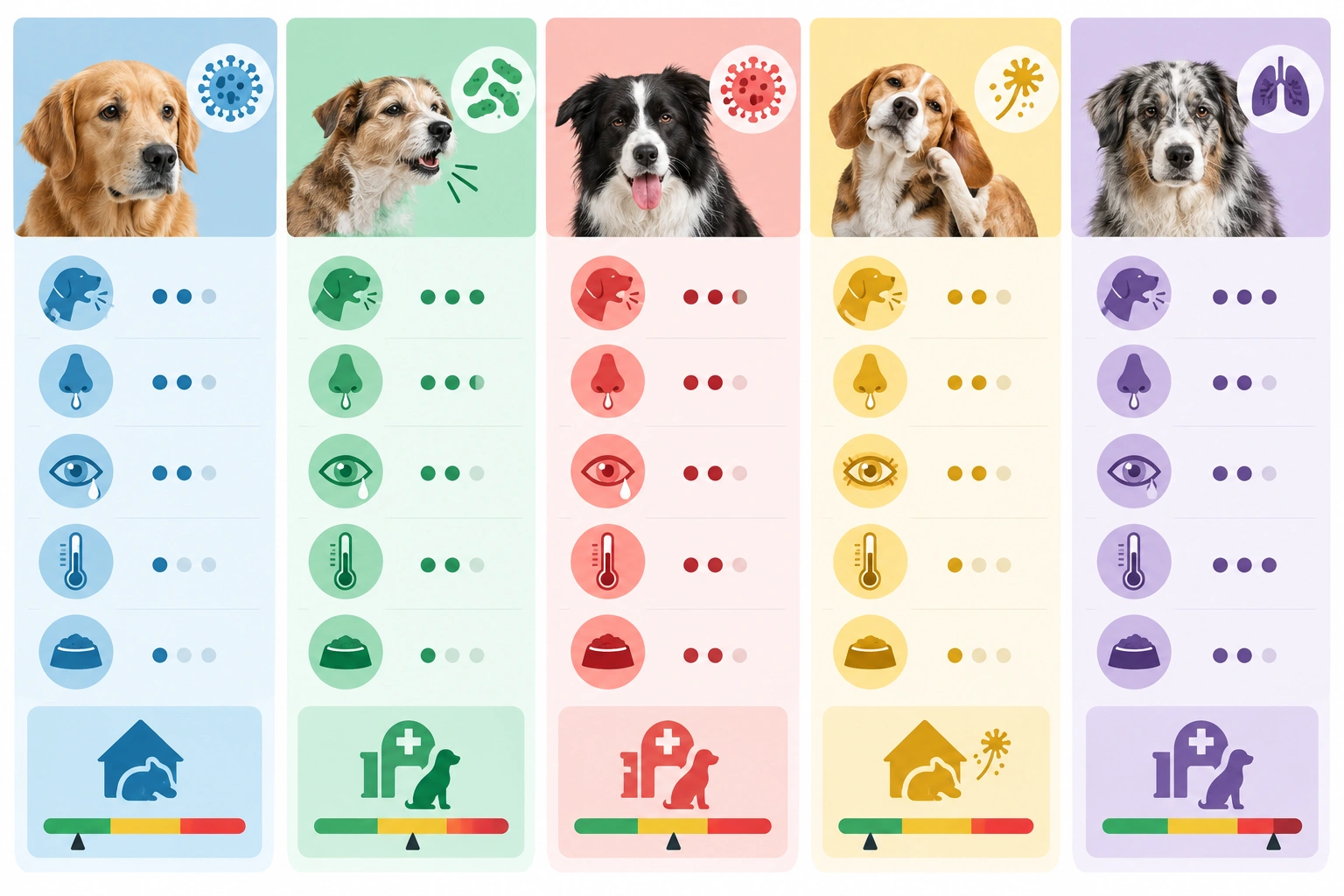
This is where owners save time and avoid mistakes. Many respiratory conditions overlap early on, but they do not deserve the same response.
| Condition | Common signs | Contagious to other dogs? | What it often means for you |
|---|---|---|---|
| Mild dog cold / upper respiratory infection | Sneezing, runny nose, mild cough, low energy | Often possible | Monitor closely, rest, limit exposure |
| Kennel cough | Dry, hacking cough; may follow daycare, boarding, or dog-park exposure | Yes | Isolate from other dogs and call the vet if worsening |
| Canine flu | Coughing, fever, lethargy, poor appetite, nasal discharge | Yes | Vet visit recommended because it can spread and become more serious |
| Allergies | Sneezing, watery eyes, itching, seasonal pattern | Not contagious | Usually less likely to cause fever or loss of appetite |
| Pneumonia | Cough, fever, breathing changes, marked lethargy, poor appetite | Depends on cause | Needs prompt veterinary care |

The biggest trade-off is this: if you assume “just a cold” when it is actually kennel cough, canine flu, or pneumonia, you may delay care and expose other dogs. If you treat every sneeze like an emergency, you can end up overreacting to mild irritation. The safest middle ground is to watch the full pattern.
A few clues help separate them:
- Dry hacking cough after contact with many dogs suggests kennel cough more than a simple cold.
- Fever, heavy fatigue, or poor appetite pushes the concern higher.
- Itching, watery eyes, and seasonal flare-ups point more toward allergies.
- Labored breathing, fast breathing, or a dog that seems unable to settle is not something to watch casually.
If you want a deeper look at how illness can masquerade as mood or behavior changes, our guide on why Border Collies get depressed explains why sudden low energy should never be dismissed too quickly.
Can Dogs Catch Colds From Humans or Spread Them to Other Dogs?
Dogs do not catch the human common cold in the normal sense, and humans do not catch a dog’s cold from them. The viruses that cause colds in people are generally species-specific, so the risk of direct “cold” spread between you and your dog is extremely low.
That said, dogs can absolutely catch other respiratory illnesses from other dogs. So the real question is not “Can my dog catch my cold?” but “Could my dog have a contagious respiratory infection that should be kept away from other dogs?”
If your dog is coughing, sneezing, or has nasal discharge, keep it separate from other household dogs as much as possible. Use separate bowls, bedding, and toys, and avoid close nose-to-nose contact while the dog is sick. It is also wise to avoid dog parks, daycare, boarding, and other high-contact dog spaces until your dog is fully recovered.
That may feel conservative, but it is a sensible trade-off. You give up some social contact to avoid passing along a potentially contagious illness.
What You Can Safely Do at Home
If your dog seems bright enough, is breathing normally, and is still drinking, supportive care at home may be reasonable while you monitor closely.
The safest at-home steps are simple:
- Give rest. Keep exercise light and skip intense fetch, agility, or rough play for now.
- Offer water often. A dog that is drinking normally is easier to monitor and support.
- Keep the environment calm and warm. Quiet rest helps more than excitement.
- Watch appetite and energy. Note whether your dog eats, drinks, and behaves normally.
- Use short leash walks only if needed. This reduces strain and limits exposure to other dogs.
A simple home-monitoring checklist can help you decide whether things are improving:
- resting breathing rate
- appetite
- water intake
- nasal discharge color and thickness
- whether symptoms are improving after 24–48 hours
For a Border Collie, the hard part is usually not knowing what to do; it is persuading the dog to do less. A dog that seems eager for activity may still need a quiet day or two. That is especially true if the dog is sneezing, coughing, or more tired than usual.
You can also make recovery easier by reducing irritation. Avoid dusty rooms, strong fragrances, smoke, and heavy excitement. If the nose seems dry or irritated, a comfortable indoor environment is better than pushing through long outdoor sessions in cold, damp weather.
What Not to Give a Dog With Cold-Like Symptoms
Do not give human cold medicines, decongestants, pain relievers, or cough suppressants unless your veterinarian specifically tells you to. Many products that are ordinary for people can be unsafe for dogs, and dosing mistakes happen easily.
That includes “just a little” over-the-counter medicine. The risk is not only the ingredient itself; it is also the fact that dog symptoms can come from different causes. A cough suppressant might mask a problem that needs diagnosis, and a decongestant may do nothing useful while adding risk.
If you are tempted to medicate at home, pause and ask one question: do I actually know what illness I am treating? If the answer is no, the safer move is to call your vet.
When a Dog With Cold Symptoms Needs a Vet
A mild, short-lived illness may improve with rest. But some signs mean home monitoring is no longer enough.
Call your vet today if your dog:
- keeps coughing or sneezing and is not improving
- has a fever or seems distinctly unwell
- stops eating or drinking normally
- develops thick nasal discharge
- becomes more lethargic instead of better
- has been around many other dogs recently
- has mild coughing or sneezing but is still eating and acting mostly normal and symptoms are not clearly improving after 24–48 hours
Seek emergency care now if you see:
- trouble breathing
- rapid or labored breathing
- blue or pale gums
- collapse
- severe weakness
- refusal of food and water
- a worsening cough with obvious distress
If your dog is very young, elderly, brachycephalic, or has another health condition, the threshold for calling the vet should be lower. These dogs have less margin for error.
A good decision rule is this: if the symptoms are mild and clearly improving within a day or two, home care may be enough. If the symptoms are worsening, spreading to other dogs in the home, or affecting appetite and breathing, get professional help.
How to Reduce the Risk of Future Respiratory Illness
Prevention is mostly about reducing exposure and improving resilience.
Vaccination can help lower the risk of some contagious respiratory diseases, including kennel cough-related illness in many situations. Your veterinarian can tell you which vaccines make sense based on your dog’s lifestyle. A dog that visits daycare or boarding regularly has different risk than a dog that mostly stays home.
Hygiene also matters. Wash hands after handling sick dogs, clean shared bowls and bedding, and avoid sharing toys with dogs that may be ill. In high-contact settings like boarding facilities, training classes, and dog parks, the simplest prevention is often the most effective: keep your dog away from visibly sick dogs.
If your Border Collie is social, athletic, and often around other dogs, think in terms of exposure management rather than perfect prevention. You cannot eliminate every risk, but you can lower it by being selective about crowded places and by acting quickly when symptoms appear.
For general dog-health guidance on respiratory signs and care, the AKC’s health resources and your veterinarian are both useful starting points.
Bottom Line for Border Collie Owners
Yes, a dog can get cold-like symptoms, but that does not mean dogs catch the human common cold. Most of the time, owners are dealing with a mild respiratory infection or another condition that looks similar at first.
The key is to judge the full picture: energy, appetite, breathing, cough type, exposure to other dogs, and whether things are improving. Rest and observation are reasonable for mild cases. Worsening symptoms, breathing trouble, fever, or poor appetite should move the case out of the “wait and see” category.
If you are ever unsure, it is better to call your vet early than to guess wrong.
For more practical dog-care guidance, VCA Hospitals’ pet health library is also a solid resource, especially when you want to understand symptom patterns before your appointment.
FAQ
Can a dog get a cold from a human?
Not the human common cold. Dogs and people usually have different viruses, so direct spread is extremely unlikely.
Is a dog cold contagious to other dogs?
It can be. If your dog has coughing, sneezing, or nasal discharge, keep it away from other dogs until you know more.
What can I give my dog for a cold?
Usually the safest home support is rest, water, and monitoring. Do not give human cold medicines unless your vet specifically instructs you to.
How long should a dog with cold-like symptoms stay away from other dogs?
Until your dog is fully recovered and no longer showing signs like coughing or sneezing. Keep bowls, bedding, and toys separate while the dog is sick, and avoid dog parks or daycare until it is well.
When should I worry about pneumonia instead of a cold?
Worry more if your dog has fever, labored breathing, marked lethargy, or a cough that is getting worse instead of better. Those signs need veterinary attention.
Could allergies look like a dog cold?
Yes. Allergies can cause sneezing and watery eyes, but they are less likely to cause fever or significant loss of appetite.
Should I still walk my dog if it seems mildly sick?
Keep it short and quiet if the dog is otherwise stable. Skip hard exercise, crowded places, and contact with other dogs until symptoms are gone.
How can I tell a one-off sneeze from a real respiratory illness?
A single sneeze after dust, excitement, or sniffing something irritating is usually not the same as an illness. A pattern of sneezing, coughing, nasal discharge, reduced appetite, or low energy is more concerning and should be monitored.
