
Why Do Border Collies Get Depressed? Signs, Causes, and Help

Quick Answer
Border Collies can show depression-like behavior when they are bored, lonely, stressed, grieving, anxious, in pain, or dealing with illness. A sudden change deserves extra attention because dog depression symptoms can overlap with medical problems, so don’t assume your dog only needs more play.
Signs worth watching
- Less interest: Your Collie stops caring about games, walks, toys, or training that normally excite them.
- Low energy: Your normally alert dog spends far more time sleeping or lying apart from the family.
- Appetite changes: Meals are skipped or eaten with much less enthusiasm than usual.
- Social withdrawal: Your dog stops following, greeting, or interacting with familiar people.
- Behavior changes: New pacing, whining, destructive behavior, clinginess, or restlessness appears.
What should you verify?
- Look for a clear change from your dog’s normal pattern, then consider recent routine changes, exercise, appetite, sleep, pain, and time spent alone.
Border Collies are bright, sensitive working dogs, so a flat or withdrawn Border Collie can feel especially worrying. I pay more attention to a change in the dog’s normal pattern than to one quiet afternoon.
As of 2026, veterinary guidance still treats “dog depression” as a description of behavior rather than a simple diagnosis. This guide explains what may be happening and what you can do next.
In This Guide
- Can Border Collies really get depressed?
- What are the signs of a depressed Border Collie?
- Why do Border Collies get depressed?
- Is my Border Collie depressed or just bored?
- Can loneliness and life changes affect a Border Collie?
- Can illness make a Border Collie seem depressed?
- How can I help a depressed Border Collie?
- When should I call a veterinarian?
- Frequently asked questions
- Final takeaway
Can Border Collies Really Get Depressed?
Yes, Border Collies can develop noticeable mood and behavior changes that owners describe as depression. However, those signs can have emotional, environmental, behavioral, or medical causes.
A Border Collie’s depression-like behavior is a sustained change from that dog’s normal interest, energy, appetite, sleep, or social behavior. The word “change” matters most.
A relaxed Border Collie isn’t automatically unhappy. Healthy dogs sleep, have quiet days, and sometimes turn down an activity.
- Normal rest: The dog relaxes but becomes interested when something worthwhile happens.
- Possible mood change: The dog remains unusually flat across several familiar activities.
- Possible illness: Low mood appears with pain, appetite loss, vomiting, limping, weakness, or another physical change.
The breed’s normal intensity can make the contrast striking. A dog that once appeared the moment you touched the leash may suddenly stay on the rug.
The American Kennel Club’s Border Collie profile describes the breed as a bright, energetic worker that needs meaningful occupation. That background matters when we look at mood and daily behavior.
What Are the Signs of a Depressed Border Collie?
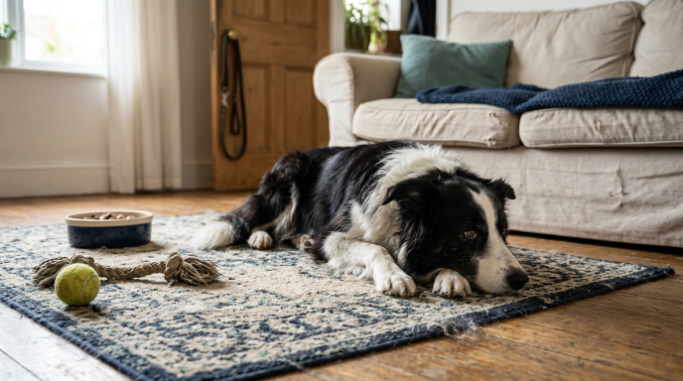
The strongest clue is a cluster of changes rather than one isolated behavior. Compare your dog with their own normal routine.
Loss of interest
Your Collie may ignore a ball, tug toy, walk, training cue, or person they normally love. This loss of enthusiasm often catches an owner first.
Sleeping or resting more
A dog that suddenly spends much more of the day asleep may be feeling low or unwell. Notice whether they still brighten when offered something enjoyable.
Changes in eating
Some affected dogs eat less or approach food slowly. Others may seek food more often, especially when boredom is part of the problem.
Withdrawal or unusual clinginess
One Border Collie may hide in another room. Another may follow a family member constantly and struggle to settle alone.
- Less greeting at the door
- Reduced interest in family activity
- More whining or pacing
- Less enthusiasm during walks
- New destructive behavior
- Changes in sleep or appetite
Don’t judge mood from facial expression alone. Border Collies can look intense, worried, or solemn even when they’re perfectly content.
Instead, write down what changed and when. A three-day behavior log often reveals more than trying to remember everything later.
Why Do Border Collies Get Depressed?
Border Collies may seem depressed when an important physical, social, or mental need changes. Their intelligence and working heritage can make an empty routine especially difficult.
Too little mental stimulation
A Border Collie was developed to notice movement, solve problems, respond to cues, and work for long periods. A repetitive home routine may leave that brain with little useful work.
This doesn’t mean you must entertain your dog all day. It means daily life should contain chances to think.
- Short obedience sessions
- Scent searches around the home
- Food puzzles
- Hide-and-seek
- Learning toy names
- Agility foundations
- Controlled tug or fetch
Not enough suitable physical activity
A quick toilet walk may not meet the needs of a fit adult Border Collie. Many adults benefit from substantial daily activity divided across the day.
PetMD notes that young Border Collies commonly need around one to two hours of daily exercise, although age, health, weather, and fitness change the right amount. More isn’t always better.
Loss and grief
Dogs can behave differently after a person or animal companion disappears from the household. They may search, sleep more, eat differently, or become less engaged.
A sudden routine change
A new work schedule, house move, baby, family member, or long absence can change a dog’s emotional environment. Border Collies often notice routine changes quickly.
Section Takeaway: Border Collies don’t need nonstop excitement, but they do need a meaningful balance of exercise, thinking, social contact, and rest.
Is My Border Collie Depressed or Just Bored?
Boredom often produces restless, attention-seeking behavior, while depression-like states tend to reduce normal interest. Separation anxiety usually appears most clearly around departures and time alone.
| Pattern | What you may notice | Useful first check |
|---|---|---|
| Boredom | Pestering, stealing items, barking, digging, chewing, or constant requests for activity | Add varied exercise plus 5–10 minute training or scent sessions |
| Depression-like change | Reduced interest, low energy, withdrawal, altered appetite, or changed sleep | Compare several days with your dog’s normal behavior and check for triggers |
| Separation distress | Pacing, panting, barking, destruction, escape attempts, or distress tied to departures | Record the first 30 minutes after leaving and review the pattern |
| Medical problem | Low mood with pain, limping, weakness, appetite loss, digestive signs, or sudden personality change | Arrange a veterinary examination |
The distinction isn’t always clean. A bored dog can become stressed, and an anxious dog may stop enjoying normal activities.
The AKC’s guidance on recognizing boredom in dogs also recommends separating ordinary under-stimulation from true separation distress. Watching the context is far more useful than attaching a label too quickly.
Can Loneliness and Life Changes Affect a Border Collie?
Yes. Border Collies often form close working-style bonds with their people, so sudden changes in access, routine, or household relationships can affect behavior.
Being alone more than usual
A dog used to having someone home most of the day may struggle after a major schedule change. That doesn’t automatically mean separation anxiety.
Use a camera to see what your dog does after you leave. Calm sleeping is different from escalating pacing, barking, drooling, or escape behavior.
Loss of a person or animal companion
Keep meals, walks, sleep, and familiar activities predictable after a loss. Familiar structure can make a changed household easier to navigate.
A move or major household change
New smells, sounds, rooms, people, and routines can be tiring. Give your Collie familiar beds, cues, walking routines, and quiet places to rest.
The ASPCA’s separation anxiety guidance notes that changes in family, schedule, residence, or attachment relationships can be associated with separation problems.
Don’t punish distress behavior. A frightened or anxious dog isn’t being spiteful.
Can Illness Make a Border Collie Seem Depressed?
Yes. Pain and illness can look remarkably similar to sadness, which is why a sudden personality change deserves medical consideration.
A dog in discomfort may stop playing because movement hurts. Another may become quiet because nausea, fever, weakness, or another problem makes normal activity unpleasant.
Watch for physical clues
- Reduced appetite or refusal to eat
- Vomiting or diarrhea
- Limping or stiffness
- Trouble getting up
- Unusual panting
- Changes in drinking or urination
- Weight change
- Sensitivity to touch
- Confusion or unusual nighttime behavior
Age also changes the picture. A senior Border Collie may slow down because of arthritis, sensory changes, or another health issue rather than emotional depression.
Vet note: Any sudden or persistent behavior change should be discussed with your veterinarian, especially when it appears with pain, appetite changes, weakness, digestive signs, or altered drinking and urination.
How Can I Help a Depressed Border Collie?
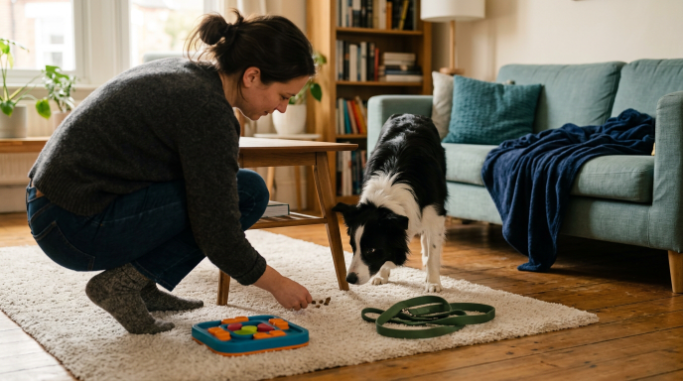
Start by looking for the cause instead of trying to make the dog “cheer up.” The right response to boredom differs from the right response to pain or separation anxiety.
1. Restore a predictable daily rhythm
Keep meals, toilet breaks, walks, training, and bedtime reasonably consistent. Predictability helps a dog understand what happens next.
2. Add useful mental work
Try two or three short thinking sessions across the day. Five to ten focused minutes can be more useful than mindless repetition.
- Scatter-feed part of a meal in grass
- Hide treats around one room
- Practice two familiar cues and one new skill
- Teach names for two or three toys
- Use a puzzle feeder
- Practice calm mat work
3. Make exercise varied, not endless
Mix walking, sniffing, training, play, and safe running according to your dog’s age and health. Repeating high-speed ball chasing for long periods isn’t the only way to tire a Border Collie.
4. Protect quiet rest
High-drive dogs also need an off switch. A dog that expects entertainment every minute can struggle to settle.
I use a simple rule: purposeful activity should be followed by uneventful downtime. The ability to relax is a skill worth building.
5. Rebuild enjoyment gradually
If your dog has gone flat, offer easy versions of activities they used to enjoy. Keep the session short and stop while the dog still seems comfortable.
Don’t force interaction. Quiet companionship may be more useful than repeatedly pushing a withdrawn dog to play.
Section Takeaway: Help starts with identifying the cause, then rebuilding routine, suitable activity, mental work, social contact, and restful downtime.
When Should I Call a Veterinarian?
Call your vet when the change is sudden, significant, persistent, or paired with physical symptoms. Medical causes should be ruled out before assuming your Border Collie has a purely behavioral problem.
- Your dog stops eating or drinking normally
- They seem painful, weak, or unusually tired
- Vomiting or diarrhea appears
- Movement or coordination changes
- The behavior change appeared suddenly
- Your dog withdraws from nearly everything they normally enjoy
- Severe anxiety causes escape attempts or self-injury
- You can’t identify a reasonable environmental cause
Bring notes about sleep, appetite, exercise, recent household changes, and when the behavior started. Videos can also help when the concerning behavior doesn’t happen at the clinic.
For separation-related problems, record what happens after departure. The timing and intensity can help your vet or behavior professional understand the pattern.
Vet note: This guide can’t diagnose depression, anxiety, pain, or illness. Your veterinarian can examine your dog and decide whether medical testing or behavioral support is appropriate.
Frequently Asked Questions
Do Border Collies get sad when left alone?
Some do. A Border Collie may become bored, lonely, or anxious when left alone, especially after a sudden schedule change. Severe barking, pacing, drooling, destruction, escape attempts, or panic linked specifically to departures can point toward separation distress rather than simple boredom.
Can a Border Collie get depressed from lack of exercise?
Too little suitable activity can contribute to boredom, frustration, and behavior changes. However, low energy or loss of interest shouldn’t automatically be blamed on exercise because pain and illness can produce similar signs.
How much exercise should I give a depressed Border Collie?
There is no single depression-specific exercise dose. Healthy young adults often need substantial daily activity, but the amount should match age, fitness, health, weather, and temperament. If your dog suddenly seems unable or unwilling to exercise, speak with your vet before increasing it.
Will getting another dog make my Border Collie happier?
Not necessarily. Another dog can provide companionship for some Border Collies, but it can also add stress or competition. First identify why your current dog seems unhappy rather than treating a second pet as an automatic cure.
Can Border Collies grieve another dog?
A Border Collie may show behavior changes after another household pet disappears. Appetite, sleep, activity, searching behavior, and social contact can change. Keep the routine predictable and contact your vet if the change is severe or persistent.
How long does Border Collie depression last?
There is no standard timeline because “depression” can describe several different problems. A mild response to routine change may improve as the dog adjusts, while pain, illness, or serious anxiety will need appropriate treatment.
Should I force my Border Collie to play if they seem depressed?
No. Offer gentle, familiar activities and let your dog choose whether to engage. Repeatedly forcing interaction can create more stress, especially if the dog feels painful or unwell.
Final Takeaway
When a Border Collie seems depressed, look for a change in the whole dog rather than one sad-looking moment. Interest, appetite, sleep, movement, social behavior, exercise, and recent life changes all provide useful clues.
Start with health and context. Then give your Collie the things this working breed tends to thrive on: purposeful activity, mental challenges, predictable companionship, and enough quiet time to switch off.
If the change is sudden, strong, or persistent, involve your veterinarian. Catching the real cause early is far more useful than simply trying to keep a Border Collie busier.
