
How Many Teeth Do Dogs Have? A Practical Guide for Puppy and Adult Dog Owners

If you’re checking your dog’s mouth and wondering whether everything looks normal, the short answer is this: adult dogs usually have 42 teeth, while puppies usually have 28 baby teeth once their first set is fully in. That difference matters because a puppy mouth is supposed to look incomplete for a while. An adult mouth is not.
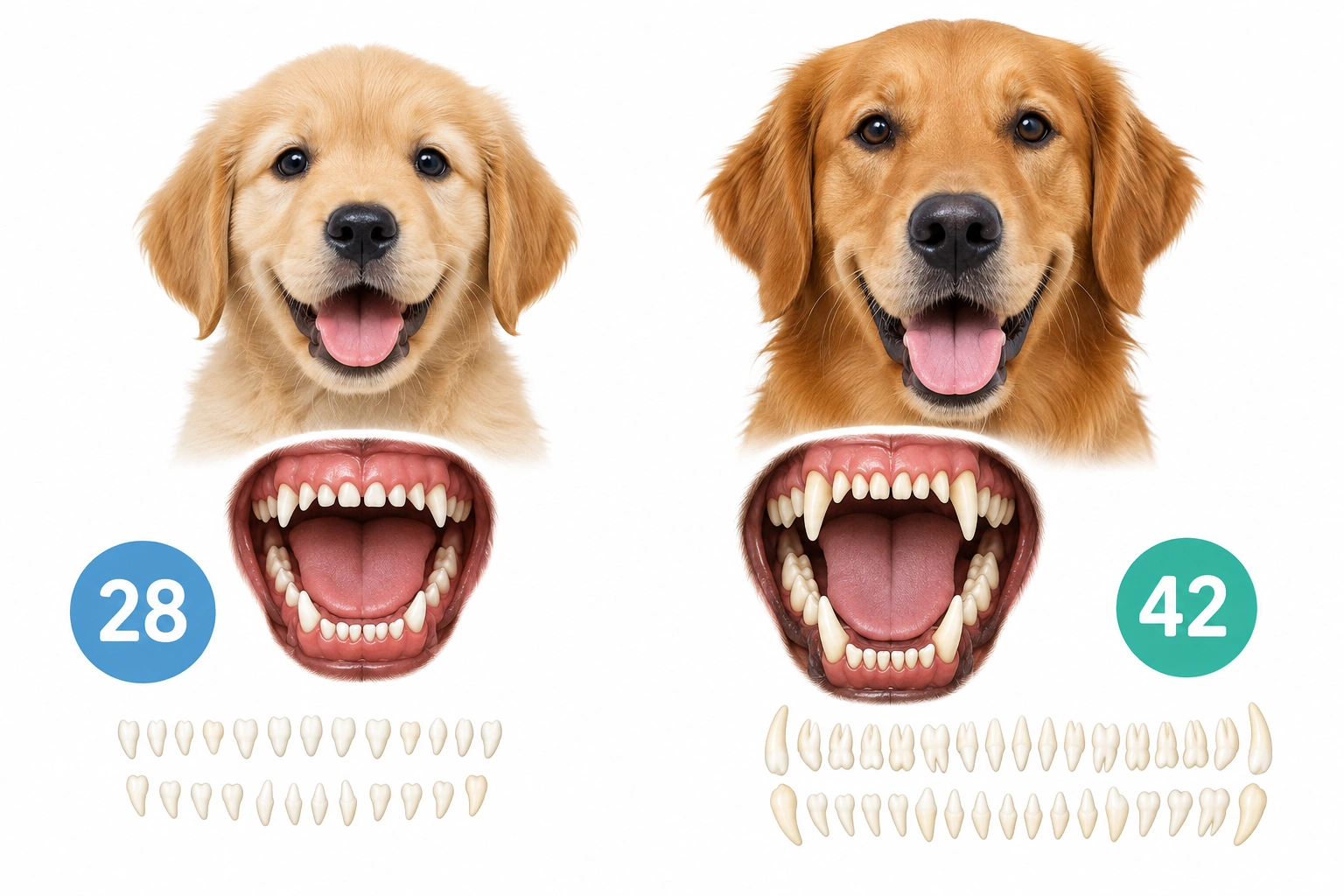
This 42-tooth count is the normal full permanent set after teething is complete.
Puppies chew more, mouths change quickly, and it is easy to mistake normal teething for a dental problem. The goal here is simple: help you tell the difference between expected development and something that needs a vet’s eye.
How Many Teeth Do Dogs Have? The Short Answer
Most adult dogs have 42 permanent teeth. Puppies usually have 28 deciduous teeth — also called baby teeth or milk teeth.
That means a healthy adult dog has 14 more teeth than a puppy with a full baby set. The extra teeth are mostly in the back of the mouth, where adult dogs gain more premolars and molars for chewing and grinding.
A useful way to remember it:
- Puppy teeth: 28 total
- Adult teeth: 42 total
- Adult jaw split: 20 upper, 22 lower
Dogs also do not have wisdom teeth, so you should not expect the late-arriving extra molars that humans get.
AKC’s dental overview is a helpful reference if you want a second source on the puppy-to-adult transition.
Puppy Teeth vs. Adult Teeth: What Changes and Why It Matters
Puppy teeth and adult teeth are built for different jobs at different stages of life.
Puppy teeth are smaller, sharper, and designed to fit into a tiny jaw. They erupt early so puppies can begin exploring food and the world. Adult teeth are larger, stronger, and meant to last for life.
Here’s the practical breakdown of adult teeth:
- 12 incisors at the front for nibbling, grooming, and picking up objects
- 4 canines for grabbing and tearing
- 16 premolars for shearing and chewing
- 10 molars for crushing and grinding
That adds up to 42.
The reason this matters is simple: if you judge a 4-month-old puppy by adult standards, you may think something is wrong when the mouth is actually developing normally. On the other hand, if a 7-month-old dog still has baby teeth hanging around, that is no longer a normal stage of development.
Dog Tooth Count by Age: The Normal Teething Timeline
Dogs are not born with visible teeth. Their baby teeth begin to erupt at around 3 to 4 weeks of age. By about 8 to 10 weeks, many puppies have a full baby set.
From there, adult teeth usually start coming in between 4 and 7 months of age, and most dogs have their full adult set by around 6 to 7 months. Some sources note the full set may be in place by about seven months, though the exact timing can vary by breed and individual dog.
A simple timeline helps:
| Age | What you usually expect | What it means |
|---|---|---|
| Birth to 3 weeks | No visible teeth | Normal |
| 3 to 10 weeks | Baby teeth erupt and fill in | Normal puppy stage |
| 3 to 4 months | Baby teeth start loosening | Teething begins |
| 4 to 7 months | Adult teeth erupt and replace baby teeth | Normal transition |
| About 6 to 7 months | Full adult set usually present | Development mostly complete |
If your puppy is 5 months old and still losing teeth, that can still be normal. If your dog is 8 months old and missing several adult teeth or still has obvious baby teeth, that deserves a closer look.
What Normal Teething Looks Like in Puppies
Normal teething is usually annoying, not alarming.
A teething puppy may:
- chew more than usual
- drool a little more
- mouth toys, blankets, or hands
- have mild gum irritation
- leave small spots of blood on chew toys
- seem temporarily fussier about hard food
That last point matters. Some puppies still eat normally, while others become a bit selective for a few days. Mild discomfort is common; a complete refusal to eat is something to take seriously.
A realistic example: a 4-month-old puppy that chews his bed corners, wants frozen toys, and has slightly red gums is probably going through normal teething. A 4-month-old puppy with swelling, bad breath, or obvious pain is a different situation.
For teething puppies, the goal is not to stop chewing entirely. The goal is to redirect chewing toward safe, appropriate items so the puppy can work through the stage without damaging furniture or injuring the mouth.
When Tooth Loss or Tooth Count Is Not Normal
This is the part most owners need help with: when should you relax, and when should you call the vet?
Retained baby teeth
Retained baby teeth happen when a puppy tooth does not fall out as the adult tooth comes in. This is especially worth watching if you can see two teeth in the same spot — a baby tooth and the adult tooth beside or behind it.
Why it matters:
- it can crowd the mouth
- it can affect bite alignment
- it can trap food and increase dental problems later
Retained baby teeth often need veterinary attention. In many cases, the vet will recommend removal rather than waiting, especially if the adult tooth is already trying to erupt into the same space.
Missing teeth
A missing tooth is not automatically a problem, but context matters.
During normal teething, a puppy tooth may fall out and leave a temporary gap before the adult tooth appears. That is expected if the puppy is in the teething age range and the rest of the mouth is changing on schedule.
A missing adult tooth is different. If an adult tooth is absent and you do not know why, that is worth discussing with a veterinarian. It may have never developed, been lost to injury or disease, or been extracted previously.
Delayed eruption or crowding
If adult teeth are slow to appear, erupt in the wrong place, or seem crowded, the mouth may need an exam. Small dogs and brachycephalic breeds are often discussed in relation to crowding, but any dog can have eruption problems.
Pain, swelling, or bleeding beyond mild teething
Mild gum irritation is normal. These are not:
- significant swelling
- persistent bleeding
- strong bad breath
- obvious pain when touched
- trouble eating or dropping food repeatedly
Those signs point away from routine teething and toward a possible dental problem.
How to Check Whether Your Dog’s Teeth Are Developing Normally
You do not need to become a dental technician to do a useful home check. A quick monthly mouth check is enough for most owners.
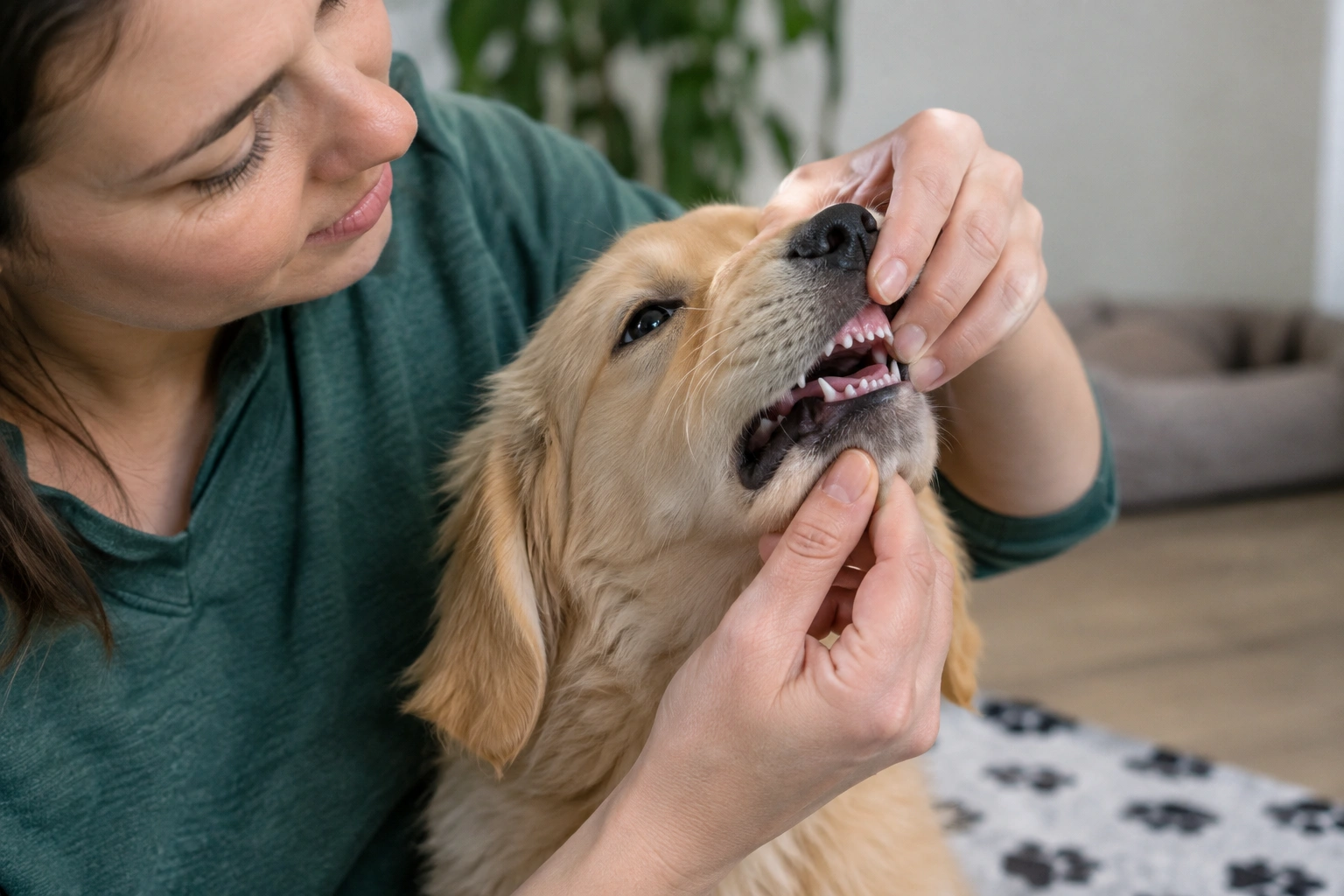
Use this simple framework:
1. Check the age against the stage
Ask yourself:
- Is this a young puppy with baby teeth?
- Is this a 4- to 7-month-old puppy likely in the teething phase?
- Is this an older puppy or adult that should already have a full permanent set?
Age is the first filter. It tells you whether the mouth should still be changing.
2. Look at the tooth count and pattern
You do not need to count every tooth every time, but it helps to notice obvious gaps, extra teeth, or duplicate teeth in the same area. Compare both sides of the mouth. Symmetry matters.
If one side looks very different from the other, that is more useful than obsessing over a single loose tooth.
3. Check the gums
Healthy gums are usually pink and fairly even. Mild redness during teething can happen. Swelling, ulcers, or bleeding that does not seem tied to a loose tooth should be taken seriously.
4. Watch how your dog eats
A dog that chews a little more slowly during teething may be fine. A dog that suddenly refuses kibble, drops food, or cries while chewing needs a vet exam.
5. Notice the bite
As adult teeth come in, the bite should settle into a stable pattern. If the jaw looks crowded, teeth are crossing, or the mouth seems uncomfortable to close, do not wait and hope it sorts itself out.
Basic Dental Care for Puppies and Adult Dogs
Good dental care is not complicated, but it works best when it starts early.
Brush before the mouth looks perfect
Do not wait until all adult teeth are in. A gentle brushing routine can begin while your puppy is still growing. The aim is to build tolerance and make mouth handling normal.
Use mouth checks as part of routine care
A quick look every week or two helps you spot:
- retained baby teeth
- broken teeth
- red gums
- tartar buildup
- unusual wear
Choose chews that match the stage
During teething, softer or cooling chews may be easier on sore gums. Hard items can be too much for some puppies. The trade-off is simple: harder chews may last longer, but they can also irritate a tender mouth.
Stay consistent in adulthood
Once adult teeth are in, the mouth still needs attention. Dental disease builds quietly. Daily brushing is ideal, but even a few well-done sessions per week are better than ignoring the mouth until problems are obvious.
For more on everyday reward choices and keeping a dog lean while still using treats, see our guide on how many treats a Border Collie can have per day. If you want to understand how an intense, busy Border Collie may react when uncomfortable or under-stimulated, our article on Border Collie anxiety may also help.
When to See a Veterinarian or Certified Trainer
For teeth, the main professional you need is the veterinarian.
Book a vet visit if you notice any of the following:
- baby teeth that remain after adult teeth are erupting
- a missing tooth with no clear explanation
- swelling in the gums or face
- bleeding that seems excessive or ongoing
- strong bad breath
- obvious pain when chewing
- trouble eating
- teeth that look misaligned or crowded
Do not try to pull a loose or retained tooth at home. That can injure the gum, break the tooth, or leave the root behind.
If your puppy is chewing, drooling, and acting a little fussy but still eating and playing, you can usually monitor at home. If the mouth looks painful, the bite looks wrong, or the teeth are not following the expected age pattern, get it checked.
FAQ: Dog Teeth Basics
How many teeth do puppies have?
Puppies usually have 28 baby teeth when the full set has erupted.
How many teeth do adult dogs have?
Adult dogs usually have 42 permanent teeth.
Do all dogs have the same number of teeth?
Most adult dogs have the same total number of permanent teeth, though individual problems like missing teeth, retained baby teeth, or dental disease can change what you see in the mouth.
When do puppies lose their baby teeth?
Most puppies begin losing baby teeth around 3 to 4 months of age.
When do adult teeth come in?
Adult teeth usually erupt between 4 and 7 months of age, and most dogs have their full adult set by about 6 to 7 months.
Are dogs born with teeth?
No. Puppies are not born with visible teeth. Their baby teeth erupt a few weeks after birth.
Do dogs have wisdom teeth?
No. Dogs do not have wisdom teeth.
What if my dog is missing a tooth?
If the tooth was lost naturally during teething or removed by a vet, that may be fine. If you do not know why it is missing, or if an adult dog loses a tooth unexpectedly, ask your veterinarian.
What if my puppy still has baby teeth?
Retained baby teeth can crowd adult teeth and should be checked by a veterinarian, especially if adult teeth are already coming in beside them.
How can I tell if my dog’s teeth are healthy?
Look for pink gums, a stable bite, no obvious pain, no persistent bleeding, and no difficulty eating. A quick regular mouth check is usually enough to catch early problems.
For more general guidance on canine oral health, the ASPCA’s pet care resources and VCA Hospitals’ dental health information are both solid places to continue reading.