
What Dogs Ate Before Commercial Dog Food: A Practical History for Modern Owners

Before commercial dog food existed, dogs mostly ate scraps, leftovers, scavenged food, and other locally available foods, but what that looked like varied widely by era, region, and social class. That often meant bones, meat trimmings, bread, grains, broth-soaked bits, offal, and sometimes vegetables or dairy. Working dogs usually got more food and better rations than household pets because they burned more energy. But the key point is this: there was no single “old-fashioned dog diet.”
For a Border Collie owner, that history matters for one reason: it shows that dogs have always been adaptable, but not every historical feeding habit was safe, complete, or suitable by modern standards.
Dogs Before Commercial Food: Scavengers, Companions, and Working Animals
Dogs were opportunists long before kibble. In many places, they lived close to people and made use of what humans discarded, ignored, or could not eat themselves. That included kitchen waste, butcher scraps, stale bread, and bones with little meat left on them.
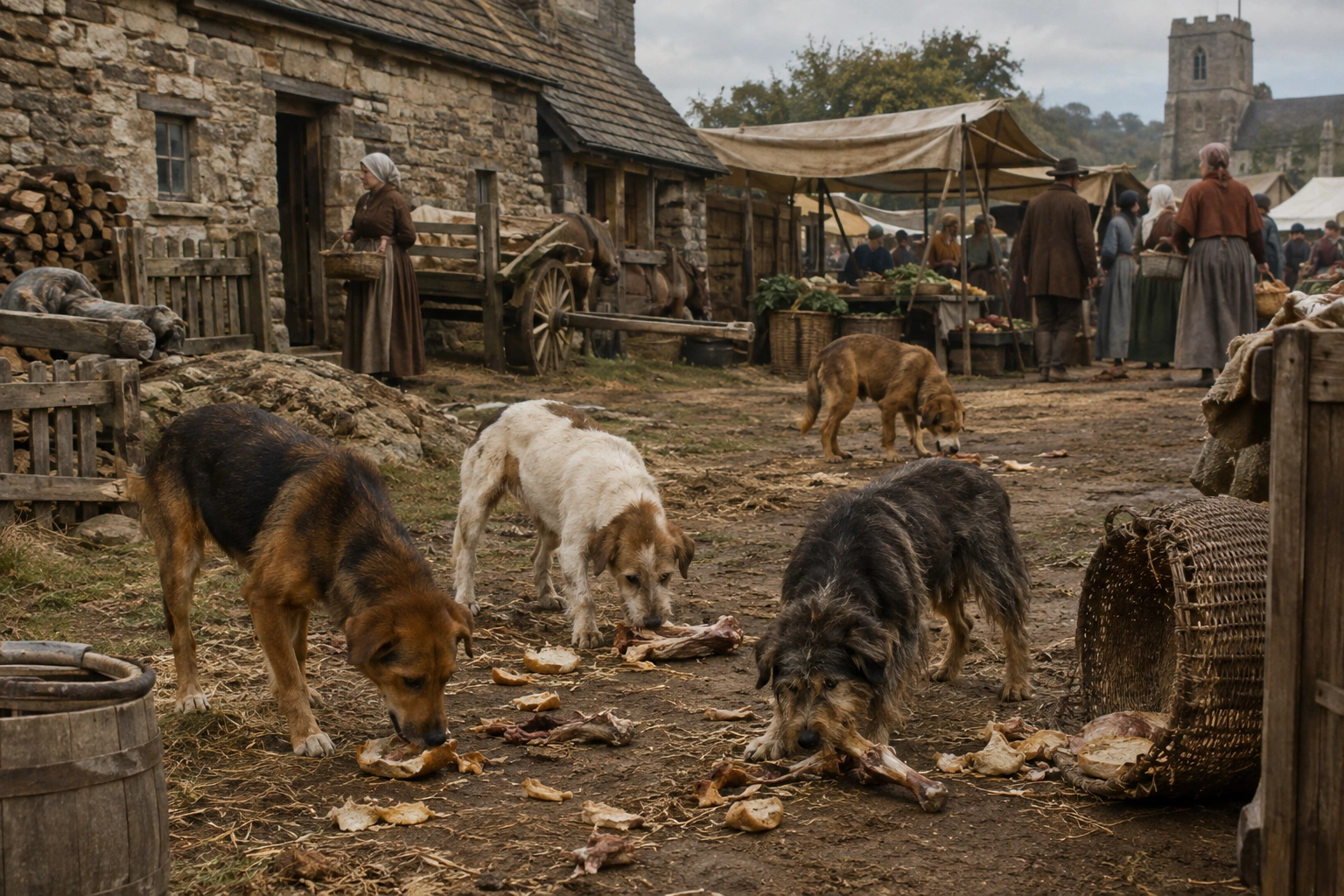
But dogs were not all fed the same way. A farmhouse dog, a city street dog, a hunting dog, and a lap dog in a wealthy household could have very different diets. The more work a dog did, the more likely it was to receive deliberate feeding rather than random leftovers.
A useful way to think about pre-commercial feeding is this:
- Scavenging dogs ate what they found.
- Household dogs ate what people spared.
- Working dogs were often fed to keep them functional.
That distinction matters because “dogs used to eat scraps” is true, but incomplete. Scraps could mean a crust of bread in one home and boiled meat trimmings in another. Some dogs got enough to maintain body condition; others were simply surviving.
What Historical Dog Diets Commonly Included
Historical sources and accounts point to a fairly broad mix of foods. In some historical accounts, especially in common households from the Middle Ages through the mid-19th century, dogs were fed whatever owners could spare, including bones, bread, grains, vegetables, and meat scraps. In some cities, accounts also mention pet owners buying horse meat.
That list tells you something important: dogs were often fed human leftovers, not specially prepared meals. The food was shaped by what was available, not by canine nutrition science.
Common historical foods for dogs
Here’s the practical breakdown:
- Meat scraps and trimmings: Often boiled before feeding.
- Bones: Common, especially when meat was scarce.
- Offal: Organ meats were a natural byproduct of butchering.
- Bread and grains: Cheap fillers and easy household staples.
- Vegetables: Cabbage, potatoes, turnip tops, nettle tops, and carrots show up in historical accounts.
- Dairy or fatty scraps: Some dogs received lard or other fat-rich leftovers.
- Hardtack: Street dogs in port cities reportedly ate moldy hardtack thrown away by sailors.
The old diet was practical, not polished. If a family had porridge, broth, stale bread, and a few meat scraps, the dog might get some version of that mix. If there was a butcher nearby, the dog might do better. If the household was poor, the dog might live on whatever came from the pot after everyone else was fed.
One caution: just because a food appeared historically does not mean it was ideal. Onions, for example, are not safe for dogs today. Historical feeding often reflected scarcity, not nutritional best practice.
How Working Dogs Were Fed Differently From Pet Dogs
Working dogs had a stronger claim on food because they were earning it. Herding dogs, hunting dogs, farm dogs, and guard dogs needed enough calories to keep going through cold weather, long days, and physical labor.
By the 18th century, some accounts describe farm and hunting dogs being fed mixed grains and lard. That combination was useful because it was calorie-dense and cheap. It was not necessarily balanced, but it could keep an active dog from losing weight.
A working dog’s ration was often built around one question: How do we keep this dog capable of doing the job tomorrow? That meant more emphasis on energy than on variety. A companion dog in the house might get leftovers because it was convenient. A dog that helped on the farm might get a more intentional bowl because its work mattered.
What workload changed
The heavier the workload, the more the diet needed to shift:
- More calories for long daily activity
- More protein and fat if the dog was expending serious energy
- More consistency so the dog did not lose condition during busy seasons
That is still true today. A Border Collie working livestock all day has very different needs from a Border Collie living a mostly indoor life with a couple of walks and a training session.
When Commercial Dog Food Appeared and Why It Took Over
The first food made specifically for dogs appeared in the mid-1800s. James Spratt is widely credited with introducing an early dog food after observing dogs eating discarded shipyard biscuits. Those biscuits were made from flour, water, and sometimes salt. Spratt’s early product used wheat meals, vegetables, and meat.
That shift mattered because it changed dog feeding from “whatever is around” to “something made for the dog.”
Commercial food took off for a few practical reasons:
- Convenience: No need to sort scraps or cook separate meals.
- Shelf life: Canned food and later kibble stored well.
- Consistency: Each batch could be made to a repeatable standard.
- Nutrient control: Manufacturers could aim for more reliable nutrition than random leftovers.
The modern pet food system also became easier to regulate over time. AAFCO’s Dog Food Nutrient Profiles were first published in the early 1990s, building on earlier labeling and feeding-standard efforts rather than creating the whole regulatory framework from scratch. That is a big contrast to historical feeding, where no one was checking whether the dog’s bowl met a complete nutrient profile.
If you want a deeper look at how commercial feeding changed the standard of care, the FDA’s overview of complete and balanced pet food is worth reading.
A quick comparison
| Feeding era | Typical food source | Strengths | Weaknesses |
|---|---|---|---|
| Pre-commercial scraps | Leftovers, bones, kitchen waste, scavenged food | Cheap, available, familiar | Inconsistent, often unbalanced, sometimes unsafe |
| Working-dog rations | More deliberate scraps, grains, fat, meat trimmings | Higher calories for active dogs | Still variable; nutrient gaps possible |
| Modern commercial food | Formulated kibble or canned food | Convenient, standardized, nutritionally controlled | Less “natural-feeling” to some owners |
That table is the real story in plain language: commercial food did not appear because dogs suddenly needed food. It appeared because people wanted a safer, more reliable way to feed them.
Was the Old Way Healthier? Historical Diet vs Modern Canine Nutrition
This is where nostalgia can mislead people. Historical diets were not automatically healthier just because they were “natural.” They were often practical, but practical is not the same as complete.
Dogs need protein, fat, carbohydrates, vitamins, minerals, and water in the right proportions. Modern commercial diets are designed to meet those needs more consistently than a bowl of leftovers. Historical diets might have worked for some dogs, especially active ones with access to varied scraps, but they could also be short on key nutrients or too variable from day to day.
Historical feeding also happened in a world with different food safety risks. Spoilage was more common, refrigeration was limited or nonexistent, and scavenged food could carry parasites or bacterial contamination. Even if a dog tolerated those conditions, that does not make them a good model for today.
What history got right
- Dogs can digest a wide range of animal and plant foods.
- Many dogs do well on diets that include meat-based ingredients.
- Working dogs often need more energy than sedentary pets.
What history got wrong
- Meals were often inconsistent.
- Some commonly fed foods are unsafe by modern standards.
- Spoiled scraps and contaminated leftovers were a real risk.
- Dogs could easily miss essential nutrients over time.
A modern dog food does not need to be perfect to be better than a random historical bowl. It just needs to be complete, safe, and appropriate for the dog’s life stage and activity level.
If you are comparing feeding styles, Cornell University’s guidance on re-evaluating your dog’s diet is useful because it shows how quickly treats and extras can add up. That same logic applies to scraps: even a little extra food matters when you add it up over time.
What History Gets Wrong: Risks of Copying Old Feeding Practices Today
A lot of people hear “dogs used to eat scraps” and jump straight to “therefore I should feed bones, leftovers, and raw meat.” That is a dangerous shortcut.
The main risks
Cooked bones
Historically common, but risky now. Cooked bones can splinter and injure the mouth, throat, or intestines.
Seasoned human food
Old table scraps were not always seasoned heavily, but modern leftovers often are. Salt, garlic, onion, butter, sauces, and spice blends can cause problems.
Spoiled food
Dogs scavenged because they could, not because it was safe. Historical dogs likely faced more bacteria, parasites, and rancid fat than most owners would accept today.
Raw or underhandled meat
Some people see raw feeding as a return to the past, but historical feeding did not happen with modern expectations about food handling or pathogen control. Raw meat can carry bacteria and parasites if it is not sourced and handled carefully.
Nutrient imbalance
A bowl of meat and bread may sound rustic, but over time it can miss the minerals, vitamins, and fatty acids a dog needs.
This is where the romantic version of history falls apart. A dog surviving on scraps is not proof that scraps are a good feeding model. Survival and thriving are different things.
If you are trying to avoid unsafe foods, the ASPCA’s pet poison guidance is a useful general reference, and AKC’s nutrition articles can help you sort historical myths from practical feeding advice. For example, AKC’s overview of foods humans used to feed dogs is a helpful reminder that old habits do not equal modern safety.
What a Better Modern Approach Looks Like
The best modern takeaway from history is not “feed like it’s 1850.” It is “feed with the same practicality, but with better information.”
Use this decision framework
Ask four questions before choosing a diet:
-
Is it complete and balanced for my dog’s life stage?
A growing puppy, adult dog, and senior dog do not need the same nutrient profile. -
Can I control safety and consistency?
If ingredients change constantly, the diet is harder to trust. -
Does my dog’s workload justify more calories?
A highly active dog needs more fuel than a couch companion. -
Can I sustain this long term?
A feeding plan that works for three days but not three months usually fails in practice.
The trade-offs
- Commercial food gives consistency and convenience.
- Homemade feeding gives ingredient control, but it is easy to get wrong.
- Raw-style feeding may feel closer to “natural history,” but it carries handling and contamination concerns.
If you want to feed more naturally, do it with modern guardrails. Use plain, simple ingredients. Avoid seasoned leftovers. Be cautious with bones. And if you are building a homemade diet, get veterinary nutrition guidance rather than guessing.
For short-term backup feeding ideas, you may also find this guide useful: what to feed my dog instead of dog food.
What This Means for Owners of Active Dogs Like Border Collies
Border Collies are a good example of why history should be read carefully. A busy working Border Collie may need more food than a casual pet Border Collie, but that does not mean the answer is table scraps.
Historically, active dogs got more calories because they had to. Today, that principle still applies, but the delivery method should be more controlled. A high-drive dog does best when food matches workload, body condition, and digestion—not folklore.
Practical feeding rule for active dogs
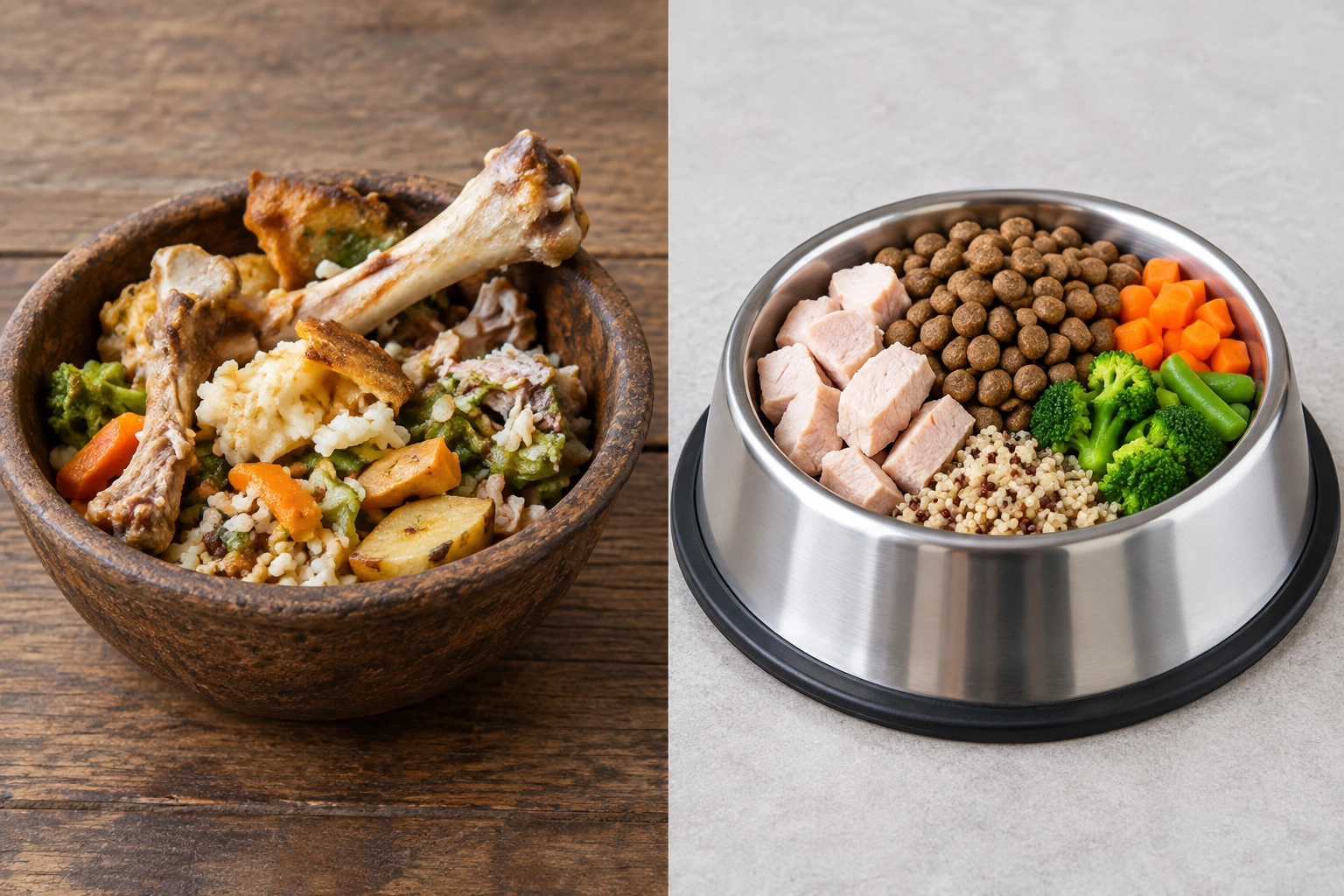
If your Border Collie is training hard, herding, hiking, or doing repeated high-energy work, watch for these signs that the diet may be too light:
- rib visibility increasing too much
- loss of muscle condition
- low stamina during work
- hunger that never seems to settle
On the other hand, if the dog is active only in short bursts and spends most of the day resting, old-style “working dog” feeding can overshoot quickly.
That is the real lesson from history: feed the job, not the myth.
When to See a Veterinarian or Certified Trainer
See a veterinarian if your dog has ongoing vomiting, diarrhea, weight loss, poor coat quality, or a sudden change in appetite. Those signs matter more than any feeding tradition.
A certified trainer can also help if food is becoming a behavior problem, such as guarding, scavenging, or constant counter surfing. In Border Collies especially, intense food motivation can be normal, but it still needs structure.
FAQ: What Dogs Ate Before Dog Food
Did dogs always eat the same scraps as people?
No. Some dogs ate leftovers from the family table, but others scavenged, and working dogs often got more deliberate rations.
Were bones a normal part of old dog diets?
Yes, bones were common historically. That does not make them safe in every form today, especially once cooked.
Did dogs eat vegetables before commercial food?
Yes, in some households they did. Historical accounts mention cabbage, potatoes, turnip tops, nettle tops, and carrots.
Was commercial dog food invented because dogs needed it?
Not exactly. Dogs always needed food. Commercial food emerged because people wanted a more convenient, consistent, and nutritionally controlled option.
Is a historical-style diet healthier than kibble?
Not automatically. Historical diets could be varied, but they were often inconsistent and sometimes unsafe. A balanced modern diet is usually the more dependable choice.
Should I feed my Border Collie like a working dog?
Only if your dog actually works at that level. A Border Collie with a full-day job needs different fueling than one that gets exercise but not sustained labor.
Final Takeaway
Before dog food existed, dogs ate what was available: scraps, leftovers, bones, grains, offal, and scavenged food. Working dogs usually got more and better food than household pets, but even then the diet was shaped by convenience and survival, not by complete canine nutrition.
The modern takeaway is simple: history can inspire a practical approach, but it should not override safety, balance, or food quality. Feed the dog in front of you, not a romanticized version of the past.