
What Can I Feed My Dog Instead of Dog Food? A Practical Guide for Safe Short-Term and Long-Term Choices

If you’ve run out of dog food, the first job is simple: feed your dog something safe, plain, and easy to digest. The second job is more important: decide whether you need a one-night stopgap or a real long-term feeding plan.
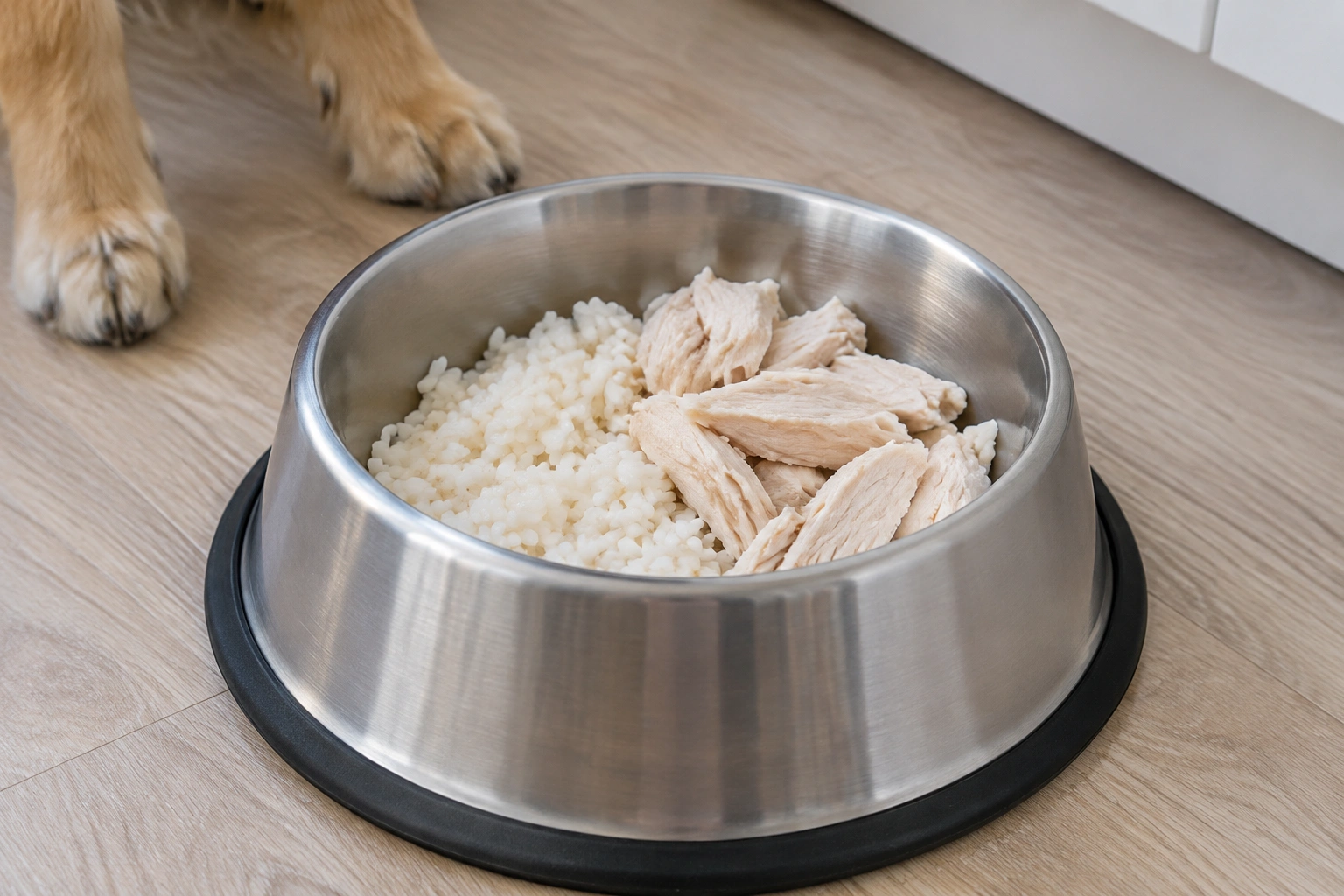
That distinction matters. A temporary meal can be very basic. A permanent diet cannot be improvised from kitchen leftovers without creating nutritional gaps. Border Collies, in particular, can burn through calories quickly, so “just give him a little of whatever is in the fridge” is not a strategy. It may keep a hungry dog quiet for a night, but it won’t necessarily support energy, muscle maintenance, or digestive stability over time.
If your dog is vomiting, has diarrhea, is refusing food, or has a medical condition such as pancreatitis, kidney disease, diabetes, or a history of food sensitivity, use a veterinarian’s advice rather than guessing. For dogs with active digestive upset, this practical guide to feeding a dog with diarrhea can help you think through the bland-food side of the decision.
What to Feed Your Dog Right Now if You’re Out of Dog Food
When you need food today, a plain, fully cooked, unseasoned food you already have on hand is often appropriate for a short emergency meal. Think in terms of simplicity, not variety.
A sensible emergency meal usually comes from one of these categories:
- plain cooked lean meat
- plain cooked rice or another bland starch
- plain cooked egg
- plain pumpkin puree, if it is plain and not pie filling
- a small amount of plain, dog-safe cooked vegetables
The goal is not to build a perfect meal. The goal is to avoid stomach upset and avoid toxic ingredients while you get back to a complete diet.
A useful rule: if you would have to add salt, butter, garlic, sauce, or seasoning to make it taste “normal” to a person, it is probably not the right version for your dog.
Best short-term emergency foods
Plain cooked lean meat
Chicken, turkey, or another lean meat can work as a temporary protein source if it is fully cooked and unseasoned. Remove skin, bones, and visible fat. Fatty scraps are a poor emergency choice because they can be harder on the stomach.
Plain cooked rice
Rice is often used as a bland carbohydrate when a dog needs something gentle. It is not a complete meal, but it can be useful as part of a temporary feeding plan.
Plain cooked eggs
Eggs are a practical backup when cooked plainly. Avoid frying them in butter or oil. Scrambled, boiled, or poached is better than anything seasoned.
Plain pumpkin
Plain canned pumpkin can be useful in small amounts, especially when stool quality is a concern. The key is plain pumpkin, not pumpkin pie filling.
Plain cooked vegetables
Some dogs tolerate simple cooked vegetables well, especially in small amounts. Keep them soft, plain, and unseasoned.
A simple way to portion an emergency meal
If you are feeding a one-meal bridge, keep the portion modest rather than making a huge bowl. A practical approach is:
- start with a small serving, especially if the food is new
- use mostly one bland carbohydrate plus one lean protein if both are available
- if you only have one safe ingredient, feed that ingredient briefly and in a small amount rather than adding risky extras
- watch appetite, stool, and energy before offering more
For a one-meal bridge, the goal is just to get your dog through the next feeding safely. For a 24–48 hour bland diet, you can repeat the same plain foods in measured meals, but it should still stay temporary and simple.
What makes an emergency food “safe enough”
Before you serve anything, check three things:
- Is it plain? No seasoning, sauces, onion, garlic, or spicy ingredients.
- Is it fully cooked? Especially for meat and eggs.
- Is it simple enough to digest? Emergency feeding should be boring.
That last point matters more than people expect. Dogs with sensitive stomachs often do worse when owners try to “make up” a meal with multiple ingredients at once. One protein and one bland starch is usually easier on the digestive system than a kitchen-sink bowl.
What Dogs Should Never Eat
This is the part that prevents emergencies from becoming vet visits.
Some foods are unsafe because they are toxic. Others are not toxic but can still cause digestive trouble, choking, or pancreatitis. A few common kitchen items deserve special attention.
Avoid giving dogs:
- chocolate
- grapes and raisins
- onions
- garlic
- xylitol or birch sugar, found in some sugar-free products
- alcohol
- cooked bones
- very salty foods
- heavily seasoned foods
- greasy leftovers
- sauces, gravies, and marinades
The ASPCA’s animal poison control guidance is a useful reference point for owners who want to check whether a food or ingredient belongs on the no-go list.
Cooked bones are a frequent mistake. They can splinter, cause choking, or damage the digestive tract. Even when a bone looks harmless, it is not worth the risk.
Also be careful with “healthy-looking” human foods that come heavily processed. A plain ingredient is not the same thing as a dish. Plain chicken is one thing; chicken in garlic sauce is another.
Can You Feed Chicken and Rice to a Dog?
Yes, chicken and rice can be a reasonable temporary meal for many dogs, especially when you need something bland and easy to digest. That is why it shows up so often in emergency feeding advice.
But it is a stopgap, not a complete diet.
Here is the practical way to think about it:
- Good use: a short-term backup when dog food is unavailable, or as a bland meal when a dog’s stomach needs a break
- Poor use: as a daily long-term diet with no veterinary formulation or supplement plan
Why the limit? Because chicken and rice does not supply everything a dog needs over time. It may provide protein and calories, but it does not automatically provide the right balance of calcium, essential fats, vitamins, and minerals.
For a Border Collie that is active, lean, and mentally switched on all day, that imbalance matters even more. These dogs often need enough energy to match their workload. A bland emergency bowl can keep them going for a day or two, but it is not a maintenance plan.
How long can a dog go without dog food?
This depends on the dog. A healthy adult dog may tolerate a short gap better than a puppy, senior dog, or dog with an illness, but going without food is not something to treat casually.
A medically cautious rule of thumb:
- Puppies, underweight dogs, senior dogs, and dogs with health problems: call a veterinarian sooner rather than later if they miss meals
- Healthy adult dogs: a missed meal may happen, but if your dog refuses food for more than a day, or sooner if they seem unwell, contact your vet
- Any dog that is vomiting, has diarrhea, is weak, or is not drinking normally: seek veterinary advice promptly
Water matters too. A dog that is not eating but is still drinking and acting normal is different from a dog that is not eating and not drinking.
Temporary Feeding vs Long-Term Replacement: The Critical Difference
This is the decision point most owners miss.
Temporary feeding
Temporary feeding is what you do when:
– you ran out of dog food
– you are waiting for a delivery
– your dog needs a bland meal for a short digestive reset
– you need to bridge one or two meals safely
In this situation, the priority is safety and digestibility.
Long-term replacement
Long-term replacement means you are choosing to stop feeding commercial dog food and instead feed homemade, cooked, raw, or fresh diets on purpose.
That is a very different job. Long-term feeding has to cover:
– calories
– protein
– fat
– calcium
– phosphorus
– trace minerals
– vitamins
– fiber, when appropriate
– digestibility and consistency
If you are not formulating for all of that, you are not really feeding a diet. You are feeding ingredients.
That distinction is why many veterinarians and canine nutritionists caution against casual homemade feeding. Good intentions do not fix nutrient gaps.
What a Balanced Homemade Dog Diet Actually Needs
A balanced homemade diet is more than “meat plus something else.”
Dogs need a complete nutritional picture, and the missing pieces are often the ones owners do not think about first.
Protein is not the whole story
Protein supports muscle and tissue maintenance, but protein alone does not make a diet complete. Dogs also need the right amount of fat for energy and nutrient absorption.
Calcium and phosphorus matter
This is one of the biggest homemade-diet problems. Meat-heavy meals can be high in phosphorus and low in calcium. Over time, that imbalance can be a serious issue, especially for growing dogs.
Vitamins and minerals are easy to miss
Homemade diets often fall short on micronutrients unless they are carefully formulated. That is why a recipe from a qualified professional is different from a “healthy homemade meal” idea from social media.
A practical mini-framework for a short-term homemade meal
If you are building a brief homemade meal at home, think in this order:
- Choose a lean protein such as plain cooked chicken, turkey, or egg.
- Add a bland carbohydrate such as plain rice or potato if your dog tolerates it.
- Include a calcium source if the meal is going to be used beyond a single emergency feeding. Meat by itself is not enough.
- Use a vet-formulated supplement or a professionally balanced recipe if the diet is meant to continue beyond a very short bridge.
This is only a framework, not a full recipe. It is meant to help you avoid the biggest homemade-diet mistake: assuming that safe human foods automatically make a complete dog diet.
Calories need to match the dog
A Border Collie that hikes, trains, runs, or works will need more energy than a sedentary dog of the same size. Underfeeding can show up as weight loss, low stamina, or a dull coat. Overfeeding can create weight gain even when the ingredients look “healthy.”
If you are serious about homemade feeding, the safest route is a recipe built by a veterinarian or board-certified veterinary nutritionist, not guesswork.
Cooked Homemade Diets vs Raw Diets vs Commercial Fresh Food
Different alternative feeding approaches solve different problems. None of them is automatically better in every home.
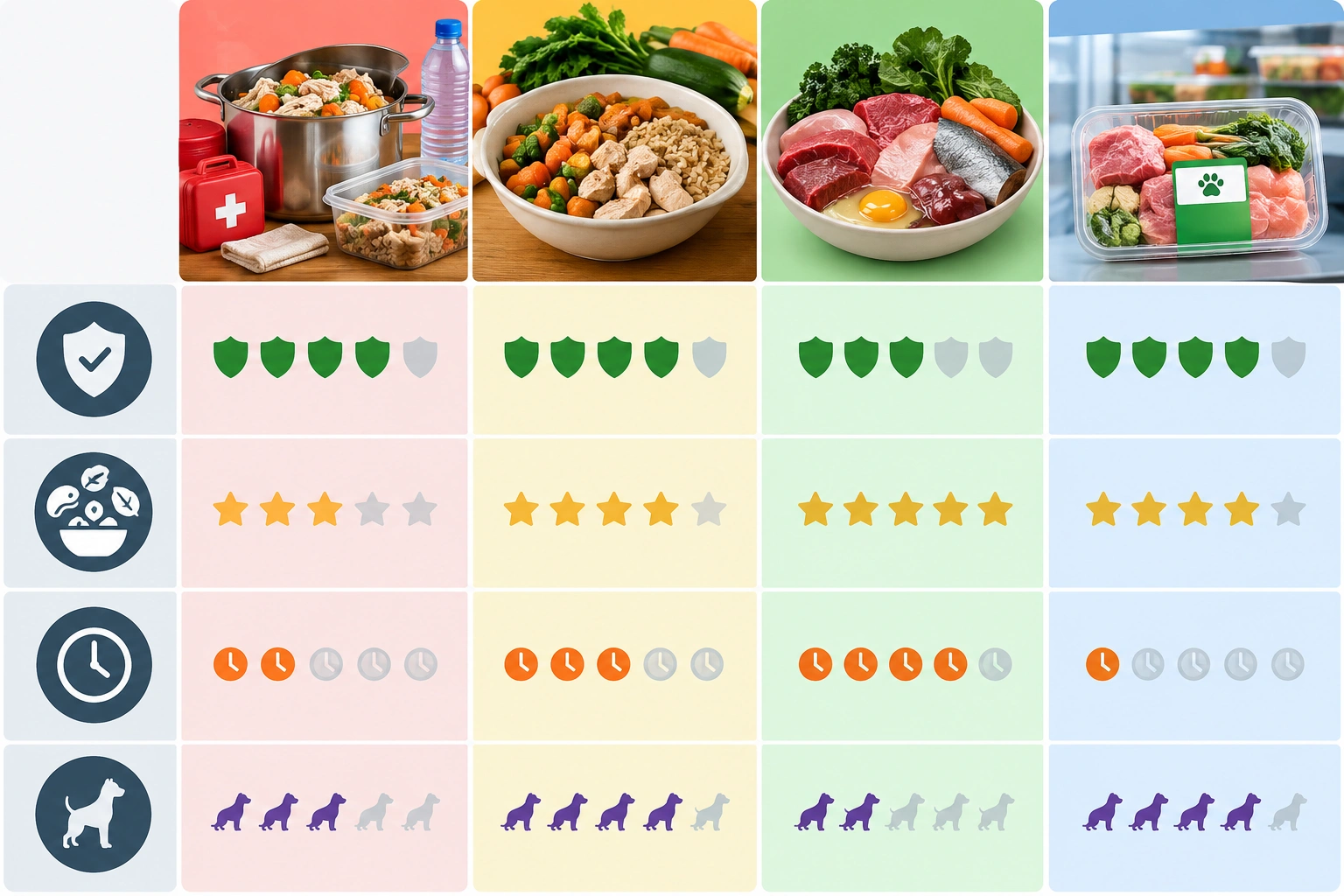
| Feeding approach | Safety | Nutritional completeness | Prep effort | Best use |
|---|---|---|---|---|
| Emergency home-cooked food | Usually safer than raw if plain and cooked | Not complete | Low | Short-term backup |
| Homemade cooked diet | Can be safe with proper formulation | Can be complete if professionally balanced | High | Long-term only with guidance |
| Raw diet | Higher food-safety concerns | Can be complete only if correctly formulated | High | Not a casual switch |
| Commercial fresh food | Often convenient and consistent | Usually complete if labeled complete-and-balanced | Moderate | Long-term option for many homes |
The biggest trade-off is control versus reliability.
- Homemade cooked food gives you ingredient control, but it also gives you the burden of balance.
- Raw feeding appeals to owners who want minimal processing, but it introduces food-safety and formulation concerns.
- Commercial fresh food can be a practical middle ground because it is designed to be complete-and-balanced, though it usually costs more than standard kibble.
In practical terms, store-bought fresh food is often easier to use correctly than home-cooked food because the recipe is already formulated for balance and portioning. Home-cooked food can work too, but it usually requires more planning, more measuring, and more attention to calcium and supplements. That is why the “fresh vs homemade” decision is often about reliability and convenience, not just ingredient quality.
For most owners, the question is not “Which one sounds healthiest?” It is “Which one can I feed correctly every day without creating a new problem?”
How to Transition Away from Kibble Without Upsetting Your Dog’s Stomach
If you are changing foods on purpose, do not switch all at once unless a veterinarian tells you to.
A gradual transition is usually easier on the gut:
– mix a small amount of the new food with the old food
– increase the new food slowly over several days
– watch stool quality, appetite, and energy
– slow down if your dog has a sensitive stomach
Sensitive dogs often do better with a longer transition than a healthy dog with a cast-iron gut. Border Collies can be surprisingly reactive to abrupt food changes, especially if they are already stressed, traveling, or working hard.
If your dog is coming from kibble to a cooked or fresh diet, keep the first meals simple. Do not introduce six “healthy” ingredients on day one. That makes it hard to know what agrees with your dog and what does not.
How Much to Feed: Portions, Frequency, and Calorie Needs
There is no safe universal portion for emergency foods because the right amount depends on body size, activity, age, and the rest of the diet.
Use these practical rules:
- Feed conservatively at first if the food is new or very bland.
- Split meals if your dog is prone to stomach upset.
- Adjust upward for active dogs that burn more energy.
- Do not overfeed rich foods like fatty meats or heavy leftovers.
A simple way to estimate portion size is to start with a small meal and then adjust based on body condition, stool quality, and how hungry the dog seems afterward. For a sedentary dog, smaller portions and fewer extras usually make more sense. For an active dog, you may need a larger total amount of food across the day, but it should still come from a balanced plan rather than random table food.
A Border Collie that is running, training, or working will often need more food than a calm companion dog, but that does not mean more table scraps. It means enough total energy from a diet that still makes sense nutritionally.
If your dog is an adult with a stable weight, a temporary emergency meal should not turn into free-feeding. Offer a measured amount, observe how the dog responds, and return to a complete diet as soon as possible.
When Homemade Feeding Becomes a Veterinary or Nutritionist Job
Some situations are not DIY territory.
Get professional input if your dog is:
– a puppy
– pregnant or nursing
– a senior with health issues
– underweight or overweight
– highly active and hard to keep in condition
– prone to digestive problems
– diagnosed with kidney disease, diabetes, pancreatitis, or food allergies
– expected to stay on homemade food long term
A veterinarian or canine nutritionist can help you avoid the common homemade-diet mistakes: too much meat, too little calcium, not enough micronutrients, and calories that do not match the dog’s needs.
If you want a broader reference point for safe feeding decisions, the American Kennel Club’s nutrition guidance is a helpful starting place for many owners.
Signs Your Dog Is Not Tolerating the New Food
If the food is not working, your dog will usually tell you.
Watch for:
– vomiting
– diarrhea
– repeated loose stool
– gas that is clearly worse than usual
– refusal to eat
– lethargy
– abdominal discomfort
– itching or skin changes after a diet switch
One loose stool after a food change is not always a disaster. Repeated vomiting, ongoing diarrhea, or a dog that stops eating is different. Stop the change and call your veterinarian if symptoms continue or worsen.
This is especially important for dogs with existing digestive issues. If you are trying to solve diarrhea with a bland diet, keep an eye on hydration and overall behavior as well as stool quality.
Expert Take: the Safest Practical Choice for Most Owners
If you need to feed your dog today, plain cooked lean meat with a simple bland starch is usually the most practical bridge, provided it is fully cooked, unseasoned, and used briefly.
If you are choosing a long-term alternative to kibble, the best option for most homes is a complete-and-balanced commercial food or a professionally formulated fresh or cooked diet. Homemade feeding can work, but only when the recipe is built to cover the nutrients dogs actually need, not just the ingredients that look wholesome.
For Border Collie owners, the main mistake is assuming an energetic dog can run on “real food” without structure. These dogs often do best on a diet that is both digestible and reliably balanced. Convenience matters, but consistency matters more.
If you remember only one thing, make it this: emergency feeding and permanent feeding are not the same job. Treat them differently, and you’ll make better decisions for your dog’s stomach, energy, and long-term health.
FAQ
What can I feed my dog right now if I have no dog food?
Use a plain, fully cooked, unseasoned food you already have, such as lean meat, rice, eggs, or plain pumpkin. Keep it simple and temporary.
Can I give my dog human food instead of dog food every day?
Only if the diet is designed to be complete and balanced for dogs. Random human food or table scraps are not a safe everyday replacement.
Is chicken and rice enough for a dog long term?
No. It can work as a short-term bland meal, but it does not reliably provide complete nutrition on its own.
Is raw food better than cooked food?
Not automatically. Raw feeding has food-safety and balance concerns, so it should not be treated as a casual upgrade.
When should I call a vet?
Call if your dog is vomiting, has ongoing diarrhea, refuses food, seems weak, or has a medical condition that affects diet.
Can Border Collies eat the same alternatives as other dogs?
Yes, but active Border Collies may need more calories than a low-activity dog, so portions and energy intake matter more.
How long can a dog go without dog food?
A short gap may be tolerated by some healthy adult dogs, but puppies, seniors, underweight dogs, and dogs with medical problems should not go without food for long. If your dog misses more than a day of eating, or sooner if they seem unwell, call your veterinarian.
Should I switch foods suddenly if my dog runs out of kibble?
If you are using a temporary emergency meal, keep it bland and brief. If you are changing diets long term, transition gradually when possible.
Can I feed my dog vegetables instead of dog food?
Vegetables can be part of a meal, but they should not replace a complete diet on their own.
What if my dog has a sensitive stomach?
Use the simplest plain foods you can, avoid rich or seasoned ingredients, and slow the transition down. If symptoms persist, involve your vet.
What if my dog has diarrhea?
Use a bland, temporary feeding approach and monitor hydration. If diarrhea continues, worsens, or comes with vomiting or lethargy, contact your veterinarian.
