
Why Dogs Get Goopy Eyes: What’s Normal, What Isn’t, and What to Do Next

A little eye crust is common in dogs. A lot of eye goop is not. The difference matters, because the same symptom can indicate harmless tear residue or a foreign body, infection, dry eye, or a painful corneal injury.
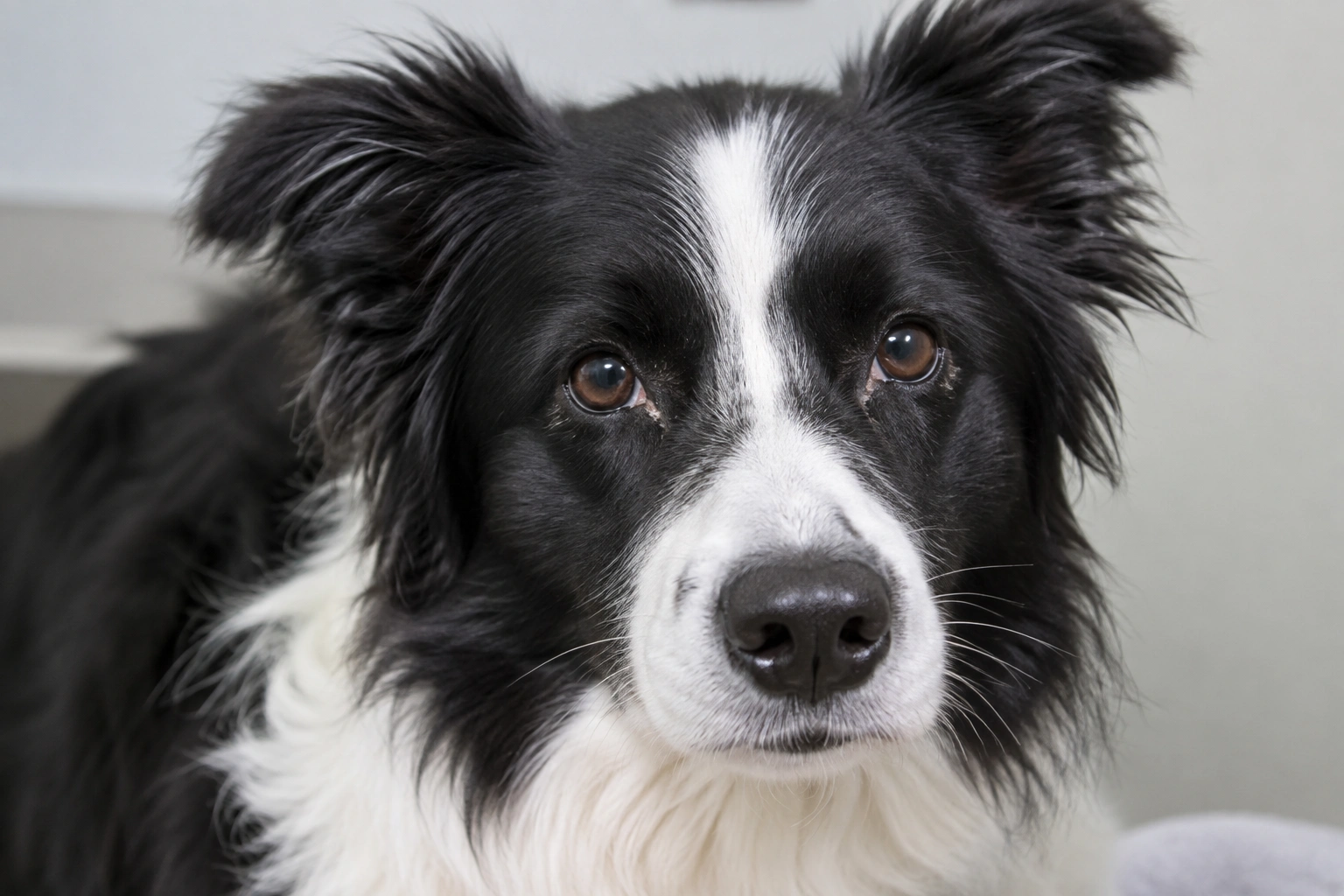
For Border Collie owners, this is worth paying attention to. Border Collies are active, outdoor dogs. They run through grass, brush past dust, and often get a face full of the environment. That makes mild irritation more likely. It also means you should not ignore a change that looks small but keeps coming back.
What “goopy eyes” usually means
“Goopy eyes” is a catch-all phrase owners use for discharge that collects at the inner corners of the eyes or dries into crusts around the lashes. It may look clear, white, brown, yellow, green, sticky, watery, or thick.
A small amount of eye discharge can be normal. Tears naturally drain through ducts at the inner corner of each eye, and a little residue can build up there. That residue is usually made from dried tears, oil, mucus, dead cells, dust, and other debris. It often shows up most clearly after sleep or a nap, when the dog has not blinked away the buildup.
The key question is not, “Does my dog have any discharge?” It is, “Has the amount, color, texture, or pattern changed?”
Normal eye discharge vs. abnormal discharge: the decision rule
Use four simple checks.
1) How much is there?
A tiny amount that wipes away easily and does not return quickly is usually less concerning than discharge that keeps reappearing, mats the fur, or coats the whole eye area.
2) Is it one eye or both?
Both eyes can point more toward allergies, general irritation, or tear drainage issues. One eye is more suspicious for a foreign body, scratch, ulcer, or infection in that eye.
3) What does it look like?
Clear and watery is often less concerning than thick yellow, green, bloody, or foul-smelling discharge.
4) Is the dog uncomfortable?
Redness, squinting, pawing, rubbing, swelling, cloudiness, or avoiding light changes the picture fast. Those signs suggest pain or deeper eye disease, not just surface debris.
A useful rule: if the discharge is mild, brief, and your dog acts normal, you can usually clean it and watch closely. If it is persistent, worsening, or paired with pain, book a veterinary exam.
What the color and consistency can tell you
Here is the practical version owners can actually use. Color alone is not enough to diagnose the cause; pain, redness, and whether one or both eyes are affected are often more important clues.
| Discharge type | What it may mean | How urgent is it? |
|---|---|---|
| Clear, watery | Mild irritation, allergies, normal tear drainage | Monitor if brief and the eye looks comfortable |
| White or pale mucus | Irritation, dry eye, mild inflammation | Watch closely if it keeps returning |
| Brown or reddish-brown crust | Dried tears, tear staining, chronic overflow | Not always urgent, but chronic staining deserves a look |
| Yellow or green | Infection, significant inflammation, sometimes a foreign body | Vet visit recommended |
| Thick, sticky, ropey discharge | Dry eye, infection, or ongoing irritation | Needs veterinary assessment |
| Bloody discharge | Trauma, scratch, ulcer, or more serious eye problem | Urgent vet care |
Brown staining around the eyes is not always infection. It is often related to chronic tear overflow, with pigment left behind as the tears dry. The key concern is change over time: if the staining is new, heavier than usual, or paired with redness or squinting, don’t assume it is cosmetic.
Yellow or green discharge deserves more caution. That color often points to inflammation or infection rather than ordinary tear residue.
Common causes of goopy eyes in dogs
Allergies
Allergies can cause watery eyes, mild redness, and discharge in both eyes. You may also notice sneezing, seasonal flare-ups, or symptoms that get worse after walks in pollen-heavy grass.
The trade-off here is that allergies can look mild but still be annoying enough to keep coming back. If the discharge is seasonal and both eyes are involved, allergies move higher on the list. If the eye is painful or only one side is affected, look beyond allergies.
Irritation from dust, grass, or debris
Active dogs often get a little grit in the eye. A stray hair, dust, or bit of plant material can trigger tearing and a temporary goopy look.
This is one reason the symptom can appear after a hike, a zoomy session in the yard, or a run through tall grass. If it clears quickly and the eye is otherwise calm, surface irritation is possible. If the dog keeps squinting, you may be dealing with something stuck in the eye or a scratch on the cornea.
Foreign body
A foreign body is anything that should not be in the eye: grass seed, dirt, a tiny twig, or similar debris. This often affects one eye and can cause sudden tearing, redness, blinking, and pawing.
Do not keep poking around if your dog is clearly uncomfortable. A stuck object or a corneal scratch can worsen if you keep manipulating the eye.
Conjunctivitis
Conjunctivitis is inflammation of the tissue around the eye and is a common reason dogs develop goopy discharge. It can be caused by infection, irritation, allergies, or another underlying problem.
If you want a deeper look at conjunctivitis specifically, see our guide on do dogs get pink eye. That article covers the signs that make conjunctivitis more likely and when it needs treatment.
Dry eye, or keratoconjunctivitis sicca
Dry eye happens when the eyes do not produce enough tears. That can lead to thick, sticky discharge, discomfort, and repeated irritation because the eye is not being properly lubricated.
This is not a small nuisance if it keeps happening. Dogs with dry eye often need veterinary diagnosis and ongoing treatment. A vet may use the Schirmer Tear Test to measure tear production.
Blocked tear ducts
Tears normally drain through ducts at the inner corner of each eye. If those ducts are blocked, tears can overflow and create chronic discharge or staining.
This tends to look more like constant watering than sudden infection. One clue is a dog with recurring tear overflow but otherwise not much pain. Even then, chronic blockage should be checked rather than dismissed.
Entropion
Entropion is when the eyelid rolls inward and the lashes rub against the eye. That rubbing can create constant irritation, tearing, and discharge.
This matters because the problem is mechanical. Cleaning the eye may reduce the mess, but it does not fix the eyelid shape. If a dog keeps having one eye that waters, squints, or looks irritated, entropion belongs on the vet’s list.
Infection or corneal ulcer
Infections and corneal ulcers can both cause discharge, but they usually come with more obvious discomfort. Squinting, redness, pawing, and cloudiness raise concern.
A corneal ulcer is especially important because the surface of the eye is damaged. That is not something to “wait and see” for several days.
When goopy eyes are urgent
Some signs should move you from home care to a veterinary visit quickly.
Seek prompt care if you notice:
- Squinting or keeping the eye closed
- Pawing or rubbing at the eye
- Redness that is not fading
- Swelling around the eye
- Cloudiness or a bluish haze over the eye
- Bloody discharge
- Thick yellow or green discharge
- A sudden change after possible trauma
- Sensitivity to light
- Obvious pain
Why this matters: painful eye conditions can worsen quickly, and the dog cannot tell you whether vision is changing. If you see a sudden change plus discomfort, treat it as more than routine goop.
Some eye problems can become serious enough to threaten vision. Glaucoma is one possible cause of a painful, red eye with discharge, but it is not a typical explanation for simple goopy eyes. That is one reason painful eye symptoms should not be brushed off.
For broader dog-health guidance on eye symptoms, the ASPCA and VCA Hospitals both offer useful owner-focused information on when eye signs need veterinary attention.
How to clean a dog’s eyes safely at home
If the discharge is mild and your dog seems comfortable, cleaning the eye area can help.
Use this approach:
- Wash your hands first.
- Use sterile saline solution or a veterinarian-recommended eye rinse.
- Moisten clean gauze or a soft cotton pad.
- Wipe gently from the inner corner outward.
- Use a fresh pad for each eye.
- Stop if the dog flinches, pulls away, or seems painful.
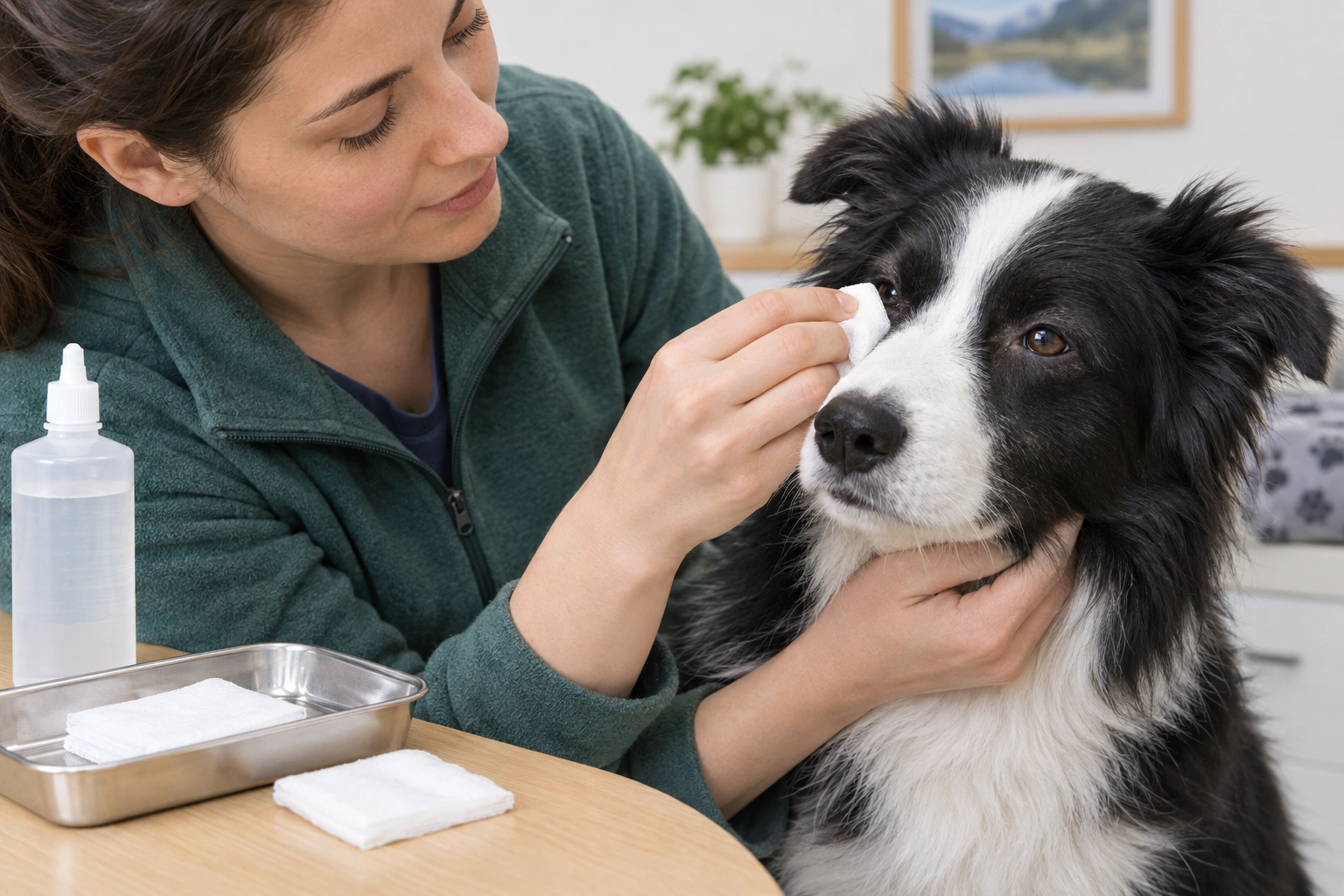
The goal is to remove discharge without scraping the skin or pushing debris back into the eye. Gentle wiping is enough for simple crusts. You are not trying to “dig out” anything.
If the discharge returns within hours, or if cleaning causes obvious discomfort, that is a sign the problem is not just surface buildup.
What not to use on a dog’s eyes
This is where owners sometimes make a small problem worse.
Do not use:
- Human eye drops unless a veterinarian specifically approves them
- Contact lens solution
- Hydrogen peroxide
- Alcohol
- Harsh soaps or shampoos
- Rough cloths or paper towels that can scratch
Also avoid repeatedly rubbing the eye to “get it all out.” If there is a scratch, foreign body, or ulcer, rough handling can increase irritation.
If you are unsure what is safe, sterile saline is the conservative choice while you arrange a vet visit.
Why Border Collies deserve extra attention
Border Collies are not known for a specific inherited eye-discharge problem, but their active lifestyle means scratches, debris, and irritation are realistic concerns.
A Border Collie that comes in from the field with a little clear crust in both eyes may simply need cleaning. A Border Collie that keeps one eye half-closed after a run through brush is different. That pattern makes a foreign body, scratch, or corneal irritation more likely.
The practical takeaway: in a Border Collie, recurring discharge is worth tracking carefully because the breed’s lifestyle can hide the early signs of a problem. If the same eye keeps getting goopy, or if squinting appears with it, don’t assume it is just dirt.
How veterinarians diagnose and treat the cause
A vet usually starts by looking at the eye closely and checking for redness, ulcers, foreign material, or eyelid problems. Depending on what they see, they may use:
- Fluorescein stain to look for a corneal ulcer
- Tear production testing such as the Schirmer Tear Test
- Examination of the eyelids and tear ducts
- Checks for infection or inflammation
Treatment depends on the cause, not just the discharge.
That may mean:
– Prescription eye drops for infection or inflammation
– Lubricating medication for dry eye
– Removing a foreign body
– Managing allergies
– Treating eyelid abnormalities such as entropion
This is why “goopy eye” is not a diagnosis. It is a symptom. Two dogs can have the same crusty discharge for completely different reasons.
When home care is reasonable and when it is not
Home care is reasonable when:
– The discharge is small in amount
– It is clear or only lightly crusty
– Both eyes are otherwise comfortable
– Your dog is eating, acting normal, and not rubbing the eye
– The issue improves after gentle cleaning
Get a vet exam when:
– The discharge is yellow, green, bloody, or thick and sticky
– Only one eye is affected and it keeps happening
– The eye is red, swollen, or painful
– Your dog is squinting or holding the eye closed
– The discharge keeps returning after cleaning
– There is cloudiness or a change in vision behavior
A useful rule is to give mild, comfortable discharge a short monitoring window. If it does not improve quickly, or if any pain signs appear, stop treating it like routine eye goop.
FAQs
Is a little eye discharge normal in dogs?
Yes. A small amount of clear or slightly reddish-brown residue can be normal, especially after sleep. What matters is whether the amount stays mild and the eye remains comfortable.
Why is my dog’s eye goopy only in the morning?
That often happens because tears and debris collect while the dog is asleep. If the discharge is small and consistent, it may be normal. If it becomes thick, colored, or painful, it needs attention.
Does yellow or green discharge always mean infection?
Not always, but it is concerning enough to treat as a veterinary problem until proven otherwise. Infection is one possibility, but so are inflammation, a foreign body, or another eye condition.
Can I flush my dog’s eye with water?
Plain water is not ideal. Sterile saline is safer for gentle cleaning because it is designed for this kind of use. If your dog is painful or the eye looks injured, skip home flushing and call the vet.
Should I wait a few days to see if it clears up?
Only if the discharge is mild, clear, and your dog is otherwise comfortable. If there is squinting, redness, swelling, blood, or thick discharge, waiting is the wrong trade-off.
Are Border Collies more likely to get eye problems?
They are not known for a specific inherited eye-discharge problem, but their active lifestyle means scratches, debris, and irritation are realistic concerns. Recurring discharge in a Border Collie deserves a closer look.
Final takeaway
Goopy eyes in dogs are common, but common does not always mean harmless. A tiny amount of clear crust can be normal. Thick, colored, smelly, painful, or one-sided discharge is different and should be taken seriously.
One simple decision rule: if the discharge changes and the eye is red, painful, or only affected on one side, skip the wait-and-see approach and call your veterinarian.