
How Old Is Considered a Senior Dog? A Practical Age Guide for Border Collie Owners

If you’re trying to figure out how old is considered a senior dog, the honest answer is that there isn’t one universal age. A dog becomes “senior” based mostly on size, breed, and how their body is aging—not just the number on the calendar.
That matters because a dog can look fit, bright, and eager to work while still being old enough to benefit from senior-style care. In Border Collies especially, the change can be subtle. They often stay active longer than many breeds, so owners miss the early signs until stiffness, slower recovery, or weight changes become obvious.
The practical goal is not to label your dog too early or too late. It’s to notice when preventive care, diet, exercise, and monitoring should shift.
What Counts as a Senior Dog?
A senior dog is usually an adult dog that has entered the later stage of life, when age-related changes become more likely and routine care needs to become more proactive. That does not mean the dog is “old” in a fragile sense. Many senior dogs still hike, train, and enjoy full lives.
The key point is this: senior status is a guideline, not a hard switch. Veterinarians use age ranges because aging pace differs by size and breed. A Labrador and a Chihuahua may both be 8 years old, but they are not usually at the same stage of life.
A useful way to think about it is this:
- Age tells you when to pay attention
- Body condition, mobility, and behavior tell you what to do next
The old “seven dog years equals one human year” idea is too blunt to be useful. It misses the fact that dogs mature quickly early in life and then age at different rates later on. That’s why veterinary guidance tends to use size-based ranges instead.
For a broader age perspective, you can also read this practical guide on when a dog is considered old.
Senior Age by Dog Size: Small, Medium, Large, and Giant Breeds
Here is the simplest rule of thumb: smaller dogs usually become seniors later than larger dogs.
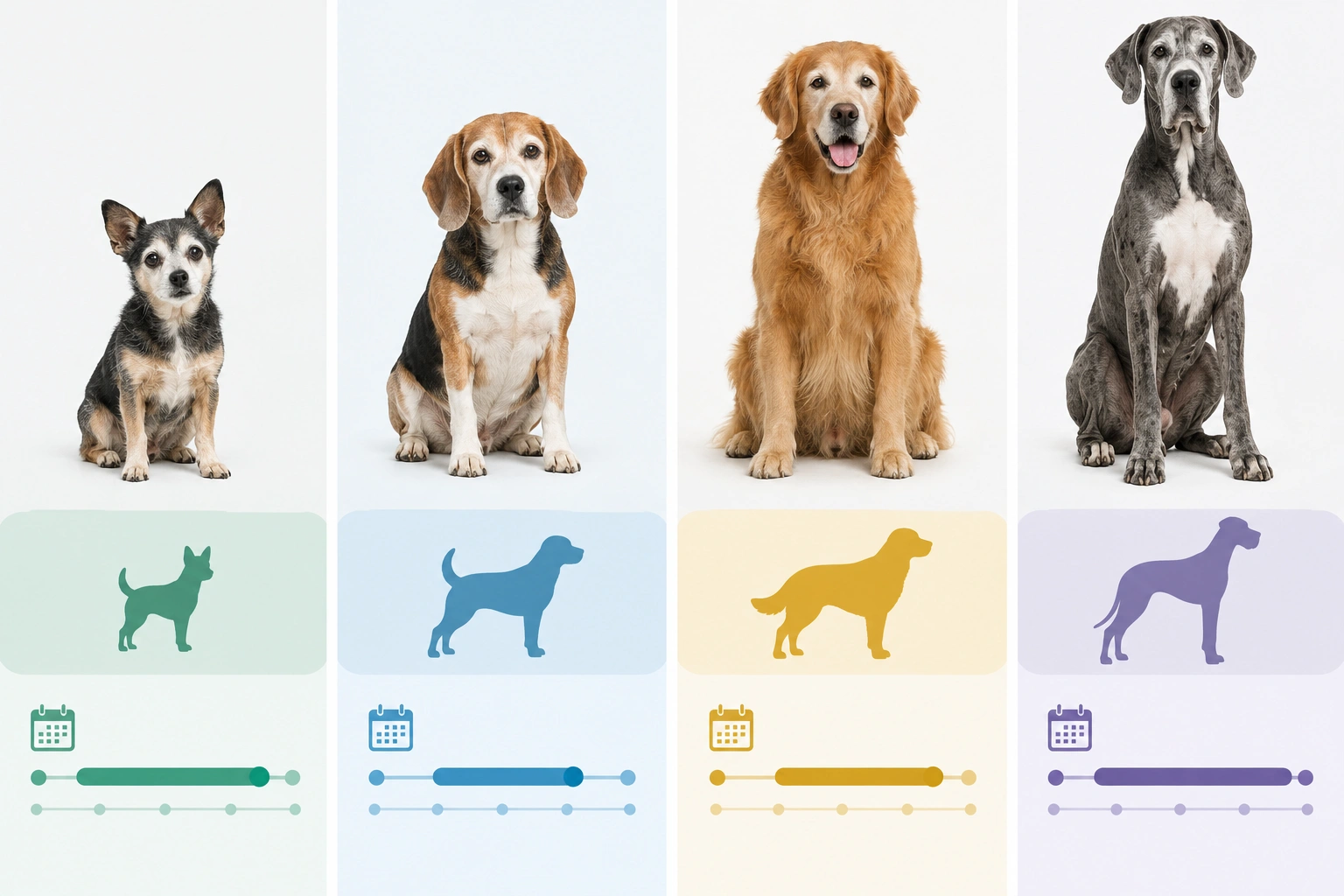
| Dog size | Typical senior age range |
|---|---|
| Small breeds | 10–12 years |
| Medium breeds | 8–9 years |
| Large breeds | 6–7 years |
| Giant breeds | 5–7 years, sometimes as early as 5 |
Those ranges line up with veterinary guidance showing that small breeds often reach senior status around 10–12 years, medium breeds around 8–9 years, and large or giant breeds around 6–7 years. Some giant-breed dogs may be considered senior as young as 5 years old.
That spread is why size is the most useful first filter. A 7-year-old Great Dane is often already in senior territory. A 7-year-old small terrier may still be in middle adulthood.
Why size changes the timeline
Larger dogs generally age faster and tend to have shorter lifespans than smaller dogs. That doesn’t mean a large dog is unhealthy by default; it means the body tends to show age-related wear sooner.
Smaller dogs often stay active longer, but “active” is not the same as “not aging.” A small dog may still need dental care, bloodwork, and weight monitoring well before they look elderly.
Where Border Collies fit
Border Collies are typically medium-sized dogs, so many fall into the 8–9 year senior range. That said, individual dogs vary. A lean, well-conditioned Border Collie may look youthful at 8. Another may already show early stiffness, lower stamina, or slower recovery after exercise.
For Border Collie owners, the safest mindset is simple: watch the dog, not just the birthday.
How Breed, Genetics, and Lifestyle Change the Timeline
Two dogs of the same size can age very differently. Genetics, body weight, nutrition, environment, and overall health all affect how quickly a dog shows senior changes.
A fit dog with a healthy weight and good muscle tone may stay mobile longer than a dog that has carried extra weight for years. That extra load matters because it increases stress on joints, back, and heart.
Lifestyle also matters. A dog that has had consistent exercise, routine veterinary care, and dental attention may age more smoothly than one that has had frequent weight swings or chronic inflammation.
The trade-off: “active” does not always mean “young”
Border Collies are a good example. They often keep working, running, and learning well into later life. That can make owners delay senior care because the dog still seems sharp and athletic.
But energy can hide aging. A Border Collie may still want a ball session while quietly developing:
- slower recovery after hard exercise
- mild stiffness after rest
- less tolerance for cold or wet weather
- subtle changes in sleep patterns
- more sensitivity to joint strain
That is why older active dogs should still be treated as candidates for senior screening on schedule, even if they seem “fine.”
Signs Your Dog Is Entering Senior Years
Aging rarely begins with a dramatic collapse in activity. More often, it shows up in small changes that are easy to dismiss.
Physical signs
Watch for:
- stiffness after naps or first thing in the morning
- slower rising from the floor
- reluctance to jump into the car or onto furniture
- less enthusiasm for long walks or repeated fetch sessions
- heavier breathing after exercise that used to feel easy
- weight gain or weight loss without a clear reason
- cloudy eyes, graying muzzle, or reduced hearing
Behavioral signs
Behavior often changes before owners connect the dots. You may notice:
- sleeping more deeply or for longer stretches
- less interest in play that used to be exciting
- needing more encouragement to get moving
- irritability when touched around the hips, back, or neck
- wandering at night or seeming less settled
- slower response to cues they used to know instantly
Normal aging vs a possible problem
A little slowing down can be part of aging. Sudden changes are not. If your dog goes from “a bit slower” to “clearly uncomfortable” in a short time, treat that as a veterinary issue, not a normal age milestone.
Aging should look gradual. Pain, limping, collapse, coughing, or major appetite change should not be written off as “just getting old.”
Senior Dog vs. Geriatric Dog: What’s the Difference?
These terms are related, but they are not identical.
- Senior dog: an older adult dog entering the later stage of life
- Geriatric dog: a dog in advanced age, often needing more intensive monitoring and support
Think of “senior” as the stage when prevention matters more, and “geriatric” as the stage when age-related limitations often become more pronounced.
A 7-year-old large-breed dog may be senior, but not geriatric. A 12-year-old medium dog may still be fairly functional, yet some may already need geriatric-level management if arthritis, dental disease, or organ changes are present.
A practical threshold is when age-related changes start affecting daily comfort or function—for example, if your dog needs mobility support, is slowing down noticeably, or benefits from more frequent veterinary monitoring. At that point, geriatric-style care may be appropriate even if the dog still seems fairly active.
The label matters less than the care plan. A dog becomes “geriatric” when age-related changes begin to affect daily comfort, mobility, or medical needs more substantially.
What Changes to Make in Vet Care and Screening
Once a dog is in senior years, preventive care should become more deliberate.
Senior wellness exams
Many veterinarians recommend more frequent checkups for older dogs, often every 6 months instead of once a year. That shorter interval helps catch changes earlier, when they are easier to manage.
A practical rule: if your dog is in the senior range and has arthritis, weight changes, chronic disease, or other ongoing concerns, move from annual exams to twice-yearly exams. If your senior dog is still stable and low-risk, your vet may still be comfortable with annual visits, but many older dogs benefit from the 6-month schedule.
This is especially useful for dogs that still seem healthy. Early problems often show up first in routine exams, not in obvious symptoms at home.
Bloodwork and screening
Senior screening commonly includes bloodwork, and sometimes urine testing or other diagnostics depending on the dog’s history. The purpose is to look for issues that do not always show visible signs right away.
That can help identify changes in:
- kidney function
- liver function
- blood sugar
- thyroid levels
- inflammation or infection
- dehydration or anemia
For many dogs, baseline senior bloodwork and urinalysis are reasonable once they enter the senior age range. Dogs with higher risk—such as large and giant breeds, dogs with weight loss or gain, dogs on long-term medication, or dogs with kidney, urinary, endocrine, or heart concerns—may need screening earlier or more often. Your veterinarian can help decide what makes sense based on age and risk, not just the calendar.
Dental checks matter more than many owners realize
Dental disease becomes more common with age and can affect comfort, appetite, and overall health. A dog that is “just a little picky” about hard food may actually be dealing with mouth pain.
If your senior dog has bad breath, tartar buildup, drooling, or chewing on one side, a dental exam is worth prioritizing.
For general breed and care context, the AKC’s dog health resources are a useful starting point, especially when you want mainstream guidance that stays practical.
When to Adjust Food, Weight Management, and Supplements
Not every older dog needs a food labeled “senior.” That label can be helpful, but it is not automatically necessary.
Use body condition, medical issues, and vet guidance
Consider changing diet when you see one or more of these:
- weight gain with no change in appetite
- weight loss
- softer stools or digestive sensitivity
- decreased muscle tone
- lower daily activity
- vet advice tied to kidney, joint, or weight concerns
A dog that is aging well and maintaining ideal body condition may do fine on a current diet with portion adjustments. A dog that is gaining weight should not just be switched to a senior formula and left alone; the portion size still matters.
When you talk to your vet about food, ask whether your dog needs:
– fewer or more calories
– higher protein to help preserve muscle
– a prescription diet for a medical issue
– a senior dog food, or simply a better portion plan
The trade-off with senior diets
Senior formulas often aim for easier calorie control, joint support, or digestibility. That can help some dogs. But if a dog is thin, losing muscle, or has a medical condition, a generic senior food may not be the best fit.
That’s why food changes should follow the dog’s body condition, medical needs, and your veterinarian’s guidance—not age alone.
Supplements: useful in some cases, not automatic
Joint supplements, omega-3s, and other products may be discussed for older dogs, but they are not universal fixes. If your dog has pain, stiffness, or a medical issue, ask your veterinarian before adding anything. The goal is to support the dog safely, not stack products and hope for the best.
How to Adapt Exercise and Mobility Support Safely
Senior dogs still need movement. In many cases, the mistake is not too much exercise—it is too little.
Keep the dog moving, but reduce strain
For an older Border Collie or other active dog, the best adjustment is often to change how they exercise, not whether they exercise.
Helpful shifts include:
- shorter but more frequent walks
- fewer high-impact leaps or sharp turns
- controlled fetch instead of endless sprinting
- warm-up time before hard play
- rest days after intense activity
This approach protects joints while preserving muscle and mental health.
Why this balance matters
Too much impact can aggravate arthritis or soft-tissue strain. Too little activity can lead to stiffness, weight gain, and muscle loss. Senior care is often about finding the middle ground where the dog stays functional without being pushed past recovery.
A dog that is sore after a normal walk is telling you something. A dog that is restless and stiff after too much inactivity is telling you something too.
Mobility support can be simple
You do not need to overcomplicate it. Non-slip rugs, a supportive bed, ramps for cars, and keeping nails trimmed can make daily movement easier. Small changes often help more than dramatic ones.
Border Collie Senior-Age Considerations
Border Collies are a special case only in the sense that they can stay mentally and physically engaged for a long time. That can hide aging.
An 8-year-old Border Collie may still look and act like a younger dog in many ways. But that is exactly when owners should become more observant about:
- recovery after exercise
- joint stiffness after rest
- changes in drive or focus
- weight creeping up if activity drops even slightly
- soreness after rough terrain or repetitive work
Because Border Collies are so good at pushing through discomfort, they may continue performing even when they are no longer fully comfortable. Owners often notice the change first in the “after” period—how the dog stands up later, how long they sleep, or how they move the next morning.
A Border Collie does not need to be treated as frail to receive senior care. In many cases, the best care is simply earlier monitoring, better weight control, and smarter exercise choices.
When Aging Signs May Be More Than Normal Aging
Some symptoms should not be assumed to be routine senior changes.
See a veterinarian if your older dog shows:
- sudden or worsening limping
- repeated coughing
- unexplained weight loss
- vomiting or diarrhea that keeps returning
- fainting, collapse, or extreme weakness
- major appetite changes
- confusion, pacing, or disorientation
- obvious pain when touched or moved
These signs can overlap with aging, but they can also point to treatable medical problems. The safer move is to check early rather than wait and see.
Senior Dog Care Checklist
Use this as a practical next-step list once your dog enters senior age:
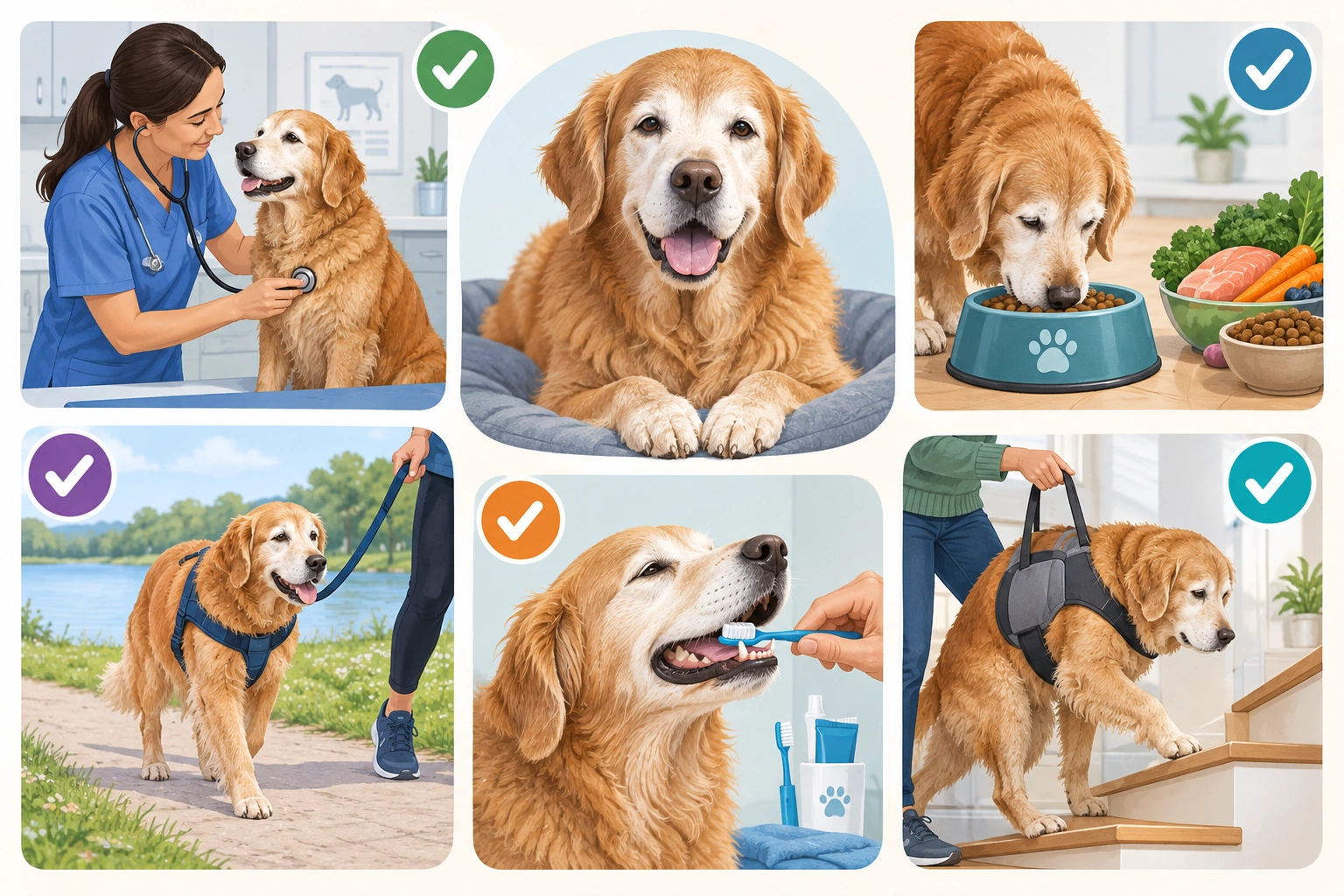
- Confirm your dog’s size-based senior range.
- Schedule senior wellness exams more often if your vet recommends it.
- Ask whether bloodwork or urine testing is appropriate.
- Track weight and body condition every month.
- Watch for stiffness, slower recovery, or behavior changes.
- Review food portions before changing formulas.
- Keep exercise consistent, but reduce impact and overexertion.
- Prioritize dental care.
- Add mobility support at home if needed.
- Recheck anything that seems “a little off” rather than assuming it is normal aging.
For owners who want a broader reference on senior-dog care, PetMD’s senior dog guide is a solid general overview, and the VCA Hospitals pet health library is another reliable place to compare care topics with your veterinarian’s advice.
When to See a Veterinarian or Certified Trainer
See a veterinarian promptly if your dog’s aging seems sudden, painful, or uneven. A certified trainer can also help if an older dog becomes less responsive, more reactive, or less confident during walks or handling. In senior dogs, behavior changes are sometimes tied to discomfort, hearing loss, or reduced vision, so training support works best when it is paired with medical screening.
The main decision is not whether your dog is “officially old.” It is whether their current age and body changes call for a more careful plan. If the answer is yes, that is the right time to act.