
When Is a Dog Considered Old? A Practical Age Guide for Border Collie Owners

If you want the short answer, here it is: a dog is usually considered senior somewhere between 6 and 12 years old, depending on size and breed. Small dogs often enter senior years around 10–12, medium breeds around 8–9, and large or giant breeds around 6–7. These are general veterinary guidelines, not hard cutoffs, and they can shift based on health, lifestyle, and your veterinarian’s advice.
For Border Collie owners, that usually means your dog is not “old” at 7 in the same way a giant breed might be. Many Border Collies are still firmly middle-aged at 7, but that is also the age when smart owners start watching more closely for stiffness, dental issues, weight gain, and slower recovery after exercise. If your dog reaches the senior range, schedule a senior wellness exam and review weight, dental health, and mobility with your vet.
Age matters. Function matters more.

A dog that is 9 but still moving well, holding a lean body condition, and recovering normally after activity may need less senior-style management than a 7-year-old who is already stiff in the morning. That is why the best answer is not just a number — it is a combination of age, breed size, and day-to-day function.
Quick answer: what age is a dog considered old?
Think in three stages:
- Adult: most dogs are in their adult years after they finish growing, usually from about 1 to 2 years old depending on breed size.
- Senior: age when routine monitoring should become more deliberate, often around 10–12 years for small breeds, 8–9 years for medium breeds, and 6–7 years for large and giant breeds.
- Geriatric: the later senior stage, when age-related changes tend to be more noticeable and vet monitoring often becomes more important.
That framework is useful because it helps you avoid two common mistakes: treating every older dog as fragile, or waiting until obvious decline before making any changes.
A practical way to use it is this: if your dog is close to the senior threshold for its size, begin acting like a senior owner even if the dog still looks youthful. That usually means more attention to weight, teeth, mobility, and regular vet checks.
For a general veterinary overview of senior-age ranges, VCA Hospitals has helpful owner education on aging dogs, and the AKC’s dog care resources also explain how size affects aging.
Why “old” depends on breed size, not just calendar age
The biggest reason dog aging is confusing is that dogs do not all age at the same pace. Smaller dogs generally age more slowly than large-breed dogs, while giant breeds tend to reach senior status earliest.
That difference shows up in real life:
- A 12-year-old small dog may still be active enough to walk comfortably and play in short bursts.
- A 7-year-old large dog may already show reduced stamina, joint stiffness, or age-related dental wear.
- A giant breed can look “old” at an age when a small dog is still middle-aged.
Veterinary guidance commonly places small breeds in the 10–12 year senior range, medium breeds around 8–9 years, and large or giant breeds around 6–7 years. These are broad veterinary guidelines rather than definitive cutoffs, and individual health status matters too.
That seven-year rule is too blunt to be useful. It hides the real pattern: body size affects aging speed. Bigger dogs tend to face more stress on joints and tissues, and they often move into senior care earlier.
A practical takeaway: if you own a larger dog, don’t wait for a dramatic slowdown before you start senior monitoring. By the time the slowdown is obvious, the dog may already have been compensating for discomfort for months.
When a Border Collie is considered old
Border Collies usually fall into the medium-sized dog category, so a useful starting point is to think of them as entering senior years around 8 to 9 years old. Some fit Border Collies still look and act quite young at that age. Others begin showing age-related changes earlier or later depending on genetics, workload, and overall health.
Working Border Collies and companion Border Collies can age a little differently in how they look and act. A dog that has spent years doing regular herding or other demanding work may show wear in stamina or joints sooner, while a less active pet may appear to age more gradually. Activity level can influence how visible those changes are, even when the calendar age is the same.
Here is the practical Border Collie version:
- Around 7 years old: often middle-aged, but worth monitoring closely
- Around 8 to 9 years old: commonly a senior monitoring stage
- Around 10 years old and beyond: many Border Collies need more deliberate senior care
That does not mean a 7-year-old Border Collie is “old” in the fragile sense. It means this is the point where you should stop assuming every change is just normal life. If your dog is slower to warm up, less eager after long walks, or more likely to nap after activity, that may be the first clue that senior changes are starting.
Border Collies are especially easy to misread because they often keep a bright expression and strong work drive even when their bodies are beginning to age. A dog may still chase a ball with enthusiasm while also taking longer to recover, hesitating on stairs, or showing stiffness after rest. Those small changes matter.
If you want a Border Collie-specific senior guide, this article pairs well with our internal references on how old a dog is considered a senior and what age is a senior dog considered.
Senior vs. geriatric: the difference and why it matters
“Senior” and “geriatric” are not the same thing.
A senior dog is usually entering the age range where preventive care should become more proactive. You are looking for early changes and adjusting routines before problems snowball.
A geriatric dog is further along in the aging process. At this stage, small health issues can have a bigger effect on daily comfort and function, so monitoring tends to become more frequent and more detailed.
The distinction matters because it changes how you respond:
- Senior stage: review diet, body weight, exercise, and dental care
- Geriatric stage: watch more closely for pain, mobility loss, appetite changes, confusion, or chronic disease signs
In other words, “senior” is often the time to prevent decline. “Geriatric” is the time to manage it more actively.
A dog does not need to be geriatric before you take aging seriously. In fact, the best time to make small adjustments is usually the senior stage, while the dog is still comfortable enough to benefit from them.
Signs your dog is entering senior years
Most aging dogs do not suddenly become old. They change in small ways first.
Look for these common signs:
Physical signs
- Slower to rise after resting
- Stiffness, especially after sleep or hard exercise
- Reduced stamina on walks
- More weight gain, or sometimes muscle loss
- Greying around the muzzle
- Coarser coat or slower coat recovery
- Dental wear, bad breath, or chewing on one side
- More trouble with stairs, jumping, or slippery floors
Behavioral signs
- More sleeping or longer recovery after activity
- Less enthusiasm for very long outings
- Increased irritability when touched in sore areas
- Confusion in familiar places
- Changes in house training habits
- New clinginess or, in some dogs, more withdrawal
Not every change means disease. Some are part of normal aging. But the pattern matters. If several changes show up together, your dog is probably moving into senior territory even if the calendar age seems young.
A useful rule: if your dog still wants to move but seems to “pay for it” afterward, that is often an early aging clue. The dog may not quit activity, but recovery takes longer.
Normal aging vs. a health problem: what should not be ignored
This is where owners can save their dogs a lot of discomfort. Some things are age-related. Some are not.
Normal aging often looks like:
– Slightly slower movement
– Longer naps
– Mild stiffness that improves after warming up
– More sensitivity to intense exercise
But these signs deserve a vet check, not just a shrug:
- Sudden limping
- Rapid weight loss
- Appetite loss
- Increased thirst or urination
- Persistent bad breath
- New accidents in the house
- Major behavior changes
- Confusion or disorientation
- Coughing, vomiting, or repeated digestive upset
The key question is not “Is my dog old?” It is “Is this change gradual and expected, or new and abnormal?”
A dog that is simply aging usually changes slowly. A dog that is sick often changes in a way that is more sudden, more obvious, or more uneven. For example, a Border Collie that just seems to be slowing down over a year may be aging normally. A Border Collie that suddenly stops wanting stairs, pants at rest, or guards a shoulder or hip is more likely dealing with pain or illness.
Dental disease is a common example of a problem that owners mistake for old age. Bad breath, chewing on one side, dropping food, or avoiding hard kibble can all point to mouth pain rather than “just getting old.”
How to decide whether your dog should be treated as a senior
If you want a practical decision framework, use four questions.
1. What is the dog’s size and breed?
Small dogs usually become seniors later. Large and giant breeds usually become seniors earlier. Border Collies generally fit the medium-dog timeline.
2. What is the dog’s actual age?
Age gives you the starting point, but not the full answer. A healthy 6-year-old large breed may need senior-style monitoring sooner than a 9-year-old small breed.
3. How is the dog functioning?
Ask whether your dog:
– rises easily
– moves freely
– recovers normally after exercise
– maintains weight well
– eats and drinks normally
– behaves like itself
4. Are there early warning signs?
Even if the dog is not technically “old” by age, stiffness, weight changes, dental issues, or slower recovery may justify senior care adjustments.
If the answer to any of those function questions is “not as well as before,” treat the dog like a senior for management purposes. That does not mean the dog is frail. It means you should be more deliberate.
What to change in senior dog care
Once a dog is entering older age, the goal is not to wrap it in cotton wool. The goal is to keep it comfortable, lean, and moving well.
Vet visits
Senior dogs often benefit from a checkup every 6 months, but the exact interval should be set by your vet based on your dog’s health history. Your vet can track weight, joints, teeth, and subtle changes over time. That matters because gradual decline is easier to miss at home.
Diet and body condition
Weight control becomes more important with age. Extra pounds make joint pain and mobility issues worse. At the same time, some older dogs lose muscle, so the goal is not just “feed less.” It is to keep the dog in a healthy body condition.
If your dog is gaining weight, review portions before switching foods blindly. If your dog is losing muscle or appetite, that needs a veterinary conversation rather than an automatic diet change. Ask your vet whether a senior formula, a joint-support diet, or a different calorie target makes sense for your dog.
Exercise
Older dogs still need movement. The trade-off is intensity versus recovery. A senior Border Collie may do better with:
– shorter walks more often
– controlled play instead of repetitive high-impact fetching
– warm-up time before hard activity
– fewer abrupt jumps or sharp turns
For dogs with mild stiffness, keep exercise steady but lower-impact. For dogs with arthritis or obvious mobility limits, ask your vet what activity level is safe and whether physical therapy, leash walks, or short sniff sessions are better than longer outings.
That lets the dog stay fit without overloading joints.
Dental care
Oral health matters more with age because dental disease can affect appetite, comfort, and overall health. If your dog has bad breath, tartar buildup, or trouble chewing, do not assume it is just age.
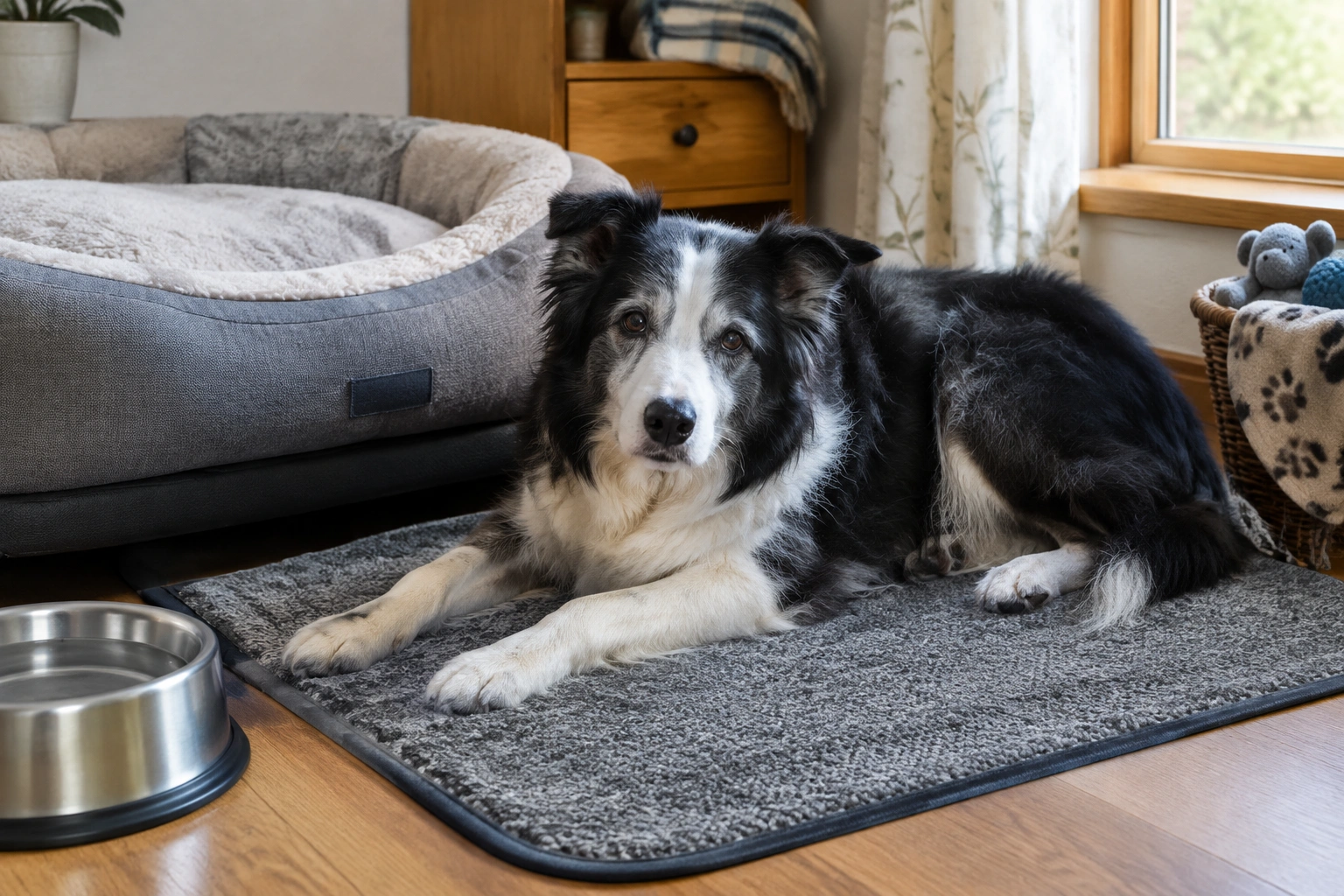
Home setup
Simple changes help:
– non-slip rugs on slick floors
– easier access to resting spots
– ramps or steps for cars and furniture if needed
– a warm, supportive bed
These are small changes, but they often reduce daily strain more than owners expect.
When to see a veterinarian or certified trainer
See a veterinarian promptly if aging is accompanied by:
– sudden weakness
– limping
– appetite loss
– rapid weight change
– increased thirst
– confusion
– incontinence
– coughing
– persistent pain or yelping
A certified trainer can also help if age-related changes are affecting behavior, such as reduced confidence, reactivity, or trouble settling. In older dogs, behavior changes are sometimes tied to discomfort or sensory decline, so training and veterinary care should work together rather than separately.
If your dog is slowing down and you are not sure whether it is normal, a vet exam is the right first move. That is especially true for Border Collies, because their drive can hide discomfort longer than you might expect.
Practical takeaways for owners of older dogs
If you remember only a few points, make them these:
- A dog is usually considered old based on size as much as age.
- Small dogs often become seniors around 10–12 years.
- Medium dogs, including many Border Collies, often become seniors around 8–9 years.
- Large and giant breeds may be seniors around 6–7 years.
- Border Collies are often middle-aged at 7, senior around 8–9, and more clearly older by 10+.
- Watch for stiffness, slower recovery, weight changes, dental issues, and behavior shifts.
- Do not dismiss sudden changes as normal aging.
- Senior care works best when you adjust early, not after the dog is obviously struggling.
If your dog is approaching senior age, the smartest move is simple: track the small changes, keep the body lean, and use your vet as a partner before problems become obvious.
