
What Age Is a Dog Considered Senior? A Practical Guide for Border Collie Owners

If you are trying to figure out what age is a senior dog considered, the honest answer is this: there is no single universal cutoff.
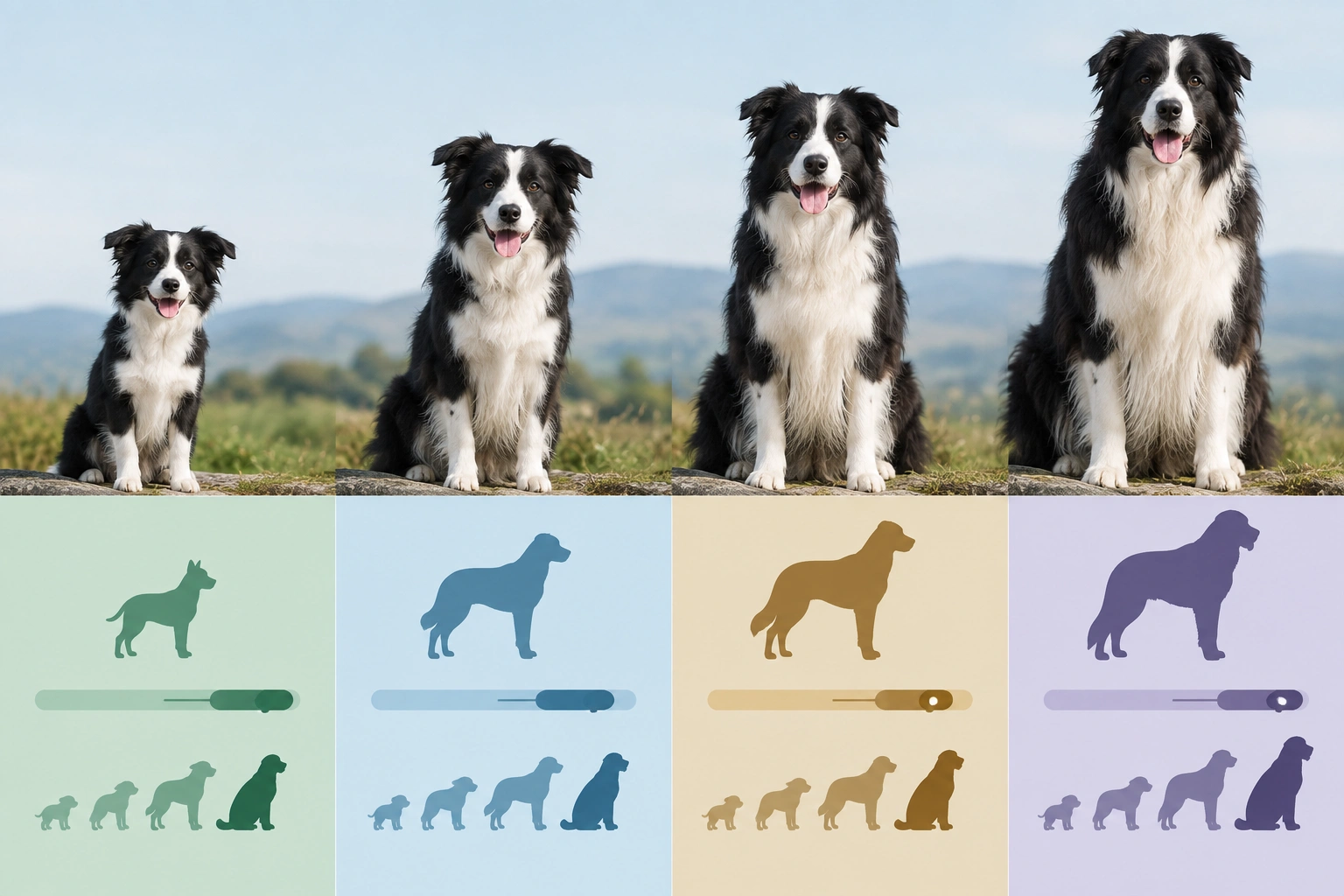
A dog may be called “senior” anywhere from about 6 to 10 years old depending on breed size, expected lifespan, and individual health. Small dogs often reach that stage later than large or giant breeds. Border Collies usually fall somewhere in the middle: many are worth treating as senior candidates around 8 years old, while some stay physically impressive well beyond that.
The useful question is not just “How old is my dog?” It is “Is my dog starting to age in a way that should change how I feed, exercise, and monitor them?”
Image placeholder 1
Quick Answer: What Age Is a Dog Considered Senior?
A practical rule of thumb used by veterinarians and pet resources is:
- Small breeds: often considered senior around 10 to 12 years
- Medium breeds: often around 8 to 10 years
- Large breeds: often around 6 to 8 years
- Giant breeds: sometimes around 5 to 7 years
Those ranges are guidance, not a law. Different veterinarians and pet resources may use slightly different cutoffs, and small breeds are often labeled senior later than large or giant breeds. A veterinarian may start senior-style monitoring earlier if a dog has arthritis, dental disease, weight changes, or other health concerns. Another dog may be chronologically “senior” but still behave like a younger adult.
If you want a simple decision rule, use this: age tells you when to pay closer attention; health tells you how much to change.
For a general veterinary overview of aging in dogs, the American Kennel Club’s guide to senior dogs is a useful starting point, and VCA Hospitals also provides practical veterinary guidance on age-related care.
Why There Is No Single Senior Age for Every Dog
Dogs do not age on one fixed schedule. A Chihuahua, a Border Collie, and a Great Dane can all be the same calendar age and still be in very different life stages.
The biggest reason is body size. Larger dogs tend to age faster and show age-related changes earlier. Smaller dogs generally have longer average lifespans, so their senior phase often starts later.
Breed matters too. A breed’s typical lifespan, structure, and common health risks shape when “senior” starts to become the right label. Individual history matters as well. A dog with a previous cruciate injury, chronic ear infections, or dental disease may need senior-style management sooner than a healthier peer.
That is why age alone is a blunt tool. It is useful, but incomplete.
Senior Age by Dog Size: A Practical Comparison
Use the table below as a working baseline, not a diagnosis.
| Dog size | Common senior age range | What that usually means in practice |
|---|---|---|
| Small breeds | 10–12 years | Many are still active, but screening and weight control become more important |
| Medium breeds | 8–10 years | A good time to watch for stiffness, dental issues, and slower recovery |
| Large breeds | 6–8 years | Senior monitoring often starts earlier because wear and tear appears sooner |
| Giant breeds | 5–7 years | Veterinary follow-up may need to shift sooner even if the dog still seems youthful |
A helpful trade-off to understand: starting senior care early can feel premature, but waiting for obvious slowing can miss problems while they are still easy to manage. That is especially true for dogs that hide discomfort well.
When Is a Border Collie Considered Senior?
Border Collies are usually medium-sized, athletic dogs, so they do not age as early as giant breeds. In practical terms, many Border Collies start entering the senior conversation around 8 years old.
That does not mean an 8-year-old Border Collie is “old” in the dramatic sense. Many still want long walks, games, and training. But this is often the age when recovery time starts to matter more. A dog may still run happily, yet need longer to bounce back after a hard hike or a day of intense fetch.
This is where Border Collie owners can get misled. Because these dogs are so energetic, it is easy to assume they are not aging at all. In reality, they may still look sharp while joints, teeth, or internal health markers are changing quietly.
If you want a deeper Border Collie-specific breakdown, this article pairs well with At What Age Do Border Collies Start to Slow Down?.
Senior vs. Geriatric: What the Labels Actually Mean
“Senior” and “geriatric” are not identical.
- Senior usually means a dog has entered the later part of adult life and should get closer monitoring.
- Geriatric usually means a dog is older and more likely to have multiple age-related changes or medical conditions that need active management.
Think of it this way: a senior dog may still be thriving with light adjustments. A geriatric dog often needs more deliberate support, tighter veterinary follow-up, and closer attention to mobility, appetite, cognition, and comfort.
This distinction matters because owners sometimes overreact to the word “senior” and make unnecessary changes, or underreact because the dog still seems active. The label is less important than the dog’s actual function.
Signs Your Dog Is Aging Before the Age Cutoff
Age cutoffs are only a starting point. The body often gives earlier clues.
Watch for these changes:
Stiffness or slower movement
A dog that gets up more slowly, hesitates before jumping, or seems stiff after resting may be showing early joint discomfort. This is especially common after sleep or longer exercise.
Longer recovery after activity
A Border Collie that used to bounce back after a big outing but now naps harder or seems sore the next day may need a revised activity plan.
Weight changes
Unexpected weight gain often means calories are outpacing activity. Unexpected weight loss can be more concerning and should be checked.
Sleep pattern changes
Some older dogs sleep more deeply or for longer stretches. Others become restless at night. Either pattern can matter if it is new.
Vision, hearing, or confidence changes
Bumping into objects, failing to notice you approaching, or seeming less certain in dim light can point to sensory changes.
Cognitive changes
Confusion, staring at walls, getting stuck in corners, or altered house-training habits can signal age-related brain changes.
The key point: subtle changes usually matter more than the birthday on the calendar.
When to Start Senior Wellness Exams and Bloodwork
A smart approach is to begin talking about senior screening before your dog looks obviously old.
For many dogs, that means discussing senior wellness exams around the time they enter the likely senior range for their size or breed. For a Border Collie, that often means around 8 years old, sometimes earlier if there are health concerns.
A senior wellness visit may include:
- A full physical exam
- Weight and body condition review
- Dental check
- Basic bloodwork
- Urinalysis, depending on the dog and the vet’s recommendation
Why do this before symptoms are obvious? Because some age-related issues may show up in lab work before they show up in behavior. That gives you a chance to act earlier, when changes are often easier to manage.
If your dog already has chronic issues, your vet may recommend more frequent monitoring. That is not overcautious; it is often the fastest way to catch problems while they are still manageable.
Should You Switch to Senior Dog Food Yet?
Not every older dog needs senior food immediately.
The better question is whether the current diet still fits the dog’s body condition, appetite, digestion, muscle mass, and activity level.
Senior diets may help some dogs depending on the formula and the dog’s needs, but the decision is usually best made around specific findings rather than age alone. For example, a diet change may be worth discussing if your dog is gaining weight, losing muscle, eating less, or has bloodwork that suggests a medical issue.
Use this decision framework:
- If the dog is gaining weight: review calories first
- If the dog is losing weight or muscle: do not rush into a lower-calorie senior formula
- If digestion is sensitive: a diet change may help, but make it gradual
- If bloodwork shows a medical issue: ask your vet before changing food
Some active older dogs do better staying on a quality adult diet with portion adjustments rather than switching too early to a lower-calorie senior formula. If a Border Collie is still highly active but starts losing muscle, a food change that reduces calories too much can work against you.
Senior food is a tool, not a milestone you must hit on a birthday.
How Exercise and Daily Routines Should Change for a Senior Dog
Older dogs still need movement. In many cases, they need better-shaped movement rather than less movement.
The goal is to protect joints without letting the dog become weak or stiff from inactivity.
Practical adjustments often include:
- Shorter but more frequent walks
- More warm-up time before hard play
- Fewer repetitive jumping games
- More controlled exercise on good footing
- Rest days after unusually demanding outings
For a Border Collie, this matters a lot. These dogs are built for work, and if you cut activity too sharply, you can end up with weight gain, stiffness, and frustration. If you keep pushing the same intensity as youth, you may invite soreness and slower recovery.
A sensible middle ground is usually best: maintain movement, reduce impact, and watch how the dog feels the next day.

Image placeholder 2
When Age Matters Less Than Health: Decision Criteria for Treating a Dog as Senior
If you are unsure whether your dog should be managed as a senior yet, use these questions:
- Is recovery after exercise slower than it used to be?
- Has body weight changed without an obvious reason?
- Is the dog stiff after rest or exercise?
- Are there dental issues, bad breath, or trouble chewing?
- Has the dog become less steady, less confident, or less engaged?
- Did the vet find anything on exam or bloodwork?
If you answer yes to more than one of those, it is reasonable to treat the dog as senior for care purposes even if the calendar age feels early.
This is the practical difference between chronology and condition. A younger dog with medical issues may need senior-style care sooner than an older dog who is still thriving.
Common Mistakes Owners Make About Senior Dogs
A few errors come up again and again.
Waiting for obvious slowing
By the time a dog is clearly limping or struggling, the issue has often been building for a while.
Switching diets based on age alone
A senior label does not automatically mean the dog needs a new food.
Cutting exercise too much
Less activity is not always kinder. Too little movement can worsen stiffness and reduce muscle support.
Assuming a lively dog is not aging
Many Border Collies keep their drive long after subtle physical changes begin.
Ignoring “small” changes
A little more sleep, a little hesitation on stairs, or a small appetite shift can be the first clue that something deserves attention.
When to See a Veterinarian or Certified Trainer
See a veterinarian sooner rather than later if you notice:
- Sudden appetite loss
- Rapid weight loss or gain
- New drinking or urination changes
- Limping or obvious pain
- Repeated accidents in the house
- Confusion or sudden behavior change
- Persistent coughing, vomiting, or lethargy
If the issue is more about behavior than physical decline, a certified trainer can help you adjust routines safely, especially if your dog is becoming less tolerant of noise, handling, stairs, or changes in schedule. But when the change is sudden, medical evaluation comes first.
The Bottom Line for Border Collie Owners
A dog is usually considered senior somewhere between 6 and 12 years old, depending on size and breed. For Border Collies, the senior conversation commonly begins around 8 years old, but the real answer depends on how the dog is moving, recovering, eating, and behaving.
If your Border Collie is around that age, book a senior wellness exam and ask your vet whether bloodwork, weight tracking, or a diet review makes sense.
