
How Dogs Act After a Seizure: What’s Normal, What’s Not, and When to Get Help

When a dog comes out of a seizure, the scene can be unsettling. Some dogs look dazed and wobbly. Some pace in circles. Some seem temporarily blind, clingy, or suddenly ravenous. Others act restless, confused, or even irritable.
That recovery period has a name: the postictal phase. It refers to the period after a seizure when the dog is not yet back to normal. In this window, your job is not to train, correct, or “snap them out of it.” Your job is to keep the dog safe, watch for improvement, and decide whether the recovery is following a normal pattern or drifting into an emergency.
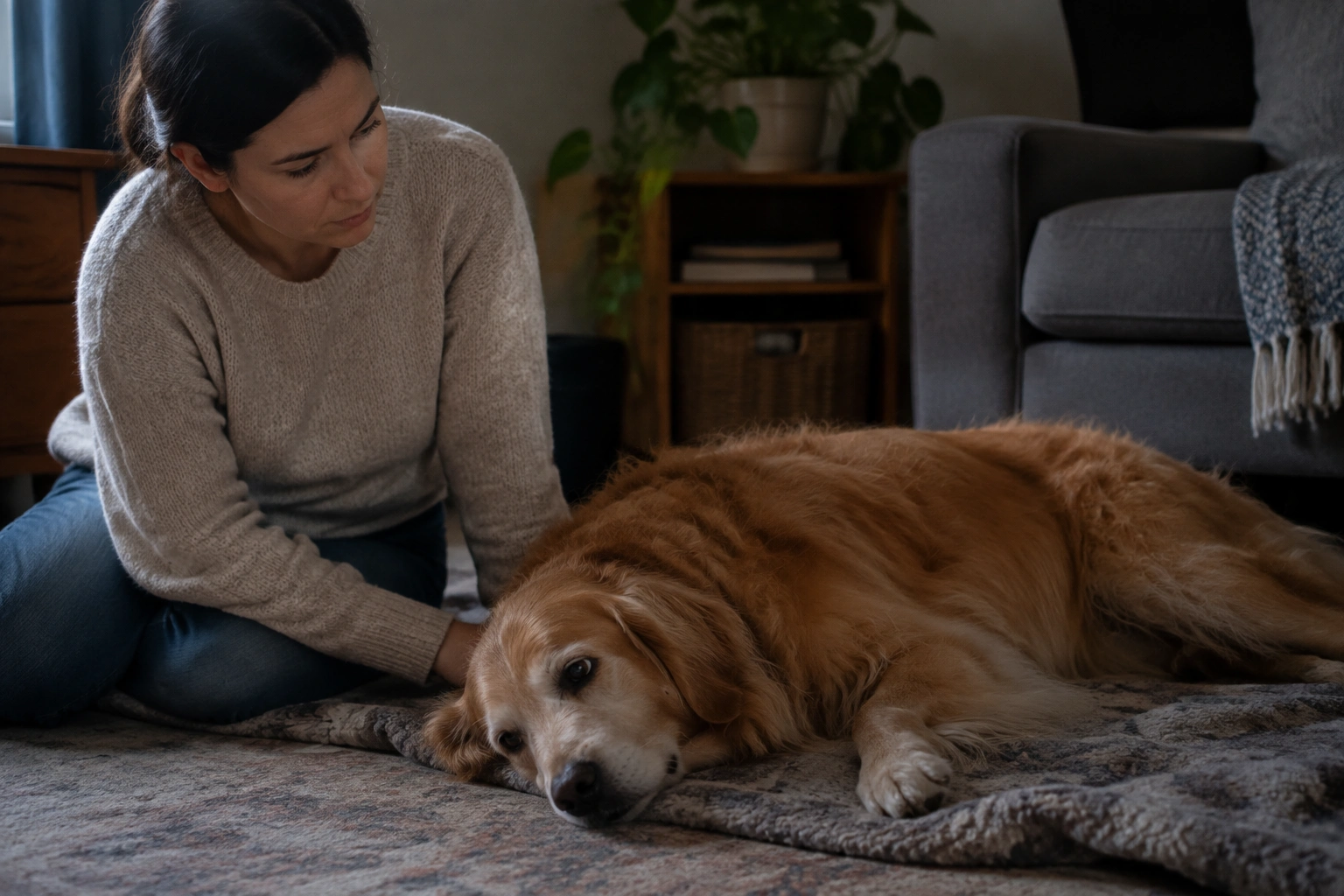
For Border Collie owners, this matters because a bright, high-drive dog can look almost “awake” while still being neurologically off. A dog that seems to pace, stare through you, or act strangely hungry may not be being stubborn or dramatic. They may still be recovering from the seizure.
What a Dog Typically Looks Like After a Seizure
The most common post-seizure behaviors are signs that the brain is still sorting itself out.
A dog may:
– look disoriented or confused
– be wobbly or uncoordinated
– seem temporarily blind or bump into things
– pace or appear restless
– sleep heavily or seem wiped out
– pant more than usual
– drool
– act unusually hungry or thirsty
– seem clingy, needy, or oddly reactive
– show aggression if touched or startled while confused
Cornell’s veterinary guidance notes that in the minutes to hours after a seizure, a dog may remain disoriented or confused, and that confusion can sometimes show up as aggressive behavior. That is one reason I tell owners not to assume a post-seizure dog is “back to normal” just because the convulsions stopped. Cornell University College of Veterinary Medicine
The MSPCA also notes that dogs after a seizure can appear disoriented, wobbly, temporarily blind, aggressive, excessively hungry or thirsty, or extremely lethargic. MSPCA-Angell
What this looks like in real life
A dog may stand in the kitchen and stare at the wall for several seconds before slowly walking the wrong way. Another may pace from room to room, unable to settle, then crash into a deep sleep. A third may act frantic for water, but still be too unsteady to coordinate a safe drink.
Those are all examples of postictal behavior that can happen after a seizure. What matters is whether the dog is gradually improving.
How Long Post-Seizure Behavior Usually Lasts
The postictal phase can last minutes to hours. Some dogs recover quickly. Others need much longer. Small Door Veterinary notes that these signs can last anywhere from a few minutes to 24 hours. Small Door Veterinary
That range is broad on purpose. The key question is not just “How long has it been?” but “Is the dog getting better?”
A practical recovery rule
You want to see a slow, steady return toward normal:
– the dog can stand more steadily
– eye contact becomes more normal
– pacing eases
– confusion fades
– the dog responds to you in a more predictable way
A dog that is still a little tired an hour later may be in a normal recovery window. A dog that is getting more agitated, more weak, or less responsive is not following a reassuring pattern.
What should improve first
Usually, the most obvious changes are mental:
– less staring
– less confusion
– less frantic movement
Physical steadiness often lags behind. A dog may know where you are before they can walk cleanly. That’s why forcing activity too early is a bad trade-off: you gain nothing, and you raise the risk of a fall.
The First 10 to 30 Minutes: What to Do Right Away
The first half hour is about safety, not problem-solving.
1. Keep the area quiet and low-stimulation
Move the dog away from stairs, sharp furniture edges, pools, cords, or anything they could hit while disoriented. Dim lighting if you can. A quiet recovery space reduces the chance that confusion turns into panic.
2. Do not crowd the dog
A confused dog may misread touch as a threat. Cornell specifically warns that while your instinct may be to hug or stroke the dog’s head, you should avoid your dog’s mouth so you do not get bitten. Cornell University College of Veterinary Medicine
You can stay nearby without hovering. Calm presence is useful; physical pressure is not.
3. Time the seizure and note what you see
If you did not already time the seizure, estimate it now while details are fresh:
– when it started
– how long the active seizure lasted
– what the body did
– whether the dog lost bladder or bowel control
– how long the recovery confusion lasts
If possible, take a video of the recovery phase once the dog is safe. That can help your veterinarian separate postictal behavior from ongoing neurologic trouble.
4. Watch breathing and responsiveness
A dog that is slowly returning to awareness is different from a dog that seems stuck, limp, or increasingly distressed. If breathing looks abnormal, or the dog is not responding at all, that changes the urgency.
5. Hold off on food and water until the dog is fully ready
Only offer water or food once your dog is fully alert, can stand steadily, and can swallow normally.
What Is Normal Recovery vs. What Is Not
The simplest way to judge recovery is to ask whether the dog is trending in the right direction.
Normal postictal recovery often looks like this
- confusion that gradually fades
- pacing that slows
- mild wobbliness that improves
- temporary blindness that resolves
- sleepiness after the episode
- hunger or thirst that settles as awareness returns
Not normal, or at least not reassuring
- the dog gets worse instead of better
- the dog cannot stand or keeps collapsing
- the dog seems blind for a prolonged period
- the dog remains severely agitated or panicked
- the dog has another seizure-like episode
- the dog seems to “space out” repeatedly, twitch again, or have brief repeated facial or limb movements
That last point matters because ongoing seizure activity can look different from ordinary recovery. A dog that is still seizing may not have the classic full-body convulsions you expect. Instead, you may see repeated staring, lip smacking, facial twitching, jaw chomping, paddling in one limb, sudden start-and-stop movements, or episodes that seem to come and go without the dog ever truly becoming normal in between. If the dog is not steadily clearing, do not assume it is just post-seizure confusion.
One useful comparison: a seizure recovery should look like a dazed period that gradually clears. MedVet notes that this dazed recovery helps distinguish seizures from fainting, because fainting animals recover instantly, while seizuring pets remain disoriented for minutes to hours afterward. MedVet
That distinction matters. If a dog “passed out” and then popped right back up as if nothing happened, fainting or another issue may be more likely than a seizure. If the dog is confused afterward, seizure becomes more likely.
Red Flags That Mean Call the Vet or Go to the ER
Some post-seizure behavior is expected. Some patterns are not safe to watch at home.
Seek urgent veterinary care if you see any of these:
– the seizure lasts more than 5 minutes
– seizures happen back-to-back or in clusters
– the dog does not improve after the seizure
– the dog cannot stand or walk normally
– the dog remains severely blind, collapsed, or unresponsive
– the dog has trouble breathing
– the dog is extremely agitated or aggressive
– you suspect injury during the seizure
– the dog has repeated twitching or another episode before returning to baseline
The MSPCA states that most seizures last under 3 minutes, and anything over 5 minutes is an emergency called status epilepticus. That requires immediate veterinary care. MSPCA-Angell
When to call your regular vet versus going to the emergency clinic
Call your regular veterinarian promptly if the seizure has ended, the dog is improving, and you need advice about next steps, follow-up testing, or medication changes. Go directly to an emergency clinic if the seizure is prolonged, seizures repeat, the dog is not recovering, or the dog has severe neurologic signs, breathing trouble, collapse, or injury.
When “wait and see” is the wrong call
If your dog is still disoriented but clearly improving, a short period of home monitoring may be reasonable. If the dog is not improving, or if a second seizure happens before recovery is complete, the situation changes fast. At that point, you are no longer dealing with simple postictal recovery.
How to Safely Monitor Your Dog at Home After a Seizure
Home monitoring is appropriate only when the dog is:
– breathing normally
– gradually becoming more aware
– not repeatedly seizing
– not in obvious distress
– safe to observe without risk of falling or injury
Set up the space
Keep your dog in one room if possible. Remove access to stairs. Block off furniture they could jump onto or fall from. If the dog likes to pace, give them enough space to move without hitting obstacles.
Stay calm and observational
Your dog does not need lectures, correction, or excitement. What they need is a low-drama environment and a person who can notice trends.
Watch for:
– improvement in balance
– response to voice
– return of normal eye focus
– less panting or restlessness
– ability to settle
If the dog seems to be improving, keep monitoring until they are clearly more coordinated.
When home monitoring stops being enough
If the dog is still not close to normal after the recovery window you were told to expect, or if new symptoms appear, call your veterinarian or an emergency clinic. “Still weird” is not a diagnosis. It is a reason to reassess.
Should You Offer Water, Food, or a Walk Afterward?
This is where owners often mean well but move too fast.
Water
Only offer water when your dog is fully alert, can stand steadily, and can swallow normally.
Food
Only offer food when your dog is fully alert, can stand steadily, and can swallow normally.
Walks
Skip the walk right away. A post-seizure dog is not ready for exercise, leash work, or “getting back to normal.” The priority is stability, not activity.
A simple decision rule:
– alert, coordinated, and improving: small amounts of water or food may be reasonable
– still confused or wobbly: wait
– still pacing, blind, or reactive: keep the dog quiet and monitor
Some clinics do recommend water and a small meal once the dog is stable, but that advice is not universal in the first moments after a seizure. The safer approach is to wait until swallowing and coordination look normal.
What to Record for Your Veterinarian
The more specific your notes, the more useful they are.
Write down:
– the date and time
– how long the seizure lasted
– what the seizure looked like
– whether there was drooling, paddling, stiffening, urination, or defecation
– how long the postictal phase lasted
– whether the dog was blind, wobbly, hungry, thirsty, aggressive, or restless
– whether this was the first seizure or one of several
– anything unusual before the episode, such as stress, missed meals, toxin exposure, or exertion
If you can, make a simple timeline:
– seizure starts
– seizure ends
– first signs of awareness
– first normal walk
– fully back to baseline
That timeline helps your vet separate a brief, self-limited event from a pattern that needs deeper workup.
Why Seizures Happen in Dogs at a High Level
You do not need a full neurology lecture to understand why follow-up matters.
Dogs can seize for many reasons, including:
– idiopathic epilepsy
– toxin exposure
– metabolic problems
– structural brain disease
– other underlying illness
That broad list is one reason no one should assume a seizure is “just a one-off” without veterinary input, especially if the dog is young, older, has repeated episodes, or does not recover normally.
When Repeated Seizures or Slow Recovery Suggest a Bigger Problem
Two patterns raise the stakes quickly.
Cluster seizures
These are repeated seizures in a short period. Even if each one is brief, the pattern is more concerning than a single isolated episode.
Status epilepticus
This is an emergency. As noted above, seizures lasting more than 5 minutes require immediate veterinary care.
A dog that fails to return toward normal between episodes is not simply having a “slow recovery.” That pattern can signal a more serious neurologic problem or an unstable seizure event.
When to See a Veterinarian
For seizure recovery, a veterinarian is the right professional.
Contact your veterinarian promptly if:
– this was the first seizure
– the dog is older or very young
– the recovery looks unusual
– you are unsure whether the episode was a seizure or fainting
– the dog has had more than one episode
– the dog has any red-flag signs
If you need a deeper overview of what to do once the seizure is over, I also recommend reading our guide on what to do after a dog has a seizure. It pairs well with this article because it focuses on the immediate next steps and monitoring.
FAQs
Is pacing after a seizure normal?
Yes, pacing can happen during the postictal phase. It becomes concerning if it is severe, prolonged, or paired with worsening confusion or another seizure.
Can a dog be temporarily blind after a seizure?
Yes. Temporary blindness is a recognized post-seizure sign and should improve as the postictal phase passes. If it does not improve, call your veterinarian.
Should I let my dog sleep after a seizure?
If the dog is breathing normally and can rest safely, sleep is often part of recovery. Keep monitoring them so you notice any change in breathing, responsiveness, or repeated seizure activity.
Is hunger or thirst after a seizure normal?
It can be. Some dogs show increased hunger or thirst after a seizure. Wait until the dog is fully alert, can stand steadily, and can swallow normally before offering anything.
How do I know if it was a seizure or fainting?
One clue is recovery. MedVet notes that fainting animals recover instantly, while seizuring pets stay disoriented for minutes to hours afterward. MedVet
When should I go straight to the ER?
Go immediately if the seizure lasts more than 5 minutes, seizures repeat, the dog cannot recover, or there are breathing problems, collapse, or severe neurologic signs.
The hard part after a seizure is that the dog may look “better” before they are truly stable. Watch the trend, not just the moment. If your dog is steadily becoming more aware, more coordinated, and more like themselves, that is reassuring. If they are not, trust the pattern and get veterinary help.