
What to Do If Your Puppy Eats Rat Poison: A Calm, Practical Emergency Guide

If you think your puppy ate rat poison, treat it as an emergency until a veterinarian says otherwise. The goal in the first few minutes is not to diagnose everything yourself. It is to stop further exposure, preserve the product information, and get expert help on the phone while you move toward veterinary care.
Quick decision path: If your puppy is symptomatic, go to the emergency clinic now; if your puppy is stable, call your vet or poison hotline immediately; if you are unsure, call while preparing to leave.
The first 5 minutes: do these steps in order
1) Move your puppy away from the bait immediately.
If there is still poison on the floor, in the garage, under the sink, or in the yard, pick up your puppy and keep them away from the area. If you can do so safely, remove the remaining bait so no one else can eat it.
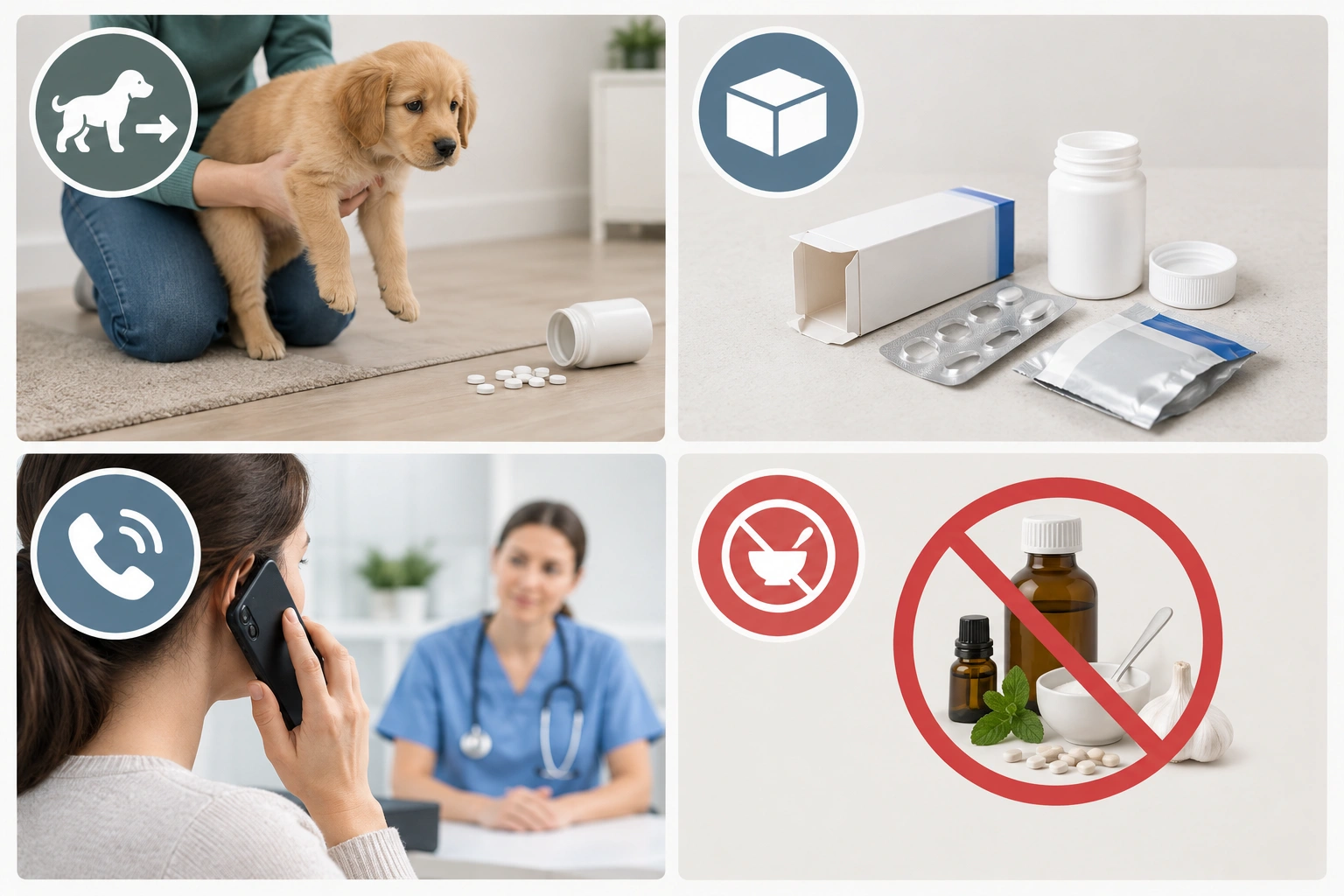
2) Save the packaging or take a clear photo.
The active ingredient matters more than the brand name alone. A photo of the front and back of the box, bait station, or pellet bag can save time later.
3) Call a veterinarian or pet poison hotline right away.
If your puppy is stable, call first while you get ready to leave. If your puppy is already vomiting, weak, wobbling, trembling, bleeding, or collapsing, head to the emergency clinic now and call on the way if you can safely do so.
4) Do not give home remedies unless a professional tells you to.
No hydrogen peroxide, no milk, no oil, no salt, and no “detox” tricks. The wrong response can make the situation worse.
5) Be ready to leave for the clinic.
If the vet says your puppy needs to be seen, go immediately. Time matters most when the exposure is recent.
For a quick reference on the general emergency approach, you can also see this practical rat poison emergency guide for dogs.
What to bring or tell the vet
Have as much of this ready as you can without delaying care:
- The package, label, or a clear photo
- The estimated amount missing or eaten
- The time of exposure or when you first noticed it
- Your puppy’s weight
- Any symptoms you have seen
- A vomit sample if one is available and safe to bring
- Any other substances or medications your puppy may have accessed
- Whether your puppy may have eaten a poisoned rodent instead of the bait itself
If you are unsure about the amount, say so. “I found crumbs and a chewed box” is still useful information.
Why rat poison is an emergency in puppies
Puppies are not just “small dogs.” Their body weight is lower, so a smaller dose can create a bigger problem. They also explore with their mouths, which means they may chew bait, lick crumbs, or eat a poisoned rodent before anyone notices.
The dangerous part is that rat poison is not one toxin. One product may cause bleeding days later. Another can trigger brain swelling or kidney injury. That is why “my puppy looks fine” is not a reliable safety check.
If you want a broad veterinary overview of rodenticide risk, the ASPCA Animal Poison Control resource is a useful starting point, but it does not replace immediate veterinary advice for your puppy.
Identify the poison type if you can
The active ingredient changes the timeline, the symptoms, and the treatment. If you can safely read the label or photograph the package, do it.
Common rodenticide types and why they matter
| Type of poison | What it does | When signs may appear | Why it is dangerous |
|---|---|---|---|
| Anticoagulant rodenticide | Blocks blood clotting | Often delayed, sometimes days | Internal bleeding can start after the puppy seems normal |
| Bromethalin | Affects the brain and nerves | Can be earlier, sometimes within hours to a day or more | Swelling in the brain can become severe quickly |
| Cholecalciferol (vitamin D3) | Raises calcium and damages organs | Often delayed | Can injure kidneys and other organs |
| Sodium fluoroacetate | Severe metabolic toxin | Can be rapid | Can cause sudden collapse or seizures |
If the label says “anticoagulant,” “bromethalin,” “vitamin D3,” or “cholecalciferol,” tell the vet exactly that. If you only have a color or shape, still mention it, but do not assume all green pellets are the same poison.
How to decide: regular vet, emergency clinic, or poison hotline
This is the decision most owners wrestle with, and it helps to think in terms of risk and timing.
Call your regular vet first if:
- The clinic is open now
- Your puppy is stable
- You can speak to someone immediately
- You already have the package or a clear photo
A regular vet can often triage the case quickly and tell you whether to come in, but that only works if they can respond fast.
Go straight to an emergency clinic if:
- Your puppy is vomiting, weak, wobbling, trembling, bleeding, or collapsing
- You do not know what poison was eaten and your vet is unavailable
- The bait was eaten recently and the clinic told you to come in
- Your puppy may have eaten a large amount
Use a pet poison hotline if:
- You need help identifying the poison type
- You have the label but not a vet on the line yet
- Your puppy is stable and you need fast triage guidance
The trade-off is simple: a hotline can help you sort out the toxin, but it cannot physically examine your puppy. If your puppy is already symptomatic, do not let phone triage delay transport.
What information to gather before you call
Write this down before you dial if you can do it without delaying care:
- Your puppy’s weight
- The brand name of the poison
- The active ingredient
- The approximate amount missing
- When the exposure may have happened
- Whether your puppy actually chewed it, or only had access to it
- Any symptoms you have seen
- Whether your puppy may have eaten a poisoned rodent instead of the bait itself
If you are unsure about the amount, say so. “I found crumbs and a chewed box” is still useful information.
What symptoms to watch for and when they may appear
A normal-looking puppy can still be in danger. That is especially true with anticoagulant poisons, where bleeding may not show up right away.
Early and delayed warning signs
Anticoagulant rodenticides
These often cause delayed bleeding. Signs can include:
– Weakness
– Pale gums
– Coughing
– Labored breathing
– Bruising
– Nosebleeds
– Bloody stool or urine
– Swollen belly
A puppy may seem fine for a while and then become suddenly ill. That delay is why waiting for symptoms is a mistake.
Bromethalin
This type can affect the nervous system. Watch for:
– Wobbliness
– Tremors
– Seizures
– Unusual behavior
– Stiffness
– Weakness
Cholecalciferol
This can lead to kidney and organ problems. Possible signs include:
– Vomiting
– Increased thirst
– Increased urination
– Loss of appetite
– Weakness
Sodium fluoroacetate
This can be severe and fast. Signs may include:
– Tremors
– Seizures
– Sudden collapse
– Rapid deterioration
If your puppy is having trouble breathing, seizing, or collapsing, this is an emergency now, not a “watch and wait” situation.
What not to do at home
This is where many well-meaning owners make the wrong move.
Do not induce vomiting unless a vet or poison expert tells you to
Vomiting can be appropriate in some situations, but not all. If the poison was swallowed too long ago, if your puppy is already weak or neurologic, or if the substance is unsafe to bring back up, forcing vomiting can cause harm.
Do not give food, milk, oil, or random home treatments
These are not reliable antidotes. They can delay proper care and sometimes worsen absorption or aspiration risk.
Do not wait to see if symptoms develop
Some poisons act later. By the time a puppy looks sick, treatment may be more complicated.
Do not assume “a tiny amount” is harmless
The risk depends on the product, the puppy’s weight, and how recently the exposure happened. A small amount of one rodenticide may be more serious than a larger amount of another, which is why the label and dose estimate matter.
Do not forget about secondary poisoning
A puppy can also be exposed by eating a rodent that already consumed poison. That is a real risk, so check the area for dead or dying mice or rats.
If you need a veterinary reference for the general emergency response, VCA Hospitals has helpful poison-related pet care information, though your own vet’s instructions should guide the actual next step.
What veterinary treatment may involve
Treatment depends on the poison type, how long ago it was eaten, and whether your puppy has symptoms.
Common treatments your vet may use
- Induced vomiting, if the ingestion was recent and it is safe to do so
- Activated charcoal, which may help bind some toxins in the gastrointestinal tract
- Vitamin K1, commonly used for anticoagulant rodenticides
- Bloodwork, to check clotting or organ function
- IV fluids and monitoring, especially if the puppy is sick or at risk of becoming sick
- Hospitalization, if neurologic signs, bleeding, or kidney injury are concerns
Treatment also differs by rodenticide type. Anticoagulant poisons may require clotting tests and follow-up testing over time, while bromethalin or cholecalciferol exposures may call for different monitoring and supportive care. The key point is that treatment is not one-size-fits-all. Vitamin K1 helps with one major class of poisons but is not the fix for every rodenticide.
Prognosis and edge cases
If treatment starts early, the outlook is often much better. That is especially true when the poison is identified quickly and the puppy is seen before major symptoms begin.
If you are not sure the puppy actually ate any
Treat it as possible exposure until a professional helps you sort it out. “I only found the box torn open” still matters.
If the puppy seems normal
That does not rule out danger. Delayed toxins can stay quiet at first. Your vet may still recommend evaluation, bloodwork, or preventive treatment.
If only a tiny amount may have been eaten
The amount matters, but the active ingredient matters more. A tiny amount of one product may be more serious than a larger amount of another. This is why the label or packaging is so valuable.
If you are already late
Do not assume it is “too late to help.” Many cases are still treatable, but the vet needs to know exactly what happened and when.
How to prevent another exposure
Once the immediate crisis is handled, tighten up storage and access.
- Keep rodenticides in a sealed container
- Store them out of reach of puppies and children
- Do not leave bait stations where a curious puppy can investigate them
- Check garages, sheds, and utility rooms, because those are easy places to forget
- Inspect the yard for bait crumbs or dead rodents after use
If your puppy is a Border Collie, remember that the breed’s curiosity and speed can make “I thought that was out of reach” a dangerous assumption. They are quick, observant, and often better at finding hidden objects than owners expect.
When to see a veterinarian or certified trainer
For this topic, the answer is simple: see a veterinarian immediately if ingestion is confirmed or suspected. A certified trainer is not the right professional for poisoning advice, though a trainer can later help with prevention around scavenging, counter-surfing, and leave-it work once the medical crisis is over.
FAQs
Is it an emergency if my puppy ate rat poison?
Yes. Treat it as urgent even if your puppy looks normal.
Should I call my vet or a poison hotline first?
Call whichever can respond fastest. If your puppy has symptoms, go to the emergency clinic while calling on the way.
Can I make my puppy vomit at home?
Not unless a veterinarian or poison expert specifically tells you to.
How do I know which type of rat poison was eaten?
Check the label, packaging, or a photo of the product. The active ingredient is what matters most.
What if I only think my puppy might have eaten some?
Still call. Suspected exposure is enough to justify advice.
Can a puppy be poisoned by eating a poisoned rodent?
Yes. That is why finding dead or dying rodents around the area matters.
How quickly do symptoms show up?
It depends on the poison. Some cause delayed bleeding, while others can produce neurologic or organ signs sooner.
Will my puppy be okay?
Many puppies do well when treatment starts early. The safest move is fast veterinary guidance, not waiting to find out.
If you are reading this because it just happened, stop researching and call a vet now. The best outcome usually comes from the shortest time between exposure and treatment.