
Why Is My Dog’s Eye Red and Swollen? A Practical Guide to Causes, Urgency, and Next Steps

A red, swollen eye in a dog is one of those problems that looks simple from a distance and gets complicated fast. Sometimes it’s minor irritation. Sometimes it’s an infection, a scratch on the cornea, or a pressure problem that can threaten vision.
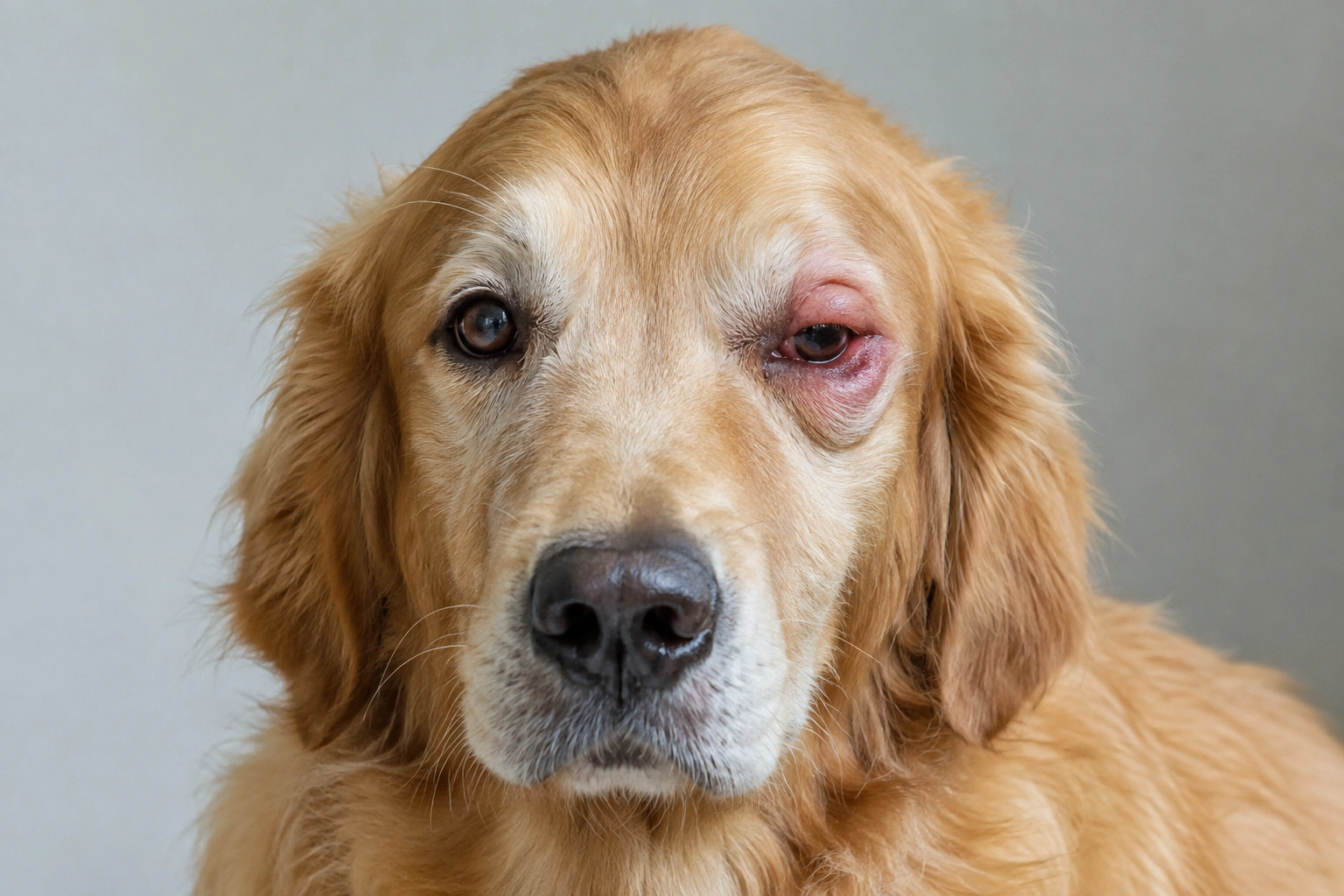
The useful question is not just “what caused it?” It’s “how urgent is this, and what should I do right now?”
If your dog is squinting, pawing at the eye, keeping it closed, or the eye looks cloudy or bulging, treat it as urgent and call a veterinarian the same day. If the redness is mild, both eyes are involved, and your dog seems comfortable, allergies or irritation are more likely — but it still deserves close monitoring.
Quick Triage: Is a Red, Swollen Dog Eye an Emergency?
Use the eye’s behavior, not just its color, to decide what happens next.
Go to a vet or emergency clinic now if you see:
- Squinting or holding the eye shut
- Obvious pain, including pawing, rubbing, or flinching
- Cloudiness, a blue haze, or a dull-looking cornea
- A bulging eye or sudden swelling around the eye
- Unequal pupils
- Bleeding
- Thick yellow, green, or bloody discharge
- Sudden vision problems, such as bumping into objects
- A suspected scratch, bite, or foreign object
Those signs matter because a red eye can be more than surface irritation. It can reflect a corneal ulcer, trauma, uveitis, or acute glaucoma, and those problems can worsen quickly.
Same-day veterinary care is the safer choice if:
- The eye is red and swollen, but your dog is still opening it
- There is watery or mucus-like discharge
- The redness started suddenly
- Only one eye is affected
- Your dog keeps rubbing the eye even if the swelling looks mild
- There is any redness with pain, squinting, cloudiness, or discharge
Brief monitoring at home may be reasonable only if:
- The redness is mild
- Both eyes are affected
- Your dog is not squinting
- There is no cloudiness, discharge, or pain
- The eye looks slightly irritated after dust, wind, or a mild exposure and improves quickly
If symptoms are not clearly improving within a short window, stop watching and book the vet visit.
Most Likely Causes: Allergy, Irritation, Infection, Injury, or Eye Pressure Problem?
The pattern often points you in the right direction, even before the exam.
| Likely cause | One eye or both? | Pain level | Discharge | Cloudiness | Common clues | Urgency |
|---|---|---|---|---|---|---|
| Allergies or irritants | Often both, but can be one | Mild itch more than pain | Watery | Usually no | Seasonal signs, itchy face, rubbing both eyes | Usually same-day if persistent |
| Conjunctivitis or surface infection | One or both | Mild to moderate | Mucus, yellow, or green | Usually no | Red inner eyelids, sticky discharge | Vet visit soon |
| Foreign body or scratch | Usually one | Often painful | Watery at first | May develop | Sudden onset after grass, brush, dust, or play | Same day |
| Corneal ulcer | Usually one | Often painful | Watery or mucoid | Sometimes yes | Squinting, light sensitivity, rubbing | Same day or urgent |
| Uveitis | Usually one | Often painful | Variable | Can be cloudy | Small pupil, sensitivity to light, discomfort | Urgent |
| Glaucoma | Usually one, sometimes both | Often very painful | Variable | Often cloudy | Bulging, red eye, enlarged or abnormal pupil | Emergency |
When allergies are more likely
Allergy-related eye irritation tends to be itchy, watery, and sometimes bilateral. A dog may rub both eyes, and the surrounding skin can look pink or puffy. Environmental triggers such as pollen, grasses, dust mites, or flea saliva can contribute to this pattern.
That said, “looks like allergies” is not the same as “safe to ignore.” A dog can have allergies and still develop a scratch from rubbing.
When injury or a foreign body is more likely
A one-eyed problem that starts suddenly after running through brush, chasing a ball, or rough play is more suspicious for trauma, debris, or a corneal scratch. These are the cases where a dog may squint hard, keep the eye half closed, and resist having the face touched.
If the eye is painful, do not assume it will flush out on its own.
When infection is more likely
Conjunctivitis and other infections often bring discharge, redness, and swelling. Infection is one of the common reasons a dog’s eye becomes swollen, and it can involve different parts of the eye. Sticky yellow or green discharge is more concerning than clear tearing alone.
When glaucoma or uveitis rises to the top
Glaucoma and uveitis are the diagnoses you do not want to miss. Acute glaucoma can cause a red, cloudy, painful eye, and the surrounding tissue may swell. Uveitis can also be painful and may change the eye’s appearance in ways that are easy to overlook without a proper exam.
These are not “wait and see” problems.
Red Flags That Mean Your Dog Needs Urgent Veterinary Care
Some signs override home care immediately.
Treat it as urgent if the dog has:
- Squinting or a closed eye
- Cloudiness or a blue-gray haze
- A bulging eye
- Unequal pupils
- Sudden sensitivity to light
- Bleeding
- Thick discharge
- Obvious pain
- Rapidly increasing swelling
- Vision changes
- A visible scratch, puncture, or embedded debris
The reason to act quickly is simple: red and swollen eyes can worsen fast, and some causes can lead to permanent vision damage if treatment is delayed.
If the eye is red and the dog is clearly uncomfortable, assume it is more serious until a vet proves otherwise.
What You Can Safely Do at Home Right Now
Your job at home is to protect the eye, not to diagnose it.
Do this:
- Put on an Elizabethan collar if your dog is rubbing or scratching
- Keep the dog calm and away from brush, dust, and rough play
- Check whether the eye is open, cloudy, or producing discharge
- If the eye seems only mildly irritated and there is no pain, cloudiness, or suspected injury, you may gently rinse with sterile saline or a vet-approved eye wash
That last step has a narrow use case. A gentle flush can help if the problem seems minor and superficial, such as dust or a loose irritant. Do not flush if the eye is painful, cloudy, bulging, or if a corneal ulcer or penetrating injury is possible. If the dog resists, stop. Aggressive flushing can make matters worse if the eye is injured.
Use the e-collar sooner rather than later
If the dog keeps pawing at the eye, the collar is not optional. Rubbing can turn a small irritation into a corneal ulcer or deeper injury.
A few hours of prevention can save a much bigger problem later.
What Not to Do: Common Mistakes That Can Worsen Eye Damage
This is where owners accidentally make the situation worse.
Don’t:
- Use human eye drops
- Use leftover prescription eye drops
- Use steroid eye drops unless a veterinarian prescribed them for this exact problem
- Try to pull out debris with tweezers, cotton swabs, or your fingers
- Rub the eye to “check it”
- Flush aggressively if the eye may be scratched or deeply injured
- Wait several days because the dog is still eating and acting normal
The steroid warning matters. Steroid drops can worsen a corneal ulcer and some infections, which is why they should never be used casually.
Also avoid the trap of assuming that because the dog is not crying, the eye is fine. Many dogs hide discomfort well.
How Veterinarians Figure Out the Cause
A veterinarian usually has to look at the eye in more than one way because many problems look similar from the outside.
Common steps may include:
- Checking the eyelids and the surface of the eye for debris or a foreign body
- Using fluorescein stain to look for a corneal ulcer
- Measuring eye pressure if glaucoma is suspected
- Examining the third eyelid and the surrounding tissues
- Looking for discharge, trauma, or signs of infection
This is why the same red, swollen eye can lead to very different treatment plans. One dog may need antibiotic drops. Another may need pain control and a protective collar. Another may need urgent pressure-lowering treatment.
The exam changes the diagnosis, and the diagnosis changes the treatment.
If you want broader background on eye redness in dogs, this practical guide to causes and urgency is a useful companion read.
Treatment Options by Underlying Cause
There is no single eye-drop solution that fits every case.
Allergies or irritation
Treatment may focus on reducing the trigger, calming inflammation, and preventing rubbing. If both eyes are itchy and mildly red, the vet may lean toward allergy management rather than aggressive eye treatment.
Conjunctivitis
Depending on the cause, a vet may prescribe medication to address infection or inflammation. The important point is that conjunctivitis is a diagnosis, not a final answer. The underlying reason still matters.
Corneal ulcer
These need careful treatment and close follow-up. The eye may need pain relief, antibiotic medication, and protection from self-trauma. Steroid drops are a bad idea here unless a vet has ruled out ulceration.
Foreign body or trauma
The vet may remove debris, treat the damaged surface, and prevent the dog from rubbing the eye. If the injury is deeper, more intensive care may be required.
Uveitis
This is often painful and needs prompt veterinary treatment because the inflammation is inside the eye, not just on the surface.
Glaucoma
Acute glaucoma is an emergency. Treatment focuses on lowering eye pressure fast and protecting vision. The exact plan depends on the cause and how advanced the disease is.
For a broader view of red-eye emergencies, see the American Kennel Club’s dog health resources.
How to Reduce the Risk of It Happening Again
Prevention depends on the cause, but a few habits help across the board.
Practical prevention steps:
- Keep an eye on dogs that love running through brush, tall grass, or dusty trails
- Get prompt care after rough play or a suspected bump to the face
- Manage known allergies with your vet’s guidance
- Watch for repeated rubbing, especially in dogs that are prone to face irritation
- Check eyes after hikes, windy days, or yard work
If your dog has recurring eye problems, the pattern matters. A problem that returns after outdoor exposure is handled differently from one that follows a scratch or a bite.
For general eye-care guidance, the VCA Hospitals eye health resources are a solid reference point.
When to Recheck or Escalate After Initial Care
If you were advised to monitor, use a simple rule: improvement should be obvious, not subtle.
Escalate if:
- Redness worsens
- Swelling increases
- New discharge appears
- The dog starts squinting
- The eye becomes cloudy
- The dog begins rubbing again
- The eye stays closed
- There is no clear improvement in a short period
A “maybe a little better” eye is not reassuring if the dog is still uncomfortable. Eye problems often look minor right before they become more serious.
If the problem is not clearly improving, go back to the vet rather than trying a second round of home care.
When to See a Veterinarian or Certified Trainer
For this issue, the professional you need is a veterinarian, not a trainer. Eye problems are medical until proven otherwise.
If your dog is panicking around the collar or resists handling because the eye hurts, a calm, low-stress setup at home can help you get through the vet visit safely. But behavior support is secondary to medical care here.
The Bottom Line
A red, swollen eye in a dog can be as simple as irritation or as serious as glaucoma, uveitis, or a corneal ulcer. The deciding factor is not just redness. It’s pain, cloudiness, discharge, rubbing, and any change in vision.
If the eye is painful, cloudy, bulging, or suddenly swollen, treat it as urgent. Prevent rubbing, avoid human eye drops, and get veterinary help the same day.