
Why Is My Dog’s Eye Red? A Practical Guide to Causes, Urgency, and What to Do Next

A red eye in a dog is one of those symptoms that looks simple but often isn’t. Sometimes it’s just a bit of irritation from dust, grass, or a rough day outdoors. Other times it points to a scratch, infection, dry eye, or a pressure problem inside the eye that needs urgent treatment.
The first job is not to guess the exact diagnosis. The first job is to decide how urgent it is.
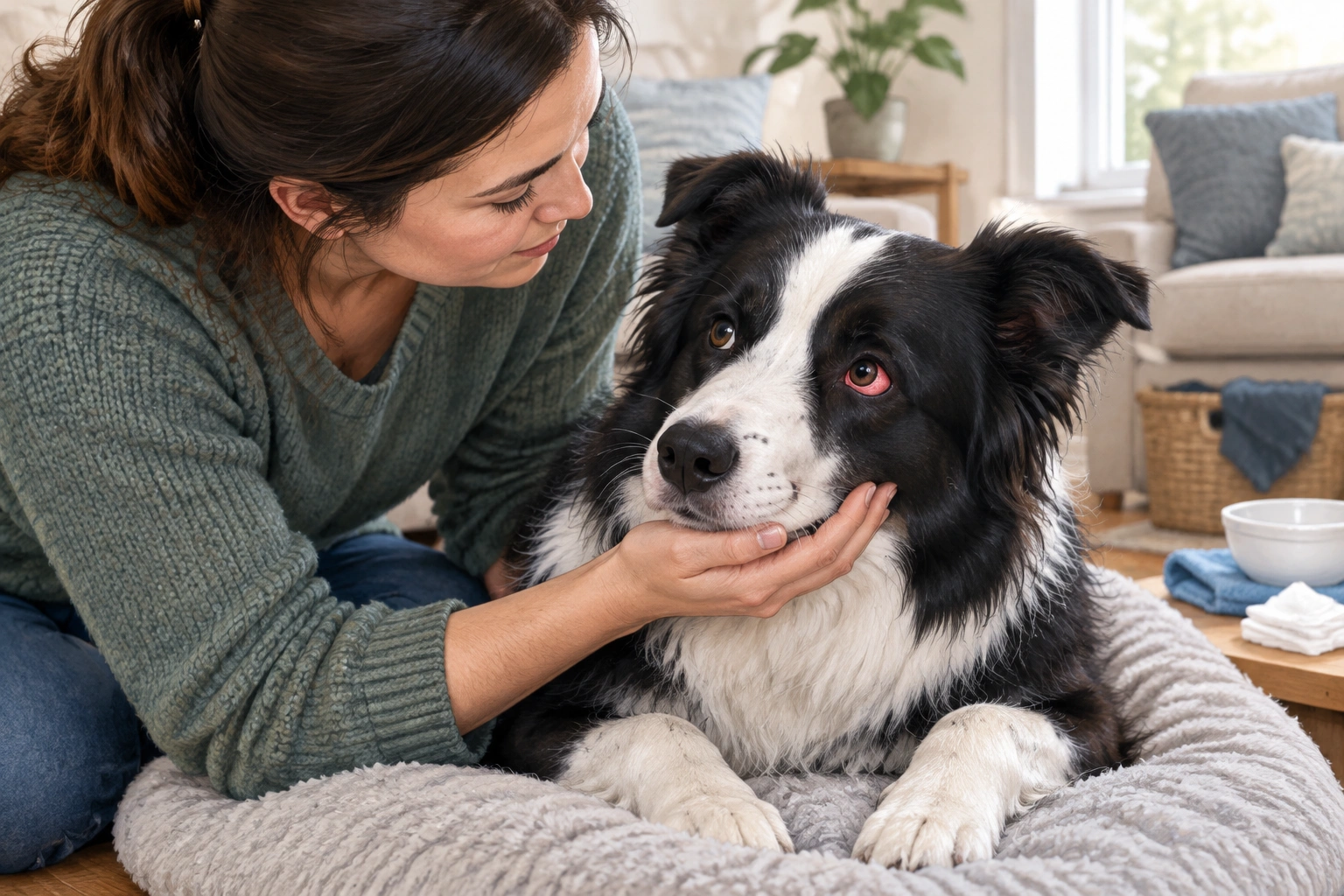
What to do right now
If you’ve just noticed a red eye, do this first:
- Prevent rubbing — use an e-collar if your dog is pawing or rubbing the eye.
- Note whether it’s one eye or both — that helps narrow the likely cause.
- Check for squinting, cloudiness, or discharge — these are important warning signs.
- Call the vet based on urgency — same day for pain or discharge, urgent care for cloudiness, swelling, or vision changes.
For Border Collies, that can matter because many are active, outdoors a lot, and often around wind, grass, dirt, and brush. A dog that spends the day chasing a ball across a field can come home with a mildly irritated eye that clears quickly. But the same kind of active dog can also pick up a foreign body, scratch the cornea, or rub an eye hard enough to make a small problem worse.
If you want a simple rule, use this: redness alone is less concerning than redness plus pain, squinting, cloudiness, swelling, or vision changes. Those extra signs are what push a red eye from “watch closely” into “call the vet today.”
Quick triage: how urgent is a red eye?
Here’s the decision framework I use.
Monitor at home for a short time if:
- the redness is mild
- your dog is otherwise comfortable
- there is no squinting or pawing
- the eye is not cloudy
- the discharge is clear or watery
- both eyes are mildly red in a way that fits an obvious irritant, like dust or pollen
In that situation, you can observe closely for a few hours and arrange a vet visit if it doesn’t improve quickly.
Book same-day veterinary care if:
- only one eye is red and it came on suddenly
- there is discharge that is thick, yellow, or green
- your dog is blinking a lot or holding the eye partly closed
- the eye looks sore, swollen, or unusually sensitive to light
- your dog keeps rubbing the face or pawing at the eye
- redness followed rough play, running through brush, or possible trauma
Treat it as urgent or emergency care if:
- the eye looks cloudy, blue, or white
- the pupil looks unusually large or different from the other eye
- the eye is very painful
- the eye is bulging or very swollen
- your dog seems unable to see normally
- redness appeared suddenly and is getting worse fast
Those signs can fit conditions like glaucoma, uveitis, or a corneal ulcer, and some of them can threaten vision if treatment is delayed.
What a red eye can mean in dogs
“Red eye” is a symptom, not a diagnosis. The redness happens when blood vessels in or around the eye become inflamed or enlarged. That can happen for a lot of different reasons, and the treatment depends on the cause.
The most common categories are:
- Irritation from dust, wind, grass, smoke, shampoo, or other environmental triggers
- Allergies, which often affect both eyes and may come with watery discharge and itching
- Infection, including conjunctivitis, which may cause redness and discharge
- Injury, such as a scratch or a foreign body like a seed, bit of grass, or debris
- Dry eye, where the eye doesn’t produce enough quality tears and becomes inflamed
- Structural problems, such as entropion, where the eyelid rolls inward and rubs the eye
- Inflammation or pressure problems inside the eye, including uveitis or glaucoma
A useful fact to keep in mind: red eyes in dogs can range from a simple irritation to something more serious, and some causes can lead to permanent vision damage without quick treatment. That is why appearance alone is not enough to judge the problem.
Redness patterns that change the risk
Not all red eyes look the same. The pattern gives you clues.
One red eye vs. both eyes
One red eye is more suspicious for a local problem: a scratch, foreign body, eyelid issue, or trauma. If a dog runs through grass and comes back with one red eye and keeps blinking, I think “something got in there” before I think “allergy.”
Both eyes red is more often associated with irritation or allergies, especially if the dog is otherwise bright, comfortable, and the discharge is watery.
That said, both eyes being red does not automatically make it harmless. Some infections and dry-eye cases affect both eyes too.
Watery discharge vs. thick discharge
Clear, watery discharge often fits irritation or allergies.
Thick yellow or green discharge is more concerning for infection or more significant inflammation. It doesn’t prove bacterial infection by itself, but it does move the case higher on the list for a vet exam.
Redness without pain vs. redness with pain
This is one of the most important comparisons.
A mildly red eye that doesn’t bother the dog much may be watched briefly.
A red eye with squinting, pawing, blinking, rubbing, or light sensitivity should be treated as a real eye problem until a vet proves otherwise. Pain usually means the eye surface is involved or pressure/inflammation is building inside the eye.
Warning signs that suggest pain, ulcer, glaucoma, or uveitis
These are the signs that should override “let’s wait and see”:
- squinting or keeping the eye partly shut
- pawing at the eye or rubbing the face on furniture or carpet
- cloudiness or a bluish haze
- a visible scratch, spot, or defect on the eye surface
- swelling around the eye
- light sensitivity
- a pupil that looks larger, smaller, or different from the other eye
- sudden vision changes
- the eye looking unusually hard, bulging, or under pressure
- redness that is clearly getting worse
A corneal ulcer, for example, can start with redness and blinking and then worsen if the dog keeps rubbing the eye. Glaucoma can be especially dangerous because pressure inside the eye rises and can damage vision quickly. Uveitis can also be painful and needs prompt treatment.
If you’re seeing pain, cloudiness, or a pupil change, don’t wait for the next routine appointment.
Safe home checks before you call the vet
You can gather useful information without touching the eye.
Look for these things:
– Is it one eye or both?
– Is the redness mild pink or deep red?
– Is there discharge, and if so, what color is it?
– Is your dog squinting, blinking, or keeping the eye closed?
– Is the eye cloudy?
– Does your dog seem bothered by bright light?
– Did this happen after a walk, rough play, mowing, wind, dust, or grass exposure?
– Has your dog been rubbing the face?
If your dog will tolerate it, compare the red eye to the other eye from a distance. You’re looking for obvious differences in pupil size, swelling, or cloudiness. A quick photo can also help you compare changes before the vet visit.
That information helps your vet decide how urgent the case is and what tests are most likely to be needed.
What not to do at home
This is where well-meaning owners can accidentally make things worse.
Do not:
– use human eye drops unless a vet specifically tells you to
– rub or press on the eye
– try to “check” for damage by pulling the eyelids hard apart
– delay care if the eye looks painful or cloudy
– assume every red eye is allergies
Human eye drops can mask symptoms or be unsafe for the wrong condition. A red eye that seems minor can also hide a corneal ulcer or pressure problem.
When rinsing or an e-collar may help — and when they shouldn’t
A gentle rinse with clean saline may sometimes help if you strongly suspect a mild, obvious surface irritant and your dog is comfortable. Keep it limited to that kind of situation. Do not try to flush the eye if there is pain, cloudiness, trauma, or any concern for a scratch, ulcer, or foreign body.
An e-collar can be very useful when a dog keeps rubbing the eye. That rubbing can turn a small scratch into a larger ulcer. If your dog is pawing at the eye, preventing self-trauma is often worth the temporary discomfort of the collar.
The trade-off is simple: the collar is annoying, but rubbing can be damaging.
Common causes your vet will consider
A vet doesn’t just look at the redness. They sort through the likely causes based on the exam and history.
Conjunctivitis
Conjunctivitis, often called pinkeye, causes inflammation of the tissues around the eye and can lead to redness and discharge. It may be related to infection, irritation, or allergies.
If you want a deeper breakdown of that condition, I’ve covered it in Do Dogs Get Pink Eye? What Border Collie Owners Need to Know.
Corneal ulcer
This is a scratch or open sore on the cornea. It can be very painful and often causes squinting, tearing, and redness. It needs veterinary diagnosis because some eye medications are not appropriate if an ulcer is present.
Foreign body
A bit of grass, dust, seed, or debris can lodge in the eye or under the eyelid and keep irritating the surface until it’s removed. Active dogs that run in brush or fields may be more likely to encounter that kind of exposure.
Allergies
Allergies often affect both eyes and may come with watery discharge and itching. Seasonal pollen, dust, and environmental triggers are common suspects.
Dry eye
When tear production is poor, the eye surface becomes irritated and inflamed. Dry eye can look like chronic redness, discharge, and discomfort.
Entropion or other eyelid problems
If the eyelid rolls inward, lashes or skin can rub the eye and cause ongoing irritation. That’s a mechanical problem, so the redness keeps returning until the underlying issue is addressed.
Glaucoma and uveitis
These are the diagnoses I don’t want owners to miss. Both can cause redness and pain, and both can threaten vision. A dog with a red eye and a cloudy look, enlarged pupil, or obvious pain needs prompt attention.
How vets diagnose a red eye
A vet usually starts with a medical history and a full physical exam, then performs a careful eye exam. That may include checking the cornea, eyelids, tear production, pupil response, and the pressure inside the eye if needed.
One common test is a fluorescein stain, which helps reveal corneal ulcers or scratches. Your vet may also use other non-invasive eye tests depending on what they see.
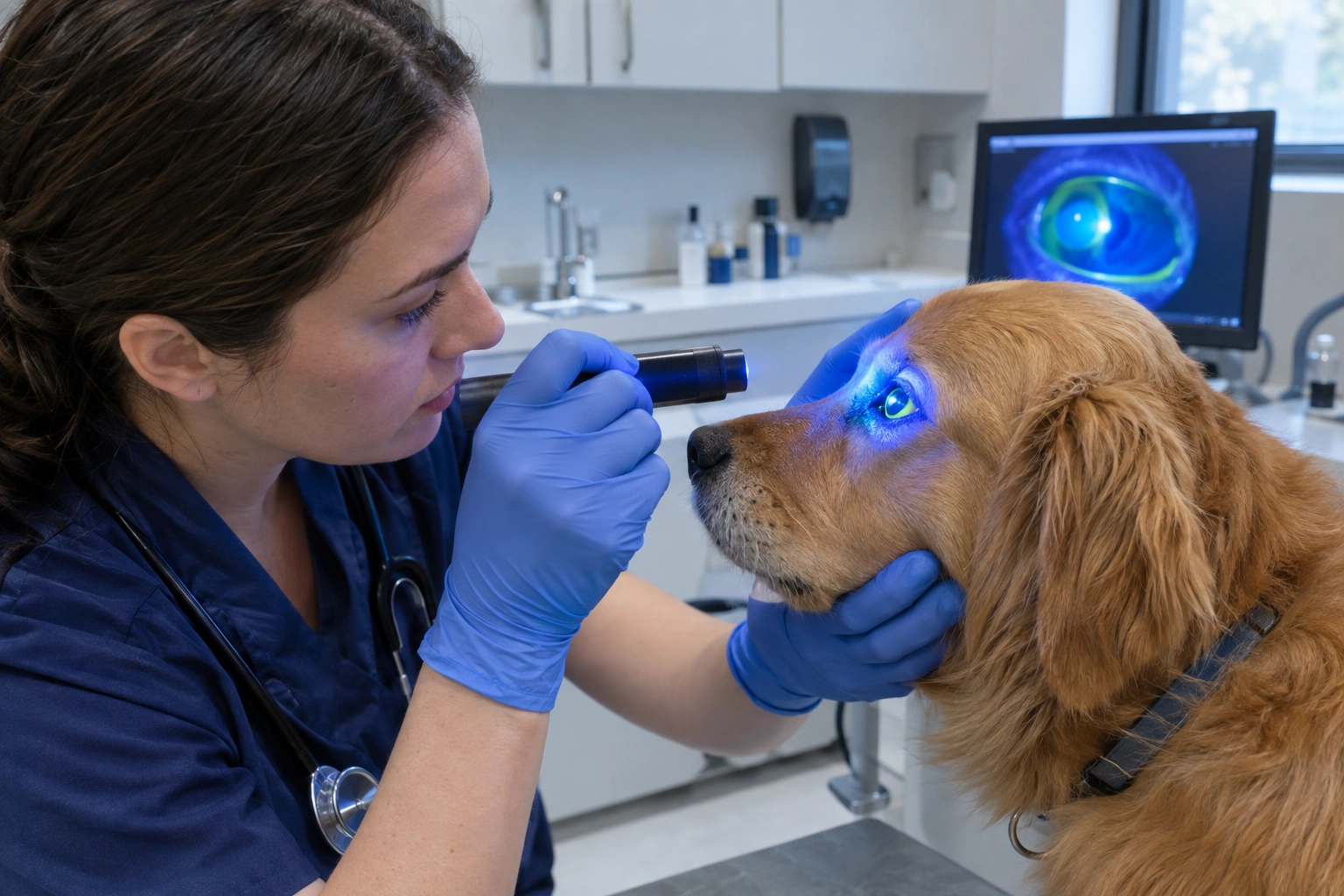
The point of the exam is simple: many eye problems look similar from the outside, but they are not treated the same way. That’s why appearance alone is not enough.
For a general veterinary reference on eye care and when to seek help, the ASPCA and VCA Hospitals both have helpful owner-facing guidance.
Typical treatments and recovery expectations
Treatment depends entirely on the cause.
A vet may recommend:
– topical medication for infection or inflammation
– pain relief if the eye is uncomfortable
– lubricating drops for dry eye
– removal of a foreign body
– an e-collar to stop rubbing
– urgent pressure-lowering treatment if glaucoma is suspected
– surgery for some eyelid or structural problems
Recovery time varies. A mild irritation may improve quickly once the trigger is removed. A scratch or ulcer may need follow-up until the surface heals. Glaucoma or uveitis may require urgent, ongoing management.
The key is not to judge the seriousness by how “small” the redness looks. Some of the most painful eye problems start with a red eye that doesn’t look dramatic at first.
Why active Border Collies may get eye irritation more often
Border Collies are often outdoors, moving fast, and working close to grass, dirt, wind, and debris. That kind of lifestyle can raise the chance of minor eye irritation. A hard run across a field, a face full of dust, or a bit of brush across the eye can all trigger redness.
Rough play matters too. A dog that barrels through bushes or collides with another dog can end up with a scratch or foreign body that looks like “just redness” at first.
That’s why I pay close attention to the context. A mildly red eye after a windy, dusty walk is one thing. A red eye after rough play, with squinting and pawing, is something else entirely.
When to see a veterinarian or certified trainer
For this topic, the professional you need is usually a veterinarian, not a trainer. If the eye is red and the dog is uncomfortable, the right move is to call your vet the same day.
If your dog is rubbing the eye because of discomfort, an e-collar may help protect the eye until the appointment.
FAQs
Is a red eye in a dog always an emergency?
No. Mild redness from irritation or allergies can be less urgent. But redness with pain, cloudiness, swelling, or vision changes should be treated as urgent.
Can I use human eye drops on my dog?
Not unless your veterinarian specifically instructs you to. Some products are unsafe or can delay proper treatment.
Should I flush my dog’s eye?
Only if the eye seems mildly irritated and your dog is comfortable, and only when you suspect a simple surface irritant. If there is pain, cloudiness, trauma, or a foreign body may be involved, skip home flushing and get veterinary advice.
Does discharge mean infection?
Not always. Watery discharge can happen with irritation or allergies. Thick yellow or green discharge is more concerning and should be checked.
Why is only one eye red?
One red eye often points to a local problem such as a scratch, foreign body, eyelid issue, or trauma. It deserves more caution than mild redness in both eyes.
Can a red eye cause blindness?
Some causes can, especially if treatment is delayed. That’s why pain, cloudiness, pupil changes, and sudden worsening are red flags.
How fast should I act?
If the eye is painful, cloudy, swollen, or the dog is squinting, act the same day. If it looks like mild irritation and your dog is comfortable, monitor closely but be ready to call your vet if it doesn’t improve quickly.
What if my Border Collie gets red eyes after running outside?
That can happen from dust, grass, or wind exposure. Still, if there’s squinting, pawing, discharge, or one eye is much worse than the other, treat it as more than simple irritation.
Is a red eye contagious?
Sometimes, if infection is involved. But many red eyes are not contagious. Your vet can help determine whether isolation or extra hygiene makes sense.
What will the vet likely check first?
They’ll usually examine the eye closely, look for injury or discharge, and may use a fluorescein stain or other eye tests to identify the cause.