
Why Is My Dog Gaining Weight Without Eating More? A Practical Guide for Concerned Owners

If your dog looks heavier but you haven’t changed their meals, it’s reasonable to feel uneasy. Sometimes the explanation is simple: hidden calories, fewer walks, aging, or a lower energy need after spaying or neutering. Other times, the change points to a medical problem such as hypothyroidism, Cushing’s disease, or fluid retention.
The useful first step is not guessing. It’s separating true fat gain from bloating, belly swelling, or fluid buildup, then checking whether the dog’s daily intake and activity have quietly changed. That distinction shapes what you do next.
Why a dog can gain weight without eating more
Weight gain happens when calories in exceed calories used. That sounds obvious, but in real life owners often miss the small things that tip the balance.
A dog can gain weight even if the main meal looks unchanged because:
- treats were added more often
- chews and table scraps were not counted
- multiple family members are feeding
- exercise dropped off
- age lowered calorie needs
- a medication changed appetite, metabolism, or water balance
- a medical condition is causing weight gain or swelling
One helpful reality check: some cases that seem “unexplained” turn out to be overfeeding once the full diet is counted.
First checks at home: food, treats, exercise, and scale accuracy
Before changing the diet, spend a few minutes on a practical audit. This catches many of the common causes.
1) Count everything edible for one full day
Write down:
- every meal
- treats
- training rewards
- chews
- table scraps
- food given by children or other household members
- anything added to kibble, such as broth, toppers, or peanut butter
Owners often focus on the bowl and forget the extras. Treats and chews can add up faster than many people expect, especially for smaller dogs.
2) Check whether feeding has become less precise
If your dog is fed “a scoop” instead of a measured cup, the amount can creep up over time. A cup that is heaped, packed, or shared between family members is not a reliable measure.
Use a real measuring cup or kitchen scale for a week. If the dog is getting food from more than one person, make sure everyone uses the same plan.
3) Compare current activity with a few months ago
A dog does not need to become sedentary to gain weight. A small drop in daily movement can be enough.
Ask yourself:
- Are walks shorter?
- Is play less frequent?
- Has weather changed exercise habits?
- Is the dog resting more because of age, pain, or routine changes?
Older dogs often exercise less while eating the same amount, which can slowly create weight gain.
4) Confirm the scale change is real
If the increase is small, weigh the dog on the same scale under the same conditions, ideally at the same time of day. A difference of a pound or two can be hard to interpret in a medium or large dog if the method changes each time.
For a small dog, even a modest gain matters more than it would in a larger dog. The same number on the scale means something very different depending on body size.
5) Keep a simple home-check log
Before the vet visit, it helps to track a few basics so you can describe the change clearly:
- weekly weights
- photos from the side and from above
- water intake changes
- urination changes
- appetite changes
- exercise changes
That record can make patterns easier to spot, especially if the change is gradual.
Use body condition score instead of scale weight alone
The scale tells part of the story. Body condition score (BCS) tells you whether the dog is carrying too much fat.
A dog can look “fine” on the scale and still be overweight if they are short-legged, small-framed, or naturally muscular. The reverse is also true: a dog might weigh more than expected because of fluid or abdominal swelling, not fat.
What to look for at home
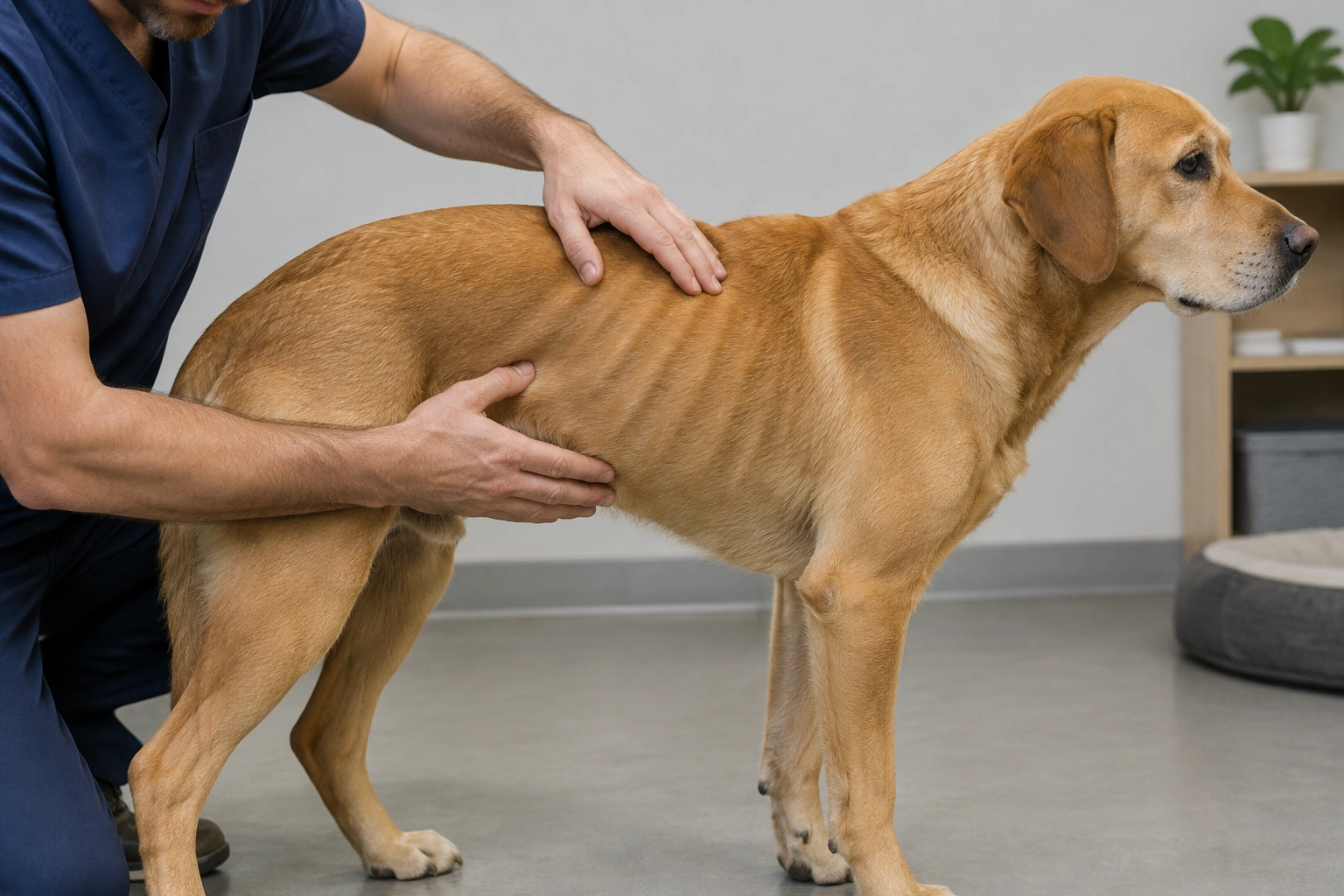
Run your hands along the dog’s ribcage and waistline:
- Ribs: You should be able to feel ribs without pressing hard. If you have to dig through a thick layer of fat, the dog may be overweight.
- Waist: Viewed from above, most dogs should have a visible waist behind the ribs.
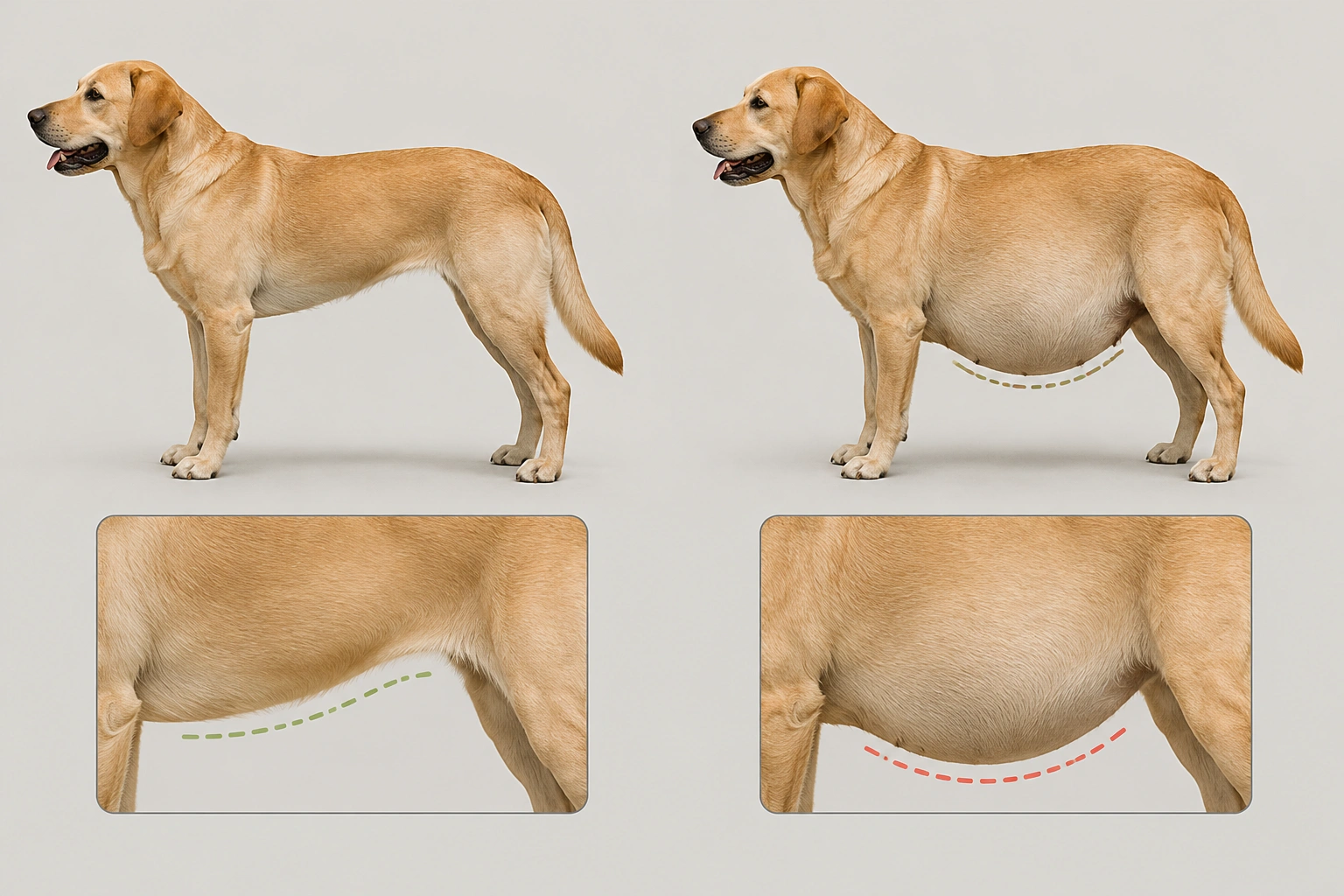
- Tummy tuck: From the side, the belly should rise slightly after the ribcage, not hang in a straight or rounded line.
If you cannot feel the ribs well, or the dog has lost a waist and belly tuck, excess body fat is more likely than a sudden medical swelling issue.
Why this matters
BCS helps you decide whether the dog truly needs weight management or whether the body shape suggests something else. That matters because the next step is different:
- fat gain usually calls for portion review and gradual lifestyle changes
- fluid retention or abdominal swelling needs veterinary evaluation
When normal aging, spaying/neutering, or medications can explain the change
Not every weight change means disease. Some changes are expected, but “expected” does not mean harmless.
Aging
As dogs get older, they often move less. If the food bowl stays the same while daily activity drops, weight gain can follow. This is one of the most common non-medical reasons for gradual gain.
A useful clue is the timeline. If the weight has crept up over months and the dog otherwise seems well, age-related slowing plus unchanged feeding is a plausible explanation.
Spaying and neutering
After spaying or neutering, many dogs need fewer calories than before. That does not mean the procedure causes obesity by itself; it means the dog’s energy needs may change, and the old feeding amount may now be too much.
This is especially easy to miss when the dog still seems hungry and finishes meals quickly. Hunger is not the same as calorie need.
Medications
Some medications can change appetite, water balance, or body weight. If the weight gain started after a new prescription, that timing matters.
If your dog’s weight changed after a medication was started, do not stop the drug on your own. Instead, ask your veterinarian whether the medication could be contributing and whether the dose or monitoring plan needs review.
Medical causes that can make a dog gain weight unexpectedly
If diet and activity do not explain the change, medical causes move higher on the list.
Hypothyroidism
Hypothyroidism can slow metabolism, which may contribute to weight gain. Dogs may also show other changes such as low energy or coat changes. Because those signs can be subtle, the condition can look like ordinary middle-age slowing until testing is done.
Cushing’s disease
Cushing’s disease, also called hyperadrenocorticism, can change how a dog stores fat and handles water. The dog may develop a rounder appearance, especially around the belly, and may also show other signs such as increased thirst or urination.
Other health problems
Fluid retention from organ dysfunction can also make a dog appear heavier. In that case, the issue is not excess fat but abnormal fluid accumulation, which is a very different medical problem.
Medical weight gain is more concerning when it comes with:
- lethargy
- hair loss or coat changes
- increased thirst
- more frequent urination
- panting
- appetite changes
- weakness
Those signs do not prove a specific disease, but they do make a veterinary exam much more important.
Fat gain versus fluid retention or abdominal swelling
This is one of the most important distinctions to make at home.
| Clue | More like fat gain | More like fluid retention or abdominal swelling |
|---|---|---|
| Timeline | Gradual over weeks or months | Sudden or fairly rapid |
| Body shape | Overall rounder, less waist, thicker ribs | Belly looks enlarged or tight, sometimes uneven |
| Feel | Soft fat under the skin | Tense abdomen or unusual fullness |
| Appetite | Often normal or slightly increased | May be normal, reduced, or variable |
| Energy | May be slightly lower over time | May seem tired, weak, or uncomfortable |
| Other signs | Fewer walks, more treats, aging | Vomiting, weakness, breathing changes, drinking/urination changes |
| Urgency | Usually prompt but not emergency | Veterinary attention needed quickly |
If the abdomen is enlarging but the rest of the body does not look proportionally heavier, think beyond simple obesity. Sudden abdominal enlargement with restlessness, retching, or breathing trouble can be an emergency and needs urgent veterinary care.
When weight gain needs a vet visit now
Book a veterinary appointment promptly if:
- the weight gain is new and you cannot explain it with food or activity
- the gain is continuing despite no obvious diet change
- the dog has increased thirst or urination
- the dog seems lethargic or weak
- the coat is thinning or changing
- the belly looks enlarged or tense
- the dog is panting more than usual
- the dog vomits, seems painful, or stops acting normally
Seek urgent care sooner if the weight gain is sudden or rapid, especially if it comes with breathing trouble, marked abdominal swelling, collapse, or severe weakness. Those signs raise concern for fluid buildup or another serious problem.
A good rule: gradual gain without other symptoms usually deserves a scheduled visit; sudden gain or gain plus illness signs deserves faster attention.
What a veterinarian may check or test
A veterinarian will usually start with a physical exam and body condition assessment. From there, the workup depends on what the dog looks and feels like.
Common baseline tests may include:
- a complete blood count (CBC)
- a chemistry panel
- urinalysis
- thyroid testing if hypothyroidism is suspected
- tests for Cushing’s disease if the signs fit
- abdominal imaging, such as X-rays or ultrasound, when swelling or fluid retention is suspected
The goal is to match the test to the pattern. A dog with slow, steady gain and no red flags may need a different approach than a dog with a distended belly and increased thirst.
If you want a broader look at how appetite and body changes can overlap in older dogs, see our guide on why a senior dog may stop eating.
Safe next steps if the problem is excess body fat
If your dog’s body condition suggests simple weight gain rather than illness, the safest approach is gradual and measured.
Tighten portions first
Before switching foods, confirm the current amount is appropriate. Many owners get results just by measuring meals accurately and removing hidden calories.
Cut treats strategically
Keep treats, but make them count. A few practical options:
- use part of the daily kibble as training rewards
- choose smaller treats
- reduce chews that add a lot of calories
- stop table scraps for a few weeks while you reassess
Increase activity slowly
If the dog is otherwise healthy, add movement in a way the dog can handle. That might mean an extra short walk, more sniffing time, or a few minutes of play each day.
Avoid sudden exercise jumps if the dog is overweight, older, or possibly ill. A dog that is gaining weight because of a medical issue may not tolerate aggressive activity changes well.
Track progress by body shape, not just the scale
Weigh the dog every 2 to 4 weeks and also check the waist and rib feel. If the dog is losing weight too quickly, eating less, or acting unwell, that is a reason to check back with the vet.
A practical decision framework
Use this simple filter:
- Monitor for 1–2 weeks: mild, gradual gain with no other symptoms, especially if you suspect treat creep, reduced exercise, or slightly oversized portions
- Book a vet visit now: ongoing gain without a clear explanation, weight gain with increased thirst or urination, coat changes, lethargy, or repeated weight increases despite diet review
- Seek urgent care: sudden belly enlargement, breathing changes, retching, collapse, vomiting, or obvious discomfort
That framework is more useful than trying to guess the exact disease at home. Your job is to notice the pattern and act on the red flags.
FAQ
Can a dog gain weight from treats alone?
Yes. Treats, chews, and table scraps can add enough calories to matter, especially for smaller dogs or dogs that get them daily.
How do I know if my dog is overweight or just bloated?
Overweight dogs usually gain shape gradually and feel softer over the ribs and waist. Bloating or fluid buildup tends to change the belly more suddenly and may make the abdomen look tight or enlarged.
Should I wait and watch or call the vet?
If the change is mild and you can explain it with food or reduced activity, a short monitoring period may be reasonable. If the gain is unexplained, ongoing, or paired with thirst, urination, lethargy, vomiting, or belly swelling, call the vet.
Final takeaway
If your dog is gaining weight without eating more, the explanation is often hidden calories, less activity, or a lower calorie need with age or after spaying or neutering. But unexplained gain can also point to hypothyroidism, Cushing’s disease, or fluid retention. The safest next step is to compare body condition, review the full diet, and book a veterinary visit if the change is sudden, persistent, or paired with other symptoms.