
How to Train a Dog to Be Calm: Practical Steps for a More Settled, Confident Dog

A dog that can settle is easier to live with, safer around guests, and less likely to spiral into barking, jumping, pacing, or leash chaos. The good news is that calmness is not just “personality.” In many dogs, it is a learned skill built through repetition, predictable routines, and clear reinforcement.
That said, calm training works best when you understand what you are actually seeing. A dog who is simply energetic needs a different plan from a dog who is anxious, overstimulated, or in discomfort. If you treat all restlessness like “too much energy,” you can miss the real issue and accidentally make it worse.
What Calm Behavior Looks Like in a Dog
Calm behavior is not the same as a dog being frozen, shut down, or too tired to respond. A genuinely calm dog can rest, breathe normally, and relax its body without hovering for the next cue or reward.
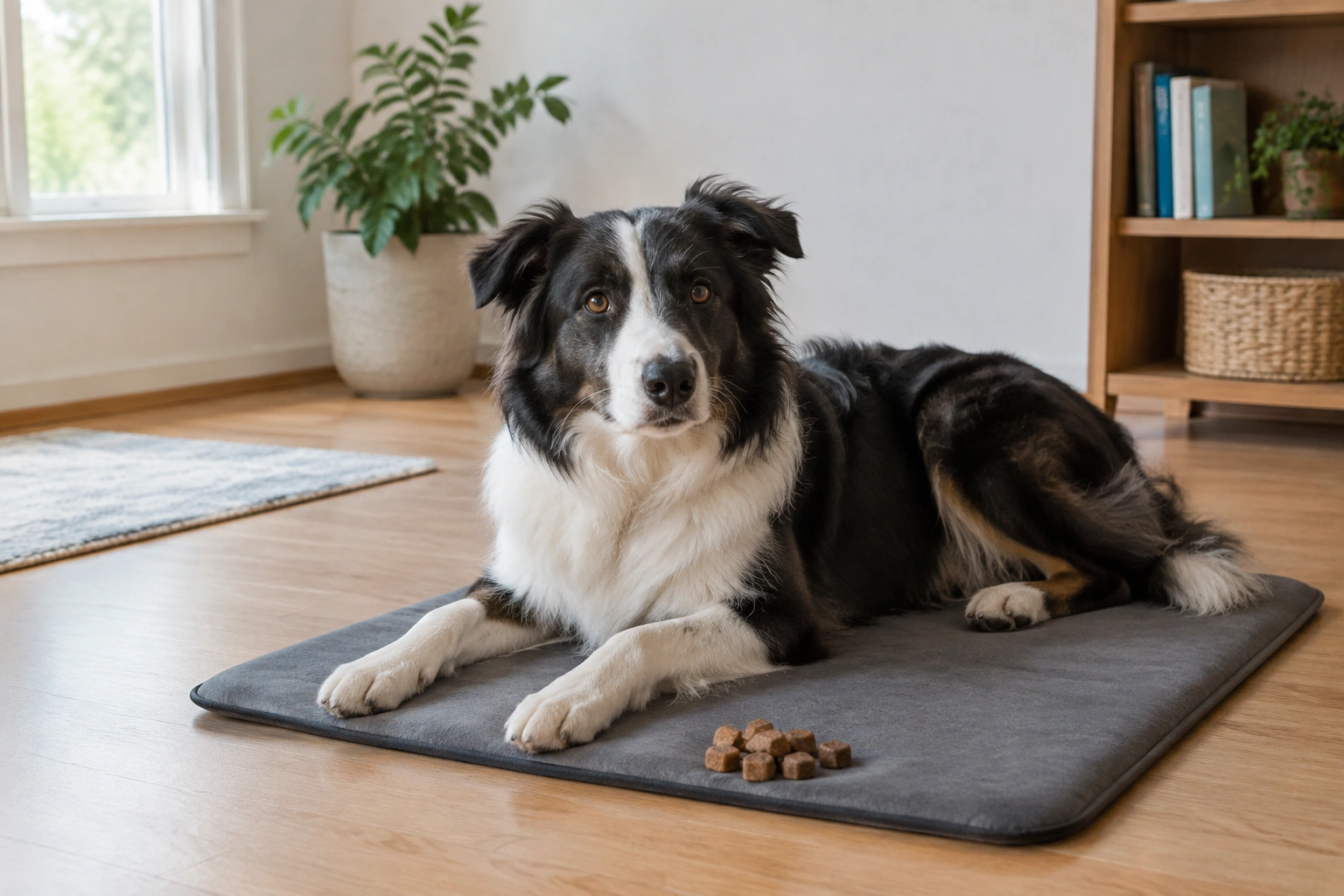
In practical home life, calm often looks like a dog lying on a bed while you cook, resting near you while you answer email, or staying on a mat while guests talk nearby without constantly popping up, staring, or demanding attention.
Look for signs like:
- loose muscles
- slower breathing
- a soft face and relaxed ears
- lying down without constant repositioning
- being able to disengage from a trigger
- settling near you without demanding attention
The goal is for the dog to be both physically and emotionally relaxed, not just lying still. VCA Hospitals also notes that settling and calm handling are learned skills that can be taught with positive reinforcement. VCA Hospitals
Calm versus shut down
A shut-down dog may look “quiet,” but the body language is different. You may see a fixed stare, tucked tail, stiff posture, avoidance, or refusal to move. That is not the same as relaxation.
If your dog is quiet but tense, do not assume the training is working. Calm should look soft and recoverable. If the dog can get up, take food, and re-engage without stress, you are on the right track.
Why Dogs Struggle to Settle
There is rarely one cause. Most dogs that seem “hyper” are dealing with some mix of these:
1. They have rehearsed excited behavior for a long time
If jumping, barking, or spinning has worked in the past, the dog has learned that excitement gets results. That might mean attention, treats, access to guests, or release to the yard.
2. The environment is too stimulating
Some dogs are fine until the doorbell rings, a leash comes out, or another dog appears. In those moments, the issue is not just energy. It is arousal.
3. They do not yet know what to do instead
A dog cannot “be calm” in a vacuum. Calmness needs a replacement behavior, such as going to a mat, holding a settle, or waiting at a threshold.
4. Their routine is too chaotic
Dogs settle better when life is predictable. Regular walk times, rest periods, feeding patterns, and quiet downtime help many dogs regulate more easily.
5. Anxiety, fear, pain, or illness is driving the behavior
Persistent pacing, panting, restlessness, or sudden changes in behavior can point to discomfort or stress. If the pattern is new, severe, or getting worse, a veterinary check matters.
Is It High Energy or Anxiety?
This distinction changes the plan.
| What you see | More likely high energy | More likely anxiety or stress |
|---|---|---|
| Body language | bouncy, loose, playful | tense, watchful, stiff, or avoidant |
| Response to stimulation | excited but recoverable | escalates or struggles to recover |
| After exercise | may settle better | may still pace, pant, or cling |
| Around triggers | eager, pushy, noisy | worried, reactive, or overwhelmed |
| Best first step | structure, outlets, impulse control | distance, management, vet check if persistent |
A high-energy dog often benefits from more structure, better outlets, and calm training. A stressed dog may need lower exposure to triggers, more distance, and more careful behavior support.
If your dog cannot settle even after a reasonable walk, seems on edge in multiple settings, or reacts strongly to ordinary household events, think beyond exercise. That pattern often needs more than “wearing them out.”
Start With Management Before Training
Before you teach calm, make the environment easier to succeed in. Management prevents the dog from practicing the exact behavior you are trying to reduce.
Use simple structure at home
Try these practical adjustments:
- block access to the front window if outside activity sets the dog off
- use baby gates to reduce door chaos
- keep a leash handy for greeting practice
- create a quiet rest area with a bed or mat
- schedule rest after active periods instead of letting the dog self-amplify
This is not “giving in.” It is setting the dog up to rehearse calm instead of rehearsing frenzy.
Decide what the dog must do before access
If your dog rushes the door, jumps on guests, or hovers at mealtimes, build a rule: calm earns access.
For example:
– sitting or going to a mat before a door opens
– four paws on the floor before greeting
– staying on a station while food is prepared
That structure is especially helpful for dogs that are smart, social, and easily overstimulated.
First 1–2 Weeks: A Simple Calmness Training Plan
If you are just starting, keep the plan small and predictable.
- Pick one station behavior: a mat, bed, or place cue.
- Set up low-distraction practice: a quiet room, short sessions, and easy rewards.
- Reward calm moments only: lying down, soft body language, or staying on the mat without fussing.
- Use the station in one daily routine: meals, visitor arrivals, or your own work time.
- Keep sessions short and successful: end before the dog gets restless.
- Repeat the same pattern for several days before making it harder.
- Add one small distraction at a time only after the dog can succeed in the easy version.
The goal in the first phase is not perfection. It is to make calm predictable enough that the dog can start choosing it.
Teach Foundational Calmness Skills
The most useful calm behaviors are practical, repeatable, and easy to use in daily life.
1. Teach a settle cue
A settle cue asks the dog to relax in one spot, usually on a bed, mat, or blanket. Begin in a quiet place with very few distractions. Humane Society of Missouri recommends starting calmness work when the dog is already calm and the environment is minimal and predictable. Humane Society of Missouri
Keep the first sessions short. Reward small moments: lying down, shifting weight off the front feet, sighing, or resting the head.
The point is not stillness at all costs. The point is to build a pattern the dog can repeat.
2. Use mat or place training
Mat training gives the dog a clear station. It is useful for guests, meals, and busy households because the dog has a job that is incompatible with zooming around.
A simple progression:
1. toss a treat onto the mat
2. reward the dog for stepping on it
3. reward sitting or lying down there
4. add a brief pause before the next reward
5. gradually add mild distractions
If the dog repeatedly leaves the mat, the step is too hard. Go back to an easier version.
3. Practice impulse control
Impulse control is the ability to wait without exploding. Useful exercises include:
– waiting before going through a door
– pausing before taking food
– holding a sit before greeting
– leaving low-value items alone
These are not about making the dog “obedient” for the sake of it. They teach the nervous system that waiting is safe and rewarding.
4. Build relaxation as a separate skill
Some dogs can perform commands but still cannot truly relax. That is where relaxation practice helps.
A relaxation exercise described by Dog Gone Problems uses a dog bed, a quiet room, and high-value treats, building slowly so the dog learns that quiet behavior earns a reward. Dog Gone Problems
The key is gradual progression. If the dog gets restless, you have moved too fast.
How to Reward Calm Without Accidentally Rewarding Excitement
Timing matters more than most owners realize. If you reward after barking, jumping, or frantic pawing, the dog may learn that the explosion worked.
A concrete example: if your dog barks, jumps, then pauses for one second, wait for that brief pause before marking and rewarding. If the dog immediately ramps back up, do not keep feeding the frenzy. Reset, create more distance, and wait for a calmer moment that the dog can actually hold.
That same principle applies in daily life. Reward the first calm moment you can honestly catch:
– four feet on the floor
– a pause after movement
– lying down on the mat
– a soft exhale
– choosing to disengage from a trigger
How to avoid reinforcing excitement in the moment
If your dog is demanding attention with jumping, barking, pawing, or nudging:
– pause your interaction
– avoid eye contact if that keeps the dog amped up
– keep your voice neutral
– reward only after the dog settles, even briefly
If the dog starts escalating again, stop the reward flow and reset. Calm behavior should pay better than chaos.
Exercise vs Mental Enrichment: What Your Dog Actually Needs
Physical exercise and mental work solve different problems.
Physical exercise helps when the dog has excess energy
A dog that is under-exercised may be restless simply because the body has too much unused fuel. Walks, sniffing, fetch, and safe play can help.
Mental enrichment helps when the dog is bored or under-stimulated
Food puzzles, scent games, short training sessions, and problem-solving tasks can reduce frustration and improve focus.
Calming enrichment versus arousing activity
Not all enrichment has the same effect. Some activities are more settling, while others can ramp a dog up.
More calming options often include:
– sniff walks at a slower pace
– scatter feeding in grass or around the house
– lick mats or stuffed food toys
– simple nosework games
– short, low-pressure shaping sessions
– quiet chewing, if your dog handles it well
More arousing options can include:
– rough, fast fetch sessions
– high-intensity tug with lots of arousal
– crowded dog parks
– prolonged chase games
– overstimulating play with too many breaks in impulse control
A practical rule:
– if your dog is physically restless but emotionally steady, add more movement
– if your dog is mentally frantic, pushy, or unable to switch off, add structure and calmer enrichment
– if both are true, use a mix of both
What to Do in Real-Life Trigger Situations
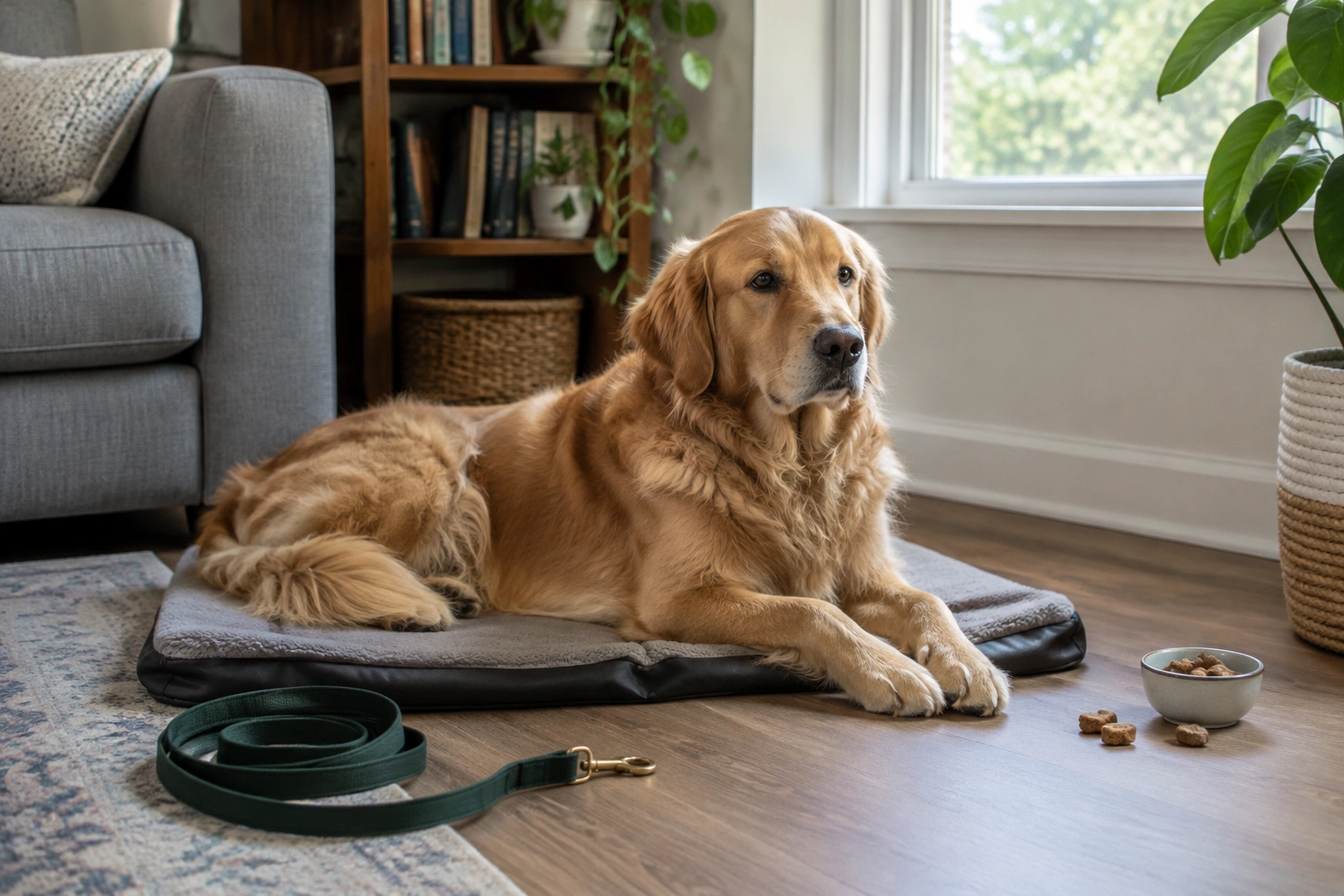
Training only matters if it works in everyday life. Here is how to apply it where dogs usually struggle.
Guests and visitors
If your dog is already highly aroused, do not open the door and hope for the best. Put the dog behind a gate, on leash, or in another room before guests enter.
A useful sequence is:
– guest arrives
– dog is stationed away from the door
– door opens only after the dog is calm enough to succeed
– reward the dog for staying on the mat or behind the gate
– release the dog only if the body stays loose
If the dog is barking, spinning, or jumping, make the setup easier. Ask guests not to greet the dog yet. Shorten the greeting, add more distance, or keep the dog separated until the arousal drops.
Doorbells and knocks
Pair the sound with a predictable routine:
– sound happens
– dog goes to station
– calm behavior gets rewarded
If the dog explodes before you can cue anything, manage first. You may need to mute the sound, use a gate, or preemptively station the dog.
Leash walks
If your dog pulls, spins, or scans constantly, calm starts before the walk begins. Ask for a sit or brief pause at the door, then reward loose-body movement and check-ins outside.
If the dog is already over threshold, do not keep pushing forward just to “get the walk done.” Step back, turn around, create distance, or end the outing if needed. In some cases, a few minutes of sniffing in a quieter area is more useful than a long, frantic walk.
Concrete examples:
– If your dog launches toward every person or bike, increase distance before the reaction starts.
– If the dog is barking at the end of the leash, move away in a wide arc rather than tightening the leash and correcting.
– If the dog cannot eat treats, cannot respond to cues, and is scanning nonstop, the dog is too aroused to learn in that moment.
Mealtimes
Use meals as calm training opportunities. Ask for a mat stay or brief wait before the bowl appears. Release the dog only when the body is settled enough to succeed.
Other dogs
Do not force greetings to “socialize” a dog that is already over threshold. Create distance first. Calm reinforcement works better when the dog is still able to think.
If your dog is already highly aroused around another dog, move away before contact happens. Cross the street, turn behind a car, or put a barrier between the dogs if possible. If the dog is barking, lunging, or fixated, do not try to “work through it” at close range. That usually makes the rehearsal worse.
For on-leash encounters:
– keep the leash loose enough to avoid extra tension
– increase distance early
– reward attention back to you if the dog can take food
– leave the area if the dog cannot recover
A note on crate training
Crate training can be a helpful calm-management tool when it is introduced positively and used for rest, decompression, or short periods of safety. It can reduce overstimulation when a dog needs help settling away from guests, door traffic, or constant household motion. It should not be used as punishment, and it should not be the only strategy for a dog that is anxious, panicked, or unable to relax.
Common Mistakes That Make Dogs More Excited
A few habits slow progress more than people expect:
- talking too much during excitement
- repeating cues over and over
- rewarding after the dog has already escalated
- moving to distractions before the dog can succeed in quiet settings
- using punishment to stop barking or jumping
- changing the rules from day to day
Punishment may suppress behavior in the moment, but it does not teach relaxation. It can also increase anxiety, which is the opposite of what you want in a calmness plan.
How Long Calm Training Takes and How to Measure Progress
There is no honest one-size-fits-all timeline. Some dogs improve quickly once the household becomes more predictable. Others need weeks or months of steady practice, especially if excitement or anxiety has become a habit.
Measure progress by behavior, not by calendar time:
– can the dog settle faster than before?
– does the dog recover more quickly after stimulation?
– can you add a little more distraction without losing the behavior?
– does the dog choose the mat or bed more often on its own?
These are better signs than waiting for a perfect, permanently calm dog. Most dogs become more manageable in layers.
When to Call Your Veterinarian
Call your veterinarian if the restlessness is sudden, intense, or paired with other changes such as panting, pacing, appetite changes, stiffness, or trouble resting. Persistent inability to settle can be linked to pain, discomfort, or other medical issues.
You should also seek help from a certified dog trainer or veterinary behaviorist if:
– the dog is escalating rather than improving
– fear, panic, or reactivity seems to drive the behavior
– basic calm training is not making progress
– the dog cannot function around common triggers
If the issue is bigger than home training, getting help early usually saves time and stress.
FAQ
How do I train my dog to be calm without rewarding bad behavior?
Reward the first quiet, settled moments you see, not the barking or jumping that came before them. Keep your timing clean, and avoid eye contact, talking, or touching during excitement if those things keep the dog amped up.
Should I tire my dog out before calm training?
Sometimes a dog needs some exercise before training, but not so much that it becomes overexcited or depleted. The goal is a dog that can think. A brief walk, sniff time, or play session may help, but calm training still needs a quiet setup.
What is the best calm behavior exercise?
The best exercise is the one your dog can actually succeed at consistently. For many households, that means mat training or a settle cue because those behaviors are easy to use around guests, meals, and daily routines.
How do I know if my dog is calm or just shut down?
A calm dog looks loose, soft, and responsive. A shut-down dog often looks stiff, avoidant, or emotionally flat. If the dog seems tense or frozen, treat that as stress rather than success.
Can an energetic dog learn to be calm?
Yes. Calmness can be taught and reinforced. Some dogs will always be lively, but they can still learn to settle, wait, and recover more easily in real life.
A calmer dog is built, not wished for
If you want a dog that settles more easily, focus on three things at once: manage the environment, teach a clear replacement behavior, and reward the quiet moments you want more of. That combination is usually far more effective than trying to exhaust the dog or correct the behavior out of them.
For related help with daily routines and behavior foundations, you may also find our guide on how to potty train a rescue dog useful if your dog also struggles with structure and settling at home.