
How to Make Bath Time Safer for a Border Collie

Quick Answer
To make bath time safer for a Border Collie, secure the floor with a non-slip mat, use comfortably lukewarm water, keep spray and shampoo away from the face and ears, and reward calm cooperation. Brush before washing, rinse the dense double coat thoroughly, and dry the undercoat. If your dog panics, stop and rebuild comfort gradually rather than forcing the bath.
Set Up a Bathing Area That Prevents Slips and Escapes
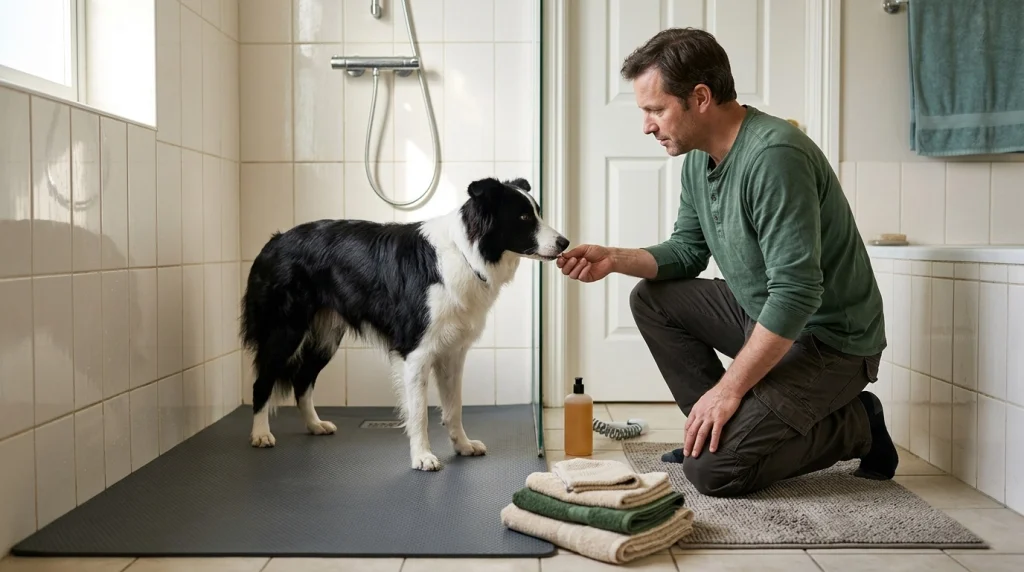
The safest bath begins before the water runs. A Border Collie may step sideways, pivot quickly, or attempt to jump out if startled. On a slick tub floor, even a small movement can become a fall.
Place a rubberized, non-slip mat across the standing area and check that it stays flat when wet. Put a second mat or towel where your dog will step out. Clear away bottles, sharp grooming tools, dangling cords, and anything that could fall when bumped.
- Keep supplies within arm’s reach: dog shampoo, several towels, a cup or gentle handheld sprayer, treats, and a washcloth.
- Use stable footing: avoid a loose towel inside the tub if it slides or bunches under the paws.
- Control the exit: close nearby doors, and position yourself to guide your dog without grabbing or wrestling.
- Stay with your dog: never leave a dog unattended in a tub, even when the water level is low.
If your Border Collie cannot step into the tub comfortably, use a stable entry aid suited to the dog and setup, or choose a ground-level shower. Avoid lifting a struggling dog into a slippery space. Dogs with joint pain, weakness, or mobility problems may do better with a professional grooming setup.
Check Your Dog Before Starting
A brief hands-on check can prevent bathing from making an existing problem worse. Part the fur and look for sore spots, red skin, hot spots, wounds, unusual lumps, parasites, or painful tangles. Check whether the paws are comfortable standing on the chosen surface.
Brush the coat while it is dry, paying attention behind the ears, under the collar, beneath the legs, and around the tail. Do not pull hard against tight mats. Wetting badly tangled fur can make handling and drying more difficult; painful or heavily matted areas may need a groomer or veterinarian.
Border Collies have a dense, weather-resistant double coat, so the coat can look wet on the outside while the undercoat remains comparatively dry. That makes gentle parting, careful rinsing, and complete drying especially important. For the complete coat-cleaning sequence, see the guide to bathing a double coat.
Postpone a routine bath when your dog is ill, unusually lethargic, shivering, or showing clear pain. If you notice an open wound, severe irritation, discharge, or persistent foul skin odor, ask a veterinarian what cleaning is appropriate before applying shampoo.
Make Water and Shampoo Gentle on Skin, Eyes, and Ears
Use comfortably lukewarm water rather than hot or cold water. Test it with your hand and adjust if your dog recoils, shivers, or appears uncomfortable. Start with a gentle flow near the shoulders instead of directing a powerful spray at the head.
Choose a shampoo labeled for dogs, preferably a mild, fragrance-conscious option if the skin is sensitive. Human shampoo and household dish detergents are not good routine substitutes. If your veterinarian has prescribed a medicated wash, follow that product’s directions instead of general grooming advice.
The ASPCA dog grooming guidance recommends avoiding direct water spray into a dog’s eyes, ears, and nose. A damp washcloth is a more controlled option for the face. Keep shampoo away from these areas too.
Warning
Never forcefully restrain a panicking dog beneath running water. Stop the spray, allow a safe exit, and switch to gradual practice or professional assistance. Do not put cotton swabs deep inside the ear canal or aim a dryer into the ears.
Follow This Low-Stress, Step-by-Step Bath Routine
- Reward entry and standing still. Let your Border Collie investigate the dry bath area first. Offer a treat for stepping onto the mat and standing with relaxed posture. Do not rush into washing.
- Introduce water gradually. Run the water away from the dog briefly, then dampen the paws and lower body with a cup or low-pressure sprayer. Watch the response before moving higher.
- Wet from the neck down. Work water gently through the outer coat to the undercoat, parting the fur with your fingers. Avoid blasting sensitive areas with the sprayer.
- Apply dog shampoo carefully. Follow the label for amount, dilution, and contact time. Massage with fingertips rather than scrubbing hard. Use a damp cloth to clean the face separately.
- Rinse until residue is gone. Separate the hair as you rinse the chest, underarms, belly, legs, and hindquarters. Shampoo trapped in the thick coat can irritate skin.
- Guide your dog out safely. Turn off the water, clear the exit path, and help the dog step onto the prepared non-slip area. Do not encourage an uncontrolled leap from a raised tub.
- Dry in stages. Blot with towels, then consider cool or low-temperature airflow if your dog tolerates its sound and sensation. Check the undercoat rather than assuming a dry-looking surface means the dog is dry.
Keep sessions manageable. A calm partial wash is often safer than insisting on finishing every step while your dog is frightened. You can clean muddy paws separately and complete the rest another time if necessary.
Recognize Stress Before It Turns Into Panic
Some Border Collies stand perfectly still when afraid, so lack of struggling does not automatically mean comfort. Watch the whole dog. Repeated lip licking, yawning when not tired, a tucked tail, rigid posture, freezing, avoidance, trembling, or repeated escape attempts can indicate stress.
If you see these signals, pause the water and lower the intensity of what you are asking. Reward an easy behavior, such as approaching the dry mat, and stop before the dog becomes overwhelmed. Scolding, pinning the dog, or increasing pressure may make future baths harder.
Practice useful parts of the bath on non-bath days: entering the empty shower, standing on the mat, hearing the tap run at a distance, and tolerating a damp cloth on a paw. Reward each small success. A dog that reacts strongly to spray noise may prefer a cup and quieter, slower handling.
Tip
For an anxious dog, rehearse the first minute of bath time without actually bathing: walk onto the non-slip mat, accept one treat, hear a brief trickle of water, and leave. Repeat calmly over several sessions before adding shampoo.
If fear is severe, your dog becomes defensive, or there is a bite risk, seek help from a qualified reward-based behavior professional and a groomer experienced with fearful dogs. A veterinarian can help rule out pain as the reason for a sudden change in behavior.
Dry the Double Coat Without Overheating or Frightening Your Dog
Drying is part of the safety plan, not an optional finishing touch. Moisture can remain in the dense undercoat, particularly around the chest, belly, and rear legs. The goal is to remove moisture without overheating the skin or frightening the dog.
Start with several absorbent towels. Press and blot instead of rubbing vigorously, which can create more tangles. If you use a dryer, begin from a distance with cool or low heat and gentle airflow. Keep it moving, check the air temperature at the coat, and stop if the dog shows distress. Never leave the dog confined with unattended heated airflow.
According to Virginia Tech’s veterinary bathing advice, careful preparation, lukewarm water, gentle shampoo application, and attention to the skin are important parts of a safe bath. Those principles are especially useful when handling a thick coat.
For a healthy dog that only needs a small cleanup, a full soaking may not be necessary. The guide to a waterless Border Collie bath explains where a dog-specific no-rinse cleaning approach may fit—and when it cannot replace washing.
Adjust the Routine for Puppies, Seniors, and Sensitive Dogs
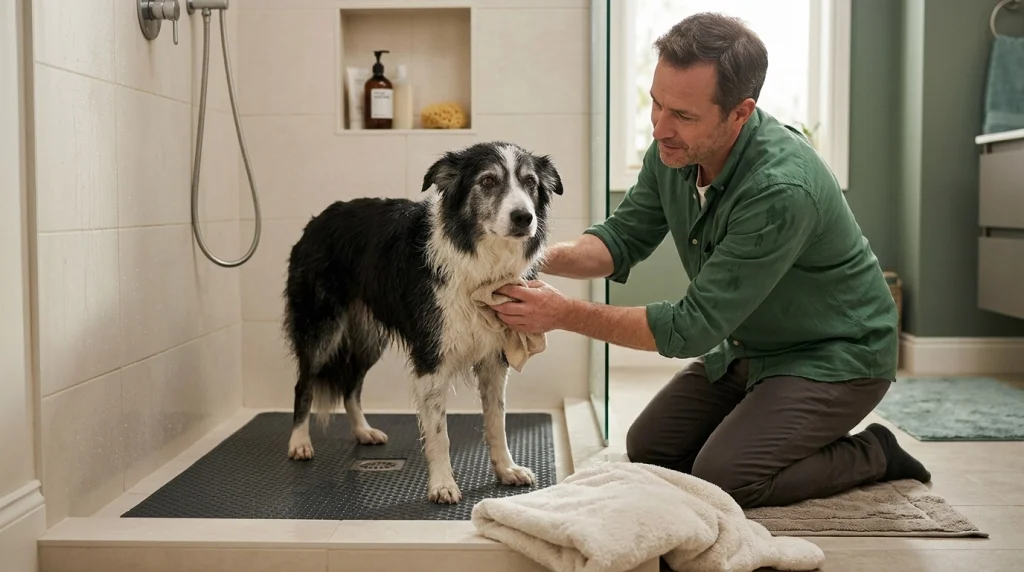
Puppies: Use a small, stable bathing space and brief positive introductions. Young dogs can be wiggly and may find the sound of running water intimidating. Keep the session warm and short, and prevent jumping from elevated surfaces.
Senior dogs: Prioritize traction, joint comfort, and easy entry. Do not make an older dog stand for a long session if their legs are tiring. A shower with floor-level access or help from an experienced groomer may be safer than a high tub.
Dogs with allergies or skin conditions: Ask your veterinarian which cleanser and bathing interval are suitable. Itching after a bath may reflect shampoo residue, irritation, or an underlying skin condition rather than a need to bathe more often.
Dogs with ear trouble: Keep the face and ear canals dry and avoid home ear treatments unless advised by a veterinarian. Pain, head shaking, redness, discharge, or odor warrant evaluation rather than repeated washing.
Know When to Stop or Get Help
Stop immediately if your Border Collie is slipping repeatedly, struggling to breathe, becoming extremely distressed, or unable to stand comfortably. Move them to secure footing and assess the situation. Seek urgent veterinary help for breathing difficulty, collapse, or serious injury.
If shampoo splashes into an eye, promptly rinse gently with clean lukewarm water. Contact a veterinarian if squinting, redness, pawing at the eye, or discomfort continues. If the skin develops pronounced redness, hives, swelling, or severe itching after a product, discontinue it and contact your veterinarian.
For routine coat maintenance rather than bath-safety troubleshooting, the site’s step-by-step bathing guide covers the broader washing process. Keeping the safety routine focused helps you avoid turning each bath into an unnecessarily long grooming session.
Related Product
Non-Slip Dog Bath Mat
A properly fitted, slip-resistant mat can provide steadier footing in the tub. Confirm that it grips your particular bathing surface before use.
As an Amazon Associate, we earn from qualifying purchases.
Frequently Asked Questions
Can I bathe my Border Collie outside?
Yes, when weather is mild, the ground is secure, and you can use comfortably lukewarm water. Avoid bathing outdoors in cold or windy conditions that could chill a wet dog. Choose a quiet, enclosed area rather than an exposed, slippery surface.
Should I put cotton balls in my dog’s ears?
Some grooming guidance suggests loosely placed cotton to help block splashes, but it is not essential for every dog. Never push anything into the ear canal or leave cotton behind. Controlling the spray and cleaning the face with a cloth are safer priorities.
What if my Border Collie shakes during the bath?
Shaking off water is normal, but trembling, tense posture, or repeated attempts to escape may signal cold or distress. Pause, check the water and room temperature, and observe the dog’s body language before continuing.
Can I use a lick mat to keep my dog calm?
A securely attached lick mat with a dog-safe treat may help some dogs associate the bathing space with something pleasant. It should not be used to distract a dog who is panicking, and it must not compromise safe positioning or supervision.
How often should a Border Collie have a full bath?
There is no single schedule for every Border Collie. Coat condition, outdoor activity, dirt, skin health, and veterinary instructions matter more than a fixed calendar. Too-frequent shampooing may dry the skin, while genuine contamination may require prompt cleaning.
Is a professional groomer safer for a dog that hates baths?
Sometimes. An experienced, fear-aware groomer may have safer equipment and handling options. Tell them about previous panic, mobility limitations, skin issues, and any bite risk before booking. Severe fear or sudden behavioral changes should also be discussed with a veterinarian.
The Safest Bath Is One Your Dog Can Handle
Prioritize secure footing, mild water, gentle handling, and thorough rinsing and drying. Just as importantly, let your Border Collie’s behavior guide the pace. A shorter, comfortable session builds a better foundation for the next bath than a forced wash that ends in panic.
