
How to Stop a Border Collie Slipping in the Bath

Quick Answer
To keep a Border Collie from falling in the bath, place a secure non-slip rubber mat across the tub floor, help your dog enter and exit safely, and maintain gentle physical support while washing. Use lukewarm water, low water pressure, and calm handling to prevent sudden movements. Never leave your dog unattended, and stop the bath if they panic or cannot stand securely.
Set Up a Safe Bath Before Your Border Collie Gets In
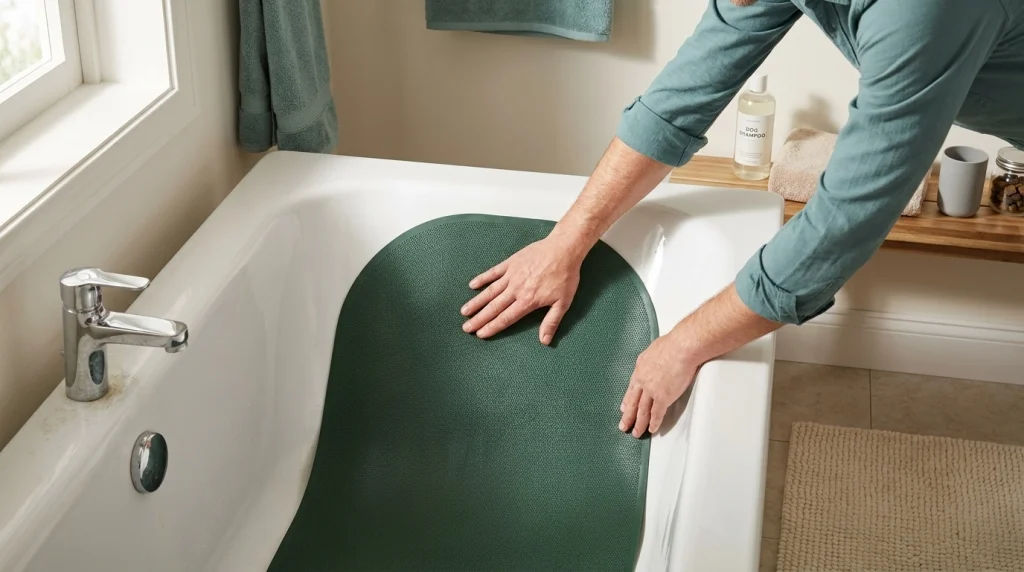
The easiest way to prevent a bath-time fall is to prepare the bathing area before bringing your Border Collie into it. A smooth bathtub can become slippery as soon as water and shampoo reach the surface.
Start with a rubber bath mat designed to grip the bottom of a tub. It should cover the area where your dog’s paws will stand without curling, sliding, or bunching up.
Before each bath, check that the underside of the mat and the bathtub are clean. Soap buildup and trapped dirt can weaken its grip. Press the mat firmly into position and test it with your hand before letting your dog step onto it.
Prepare these items within easy reach:
- Non-slip rubber mat: Provides traction under wet paws.
- Absorbent towels: Keep the bathroom floor and exit area dry.
- Dog-safe shampoo: Avoids searching for supplies midway through washing.
- Handheld sprayer or cup: Allows controlled rinsing without a forceful stream.
- Small training treats: Reward calm standing and cooperation.
- Stable floor mat: Creates a secure landing area after the bath.
Check that the drain is clear and that the water can flow away. Standing in unnecessary water can make the experience more uncomfortable, especially for a dog that dislikes bathing.
A secure tub floor is also part of a complete Border Collie bathing routine, which includes coat preparation, washing, rinsing, and drying.
Help Your Border Collie Enter the Bathtub Without Jumping
Getting into the tub can be more hazardous than standing inside it. A Border Collie may try to leap over the edge, land awkwardly, or push off a slippery surface.
The safest entry method depends on your dog’s size, mobility, confidence, and the height of the bathtub.
- Prepare the landing surface. Make sure the rubber mat is secure and the tub is empty before entry.
- Position your dog calmly. Encourage your Border Collie to approach rather than pulling them toward the tub.
- Choose a controlled entry. Use an appropriate stable step or ramp if your dog has been trained to use it. Do not use loose stools or slippery furniture.
- Support when necessary. If you can safely lift your dog, support both the chest and hindquarters rather than lifting by the front legs.
- Reward secure footing. Once all four paws are stable, pause and offer calm praise or a small treat.
Never force a struggling dog over a high bathtub edge. If you cannot safely assist entry, a floor-level shower or another accessible washing space may be more appropriate.
Warning
Do not lift a Border Collie by the collar, leash, front legs, or scruff. Avoid tethering the dog tightly to a faucet or fixture. Sudden struggling can cause falls, choking, or other injuries.
Keep Your Dog Steady While Washing
Once your Border Collie is standing securely, the goal is to avoid sudden changes in footing or balance. Smooth movements make it easier for your dog to remain comfortable.
Begin with a gentle flow of lukewarm water near the shoulders or body. Avoid spraying directly into the face. A sudden blast of water can startle a dog and trigger an unexpected attempt to turn or escape.
When practical, stand beside the tub and keep one hand available to offer light support around the chest or shoulder area. Do not push down on your dog’s back or try to force them into position.
Wash one area at a time. For example, clean the back and sides before moving to the belly and legs. When reaching underneath the body, avoid pulling a leg outward or asking your dog to balance on three paws for long periods.
Border Collies have dense double coats that can take time to wet and rinse. Work through the coat gradually instead of increasing water pressure to speed up the process.
The veterinary-reviewed bathing guidance from PetMD also recommends non-slip footing, comfortable water temperature, and gentle water flow.
Keep Water and Shampoo From Making the Tub More Slippery
Use a modest amount of dog shampoo and rinse each area thoroughly. Shampoo residue can create a slippery film on both the coat and nearby surfaces.
Do not let bottles, grooming brushes, or other loose items collect around your dog’s paws. Keep the standing area clear so the dog can adjust its position without stepping on an object.
What to Do if Your Border Collie Starts Slipping
If your Border Collie loses traction, stop washing immediately. Continuing to spray water or apply shampoo while the dog struggles may make the situation worse.
- Turn off the water. Remove the noise and movement of the running stream.
- Stay calm. Avoid shouting, pulling, or making sudden movements.
- Offer gentle support. Steady the dog’s body if you can do so without risking injury to either of you.
- Check the footing. Look for a shifted mat, slippery residue, or an awkward paw position.
- End the bath if necessary. Help the dog reach a secure surface rather than forcing them to continue.
If the dog has fallen, assess whether they can stand and move normally. Watch for limping, reluctance to put weight on a leg, unusual weakness, or signs of pain.
If your dog cannot rise, appears seriously injured, or is in marked pain, seek urgent veterinary advice. Do not make the dog walk or jump out of the tub to test whether they are okay.
A minor slip with no apparent injury is still a reason to review the setup. Repeated loss of footing can turn an ordinary bath into a frightening experience.
Prevent Panic and Sudden Attempts to Escape
Not every bath-time fall begins with poor traction. Some dogs lose balance because they suddenly twist, scramble, or try to climb out.
Common triggers include loud water, unfamiliar handling, slippery surfaces, and unpleasant past experiences.
Watch for signs such as:
- Repeatedly trying to climb over the tub edge.
- Trembling or holding the body unusually stiff.
- Scrambling with the paws even when the water is off.
- Pulling away from the showerhead.
- Refusing treats that the dog would usually enjoy.
- Freezing or showing escalating distress.
These behaviors can indicate that your dog needs a slower introduction to bathing. Do not assume that tighter restraint will solve the problem.
Practice Standing in a Dry Tub First
For a dog that is nervous but can safely enter the tub, begin with short sessions without water.
Place the non-slip mat inside, encourage your Border Collie to step onto it, and reward calm behavior. End the session before your dog becomes distressed.
During later sessions, introduce the sound of running water while the dog is safely positioned away from the stream. Progress to brief contact with water only when the earlier steps are comfortable.
The American Kennel Club’s bath-anxiety guidance supports gradual familiarization, non-slip footing, and rewards for calm behavior.
If your dog panics or repeatedly attempts to jump out, stop training in the tub and consider working with a qualified reward-based trainer or professional groomer.
Practical Tip
Practice entering, standing, and exiting on separate days when your Border Collie does not actually need a bath. This helps separate learning safe footing from the added challenges of water, shampoo, and drying.
Choose the Right Bathing Surface for Your Dog
A standard bathtub is not always the safest washing location. Consider your Border Collie’s age, mobility, and willingness to stand before choosing a bathing setup.
The following comparison can help identify a practical option.
| Bathing Setup | Useful For | Main Precaution |
|---|---|---|
| Bathtub with rubber mat | Dogs comfortable entering a conventional tub | Prevent jumping at entry and exit |
| Walk-in shower with non-slip floor | Dogs needing easier access | Check drainage and floor traction |
| Ground-level dog washing area | Dogs reluctant to climb into a tub | Use a secure, level surface |
| Professional grooming facility | Dogs that cannot be handled safely at home | Explain mobility or behavior concerns beforehand |
A low-entry washing area may remove the need to climb over a high tub edge. However, it still needs a non-slip floor and secure handling.
Older Border Collies and dogs with joint pain, weakness, or balance problems may need an individual bathing plan. Ask your veterinarian about new mobility problems rather than treating repeated falls as a training issue.
Make Getting Out of the Bath Just as Safe
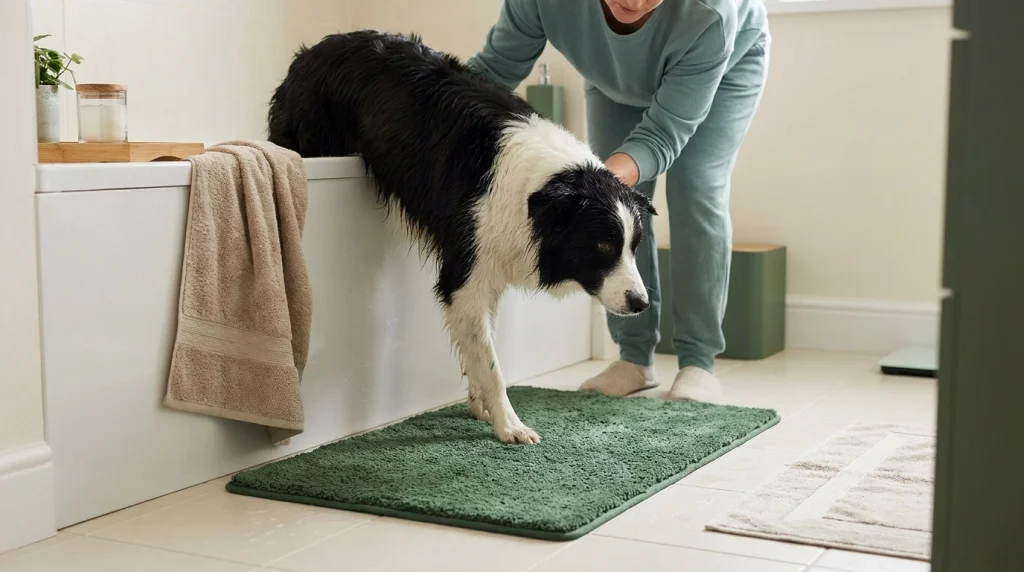
A wet Border Collie may be eager to leave the tub as soon as rinsing ends. This is an easy point to overlook because the washing is already finished.
Before allowing your dog to exit, remove excess water from the coat with a towel while they remain securely supported.
Place a stable, absorbent, non-slip mat on the bathroom floor. Make sure it cannot slide when wet paws land on it.
Then guide your dog out using the same controlled approach used for entry. Do not encourage a hurried leap onto tile or a loose towel.
Once outside, dry the paws before allowing free movement across smooth flooring. Continue blotting the coat and check that your dog is comfortable standing.
For a Border Collie’s double coat, careful drying also helps prevent moisture from lingering underneath the outer fur. Follow an appropriate bath and grooming order so the coat is brushed, washed, dried, and finished without unnecessary handling.
Common Mistakes That Make Bath-Time Falls More Likely
Most avoidable bath-time hazards involve the surface, entry method, or the dog’s reaction to handling.
- Using a loose towel as permanent traction: A towel can help temporarily, but it may shift or bunch. A properly secured rubber mat is generally a more dependable choice.
- Starting with strong water pressure: Sudden spray can make an anxious dog twist or scramble.
- Leaving the dog unattended: Even a calm dog can lose footing or attempt to leave unexpectedly.
- Holding the collar too tightly: Neck restraint can cause discomfort and create additional risk if the dog slips.
- Forcing a frightened dog to continue: Panic makes controlled standing and handling more difficult.
- Ignoring the exit surface: A secure bathtub cannot prevent a fall on wet bathroom tiles.
The simplest safety check is to review three moments: entering the tub, standing during the wash, and stepping onto the bathroom floor afterward.
If any one of these stages cannot be completed safely, change the bathing setup before the next wash.
Related Product
Non-Slip Rubber Dog Bath Mat
A properly sized rubber bath mat can improve paw traction and help your Border Collie stand more securely during washing. Look for a mat that grips your bathtub surface and stays flat when wet.
As an Amazon Associate, we earn from qualifying purchases.
Frequently Asked Questions
Can I use a regular human bath mat for my Border Collie?
Yes, if it provides reliable traction, fits the tub, and stays firmly in place. Avoid mats that slide, fold, or lose grip when wet. Check the manufacturer’s care and surface-compatibility instructions.
Should I bathe my Border Collie while wearing a collar?
A collar is not necessary for every bath. Remove accessories that may snag, and never use a collar as a lifting handle. If safe restraint is needed, use an appropriate approach under direct supervision.
Can I bathe my Border Collie outdoors instead of in a bathtub?
Yes, when the weather and washing conditions are suitable. Choose a level, non-slip area with comfortable water temperature and controlled drainage. Avoid slick concrete, unstable tables, and cold conditions.
What if my Border Collie refuses to stand in the bathtub?
Stop the bath and assess whether fear, slippery footing, discomfort, or a mobility problem is involved. Use gradual positive training if fear is the issue. Seek veterinary guidance if standing appears painful or difficult.
Is a lick mat safe to use during a dog bath?
A securely attached lick mat may help some dogs stay calm, provided it contains dog-safe food and does not distract you from supervision. Avoid food containing xylitol, and remove the mat if it creates a slipping or choking risk.
Can long nails make a Border Collie slip in the bath?
Long nails can interfere with comfortable paw placement and grip. Keep nails at an appropriate length, but do not assume trimming alone will prevent slipping. A secure bathing surface is still essential.
Final Thoughts
Keeping a Border Collie from falling in the bath starts with reliable traction, safe entry and exit, and calm handling. A secured rubber mat is a useful first step, but it works best alongside gentle washing and close supervision.
If your dog repeatedly slips, panics, or has trouble standing, change the bathing method rather than forcing another attempt. A safe, comfortable bath matters more than finishing quickly.
