
How to Brush a Border Collie’s Undercoat Safely

Quick Answer
To brush a Border Collie’s undercoat, use a suitable slicker brush or rounded-tooth undercoat rake, work through small sections with gentle strokes, and finish with a metal comb to check for hidden tangles. Brush regularly, increase grooming during heavy shedding, and stop if the tool pulls painfully or irritates the skin.
Brushing a Border Collie’s undercoat takes more than running a brush over the visible surface. Loose hair can remain trapped beneath the longer outer coat, particularly around the hindquarters, chest, tail, and feathering of a rough-coated Border Collie.
The goal is to remove loose, dead hair without pulling healthy hair, scraping the skin, or stripping away too much of the protective coat. Both rough-coated and smooth-coated Border Collies have a double coat, although their hair length and grooming needs differ.
1. Choose the Right Brush for the Undercoat
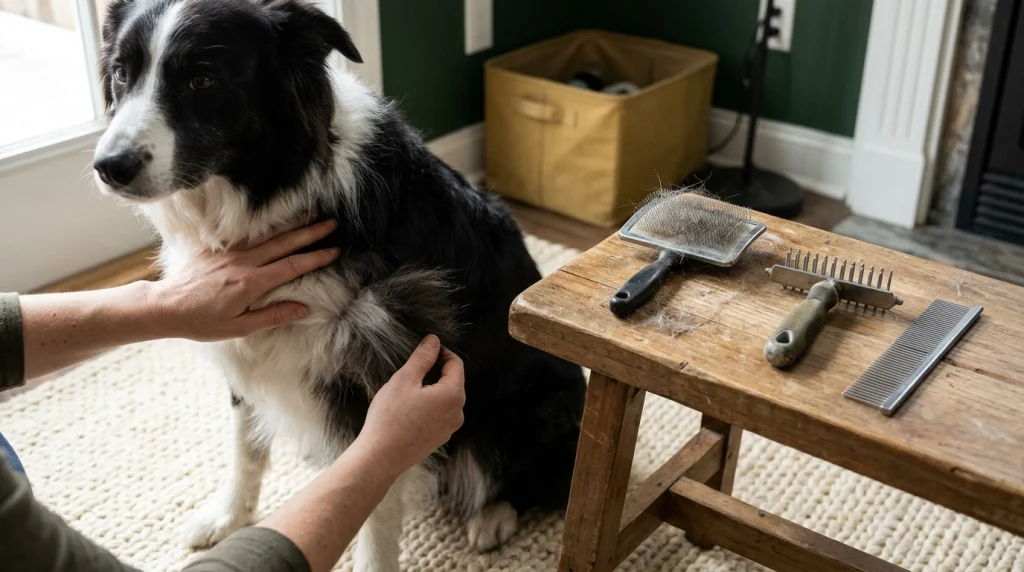
A suitable brush makes undercoat removal easier and reduces unnecessary pulling. Most owners can manage routine grooming with a slicker brush or pin brush, a metal comb, and an undercoat rake for periods when loose undercoat builds up heavily.
- Slicker brush: Useful for lifting loose hair and working through light tangles. Choose one with pins appropriate for your dog’s coat and use light pressure.
- Pin brush: Helpful for separating longer hair and maintaining the feathering of rough-coated Border Collies.
- Rounded-tooth undercoat rake: Helps loosen dead undercoat during heavier shedding. The teeth should move through the coat without scraping or digging into the skin.
- Metal grooming comb: Helps identify tangles that a brush can glide over without removing. It is especially useful behind the ears, under the legs, and around the tail.
The American Kennel Club’s guide to dog brushes explains that different brush designs serve different coat-care purposes. You do not need every tool for every session; choose according to your dog’s coat, shedding, and tangles.
Avoid assuming that a more aggressive tool will remove undercoat more effectively without consequences. Bladed de-shedding tools can cut or damage healthy outer hairs when used incorrectly or excessively. A gentle brush and comb routine is a better starting point for regular maintenance.
2. Prepare Your Border Collie Before Brushing
Start when your dog is calm and the coat is dry. Choose a comfortable place with good lighting, and let your Border Collie stand or lie in a natural position. Keep treats nearby if rewards help your dog accept handling.
- Inspect the coat. Look for loose tufts, burrs, small knots, dirt, and areas where the hair appears packed together.
- Check sensitive areas. Gently examine behind the ears, under the front legs, around the collar, between the rear legs, and beneath the tail.
- Remove accessible debris. Pick out loose grass or burrs with your fingers when they come away easily. Do not pull hard on embedded material.
- Introduce the brush gently. Let your dog see and sniff the tool, then begin with a few light strokes on an easy-to-reach area.
If your dog has a small tangle, separate the surrounding hair with your fingers before using a comb. If the coat is tightly matted against the skin, painful, or difficult to separate, do not force the brush through it.
Short, comfortable sessions are preferable to holding a struggling dog still for a long grooming session. Stop and give your dog a break if they repeatedly turn away, tense up, try to escape, or react as though brushing hurts.
3. Brush the Undercoat Step by Step
The most useful technique is to work in small sections and gradually expose the hair underneath the outer coat. Avoid brushing only the top layer, because that can leave loose undercoat and hidden tangles behind.
Step 1: Separate the coat into small sections
Begin along the shoulder or side of the body. Use your free hand to lift a small section of outer hair so you can see and reach the coat underneath. Work through one area before moving to the next.
For a rough-coated Border Collie, pay attention to the longer feathering on the chest, legs, underside, and rear. A smooth-coated Border Collie may be quicker to groom, but the shorter outer hair can still conceal loose undercoat.
Step 2: Brush with short, gentle strokes
Use the brush in the direction the hair grows, lifting loose hair without pressing hard against the skin. Work gradually through the section rather than repeatedly dragging the brush from the back to the tail in long, forceful strokes.
Where the coat is dense, gently part the hair and work from the exposed area outward. If the brush catches, stop and investigate the snag instead of pulling through it.
Step 3: Use the undercoat rake only where needed
When loose undercoat is visibly building up, make a few gentle passes with a suitable rake. Keep the teeth aligned with the coat and let them collect loose hair naturally. Do not dig into the coat or use pressure to force the rake through resistance.
Move between sections rather than repeatedly working the same patch. Once loose hair stops coming away easily, move on. The aim is to remove shed hair, not to extract every undercoat hair that remains attached.
Step 4: Check your progress with a metal comb
After brushing a section, run a metal comb gently through it. The comb should move through the hair without repeatedly catching. If it stops at a knot, work on that specific area instead of increasing your brushing pressure.
Pay particular attention to the fine hair behind the ears, the armpits, the base of the tail, and longer feathering. These spots can develop tangles even when the back and sides look smooth.
Step 5: Finish the outer coat
Once the undercoat has been addressed, use a pin brush or another suitable finishing brush to smooth the outer hair in its natural direction. Check for remaining debris and feel gently through the coat for small knots.
A successful session leaves the coat easier to comb and the skin comfortable. It does not require removing every loose-looking hair or making the dog’s coat unusually thin.
4. Which Areas Need Extra Attention?
Some parts of a Border Collie’s coat are more likely to trap loose hair or develop tangles because of friction, movement, or longer feathering.
- Behind the ears: Fine hair can knot easily. Use your fingers and a comb gently, supporting the hair near the skin.
- Under the front legs: Movement and friction can create tangles in this area. Use minimal pressure because the skin is relatively exposed.
- Chest and underside: Longer hair can collect dirt and loose undercoat. Work in small sections while keeping your dog comfortable.
- Hindquarters and tail: Dense hair can conceal shed undercoat, particularly during seasonal shedding.
- Collar area and rear feathering: Check for knots caused by rubbing, outdoor debris, or hair rubbing against itself.
Do not use the same pressure everywhere. The brush should glide gently over thinly coated or sensitive areas, and you should avoid repeated strokes over the same patch when the skin is becoming pink or irritated.
For more help with preparation, see this guide to brushing a Border Collie before a bath. It explains why loose hair and tangles should be addressed before bathing.
5. How Often Should You Brush the Undercoat?
For routine maintenance, start with a thorough brushing about once or twice a week and adjust to your dog’s coat. During heavier shedding, you may need to brush more frequently, sometimes daily, to keep loose hair from accumulating.
The AKC’s double-coated dog guidance identifies the Border Collie as a medium double-coated breed and recommends regular brushing to remove loose undercoat and help prevent mats.
- Light shedding: A routine brush and comb check may be enough to maintain the coat.
- Heavy shedding: Increase the frequency of gentle sessions as loose hair builds up. Shorter sessions can be easier on the skin.
- Rough coat: Check longer feathering more often because it is more prone to tangling.
- Smooth coat: Keep brushing even when the shorter outer coat looks tidy; loose undercoat can still accumulate.
These are starting points, not rigid schedules. Age, individual coat density, activity, climate, and shedding patterns all influence how much grooming a dog needs.
For a more detailed routine, read how often a Border Collie should be groomed. The key is to respond to the condition of the coat rather than automatically using an undercoat rake at every session.
6. Common Undercoat Brushing Mistakes to Avoid
Most grooming problems arise from using too much force, choosing the wrong tool, or trying to remove too much hair at once.
- Brushing aggressively: Heavy pressure and repeated strokes can irritate the skin and damage healthy hair. Use light strokes and stop when the skin reacts.
- Pulling through mats: A brush is not a tool for forcibly removing tight mats. Painful or skin-tight tangles are better handled by a qualified groomer.
- Overusing a rake: Frequent, forceful raking can remove more coat than necessary. Reserve it for loose undercoat that needs attention.
- Ignoring the comb check: A coat may look smooth while knots remain underneath. Check the finished sections with a comb.
- Shaving the coat to reduce shedding: Shaving removes the protective outer coat along with the undercoat and is not a routine solution for shedding. Discuss severe matting or medical grooming needs with a veterinarian or experienced groomer.
- Rushing a nervous dog: Forcing a long session can make future grooming more difficult. Reward calm handling and gradually build tolerance.
If brushing repeatedly catches in the same place, or your dog flinches when you touch an area, stop and inspect it. Redness, sores, persistent itching, unusual hair loss, or a sudden change in coat condition warrant veterinary advice rather than more intensive brushing.
7. What Should You Do if the Undercoat Is Matted?
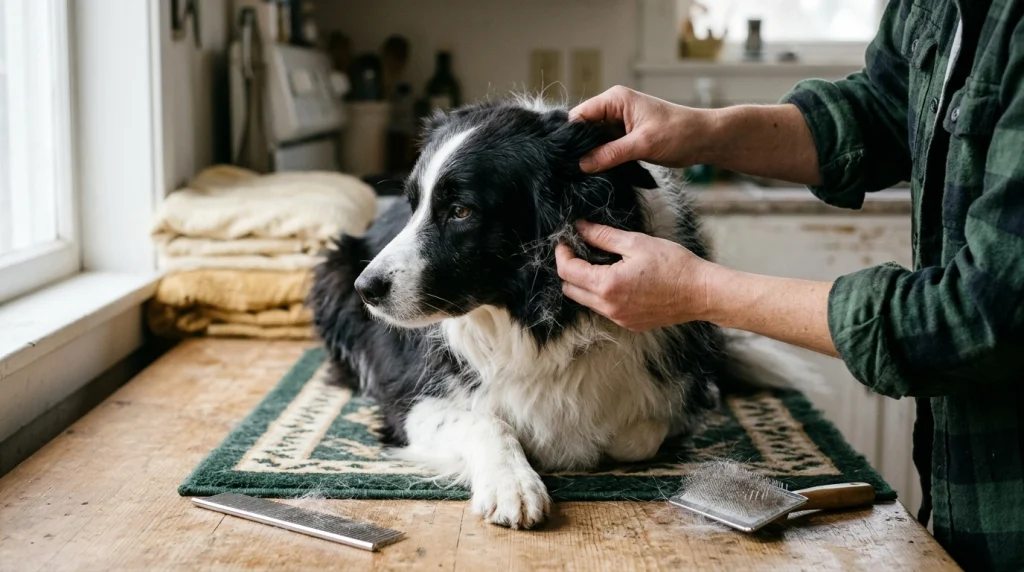
Small, loose tangles may be manageable with your fingers and a suitable comb, provided the process is painless. Hold the hair near the skin to reduce pulling, separate the knot gradually, and stop if it does not loosen easily.
Dense mats can trap moisture and pull on the skin. Do not repeatedly rake through them, cut them out with scissors close to the body, or use force to make a comb pass through. A dog’s skin can be difficult to distinguish from hair hidden inside a tight mat.
Arrange help from an experienced groomer when mats are extensive, tight, or painful. If the skin underneath appears inflamed, smells unusual, is wet or sore, or your dog seems unwell, seek veterinary assessment.
For routine coat care, brushing before bathing helps identify tangles while the coat is still dry. After bathing, ensure the dense coat dries thoroughly; trapped moisture can contribute to skin discomfort. A bath does not replace removing mats safely.
Related Product
Rounded-Tooth Undercoat Rake for Dogs
A dog-appropriate undercoat rake can help loosen shed hair during heavier shedding. Choose one that suits your Border Collie’s coat and use it gently rather than forcing it through tangles.
As an Amazon Associate, we earn from qualifying purchases.
Frequently Asked Questions
Should you brush a Border Collie’s undercoat against the grain?
Start by brushing in the direction the hair grows, using gentle strokes. If loose hair remains, carefully part the coat or lift a small section to reach underneath. Avoid forceful back-brushing or scraping the skin.
Can you use a slicker brush on a Border Collie?
Yes. A suitable slicker brush can remove loose hair and manage light tangles on both coat varieties. Use light pressure, avoid repeatedly brushing one spot, and stop if the skin becomes irritated.
Should you use an undercoat rake every day?
Not necessarily. A rake is most useful when loose undercoat is building up, particularly during heavier shedding. Use it only as often as needed, and rely on gentler routine brushing between sessions.
How do you know when enough undercoat has been removed?
Stop when loose hair is no longer coming away easily, the coat separates comfortably, and a comb passes through without catching. Do not try to remove every undercoat hair that remains attached.
Can you brush a Border Collie’s undercoat when it is wet?
For routine undercoat removal and detangling, work on a dry coat first. Wet, tangled hair can become more difficult to manage. After bathing, use an appropriate gentle technique as the coat dries, without pulling through knots.
Does a smooth-coated Border Collie need undercoat brushing?
Yes. Smooth-coated Border Collies also have a double coat and can shed loose undercoat. Their shorter outer hair may make brushing quicker, but they still benefit from regular grooming and checks for trapped hair.
Conclusion
Brushing a Border Collie’s undercoat safely comes down to using the right tool, working in small sections, and removing only the loose hair that comes away without force. A slicker or pin brush is useful for routine care, while an undercoat rake can help during heavier shedding. Finish with a comb to catch hidden tangles, especially behind the ears, under the legs, and around the tail.
Keep sessions gentle and adjust their frequency to your dog’s coat and shedding pattern. If mats are tight, brushing causes pain, or the skin looks irritated, stop rather than trying to remove everything yourself. Regular, comfortable grooming helps maintain the coat without compromising its protective function.