
Can You Bathe a Border Collie After Flea Treatment? Safe Timing Guide

Quick Answer
You can bathe a Border Collie after flea treatment, but the safe waiting time depends on the product. Oral treatments usually aren’t affected by bathing, while spot-on treatments often need time to dry and spread through the skin’s oils. Always follow the product label or your veterinarian’s instructions, and check veterinary medication guidance from VCA Animal Hospitals when you’re unsure.
How long should you wait?
- Oral flea medicine: Bathing generally doesn’t wash away medication taken by mouth.
- Spot-on treatment: Check the label because waiting periods vary between products.
- 24–48 hours: Some commonly used topical products specify a wait within this range.
- Three to four days: Certain topical formulations require a longer no-bath period.
- Flea collars: Water resistance and bathing limits depend on the individual collar.
One important exception
- If your Border Collie develops a suspected reaction after treatment, contact a veterinarian promptly instead of waiting for the normal bathing interval.
If you’re wondering when to bathe a Border Collie after flea treatment, the answer isn’t one universal number. A Border Collie dog’s dense double coat also makes careful bathing and drying especially important.
I’ve found the simplest rule is to identify the flea product first, then plan the bath around its label. This guide explains exactly how to do that without accidentally reducing your dog’s parasite protection.
In This Guide
- How Long Should You Wait to Bathe a Border Collie After Flea Treatment?
- Why Does Bathing Too Soon Matter?
- Does the Type of Flea Treatment Change the Waiting Time?
- How Do You Safely Bathe a Border Collie After Flea Treatment?
- What If You Bathed Your Border Collie Too Soon?
- Does a Border Collie’s Double Coat Change Anything?
- When Should You Call a Vet?
- Frequently Asked Questions
- Final Takeaway
How Long Should You Wait to Bathe a Border Collie After Flea Treatment?
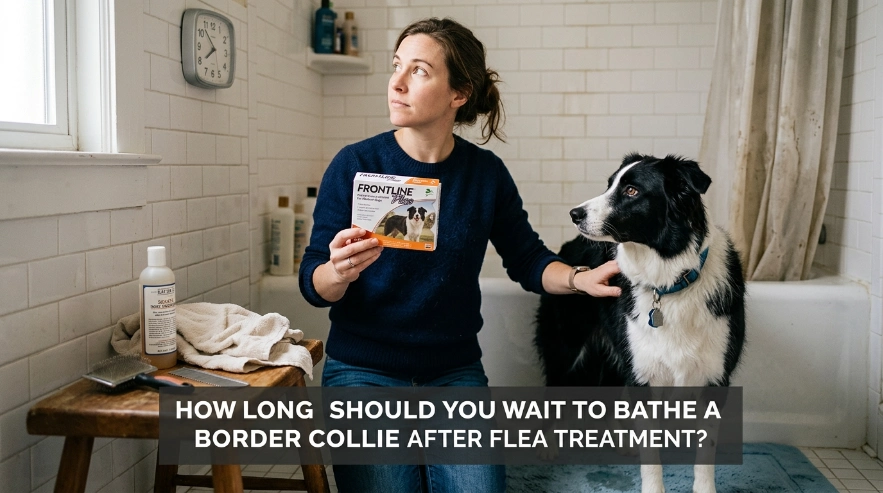
The safest waiting time is whatever the specific flea-treatment label requires. There isn’t one bathing interval that applies to every topical, oral medication, collar, spray, or shampoo.
For many spot-on products, you’ll encounter waiting periods measured in days rather than minutes. Some formulations tolerate bathing sooner than others.
Start by checking what you gave your dog
Look at the box, applicator, prescription label, or purchase record before turning on the bath water. Find both the product name and active ingredient.
- Oral chew or tablet: Bath water normally can’t wash medication out of your dog’s bloodstream.
- Spot-on liquid: Water and shampoo may interfere with certain formulations if used too soon.
- Medicated collar: Check its instructions for swimming and shampoo frequency.
- Flea spray: Follow its drying and reapplication directions.
- Flea shampoo: The shampoo itself may have specific repeat-use limits.
As of 2026, this product-by-product approach remains important because flea preventives use several different active ingredients and delivery systems. The American Kennel Club’s dog health resources also emphasize choosing parasite protection with veterinary guidance.
Definition: A topical flea treatment is medication applied directly to a dog’s skin or coat rather than swallowed. Because it stays on or spreads across the skin, bathing can matter more than it does with oral medication.
Vet note: If you can’t identify the flea product, call your veterinarian or pharmacist before bathing instead of guessing at the waiting period.
Why Does Bathing Too Soon Matter?
Bathing too soon may remove or redistribute some topical flea medication before it has settled properly. That can leave your Border Collie with less dependable protection.
This concern doesn’t apply equally to every product. The formulation, active ingredient, shampoo, and timing all matter.
Spot-on products need contact with the skin
A Border Collie’s thick coat can make spot-on application tricky. The liquid needs to reach the skin instead of sitting mostly on the outer hairs.
When I handle a dense Border Collie coat, I make a clear part with my fingers before applying anything topical. That small step helps keep the product where the label intends it to go.
Shampoo may remove skin oils
Some topical flea products use the skin surface and natural oils to distribute their active ingredients. Shampooing immediately after application can interfere with that process.
VCA specifically advises against shampooing after certain imidacloprid topical applications because doing so may strip product from the skin. Other formulations carry their own instructions.
Water resistance doesn’t mean unlimited bathing
A product described as water-resistant may still have rules about when the first bath can happen. It may also limit how frequently your dog should swim or be shampooed.
That distinction matters for active Border Collies. A dog that swims, trains outdoors, or frequently comes home muddy may need a parasite-control option that fits that lifestyle.
Does the Type of Flea Treatment Change the Waiting Time?
Yes. Treatment type is the biggest reason generic advice such as “always wait 24 hours” isn’t reliable enough.
The table below shows practical examples, not a replacement for your own product label.
| Treatment type | Bathing concern | Example timing guidance |
|---|---|---|
| Oral chew/tablet | Not washed off by normal bathing | Usually no topical drying period; still follow the label |
| Fipronil spot-on | Bathing too soon may affect some formulations | Certain Frontline formulations advise roughly 24–48 hours |
| Topical fluralaner | Needs time after application | Veterinary guidance may advise at least 3 days |
| Moxidectin + imidacloprid topical | Early bathing may interfere with treatment | Veterinary guidance may advise at least 4 days |
| Medicated flea collar | Depends on water resistance and bathing frequency | Check that collar’s individual instructions |
These differences are why I wouldn’t choose a waiting time based on another owner’s dog. Their flea treatment may have nothing in common with yours.
If your Border Collie needs frequent baths for skin problems, tell your veterinarian. An oral preventive may sometimes be easier to coordinate with frequent bathing than a topical product.
Vet note: Your veterinarian should choose or approve parasite medication based on your dog’s age, weight, medical history, and other medications.
How Do You Safely Bathe a Border Collie After Flea Treatment?
Once the required waiting period has passed, bathe your Border Collie normally but gently. Focus on protecting the skin barrier and thoroughly drying the double coat.
- Confirm the waiting period. Recheck the package before starting.
- Brush before bathing. Remove loose undercoat and small tangles while the coat is dry.
- Use lukewarm water. Avoid water that’s noticeably hot.
- Choose dog shampoo. Use a mild product intended for canine skin unless your vet prescribed something else.
- Massage gently. Work through the coat without aggressive scratching.
- Rinse completely. Dense Border Collie fur can trap shampoo close to the skin.
- Towel-blot first. Press water from the coat instead of rubbing hard.
- Dry the undercoat. Keep your dog warm until the coat is dry through to the skin.
The ASPCA’s dog-care guidance recommends appropriate grooming and careful rinsing. That’s especially useful with a coat that can hide soap residue.
Should you use flea shampoo too?
Don’t automatically combine a flea shampoo with another flea medication. Using several parasite products together can expose your dog to unnecessary active ingredients.
If you’re already using an effective preventive, ask your veterinarian whether a separate flea shampoo offers any benefit. Ordinary dog shampoo may be all you need for dirt and coat cleaning.
What If You Bathed Your Border Collie Too Soon?
Don’t immediately apply another full flea dose. First identify the medication and ask the manufacturer or your veterinarian whether early bathing could have reduced its effectiveness.
Giving an extra dose without instructions can create a different safety problem. More isn’t automatically better.
What to do next
- Write down the timing: Note when the flea treatment was applied and when the bath happened.
- Check the label: Look for bathing, swimming, and reapplication instructions.
- Don’t redose automatically: Wait for product-specific advice.
- Keep checking for fleas: Use a flea comb and watch for flea dirt or renewed scratching.
- Call your vet: Ask whether the normal schedule should continue or change.
Veterinary sources note that getting some topical flea medications wet too soon can reduce their performance. Frequent shampooing can also matter for certain topical treatments.
For general veterinary parasite information, PetMD’s dog health section provides veterinarian-reviewed explanations of flea medications and parasite care.
Vet note: Never double-dose a flea treatment because you think part of the first application washed away unless a veterinarian or the product instructions specifically tell you to do so.
Does a Border Collie’s Double Coat Change Anything?
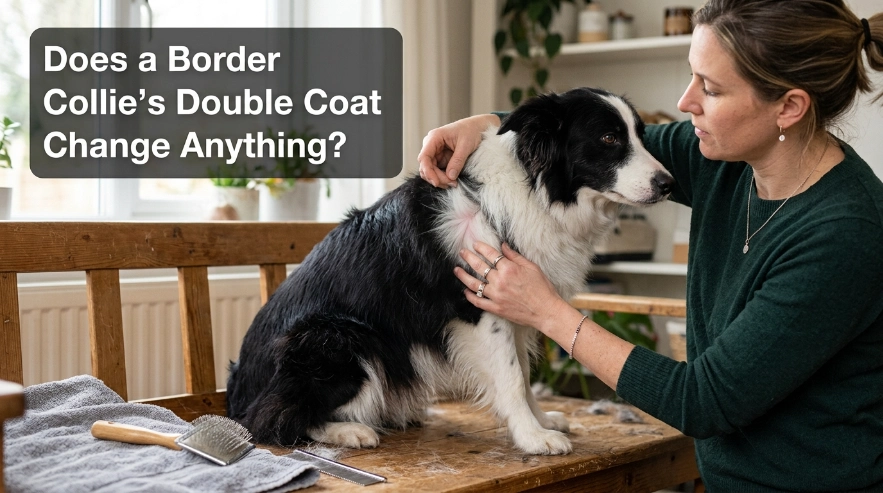
A Border Collie’s double coat doesn’t usually change the medication’s official bathing interval. It does change how carefully you should apply topical treatment, shampoo the coat, and dry your dog afterward.
The outer coat can make the skin difficult to see. The soft undercoat can also hold surprising amounts of moisture.
Make sure topical medication reaches skin
Part the coat until you can clearly see skin at the labeled application location. Apply the product exactly where its instructions specify.
Don’t spread spot-on medication randomly through the dog’s coat unless the label says to do so. Placement instructions differ between products.
Dry beyond the surface
A Border Collie may look dry while the undercoat remains damp. Check with your fingers at the neck, chest, belly, rear legs, and tail base.
After baths, I pay more attention to the undercoat than the glossy outer hairs. That’s where lingering dampness is easiest to miss.
Brush, but don’t scrub the treatment site
After the product’s drying period, normal grooming can resume according to its instructions. Avoid aggressively rubbing a freshly treated application area.
This is especially relevant during seasonal shedding when you’ll naturally want to brush more often.
When Should You Call a Vet?
Contact your veterinarian when you’re unsure about the product, accidentally used the wrong dose, or notice concerning symptoms after flea treatment. Don’t wait for a planned bath if your dog seems unwell.
Seek prompt veterinary advice for signs such as:
- Repeated vomiting or severe diarrhea
- Heavy drooling that doesn’t quickly settle
- Muscle tremors
- Difficulty walking or unusual loss of coordination
- Seizures
- Marked weakness or collapse
- Severe skin redness, swelling, or pain at the application site
The FDA Center for Veterinary Medicine advises owners that some isoxazoline flea and tick medicines have been associated with neurologic reactions such as tremors, loss of coordination, and seizures in some animals.
That doesn’t mean these medicines are unsafe for every Border Collie. It means your veterinarian should know about previous seizures or neurologic problems when helping you select parasite control.
If a veterinarian suspects a reaction to a topical product, they may give specific instructions for removing residue from the skin. In that situation, medical advice takes priority over the normal waiting period.
Vet note: Suspected poisoning, seizures, collapse, or serious neurologic symptoms require prompt veterinary attention rather than home experimentation.
Frequently Asked Questions
Can I bathe my Border Collie 24 hours after flea treatment?
Maybe, but only if your specific flea product allows it. Some topical formulas may permit bathing after about 24 hours, while others require 48 hours, three days, four days, or another interval.
Can I bathe my Border Collie 48 hours after flea treatment?
Forty-eight hours is enough for some topical flea treatments but not all of them. Check the package because certain products specify longer waiting periods before shampooing or swimming.
Can my Border Collie get wet after oral flea medicine?
Bathing normally doesn’t wash away a flea medication that your dog swallowed. However, follow the medicine’s complete directions and ask your veterinarian if the dog vomited soon after taking the dose.
Does flea treatment still work after a bath?
It depends on the treatment and when the bath happened. Oral medication isn’t washed from the coat, while some topical products can lose effectiveness when shampooed or soaked too soon.
Should I bathe my Border Collie before applying flea treatment?
Check the product label first because pre-application bathing rules vary too. If a topical treatment needs natural skin oils or dry skin for proper application, bathing immediately beforehand may not be ideal.
Can I use regular dog shampoo after flea treatment?
Usually yes once the product’s required waiting period has passed, unless its label says otherwise. Choose a mild dog-specific shampoo and avoid unnecessary medicated ingredients.
What if my Border Collie still has fleas after treatment?
Don’t assume the medicine failed after seeing one flea. Fleas can continue emerging from the environment, so treat the problem as a household cycle and ask your veterinarian whether your dog’s preventive needs adjustment.
Final Takeaway
You can bathe a Border Collie after flea treatment, but there isn’t one correct waiting period for every product. Oral medicines, spot-on liquids, collars, sprays, and shampoos behave differently.
Before bathing, identify the exact medication and read its bathing instructions. With topical products, don’t rely on a generic 24-hour rule when the label may require 48 hours or several days.
Once bathing is allowed, brush first, use dog-safe shampoo, rinse the dense coat thoroughly, and dry the undercoat completely. That’s the simple routine I trust most for keeping a Border Collie clean without undermining flea protection.
If you’re ever uncertain, call your veterinarian before bathing or redosing. A two-minute label check can save you from turning an ordinary bath into a medication problem.
