

Quick Answer
You can tell a Border Collie may be sad when several normal behaviors change together. Watch for withdrawal, less interest in play, unusual sleeping, appetite changes, reduced enthusiasm, or clinginess, while remembering that persistent behavioral changes can also have medical causes that deserve veterinary attention.
Signs worth watching
- Less enthusiasm: Your Border Collie suddenly ignores games, walks, training, or activities they usually love.
- Social withdrawal: They spend more time alone or stop seeking their usual interaction.
- Sleep changes: They rest much more than usual or seem unusually restless.
- Appetite changes: Meals or favorite treats become less interesting.
- Different body language: Their posture becomes subdued, tense, avoidant, or less animated.
- Unusual clinginess: Some unhappy dogs withdraw, while others follow their person constantly.
The best way to confirm it
- Compare today’s behavior with your dog’s normal routine and look for several changes that persist rather than relying on one “sad” expression.
Border Collies can be wonderfully expressive dogs, which is why owners often notice the moment something feels different. A normally eager Collie who suddenly ignores a ball or walks away from training can make you wonder whether they’re unhappy.
I look at changes from a dog’s normal baseline first. This guide will help you separate possible sadness from boredom, stress, tiredness, and health problems.
In This Guide
- What are the signs that a Border Collie is sad?
- Is my Border Collie sad, bored, tired, or stressed?
- Why might a Border Collie seem sad?
- What does a sad Border Collie’s body language look like?
- How can I help a Border Collie that seems sad?
- When should sadness or withdrawal concern a vet?
- How can I prevent boredom and low mood?
- Frequently Asked Questions
What Are the Signs That a Border Collie Is Sad?
A potentially sad Border Collie usually shows a change in several normal habits, not one isolated expression. The biggest clue is that your dog’s enthusiasm, social behavior, appetite, sleep, or activity has shifted from normal.
A Border Collie’s low mood is best understood as a noticeable pattern of reduced engagement or altered behavior. It isn’t something you can diagnose by looking at their eyes alone.
Loss of interest in favorite activities
This is one of the first signs I pay attention to. Border Collies usually approach rewarding activities with noticeable focus and anticipation.
- Ignoring a favorite ball or tug toy
- Showing little interest in training
- Walking slowly when they normally lead the way
- Leaving a game after only a minute or two
- Stopping their usual excited response to familiar cues
A single quiet afternoon doesn’t necessarily mean anything is wrong. A consistent change deserves closer attention.
Withdrawal or unusual clinginess
Some unhappy dogs become distant. They may choose another room, stay in their bed, or stop greeting family members enthusiastically.
Others do the opposite. They may shadow you from room to room, ask repeatedly for contact, or struggle to settle without you nearby.
Changes in eating or sleeping
Watch for meals becoming less appealing or your dog sleeping noticeably longer. Restlessness and difficulty settling can matter too.
- Eating less: Your dog regularly leaves food they normally finish.
- Sleeping more: Normal active periods become long naps.
- Restless sleep: Your dog repeatedly changes locations or wakes more often.
The important word is change. Every Border Collie has a different natural energy level, even within this famously active breed.
Is My Border Collie Sad, Bored, Tired, or Stressed?
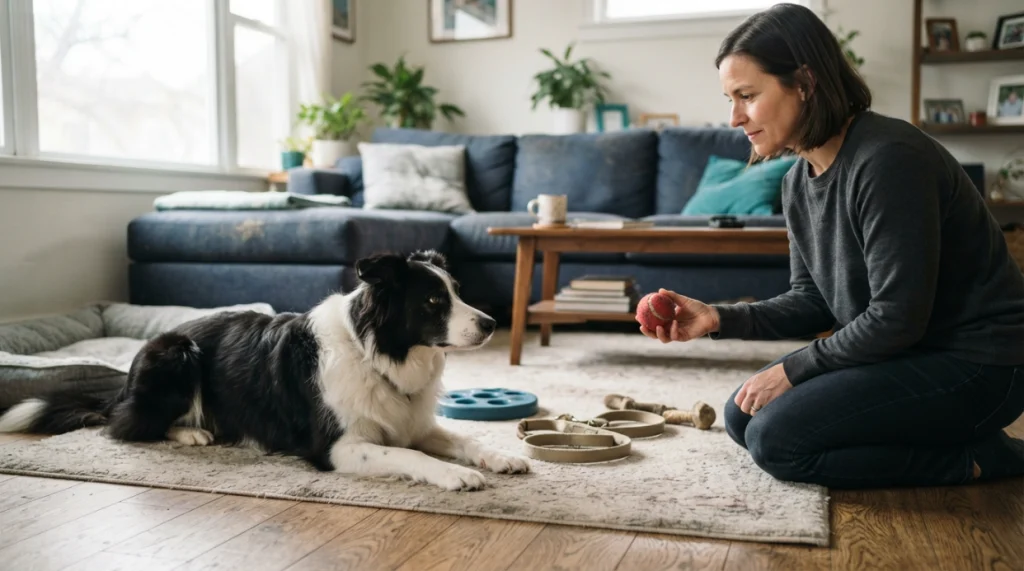
Sadness, boredom, tiredness, stress, and illness can look surprisingly similar in dogs. Looking at the trigger and the dog’s response to enjoyable activities can help you narrow the possibilities.
Border Collies were developed as highly active herding dogs. The American Kennel Club’s Border Collie breed profile describes them as energetic working dogs that need meaningful activity and mental engagement.
| Possibility | Common pattern | What may happen during an enjoyable activity | Best next step |
|---|---|---|---|
| Boredom | Restlessness, pestering, barking, stealing objects, unwanted herding, or destructive behavior | Often becomes engaged when offered training, sniffing, play, or problem-solving | Increase appropriate mental and physical enrichment |
| Normal tiredness | Extra resting after an unusually active day | Interest usually returns after recovery and sleep | Allow appropriate rest and monitor recovery |
| Stress or anxiety | Pacing, avoidance, trembling, whining, lip licking, hypervigilance, or difficulty settling | May remain too worried to play or eat | Identify and reduce the trigger without punishment |
| Low mood or grief-like behavior | Withdrawal, lower activity, reduced interest, altered appetite, or changed sleep | May show less enthusiasm even for familiar favorites | Restore routine, provide gentle engagement, and monitor |
| Possible illness or pain | Behavior change may occur with appetite, mobility, digestive, breathing, or other physical changes | Favorite activities may remain unappealing because the dog feels unwell | Contact your veterinarian |
Boredom is especially easy to mistake for unhappiness in a Border Collie. An under-stimulated dog may appear restless, frustrated, demanding, or strangely flat.
Stress can look different. Veterinary behavior guidance notes that pacing, vocalizing, avoidance, hiding, excessive licking, and altered eating can occur when dogs feel distressed.
Why Might a Border Collie Seem Sad?
A Border Collie can appear sad after changes involving companionship, routine, activity, environment, or physical health. Their strong awareness of daily patterns can make sudden lifestyle changes especially noticeable.
A major change at home
Moving house, losing a companion, changing work schedules, or adding a new family member can disrupt a dog’s predictable world. Even changes that seem positive to us can take adjustment.
Dogs may also show grief-like behavioral changes after losing a human or animal companion. VCA recommends maintaining predictable routines and providing appropriate enrichment when a pet is adjusting to loss.
Not enough mental work
A long walk isn’t the only need that matters. Border Collies were selected to observe, respond, make decisions, and work closely with people.
- Short reward-based training sessions
- Scent-finding games
- Food puzzles and safe problem-solving toys
- Trick training
- Structured fetch or tug
- Appropriate dog sports for the individual dog
Ten focused minutes of thinking can sometimes leave a busy Collie more satisfied than simply repeating the same physical activity. Variety matters.
Too little quality interaction
Border Collies often enjoy working with a person, not merely exercising beside one. A yard alone doesn’t automatically provide meaningful stimulation.
A dog may have space and toys yet still miss interaction. Shared training, exploration, and play can give that active brain a useful outlet.
Fear or separation-related distress
Behavior that looks sad may come from anxiety instead. The ASPCA’s separation anxiety guidance emphasizes that anxious behaviors are distress responses rather than spite or disobedience.
Punishment can therefore make an emotional problem worse. Look for the cause instead.
What Does a Sad Border Collie’s Body Language Look Like?
There isn’t one universal “sad Border Collie face.” You need to read the whole dog, the surrounding situation, and how that posture differs from normal.
Look at several signals together
- Head position: The head may stay lower than usual during interactions.
- Ears: They may sit farther back, although natural ear shape varies greatly among Border Collies.
- Eyes: Your dog may avoid eye contact or appear less attentive to familiar cues.
- Tail: Normal wagging and animated movement may decrease.
- Posture: Movement may become slower or less enthusiastic.
- Location: A social dog may begin choosing isolated resting spots.
Context prevents misreading these signals. A dog lowering their head during focused herding-style movement isn’t automatically unhappy.
Likewise, resting after exercise is normal. Concern rises when several unfamiliar behaviors appear together or persist.
Watch for stress signals too
A distressed dog may pace, hide, lick their lips repeatedly, whine, tremble, or struggle to settle. VCA’s guidance on canine stress signals also stresses the importance of understanding the dog’s usual demeanor and context.
I find that principle especially useful with Border Collies. Their intense stare, fast movement, and sensitivity can otherwise make normal breed behavior easy to misinterpret.
How Can I Help a Border Collie That Seems Sad?
Start by restoring predictability and offering gentle opportunities to engage. Don’t try to force excitement from a dog that is withdrawing or overwhelmed.
1. Return to a dependable routine
Keep meals, walks, bedtime, toilet breaks, and interaction reasonably predictable. Routine can be reassuring after a household or schedule change.
2. Offer a short mental challenge
Try five to ten minutes of an activity your dog already understands. Keep it easy enough to succeed.
- Scatter several pieces of food for a sniffing search
- Practice three familiar cues with rewards
- Hide a favorite toy in an easy location
- Use a food puzzle your dog already enjoys
The goal isn’t to exhaust your dog. You’re checking whether low-pressure engagement helps them reconnect.
3. Give them choice
Invite interaction rather than insisting on it. If your Collie moves away, let them have space and try again later.
This matters when stress is involved. Repeatedly pushing a worried dog toward something they avoid may increase discomfort.
4. Use calm physical activity
A relaxed sniffing walk can be more useful than frantic ball chasing when a dog seems unsettled. Let your dog explore and use their nose.
Avoid suddenly doubling exercise because your Collie seems unhappy. Excess activity can create fatigue and doesn’t solve every behavioral need.
5. Track what changes
For several days, note eating, sleep, walks, play, bowel habits, mobility, unusual events, and social behavior. A simple record can reveal patterns that memory misses.
It also gives your veterinarian better information if the change continues.
When Should Sadness or Withdrawal Concern a Vet?
Contact your veterinarian when a Border Collie’s behavioral change is sudden, persistent, worsening, or accompanied by physical symptoms. Pain and illness can reduce activity and interest in exactly the ways owners describe as sadness.
Vet note: Behavioral changes can’t reliably rule out a medical problem, so contact your own veterinarian when something feels substantially different from your dog’s normal behavior.
Seek veterinary advice when you notice combinations such as:
- Loss of appetite or markedly reduced eating
- Vomiting or diarrhea
- Unusual weakness or severe lethargy
- Limping, stiffness, or reluctance to move
- Signs of pain when touched
- Breathing changes
- Sudden aggression or marked personality change
- Persistent hiding or withdrawal
- A rapid decline in normal activity
Don’t assume a dog is “just depressed” before considering health. Veterinary evaluation is especially important when the change begins suddenly without an obvious environmental trigger.
As of 2026, veterinary guidance continues to stress ruling out medical causes when dogs develop persistent depression-like behavioral changes. Emotional and physical problems can overlap.
What if the vet finds no physical cause?
Your veterinarian can help decide whether behavioral support is appropriate. Depending on the problem, that might include a qualified reward-based trainer or veterinary behaviorist.
The goal is to identify triggers rather than simply stopping outward symptoms. That approach is especially important with fear and separation-related problems.
How Can I Prevent Boredom and Low Mood?
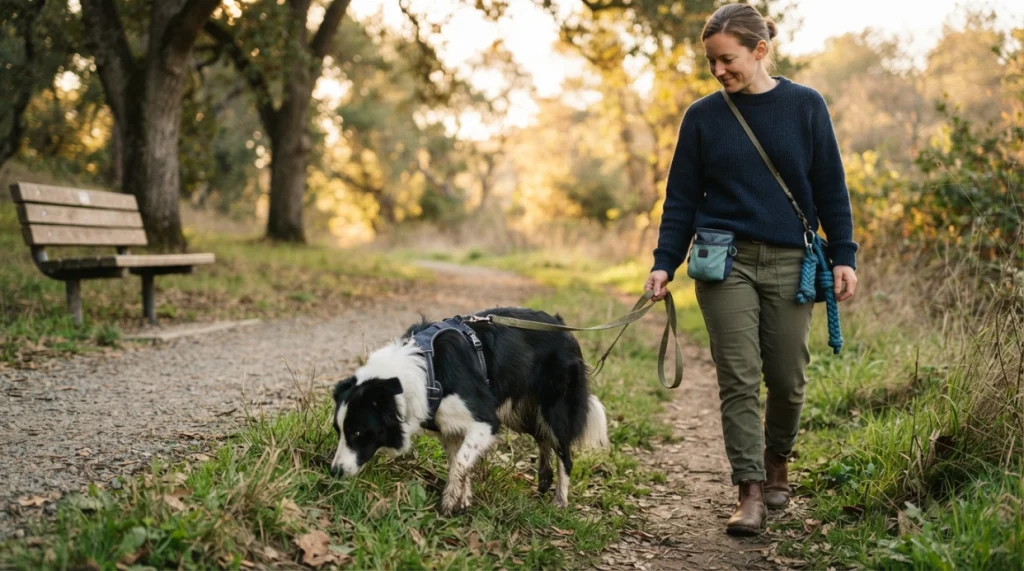
You can’t prevent every emotional change, but you can give a Border Collie a lifestyle with predictability, companionship, rest, physical activity, and regular mental work. Balance matters more than keeping the dog constantly busy.
Create a weekly mix of activities
Rotate activities rather than repeating one game until it becomes automatic. A Border Collie often enjoys learning as much as performing.
- Training: Use several short sessions instead of one long drill.
- Sniffing: Include walks where exploring smells is the main activity.
- Problem-solving: Rotate puzzle feeders, searches, and simple challenges.
- Interactive play: Use tug, retrieve games, or another activity your dog genuinely enjoys.
- Quiet time: Protect periods when your dog can sleep without being disturbed.
- Social connection: Include calm time with familiar people, not only high-energy activity.
Don’t accidentally create a dog that cannot settle
Because Border Collies have a reputation for extreme energy, owners sometimes respond by adding more exercise whenever restlessness appears. That can become an endless cycle.
Teach calm behavior too. A comfortable dog should be able to work enthusiastically and then relax when nothing is happening.
Prepare for major life changes
When possible, introduce schedule changes gradually. Keep familiar feeding, walking, and resting routines stable while your dog adjusts.
If your family loses another pet, expect behavior to shift temporarily. VCA’s guidance for grieving pets recommends predictable routines, enrichment, and professional help when concerning changes persist.
Frequently Asked Questions
Do Border Collies get sad easily?
Border Collies can show noticeable behavioral changes when their routine, companionship, activity, or environment changes. Their intelligence and awareness make changes easy for owners to notice, but a quiet expression alone doesn’t prove sadness. Look for differences from your dog’s usual behavior.
How do I know if my Border Collie is unhappy?
Watch for several changes together, such as reduced interest in play, withdrawal, altered sleeping, appetite changes, unusual clinginess, or less enthusiasm during familiar activities. The more important question is whether your dog’s behavior has changed significantly from their personal normal.
Can a Border Collie become depressed from boredom?
Insufficient stimulation can contribute to behavior that owners interpret as unhappiness. A bored Border Collie may become restless, destructive, demanding, vocal, or disengaged. Regular mental challenges, social interaction, suitable exercise, sniffing, training, and adequate rest help create a healthier daily balance.
Why is my Border Collie suddenly quiet?
A suddenly quiet Border Collie could be tired, stressed, frightened, uncomfortable, or unwell. Consider what happened before the change and check for eating, mobility, digestive, breathing, or pain-related symptoms. A significant unexplained personality change is worth discussing with your veterinarian.
Why doesn’t my Border Collie want to play anymore?
Losing interest in a previously loved activity can occur with stress, emotional changes, pain, illness, or simple fatigue after heavy exercise. Give your dog appropriate rest and try a calm favorite activity later. Persistent loss of interest deserves closer observation and possibly veterinary evaluation.
Should I comfort my Border Collie when they seem sad?
Calm companionship is fine if your dog seeks it. Offer affection, familiar routines, gentle play, sniffing, or easy training without forcing interaction. If your dog chooses space, respect that choice while monitoring their behavior and watching for physical symptoms.
How long should I wait before worrying about a sad Border Collie?
There isn’t one safe waiting period for every dog because the cause matters. Sudden severe lethargy, significant appetite loss, pain, vomiting, breathing changes, weakness, or other concerning physical signs justify prompt veterinary advice rather than waiting to see whether your dog’s mood improves.
The biggest clue isn’t whether your Border Collie looks sad. It’s whether the dog you know has started behaving noticeably differently.
Watch the whole pattern, provide suitable mental and physical engagement, and don’t overlook possible illness. When a change persists or comes with physical symptoms, your veterinarian is the right next step.
