

Quick Answer
A happy Border Collie usually has a loose body, soft eyes, relaxed ears, an easy mouth, and an enthusiastic interest in play, training, or spending time with you. Because this high-energy herding breed can look excited even when stressed, read the whole dog rather than relying on one signal such as tail wagging; the Border Collie breed profile also helps explain why work, activity, and engagement matter so much.
Common signs of a happy Border Collie
- Soft expression: The eyes, forehead, jaw, and ears look relaxed instead of tense.
- Loose movement: The body looks flexible, wiggly, and comfortable rather than stiff.
- Play interest: Your Collie brings toys, performs play bows, or eagerly joins games.
- Healthy curiosity: They sniff, explore, watch their surroundings, and remain interested in life.
- Social connection: They voluntarily stay near you, check in, or seek appropriate affection.
- Ability to settle: After enough activity, they can relax instead of pacing constantly.
Best way to confirm it
- Watch your dog’s normal behavior across several days. A pattern of relaxed body language, engagement, normal eating, restful sleep, and curiosity tells you more than one excited greeting.
Border Collies are expressive dogs, but they aren’t always easy to read. A BC can stare intensely, sprint around the yard, or obsess over a ball without necessarily feeling calm and content.
I’ve learned to judge happiness by patterns rather than one dramatic behavior. This guide shows you what a genuinely content Border Collie looks like, how happiness differs from over-arousal, and what changes deserve closer attention.
As of 2026, the most useful canine behavior guidance still comes back to one principle: look at the dog’s entire body and the situation around it.
In This Guide
- What Does a Happy Border Collie Look Like?
- What Are the Clearest Signs a Border Collie Is Happy?
- Is My Border Collie Happy or Just Overstimulated?
- How Much Activity Does a Happy Border Collie Need?
- How Can I Make My Border Collie Happier?
- Can a Calm Border Collie Still Be Happy?
- When Can a Behavior Change Signal a Health Problem?
- Frequently Asked Questions
- Final Takeaway
What Does a Happy Border Collie Look Like?
A happy Border Collie looks physically relaxed, mentally engaged, and comfortable enough to switch between activity and rest. Happiness isn’t nonstop excitement.
A happy Border Collie is a dog whose physical, mental, social, and rest needs are being met consistently. You should see comfortable body language, voluntary engagement, curiosity, and an ability to settle after activity.
That’s especially important with this breed. Border Collies were developed as intense working herding dogs that could watch livestock, respond to a handler, and make rapid decisions.
The famous Border Collie eye is part of that heritage. It describes the focused stare many Collies use while controlling livestock or concentrating on movement.
That stare doesn’t automatically mean your dog is unhappy. Context changes the meaning.
Look at the whole body
When I evaluate a dog’s mood, I start at the face and work backward. The canine body-language guidance from PetMD follows the same useful principle: don’t interpret one signal in isolation.
- Eyes: Soft rather than hard or unusually wide.
- Ears: Resting naturally instead of pinned or rigidly forward.
- Mouth: Relaxed without tight lips or a clenched jaw.
- Back and shoulders: Loose instead of rigid.
- Tail: Moving naturally for that individual dog.
- Movement: Fluid, balanced, and willing.
Your own dog’s baseline matters most. One Border Collie may be naturally cuddly, while another prefers lying three feet away and watching everything you do.
What Are the Clearest Signs a Border Collie Is Happy?
The strongest evidence comes from several positive behaviors appearing together. One tail wag or playful bark isn’t enough by itself.
1. Their eyes look soft
Relaxed eyes are one of my favorite clues. Your dog’s eyelids look comfortable, and the stare loses that hard, fixed quality associated with tension.
2. Their body stays loose
A content Border Collie moves easily. You may see a loose back, relaxed shoulders, curved movement, or an enthusiastic whole-body wiggle during greetings.
3. They offer a play bow
A classic play bow has the front end lowered and the rear end raised. It’s a strong invitation to interact when the rest of the dog’s body also looks loose.
4. They bring you toys
Many happy Border Collies don’t wait for entertainment. They’ll appear with a ball, tug toy, disc, or whatever object they’ve decided should become today’s project.
5. They enjoy training
A mentally comfortable BC often lights up when training begins. You may see quick responses, eager orientation toward you, and an obvious desire to try again.
I prefer short sessions. Five to ten focused minutes can be more satisfying than drilling the same cue until the dog loses interest.
6. They choose to be near you
Affection doesn’t always mean climbing onto your lap. Many Border Collies show attachment by following you, checking where you are, or settling nearby.
7. They can disengage
This sign gets overlooked. A healthy working drive should still allow your dog to stop staring at the ball, leave the window, or relax when the activity ends.
8. They explore and sniff
Sniffing isn’t wasted exercise. A dog who comfortably investigates scents, surfaces, and new surroundings is using their brain and gathering information.
9. Their appetite stays normal
A content dog generally maintains their usual interest in meals and rewards. What’s normal differs between individuals, so compare your dog with their own routine.
10. They sleep and rest comfortably
Border Collies need an off-switch too. A dog who curls up, stretches out, changes sleeping positions, and rests deeply is showing that they feel safe enough to relax.
11. They recover quickly after excitement
Watch what happens after a visitor arrives or a game ends. A well-regulated dog can gradually return to normal instead of staying frantic for a long period.
12. They voluntarily reconnect with you
During walks or free time, happy Border Collies often check back with their person without being called. That voluntary attention tells me the relationship itself has value to the dog.
Section Takeaway: Don’t judge Border Collie happiness from one dramatic signal. Look for repeated combinations of relaxed body language, curiosity, engagement, social connection, and comfortable rest.
Is My Border Collie Happy or Just Overstimulated?
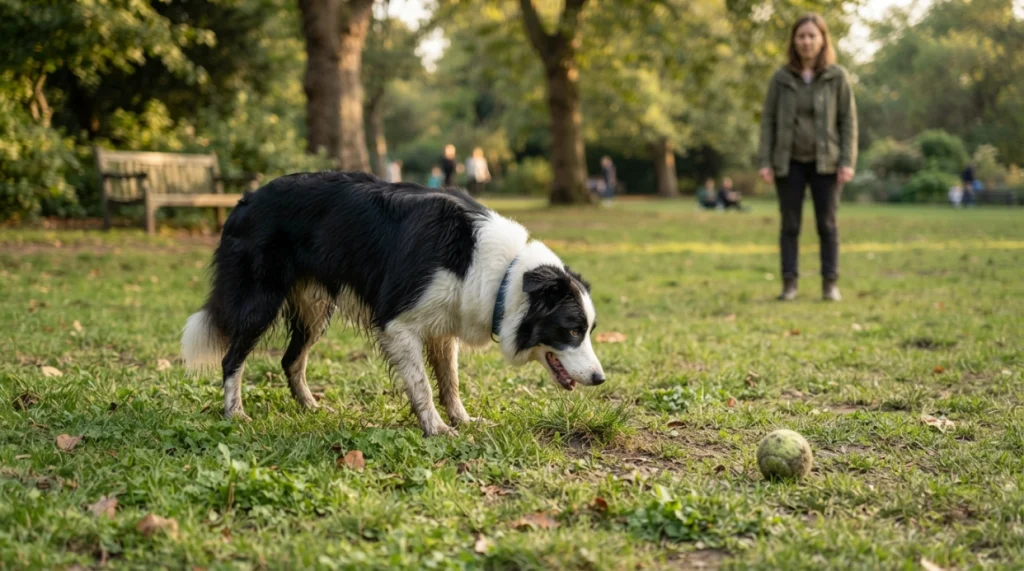
Excitement and happiness can look similar. Border Collies make this especially confusing because movement can trigger intense attention almost instantly.
A wagging tail doesn’t automatically equal happiness. The ASPCA’s dog behavior resources also emphasize interpreting behavior in context.
| Signal | Happy / Comfortable | Overstimulated | Stressed / Fearful |
|---|---|---|---|
| Body | Loose and flexible | Fast, frantic, difficult to interrupt | Stiff, lowered, frozen, or withdrawn |
| Eyes | Soft, normal blinking | Intensely fixed on a trigger | Wide, hard, avoiding, or showing white |
| Mouth | Soft or naturally open | Heavy panting despite little exertion | Tight jaw, repeated lip licking |
| Attention | Can engage and disengage | Obsessively locked onto activity | Hypervigilant or trying to escape |
| Afterward | Settles comfortably | Keeps demanding stimulation | Hides, paces, trembles, or remains tense |
The recovery period is often the giveaway. A happy dog can enjoy an intense game and then come back down.
If throwing a ball makes your Collie more frantic every minute, more repetitions aren’t necessarily making them happier. Try ending the game earlier and shifting to sniffing, searching, or quiet decompression.
How Much Activity Does a Happy Border Collie Need?
Border Collies need substantial physical and mental activity, but there isn’t one magic number that suits every dog. Age, health, temperament, fitness, and working background all matter.
For a healthy adult in everyday home life, I prefer several purposeful activity blocks instead of one exhausting session.
- Morning: 30–45 minutes of walking, exploring, play, or structured activity.
- Later activity: Another 30–60 minutes adjusted to the individual dog’s fitness and routine.
- Training: Two or three sessions of about 5–10 minutes each.
- Mental work: Sniffing games, food puzzles, searching, trick work, or simple household jobs.
- Rest: Genuine quiet time without constant stimulation.
Those numbers are examples, not a medical prescription. I increase or reduce them according to the dog’s behavior, age, weather, and physical condition.
Mental work matters as much as running
Trying to tire a Border Collie through endless high-speed exercise can create an athlete who simply wants more exercise. Their brain needs an outlet too.
Useful mental challenges include scent searches, trick chains, obedience, agility foundations, controlled herding activities, toy identification, and problem-solving games.
Don’t forget decompression
A slow walk where your dog can sniff can be more settling than another twenty minutes of frantic fetch. Happiness includes the ability to come down from excitement.
Puppies, seniors, and dogs with medical problems need different exercise plans. Avoid treating an adult Border Collie’s routine as a target for every life stage.
How Can I Make My Border Collie Happier?
Meet the dog’s breed-specific needs without turning every waking minute into a workout. The best routine balances work, choice, connection, novelty, and rest.
Give them meaningful jobs
A “job” doesn’t require sheep. Border Collies often enjoy tasks that involve listening, searching, carrying, targeting, or solving a problem.
- Find a hidden toy by name.
- Carry a soft item from one room to another.
- Touch specific objects with their nose.
- Learn directional cues such as left and right.
- Search the yard for scattered treats.
- Practice two or three tricks before dinner.
Reward calm behavior too
Owners often reward speed because Border Collies are impressive when they’re working. I also reward lying quietly, disengaging from movement, and choosing to relax.
That teaches an important lesson: calm behavior works too.
Let your dog have choices
Choice can make daily life more enjoyable. Let your dog pick a sniffing direction, choose between two toys, or decide whether they want petting.
Small choices reduce the feeling that every interaction is another command.
Protect their rest
A dog that follows every footstep can become chronically alert. Give your Collie a comfortable place where nothing interesting is expected of them.
I’ve found that some dogs settle more easily once toys are put away after play. A visible ball can become unfinished business for an obsessive Collie.
Can a Calm Border Collie Still Be Happy?
Yes. A calm Border Collie can be perfectly happy, especially after their needs have been met.
People sometimes expect this breed to look busy every second. That confuses high working ability with a requirement for nonstop motion.
A content adult may spend part of the day sleeping, watching the household, chewing something appropriate, or lying near you. That’s healthy behavior when the dog also shows normal enthusiasm for activities they enjoy.
Watch for calmness versus shutdown
Comfortable calmness has a soft quality. The dog changes positions, responds normally, eats, explores, and becomes interested when something worthwhile happens.
Shutdown looks different.
- The dog avoids interaction they normally enjoy.
- Movement becomes hesitant or unusually slow.
- They stop showing interest in favorite activities.
- They hide or isolate themselves unexpectedly.
- Their body remains tense even while resting.
Personality matters too. Not every Border Collie is a nonstop athlete, and older dogs usually behave differently from young adults.
When Can a Behavior Change Signal a Health Problem?
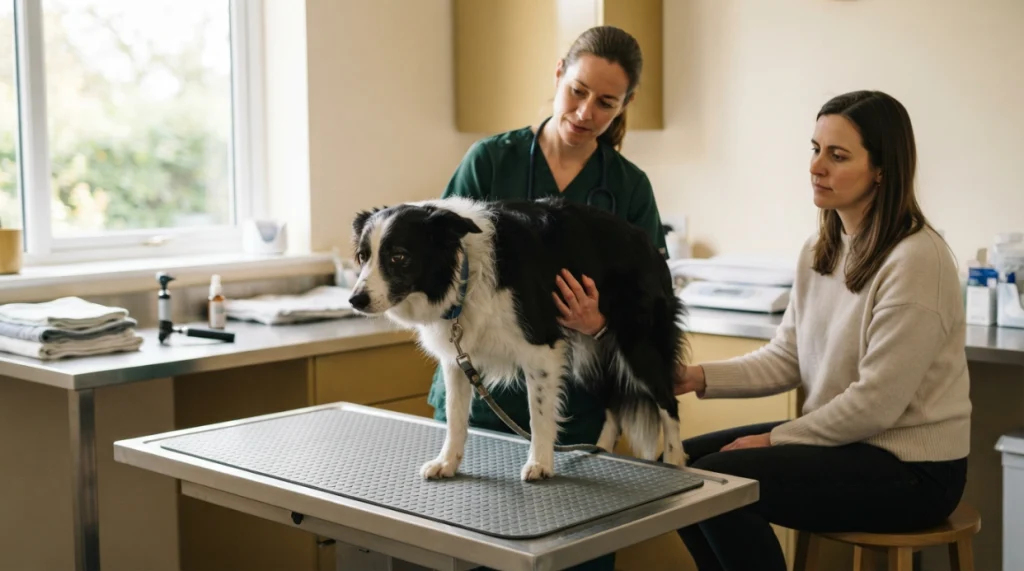
A sudden change from your dog’s normal personality deserves attention. Pain and illness can alter activity, appetite, sleep, tolerance, and social behavior.
Contact your veterinarian when a previously engaged Border Collie becomes unusually withdrawn, restless, irritable, reluctant to move, or uninterested in food.
- Sudden lethargy: Your normally energetic dog doesn’t want routine activity.
- Movement changes: They limp, hesitate on stairs, or resist jumping.
- Appetite changes: Meals or favorite treats suddenly lose their appeal.
- New irritability: Touch or handling causes reactions that weren’t normal before.
- Persistent pacing: Your dog can’t settle despite a normal routine.
- Unusual hiding: A social dog begins avoiding people or familiar spaces.
Behavior alone can’t diagnose a medical condition. Look at the timing, duration, and any other physical changes you notice.
Vet note: If your Border Collie’s behavior changes suddenly or you suspect pain, illness, or injury, speak with your own veterinarian rather than trying to solve the issue with extra exercise or training.
Frequently Asked Questions
Do Border Collies smile when they’re happy?
Some Border Collies appear to smile because their mouth is relaxed and slightly open. That can accompany happiness, but don’t judge the mouth alone. Soft eyes, relaxed muscles, comfortable movement, and the surrounding situation give you a more reliable picture.
Does a Border Collie following me everywhere mean they’re happy?
It can show social attachment, especially when your dog follows with relaxed body language and can also settle independently. Constant shadowing combined with pacing, distress when you leave, or inability to relax may reflect anxiety rather than simple happiness.
Why does my Border Collie stare at me?
Border Collies naturally use intense visual attention because of their herding heritage. Your dog may stare because they’re waiting for a cue, expecting an activity, watching your movement, or seeking information. Read the eyes together with posture, ears, mouth, and context.
Is tail wagging proof that my Border Collie is happy?
No. A wag means emotional arousal, but the emotion isn’t always happiness. A loose sweeping wag paired with a relaxed body is encouraging. A high, tight, rapid wag with stiff muscles can indicate tension, intense excitement, or uncertainty.
Why won’t my Border Collie settle after exercise?
More exercise isn’t always the answer. Your dog may be over-aroused, accustomed to constant stimulation, or still mentally keyed up. Try shorter high-intensity games, sniffing activities, calm enrichment, predictable rest periods, and rewarding voluntary relaxation.
Can a Border Collie be happy without a huge yard?
Yes. A yard is convenient, but space alone doesn’t provide meaningful enrichment. A Border Collie can thrive when their person consistently provides appropriate walks, training, mental challenges, social interaction, safe exploration, and opportunities to rest.
How do I know whether my Border Collie is bored?
Boredom may show as repeated attention-seeking, destructive chewing, digging, pacing, demand barking, or inventing unwanted activities. Before calling it boredom, consider exercise, mental stimulation, sleep, stress, and health because similar behaviors can have different causes.
Final Takeaway: Learn Your Border Collie’s Normal
The best way to tell if a Border Collie is happy is to stop searching for one perfect sign. Happiness shows up as a pattern.
Look for a loose body, soft expression, curiosity, willingness to play or work, voluntary connection with you, normal eating and sleeping, and the ability to relax afterward.
Most importantly, learn what those behaviors look like in your Border Collie. Their normal baseline will tell you more than a generic checklist ever can.
Give them worthwhile things to do, opportunities to think, time to sniff, predictable companionship, and permission to rest. When those needs are balanced, a Border Collie’s happiness is usually easier to see than you think.
