

Quick Answer
The main disadvantages of a Border Collie are intense exercise needs, constant mental stimulation, strong herding behavior, shedding, emotional sensitivity, and several breed-related health concerns. They’re brilliant dogs, but that intelligence can make everyday ownership harder rather than easier. The AKC’s Border Collie ownership guidance also emphasizes their need for an active household and ongoing training.
The biggest drawbacks to consider
- High exercise needs: A young, healthy Border Collie may need one to two hours of meaningful daily activity.
- Busy mind: Walking alone often isn’t enough because these dogs also need training, games, and problem-solving.
- Herding behavior: Chasing, staring, circling, and heel-nipping can become difficult around children, pets, bicycles, or traffic.
- Emotional sensitivity: Harsh corrections, chaotic homes, and inconsistent routines can affect them more than many owners expect.
- Hair and grooming: Both rough- and smooth-coated Border Collies have double coats and shed.
- Not an easy first dog: Their intelligence means they learn good habits and unwanted habits with impressive speed.
A useful ownership test
- If daily training, exercise, grooming, and active involvement sound exhausting rather than enjoyable, another breed may suit you better.
Border Collies are sometimes described as dream dogs because they’re athletic, loyal, and remarkably quick learners. After living and training around this breed, I’ve found that those same strengths can create some of their hardest ownership challenges.
This guide looks at the disadvantages honestly. If you’re considering a Border Collie in 2026, the goal is to help you decide whether your lifestyle fits the dog rather than whether you simply admire the breed.
In This Guide
- What are the main disadvantages of a Border Collie?
- How demanding are Border Collie exercise and mental needs?
- Why can Border Collie behavior become difficult at home?
- Do Border Collies shed and require much grooming?
- What health problems should Border Collie owners consider?
- Border Collie vs Australian Shepherd: which is harder?
- Who should not get a Border Collie?
- Frequently asked questions
- Final takeaway
What Are the Main Disadvantages of a Border Collie?
The biggest disadvantage is simple: a Border Collie often requires more time and involvement than people expect. Intelligence doesn’t make this breed low-maintenance.
A Border Collie’s working drive is the inherited desire to watch, control, chase, and respond to movement. Generations of herding work shaped that behavior.
They need a job, not just affection
Most companion dogs appreciate attention. Border Collies often need purposeful interaction as well.
- Physical exercise: Brisk walks, running, hiking, controlled fetch, or dog sports.
- Mental exercise: Obedience work, scent games, puzzles, tricks, and problem-solving.
- Impulse control: Learning to settle, wait, disengage, and ignore moving triggers.
- Consistent routines: Clear expectations help prevent a clever dog from creating its own rules.
I learned early that simply making a Border Collie tired isn’t the same as making one satisfied. A long walk can produce a fitter dog that still comes home looking for another assignment.
They notice everything
A dropped glove, opening cupboard, delivery truck, or moving cat can become important to them. Some owners enjoy that alertness.
Others find it exhausting. Living with a highly observant dog can feel like having a supervisor following every household routine.
That awareness also lets Border Collies learn accidental patterns. Give in to demand barking twice, and a smart dog may decide he’s discovered a reliable system.
Section Takeaway: Border Collies aren’t difficult because they lack intelligence. They can be difficult because they have so much intelligence, energy, and working instinct to direct every day.
How Demanding Are Border Collie Exercise and Mental Needs?
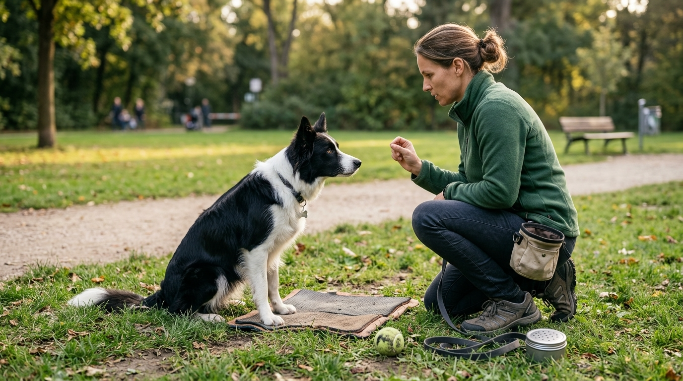
Exercise is one of the largest commitments. PetMD notes that young Border Collies may need roughly one to two hours of exercise daily, alongside mental engagement.
That doesn’t mean two hours of nonstop high-impact running. Puppies, older dogs, and dogs with medical problems need different routines.
Physical exercise alone can backfire
Owners sometimes respond to hyperactivity by throwing a ball longer and longer. That can build stamina without teaching the dog how to relax.
I prefer mixing movement with thinking. Ten minutes of focused training can change a dog’s state of mind differently from ten more minutes of frantic fetch.
| Life stage | Typical activity approach | Mental work | Main caution |
|---|---|---|---|
| Puppy | Several short play, walking, and exploration sessions | 3–10 minute training sessions | Avoid excessive repetitive impact while growing |
| Healthy adult | Often around 1–2 hours spread through the day | Training, scent work, puzzles, sport skills | Don’t create endless exercise dependence |
| Senior | Shorter, lower-impact activity based on mobility | Gentle problem-solving and familiar cues | Adjust for pain, stamina, and veterinary advice |
They also need an off-switch
One overlooked skill is doing nothing. I actively teach Border Collies that lying on a mat while life continues around them is also a valid job.
- Reward calm behavior before the dog demands activity.
- Include sniffing and slower walks, not only high-speed games.
- Use short training sessions instead of marathon drills.
- Rotate activities so excitement isn’t the only reward.
- Schedule quiet periods after exercise.
The breed’s intelligence can be rewarding for someone who loves daily training. It becomes a burden when an owner expected one morning walk to cover the dog’s needs.
Section Takeaway: Border Collies need both physical outlets and structured mental work. Teaching calmness matters as much as teaching tricks.
Why Can Border Collie Behavior Become Difficult at Home?
Border Collies were bred to control livestock through movement, positioning, and intense focus. Those instincts don’t disappear when the dog lives in a suburban home.
Instead, the behavior can shift toward children, cats, joggers, bicycles, lawn equipment, or passing vehicles.
Herding can look like staring, circling, or nipping
The famous Border Collie eye means an intense stare used while controlling livestock. In a home, owners may notice the dog freezing and staring before chasing movement.
- Children running: A dog may chase or attempt to control their direction.
- Other pets: Cats and smaller dogs may dislike persistent stalking or circling.
- Bicycles and cars: Chasing traffic can become dangerous and needs immediate management.
- Feet and ankles: Some dogs redirect herding behavior toward heels.
This doesn’t make the dog aggressive. However, instinctive behavior can still frighten someone or create a safety problem.
They’re often emotionally sensitive
Many Border Collies respond strongly to tone, body language, and changes in routine. Heavy-handed training can create confusion or avoidance instead of better behavior.
I get better results by being clear and consistent. Reward-based training gives the dog a precise alternative instead of merely punishing the wrong response.
Barking and destructive behavior can appear
VCA’s Border Collie guidance notes that understimulated dogs can become frustrated or destructive. Some also bark frequently when bored or over-aroused.
A bored Border Collie can invent work quickly. That work may involve dismantling cushions, watching windows, digging, chasing reflections, or policing every noise outside.
Do Border Collies Shed and Require Much Grooming?
Yes. Border Collies aren’t the highest-maintenance grooming breed, but they’re certainly not hair-free.
Both common coat types have an insulating double coat. The rough variety has longer feathering, while the smooth variety carries shorter hair.
Expect loose hair throughout the home
Shedding usually becomes more noticeable when the coat changes seasonally. Regular brushing catches loose undercoat before more of it reaches furniture and clothing.
- Brush routinely, increasing frequency during heavy shedding.
- Check feathering behind ears and legs for tangles.
- Trim nails before they become overgrown.
- Check ears after wet, muddy, or outdoor activity.
- Bathe when needed rather than constantly.
Mud is another practical issue. A Border Collie that’s getting enough outdoor activity may return with wet paws, burrs, seeds, and debris.
For me, towels by the door are part of Border Collie ownership. A beautiful coat looks less glamorous after a rainy field session.
What Health Problems Should Border Collie Owners Consider?
Border Collies can live active lives, but prospective owners should understand breed-related health concerns. Veterinary costs can become another disadvantage of ownership.
PetMD’s Border Collie health guide discusses conditions affecting the breed and the importance of appropriate veterinary care.
Problems worth discussing with a veterinarian or breeder
- Hip problems: Hip dysplasia can affect mobility and comfort.
- Eye disease: Inherited eye conditions occur in the breed.
- Epilepsy: Some Border Collies develop seizure disorders.
- Genetic medication sensitivity: Certain herding dogs can carry variants that change their response to some medications.
A responsible breeder should be willing to discuss health testing openly. Health history matters more than impressive coat markings or unusually bright blue eyes.
If you’re adopting, you may not have complete genetic history. That makes routine veterinary care and observation even more important.
Vet note: Breed tendencies don’t predict an individual dog’s future health. Discuss screening, medications, exercise, diet, and any concerning symptoms with your own veterinarian.
High activity can create practical injury risks
Fast turns, jumping, rough terrain, and repetitive sport work place stress on an athletic dog’s body. More exercise isn’t automatically better.
Warm-ups, appropriate surfaces, rest, and conditioning matter. The American Veterinary Medical Association is also a useful starting point for reliable general veterinary information.
Section Takeaway: Health shouldn’t scare you away from the breed, but it belongs in the ownership budget. Choose responsibly and build an ongoing relationship with a veterinarian.
Border Collie vs Australian Shepherd: Which Is Harder to Own?
Both breeds are intelligent herding dogs with substantial exercise and training needs. Neither should be chosen simply because you like the look.
The exact dog matters more than a stereotype. Working lines within either breed may be considerably more intense than individual companion dogs.
| Trait | Border Collie | Australian Shepherd |
|---|---|---|
| Working focus | Often extremely task-focused | Strong working and herding drive |
| Exercise demand | High | High |
| Mental stimulation | Extremely important | Extremely important |
| Herding behavior | Strong eye, stalking, chasing, control of movement | Strong herding and movement-control tendencies |
| Grooming | Moderate; rough or smooth double coat | Moderate; double coat |
| Best fit | Active owner who enjoys frequent training | Active home prepared for training and exercise |
I wouldn’t choose between them by asking which breed is smarter. I’d ask which daily routine I’m genuinely willing to maintain for the next decade or more.
Who Should Not Get a Border Collie?
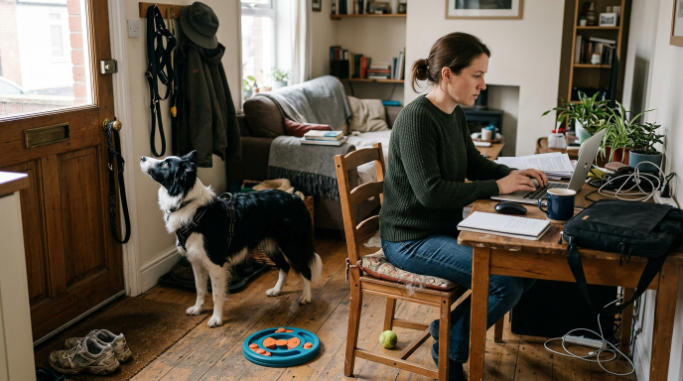
A Border Collie is a poor match when the owner wants a naturally low-effort companion. The breed generally suits people who enjoy interacting with their dog every day.
Think carefully if these situations describe you
- You’re away most of the day: Long periods without engagement can be difficult for some Border Collies.
- You dislike training: This breed benefits from continuing education throughout life.
- You want only leisurely walks: Many young adults need considerably more activity and variety.
- You dislike dog hair: A double-coated herding dog probably isn’t the best choice.
- Your household is chaotic: Sensitive dogs may struggle with unpredictable handling and constant tension.
- You expect a yard to exercise the dog: Space helps, but a yard doesn’t replace interaction.
Can a Border Collie live in an apartment?
Yes, in some cases. Square footage matters less than whether the owner can provide enough structured activity, toilet breaks, training, and quiet time.
A bored Border Collie with a huge yard can be harder to live with than a well-trained dog in an apartment. The owner’s routine is the bigger variable.
Are Border Collies suitable for older adults?
They can be, but lifestyle matters more than age. An active older adult with dog-training experience may enjoy the breed immensely.
Someone dealing with limited mobility may find a young Border Collie’s pulling, speed, exercise demands, or sudden directional changes challenging. An adult or senior dog with a known temperament may be easier than a puppy.
Before adopting, spend time with the individual dog. The ASPCA can also provide general adoption and animal-care resources.
Frequently Asked Questions About Border Collie Disadvantages
What is the biggest disadvantage of owning a Border Collie?
The biggest disadvantage is the time commitment. Most need substantial physical activity, mental stimulation, training, and interaction every day. A Border Collie without enough structured engagement can develop frustrating behaviors such as barking, chasing, chewing, or obsessive routines.
Are Border Collies difficult for first-time owners?
They can be. Their intelligence helps them learn commands quickly, but it also helps them learn accidental habits. A committed first-time owner can succeed with good guidance, yet someone wanting an easy, low-maintenance first dog may find the breed overwhelming.
Can Border Collies be left alone all day?
Regularly leaving a Border Collie alone for an entire workday can be difficult, especially for a young, energetic dog. Individual tolerance varies. Exercise, gradual alone-time training, enrichment, and appropriate daytime care may be needed for households with long absences.
Do Border Collies become destructive?
They can become destructive when bored, frustrated, anxious, or under-stimulated. Chewing and digging are possible outlets for unused energy. The solution usually involves appropriate exercise, mental work, management, rest, and training rather than simply correcting the destruction afterward.
Are Border Collies bad with children?
No, but their herding instinct can create problems around fast-moving children. Some may chase, circle, stare at, or nip toward heels. Adult supervision, early training, and teaching children calm dog interactions are especially important.
Do Border Collies ever calm down?
Most mature with age, but they don’t automatically become low-energy dogs. Owners should teach calm behavior from puppyhood instead of trying to exhaust the dog every day. Genetics, working line, training, health, and individual temperament all affect activity level.
Is a Border Collie worth the work?
For the right person, absolutely. They’re responsive, athletic, observant, and rewarding training partners. The problem begins when someone wants the intelligence without accepting the exercise, structure, grooming, sensitivity, and daily involvement that usually come with it.
Final Takeaway: Is a Border Collie Right for You?
The disadvantages of a Border Collie aren’t defects. Most are predictable results of breeding a dog for intelligence, endurance, sensitivity, and livestock work.
The difficult parts include heavy daily involvement, mental stimulation, herding behavior, shedding, training demands, and potential health expenses. Those responsibilities can feel overwhelming in the wrong home.
In the right home, the picture changes. If training is one of your hobbies and active time with a dog sounds enjoyable, these demanding traits can become part of the appeal.
Don’t choose a Border Collie because you want the smartest dog in the neighborhood. Choose one because you’re prepared to give that smart dog meaningful work, clear guidance, companionship, and enough downtime to learn how to relax.
