

Quick Answer
Border Collies aren’t good at being bored, ignored, or expected to live like low-energy companion dogs. Their intelligence, stamina, sensitivity, and herding instincts make them outstanding workers, but the same traits can become difficult in homes without enough training and purposeful activity. The AKC Border Collie breed profile also describes them as energetic working dogs that need to stay occupied.
Where Border Collies commonly struggle
- Doing nothing: Long stretches without a job can leave them restless and looking for their own entertainment.
- Long alone time: Many prefer frequent interaction and can struggle with a daily routine built around isolation.
- Low-activity homes: A short walk around the block may not provide enough physical or mental engagement.
- Ignoring movement: Running children, bicycles, pets, and cars can trigger strong chase or herding responses.
- Repetitive training: They learn patterns quickly and may lose focus when sessions become predictable.
- Switching off: Some need to be deliberately taught that calm resting is also a rewarded behavior.
The important distinction
- These aren’t defects. They’re predictable challenges that come from living with an intense herding breed.
Border Collies, sometimes simply called Borders or BCs, are among the most capable dogs I’ve worked around. That doesn’t mean they’re naturally easy household pets.
The question isn’t whether a Border Collie is a “good” dog. It’s whether the dog’s working temperament fits what you expect your companion to do every day.
In This Guide
- Are Border Collies bad at relaxing and doing nothing?
- Are Border Collies good at being left alone?
- Do Border Collies struggle in low-activity homes?
- Are Border Collies good with small children and other pets?
- What training methods are Border Collies not good at?
- Border Collie vs Australian Shepherd vs Kelpie: which is easier?
- What problems appear when a Border Collie is under-stimulated?
- Can Border Collies learn an off-switch?
- FAQs about what Border Collies are not good at
- Final takeaway
Are Border Collies Bad at Relaxing and Doing Nothing?
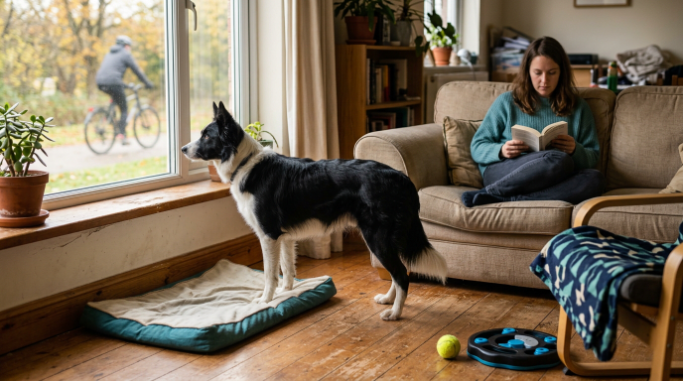
Border Collies can relax, but many aren’t naturally good at spending an entire day with nothing meaningful to do. They were developed to notice movement, solve problems, respond to a handler, and work for long periods.
That history matters inside a modern home. A clever dog without a useful outlet may invent one.
- Window patrol: Watching and reacting to every person, dog, bicycle, or delivery truck.
- Shadow chasing: Fixating on moving reflections, lights, or shadows.
- Demand behavior: Dropping toys repeatedly, staring, barking, or pawing for attention.
- Household herding: Following family members closely and trying to control where they move.
- Destructive projects: Digging, chewing, opening doors, or investigating things you never intended them to touch.
A Border Collie’s “off-switch” is the learned ability to stop working, disengage from stimulation, and settle calmly when nothing is happening.
I think this distinction saves owners a lot of frustration. Exercise can tire the body, but endlessly increasing exercise can also create a fitter dog that still hasn’t learned how to rest.
A better routine combines movement, problem-solving, training, sniffing, play, and genuine downtime. Calm behavior needs practice too.
What does productive downtime look like?
I like to make resting predictable rather than waiting for exhaustion. After an activity, the dog gets water, a quiet space, and a clear cue that the exciting part of the day has ended.
- Use a mat or bed as a regular resting location.
- Reward quiet lying down before the dog demands attention.
- Keep exciting toys out of sight during designated rest periods.
- Give calm chewing or licking activities when appropriate.
- Avoid responding to every stare with another game of fetch.
Are Border Collies Good at Being Left Alone?
Border Collies aren’t usually the breed I’d choose for a lifestyle involving long, boring days alone followed by minimal interaction. Individual dogs vary, but this is a people-focused working breed.
Being alone and having separation anxiety aren’t the same thing. A dog may simply be under-stimulated rather than clinically distressed.
Signs the daily routine may not be working
- Destructive chewing happens mainly during long quiet periods.
- The dog becomes frantic when you finally arrive home.
- Barking or pacing increases at predictable times.
- The yard develops new escape routes or digging projects.
- The dog struggles to settle despite receiving basic walks.
Don’t assume every unwanted behavior means the dog needs three more hours of running. Look at the whole routine first.
A useful day can include short training sessions, sniffing walks, food puzzles, controlled play, and sleep. Variety often matters more than repeating one exhausting activity.
What if you work a full day?
Plan engagement before and after work, then consider a safe midday break if your individual dog needs it. A trusted walker, family member, or appropriate daycare can help some dogs.
Quality matters. Ten focused minutes of training can demand more thought than wandering around the same yard for half an hour.
Do Border Collies Struggle in Low-Activity Homes?
They often do. Border Collies tend to fit active households better than homes seeking a dog that is satisfied with a slow, repetitive routine.
“Active” doesn’t have to mean running marathons. It means giving the dog regular opportunities to use both body and brain.
- Hiking on safe trails
- Structured fetch with start-and-stop cues
- Agility foundations
- Rally or obedience exercises
- Herding under knowledgeable instruction
- Nose work and scent searches
- Trick training
- Food puzzles and foraging games
The ASPCA’s canine enrichment guidance emphasizes giving dogs opportunities for natural behaviors such as sniffing, chasing, chewing, and scavenging. That’s particularly useful with a dog that wants a purpose.
Do Border Collies need a huge yard?
A large yard is helpful, but it doesn’t automatically create a fulfilled Border Collie. Dogs don’t usually design their own balanced enrichment program because grass happens to surround the house.
An engaged owner in a smaller home can sometimes provide a better life than an absent owner with several acres. Your schedule matters more than the property listing.
Are Border Collies Good With Small Children and Other Pets?
Many Border Collies live successfully with children and other animals. The challenge is that quick, unpredictable movement can activate behaviors connected to their herding heritage.
A Border Collie’s herding instinct is the natural tendency to monitor, gather, stalk, circle, or control moving animals. That instinct can sometimes be redirected toward people, pets, bicycles, or anything else that moves.
Behaviors owners may notice
- Staring intensely at a running child
- Crouching before chasing
- Circling people or dogs
- Blocking movement
- Chasing ankles
- Trying to gather children into one area
Those behaviors don’t automatically mean aggression. They do mean the situation needs management and training.
Small children shouldn’t be responsible for controlling an intense herding dog. Adult supervision matters, especially during running, shouting, ball games, or busy outdoor play.
What about cats?
Some Borders live peacefully with cats, especially when introductions are careful. Others find a running cat extremely difficult to ignore.
Don’t let repeated chasing become the daily game. Use gates, leashes, distance, and rewarded calm behavior while building better habits.
What Training Methods Are Border Collies Not Good At?
Border Collies often learn so quickly that poor training can become obvious fast. Repetition without purpose, unclear rules, and harsh handling can all create unnecessary problems.
They aren’t good at endless drilling
Once a Border Collie understands an exercise, repeating it 30 times may reduce enthusiasm rather than improve learning. I prefer short sessions that finish while the dog still wants another turn.
- Try 5-10 minute focused sessions.
- Change locations after the behavior is understood.
- Add distance, duration, or distractions gradually.
- Mix known behaviors with one new challenge.
- Finish after a good repetition instead of pushing to fatigue.
They notice inconsistency quickly
If jumping earns attention on Monday but gets punished on Tuesday, a smart dog isn’t receiving a clear rule. Everyone in the household should reward the same basic expectations.
They also learn accidental patterns. Reach for a tennis ball every time your Border barks at you, and you’ve probably trained a very effective ball-request button.
Harsh corrections can be a poor match
Border Collies can be sensitive to handler pressure, voice, and body language. Clear reward-based teaching usually gives the dog more useful information than intimidation.
Training should create confidence and communication, not make the dog afraid to offer behavior. Keep standards clear while making the correct choice worthwhile.
Border Collie vs Australian Shepherd vs Kelpie: Which Is Easier?
None of these herding breeds should be considered a low-effort choice. However, their working styles and household challenges aren’t identical.
As of 2026, AKC information lists Border Collies around 30-55 pounds and Australian Shepherds around 40-65 pounds. Australian Kelpies are commonly listed around 35-50 pounds.
| Trait | Border Collie | Australian Shepherd | Australian Kelpie |
|---|---|---|---|
| Typical weight | 30-55 lb | 40-65 lb | 35-50 lb |
| Working heritage | Intensive livestock herding | Ranch and livestock work | Long-distance stock work |
| Mental work need | Extremely high | High | Extremely high |
| Common challenge | Fixation and difficulty switching off | High energy and strong herding behavior | Intense stamina and need for purposeful work |
| Best match | Hands-on training household | Active household wanting an involved companion | Highly active or working-oriented home |
The comparison doesn’t make one breed universally easier. Individual breeding, early experiences, age, training, and temperament can outweigh a simple breed label.
If your ideal dog mostly naps while you work and needs little structured engagement, none of these three would be my first recommendation.
What Problems Appear When a Border Collie Is Under-Stimulated?
An under-stimulated Border Collie may turn normal canine behaviors into full-time hobbies. The exact behavior varies, but the common theme is self-created activity.
- Barking: Every sound becomes something worth announcing.
- Digging: The yard becomes an independent construction project.
- Chewing: Household objects become more interesting than approved toys.
- Chasing: Cars, bicycles, pets, shadows, or moving feet attract attention.
- Pacing: The dog struggles to disengage and rest.
- Escaping: Fences become puzzles instead of boundaries.
- Demanding play: The dog constantly recruits people into games.
PetMD’s guide to mental stimulation also notes that boredom can show up through behaviors such as digging, excessive barking, pacing, and attention seeking.
More exercise isn’t always the entire answer
This is one of the biggest mistakes I see with energetic dogs. Owners respond to restlessness by adding more high-speed activity every day.
Physical exercise matters, but the routine should also teach thoughtfulness and calmness. Otherwise, you may build impressive stamina without improving household behavior.
Give the brain a job
- Hide 10 pieces of kibble around one room and let the dog search.
- Practice three familiar cues in a new location.
- Teach the names of two different toys.
- Use part of a meal in a puzzle feeder.
- Practice a two-minute mat settle between active games.
- Let the dog sniff during part of a walk instead of marching constantly.
The goal isn’t to keep a Border Collie busy every waking second. It’s to provide appropriate activity, then help the dog understand when work is finished.
Can Border Collies Learn an Off-Switch?
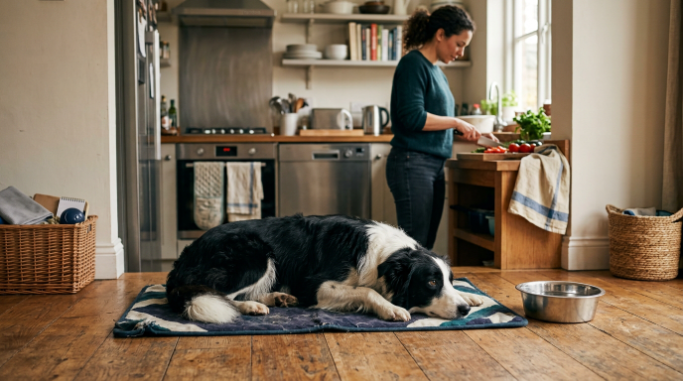
Yes. Many Border Collies can become excellent house dogs when calm behavior is taught as deliberately as obedience, fetch, or agility.
Don’t wait for your dog to collapse from exhaustion. Reward the behavior you want while the dog still has energy.
A simple settle routine
- Choose one place: Use a bed or mat away from the busiest walkway.
- Reward voluntary interest: Mark and reward stepping onto the mat.
- Build lying down: Reward relaxed positions rather than constant alert staring.
- Keep sessions short: Start with one or two calm minutes.
- Add normal life: Practice while you read, watch television, or prepare food.
- Release clearly: Use a consistent word when the resting period ends.
The VCA guidance on scheduling and enrichment explains how predictable routines and rewarding desired behavior can help dogs understand what happens next.
Don’t accidentally reward constant intensity
If staring always starts a game, staring works. If barking makes the ball appear, barking works too.
Sometimes the best reward is delivered before the demand begins. Catch your Border Collie lying quietly and make that behavior valuable.
When should you seek professional help?
Get qualified help when chasing, fear, aggression, compulsive-looking behavior, or inability to settle creates a safety or welfare concern. Sudden behavioral changes also deserve attention instead of being dismissed as a “Border Collie thing.”
Vet note: If your dog’s behavior changes suddenly, becomes extreme, or comes with signs of discomfort, speak with your veterinarian to rule out medical causes.
FAQs About What Border Collies Are Not Good At
Are Border Collies bad for first-time owners?
Not automatically, but they’re demanding first dogs. A committed beginner who enjoys daily training can succeed, while an experienced owner with little time may struggle. The key issue is whether you’re ready for a smart, active dog that needs consistent engagement.
Are Border Collies bad apartment dogs?
They aren’t automatically unsuitable for apartments. A Border Collie with enough training, enrichment, outdoor activity, and a reliable off-switch may adapt well. A bored Border Collie with a large yard can still develop problems.
Are Border Collies bad with kids?
No, but their herding instinct can make running children especially stimulating. Some may stare, circle, chase, or attempt to control movement. Adult supervision and early training are important, particularly around young children who run and shout.
Are Border Collies bad at being alone all day?
Many aren’t well suited to a routine built around long periods of isolation. They tend to thrive with interaction and purposeful activity. Individual tolerance varies, so watch your dog’s behavior rather than relying only on a fixed number of hours.
What is the biggest downside of owning a Border Collie?
For many households, the biggest downside is the amount of ongoing engagement required. Their intelligence makes training rewarding, but it also means boredom, inconsistency, and lack of structure can quickly create unwanted habits.
Do Border Collies ever calm down with age?
Many become easier to live with as they mature, but age alone doesn’t teach calm behavior. Good routines, appropriate exercise, enrichment, and deliberate settle training usually matter more than simply waiting for the dog to become older.
What kind of owner should avoid a Border Collie?
A Border Collie may be a poor fit if you want a low-maintenance dog, dislike training, spend most days away, or don’t enjoy active interaction. They’re usually better suited to people who want their dog involved in daily life.
Final Takeaway: What Are Border Collies Really Not Good At?
Border Collies aren’t good at being treated like decorative pets. They were developed to think, move, observe, respond, and work closely with people.
That’s why the traits that make them spectacular herding and sport dogs can also make everyday ownership challenging. Intelligence needs direction, stamina needs an outlet, and herding instinct needs management.
- Don’t choose one if you want a consistently low-energy companion.
- Don’t depend on a yard to provide all their entertainment.
- Don’t rely only on harder exercise to solve restlessness.
- Don’t ignore chasing and herding behavior around children or pets.
- Don’t underestimate how quickly they learn both good and bad patterns.
- Do teach purposeful activity and purposeful rest.
Give a Border Collie the right structure, and those difficult traits become strengths. If that level of involvement sounds enjoyable rather than exhausting, this extraordinary working breed may fit your life remarkably well.
