

Quick Answer
A Border Collie needs substantial daily attention, but that does not mean constant entertainment. For most healthy adults, plan around one to two hours of physical activity, several short training or enrichment sessions, and regular social time spread through the day; the American Kennel Club describes Border Collies as bright, energetic working dogs that need meaningful activity.
What that attention should include
- Physical activity: Walks, running, hiking, fetch, or dog sports matched to age and health.
- Mental work: Short training sessions, scent games, food puzzles, and problem-solving tasks.
- Social contact: Calm time near you, household interaction, grooming, and shared routines.
- Purposeful jobs: Recall practice, toy searches, trick chains, carrying tasks, or supervised herding activities.
- Real rest: Quiet downtime matters because an overstimulated Border Collie can look just as restless as an under-stimulated one.
Best rule
- Judge the routine by your dog’s ability to relax, focus, sleep normally, and recover well—not by how many miles you can tire them out with.
Border Collies are often called workaholics for a reason. I have found that the happiest ones are not simply exhausted; they get a useful mix of movement, thinking, connection, and rest.
If you are wondering whether you have enough time for a Border Collie, this guide gives you a practical daily picture. It also explains how attention changes with age, work schedule, behavior, and individual temperament.
In This Guide
- What does “attention” mean for a Border Collie?
- How many hours of attention does a Border Collie need each day?
- How do attention needs change by age?
- How much mental stimulation does a Border Collie need?
- Can a Border Collie be left alone while you work?
- How can you tell a Border Collie is not getting enough attention?
- What does a good daily attention schedule look like?
- Frequently asked questions
- Final takeaway
What Does “Attention” Mean for a Border Collie?
A Border Collie’s attention need is the daily combination of physical activity, mental engagement, social connection, training, and calm companionship. It is broader than petting, playing fetch, or keeping the dog beside you all day.
Attention has four different parts
- Movement: Walking, running, hiking, controlled fetch, swimming, agility, or other safe exercise.
- Thinking: Obedience, trick training, scent searches, food puzzles, shaping games, and problem solving.
- Connection: Training with you, relaxed household time, grooming, handling, and predictable social contact.
- Recovery: Naps, quiet chewing, settling on a mat, and learning that nothing exciting is happening right now.
I prefer to think in terms of a balanced day rather than “tiring the dog out.” That small shift prevents the common trap of building a fitter athlete who still cannot settle indoors.
Attention is not the same as constant supervision
A healthy adult Border Collie should gradually learn to relax without being entertained every minute. Independence is a trained life skill, not evidence that you are ignoring the dog.
How Many Hours of Attention Does a Border Collie Need Each Day?
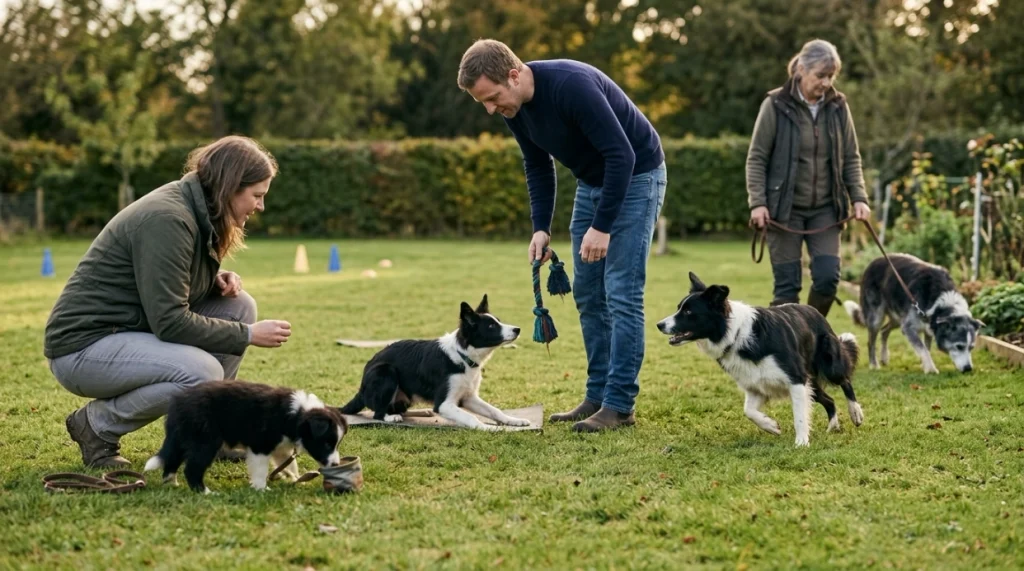
For a healthy adult, a practical target is one to two hours of physical exercise plus several short blocks of mental work and social interaction. The total human involvement often spans multiple parts of the day rather than one long session.
PetMD notes that young Border Collies commonly need at least one to two hours of daily exercise. Mental stimulation is also essential for this high-energy herding breed.
Think in sessions, not one giant workout
Splitting attention usually works better than trying to solve everything with a two-hour evening run. Short, purposeful sessions give the dog multiple chances to move, think, connect, and then settle.
- Morning: 30–45 minutes of walking, jogging, sniffing, or structured play.
- Midday: 5–10 minutes of training plus a food puzzle or scatter-feed search.
- Late afternoon: 20–30 minutes of active play, recall work, or a dog sport skill.
- Evening: 30–45 minutes of walking or calm exploration, followed by quiet family time.
Quality matters more than raw duration
Ten focused minutes of scent work can be more satisfying than another repetitive lap around the same block. Likewise, a decompression walk with plenty of sniffing can meet different needs than high-speed fetch.
Section Takeaway: Border Collies need a large daily time commitment, but that attention should be divided among exercise, thinking, connection, and rest—not nonstop cardio.
How Do Attention Needs Change by Age?
Attention needs shift as a Border Collie matures. Puppies need more supervision and shorter learning periods, adults handle longer work, and seniors often benefit from gentler but still meaningful engagement.
| Life stage | Best attention pattern | Useful session length | Main priority |
|---|---|---|---|
| Young puppy | Frequent supervision, play, toilet trips, handling, and naps | 1–5 minute training bursts | Confidence and routine |
| Adolescent | Several structured activity blocks with planned calm periods | 5–10 minute training blocks | Impulse control and good outlets |
| Healthy adult | Daily exercise, jobs, training, enrichment, and companionship | 5–15 minute skill sessions | Balanced work and recovery |
| Senior | Shorter, gentler outings plus sniffing and easy brain games | 3–10 minute easy sessions | Comfort, mobility, and engagement |
Puppies need attention without being kept busy all day
A Border Collie puppy can look ready for endless action, but sleep and recovery are essential. I keep training brief, reward calm exploration, and avoid turning every waking moment into a performance session.
Adolescents often need the most structure
Adolescence can bring speed, confidence, sensitivity, and weak impulse control at the same time. This is when clear routines matter more than simply increasing exercise.
- Practice recall around controlled distractions.
- Teach a place or mat-settle cue.
- Use sniffing and search games after exciting activity.
- Reward calm behavior before the dog demands entertainment.
Seniors still need a job
Older Border Collies may slow physically while staying mentally sharp. Easy scent work, gentle obedience, food puzzles, and short walks can preserve their sense of participation.
Vet note: Sudden changes in energy, mobility, sleep, willingness to exercise, or behavior deserve a veterinary check rather than an automatic change in the exercise plan.
How Much Mental Stimulation Does a Border Collie Need?
Most Border Collies benefit from mental work every day. I would rather do two or three short thinking sessions than one long drill that turns accuracy into boredom.
The ASPCA recommends regular enrichment that lets dogs use natural behaviors such as playing, smelling, chewing, and scavenging. Those outlets fit Border Collies especially well because they combine curiosity with purposeful activity.
Use five types of brain work
- Training: Recall, heelwork, stays, tricks, directional cues, and body-awareness exercises.
- Scent work: Hide treats, toys, or safe scented targets around a room or yard.
- Food enrichment: Use puzzle feeders, snuffle mats, stuffed toys, or simple search games.
- Problem solving: Teach the dog to interact with an object, open a safe puzzle, or find a route to a reward.
- Herding-style outlets: Where appropriate, work with qualified instructors who understand livestock and Border Collie behavior.
Do not confuse obsession with enrichment
A Border Collie who screams for the ball, stares at reflections, or cannot disengage is not necessarily enjoying healthy stimulation. High arousal can become self-reinforcing when the same trigger is repeated endlessly.
Mix exciting games with sniffing, impulse-control work, and settling. I often end a fast game with a simple search task because nose-down work can help shift the dog into a different rhythm.
Can a Border Collie Be Left Alone While You Work?
Yes, many adult Border Collies can learn to spend part of the workday alone, but a full day with no break, exercise, or enrichment is a poor fit for many individuals. The key is gradual independence training and a realistic before-and-after-work routine.
A puppy is different. Young puppies need frequent toilet breaks, supervision, socialization, meals, and sleep, so an ordinary eight-hour absence is not a workable plan without help.
Make alone time easier before you leave
- Give the dog a purposeful morning walk with sniffing.
- Use five to ten minutes of training before breakfast.
- Feed part of the meal through a safe enrichment toy.
- Provide a comfortable resting area away from windows if movement triggers barking.
- Arrange a walker, family visit, or other midday break when needed.
Teach independence while you are still home
Start with short periods on a bed, behind a baby gate, or in another safe room. Build duration gradually while the dog stays relaxed, and return before frustration becomes the pattern.
Section Takeaway: A Border Collie can fit a working household when exercise, breaks, enrichment, and independence training are planned rather than left to chance.
How Can You Tell a Border Collie Is Not Getting Enough Attention?
The clearest sign is not simply “high energy.” Look for repeated behaviors that show the dog cannot meet normal needs through the current routine.
- Demand barking: Barking at you to start play or movement.
- Destructive behavior: Chewing furniture, shredding items, or digging for stimulation.
- Herding people: Stalking, circling, body blocking, or nipping at moving feet.
- Restlessness: Pacing, repeatedly bringing toys, or struggling to lie down after activity.
- Fixation: Staring at shadows, reflections, wheels, doors, or repetitive motion.
- Poor focus: Difficulty listening because the dog is already over-aroused or frustrated.
If persistent restlessness does not improve with a better routine, involve your veterinarian rather than assuming the dog simply needs more exercise. The American Veterinary Medical Association is a reliable starting point for general veterinary information.
More exercise is not always the answer
If your dog already runs hard for two hours and still cannot settle, adding another hour may increase fitness without teaching regulation. Try changing the type of attention before increasing the volume.
- Replace some fetch with sniff walks.
- Add short obedience or trick sessions.
- Teach a mat settle after activity.
- Offer safe chewing or food puzzles.
- Schedule predictable quiet periods.
If repetitive behavior is intense, difficult to interrupt, or suddenly getting worse, speak with your veterinarian. A qualified reward-based trainer or veterinary behavior professional can also help you separate boredom from anxiety, compulsive behavior, or over-arousal.
Vet note: Behavioral changes can have medical causes, especially when they appear suddenly or occur with pain, appetite changes, sleep changes, or reduced tolerance for exercise.
What Does a Good Daily Attention Schedule Look Like?
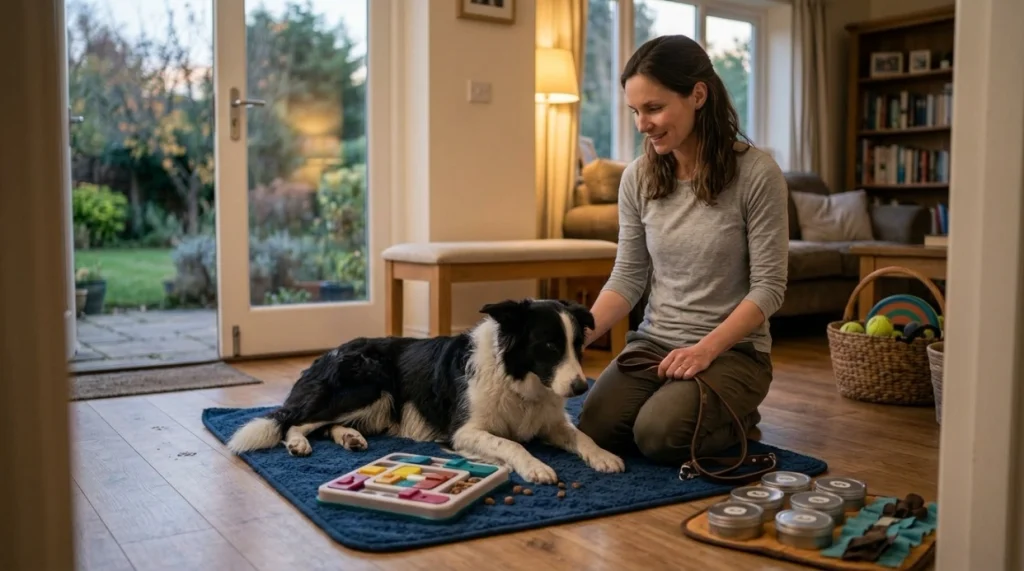
A good routine gives your Border Collie predictable chances to work and predictable chances to stop. As of 2026, that balanced approach still matches mainstream breed guidance better than the idea that a Border Collie must be physically exhausted every day.
Sample routine for a healthy adult pet Border Collie
- 7:00 a.m.: 35-minute walk with brisk movement, sniffing, and three to five recall repetitions.
- 7:45 a.m.: Breakfast from a puzzle feeder, then quiet rest.
- 12:30 p.m.: 15-minute toilet and sniff break, plus five minutes of simple training.
- 5:30 p.m.: 25 minutes of fetch, tug, agility foundations, or controlled running.
- 6:00 p.m.: Ten-minute scent search or trick session.
- 8:00 p.m.: 30-minute relaxed walk, followed by family time and settling.
This example includes about 105 minutes of physical activity plus short mental sessions. Some Border Collies will need more, while others will do best with less intensity and more calm enrichment.
Adjust the routine to the dog in front of you
Working lines, sport dogs, adolescents, and highly driven individuals may need more challenging jobs. Dogs recovering from injury, seniors, and dogs with health limitations may need shorter, lower-impact sessions.
The best test is what happens between activities. A well-matched Border Collie can usually focus when asked, disengage when finished, rest comfortably, and wake ready for the next part of the day.
Section Takeaway: The best attention plan is structured, varied, and repeatable enough to fit ordinary life while still meeting the dog’s working-breed needs.
Frequently Asked Questions
Do Border Collies need attention all day?
No. They need meaningful daily interaction, but they should also learn to rest and spend short periods independently.
A good routine alternates exercise, training, enrichment, companionship, and quiet time instead of providing constant entertainment.
Is two hours of exercise enough for a Border Collie?
For many healthy adults, one to two hours of physical activity is a reasonable starting point. The dog may still need mental work, social contact, and calm training beyond those exercise minutes.
Individual drive, age, health, and activity type matter more than a single universal number.
How long should I train a Border Collie each day?
Use several short sessions rather than one long drill. Five to fifteen minutes of focused training at a time works well for many adult Border Collies.
Puppies usually need much shorter bursts. Stop while the dog is still engaged and accurate.
Can a Border Collie live with a full-time worker?
Yes, if the household can meet the dog’s needs before work, after work, and during the day when necessary. Many dogs also need a walker, family visit, daycare, or another appropriate midday break.
Puppies need far more frequent care and should not be expected to manage a normal full workday alone.
Will getting a second dog reduce how much attention my Border Collie needs?
Usually not by much. Another dog can provide play and companionship, but it does not replace human training, individual exercise, handling, or mental work.
Two under-stimulated Border Collies can also create twice the chaos instead of solving the original problem.
Why does my Border Collie still seem hyper after a long walk?
A walk may not provide enough mental work, or the dog may be over-aroused rather than under-exercised. Try adding sniffing, training, scent searches, and a deliberate settle period.
If the behavior is extreme or changes suddenly, ask your veterinarian to rule out medical causes.
How do I know my Border Collie is getting the right amount of attention?
Look for a dog who can work enthusiastically and then relax. Healthy signs include normal sleep, good appetite, steady focus, comfortable recovery after exercise, and the ability to spend calm time without constantly demanding activity.
Final Takeaway
A Border Collie needs more than affection and a daily walk. This breed thrives when attention includes physical exercise, mental challenges, training, social connection, and deliberate rest.
Build a routine you can maintain every day, then watch how your dog responds. If your Border Collie can focus, relax, recover, and enjoy life without constantly inventing a job, you are probably close to the right balance.
