
How to Dry a Border Collie’s Wet Paws Safely

Quick Answer
To absorb water from your Border Collie’s wet paws, gently press a clean, absorbent microfiber towel against the top, underside, and sides of each paw. Carefully blot between the toes and around the paw pads without rubbing aggressively. If the paws are muddy, rinse away the dirt first, then dry them thoroughly before your dog walks across slippery floors.
The easiest way to manage wet Border Collie paws is to keep a dedicated drying towel near the door and use it immediately after rainy walks, outdoor play, or bathing. A few careful presses can remove much of the surface water without irritating the pads or tangling the longer hair around the feet.
Border Collies may have feathering around their feet that holds water and dirt. That means the visible surface can feel dry while moisture remains between the toes or beneath longer hairs. A good drying routine focuses on those hidden areas as well as the obvious wet patches.
What Is the Best Way to Absorb Water From Wet Paws?
A clean microfiber towel is a practical first choice because it absorbs surface moisture and can be folded into a small section for drying individual paws. A soft cotton towel can also work well if it is absorbent, clean, and large enough to handle comfortably.
The technique matters as much as the material. Press and blot rather than scrub. Rubbing quickly back and forth can tangle the hair around the toes and create friction on skin that is already wet or irritated.
- Microfiber towel: Useful for quick drying after walks and for absorbing water from small areas.
- Soft cotton towel: A practical alternative, particularly when the paws are very wet.
- Small clean cloth: Helpful for reaching around individual toes and the spaces near the pads.
- Dry replacement towel: Useful when the first towel becomes saturated and stops absorbing moisture effectively.
Use a separate clean section of the towel for each paw when practical, especially if your dog has walked through mud. This helps prevent dirt from being transferred from one foot to another.
How to Dry Your Border Collie’s Paws Step by Step
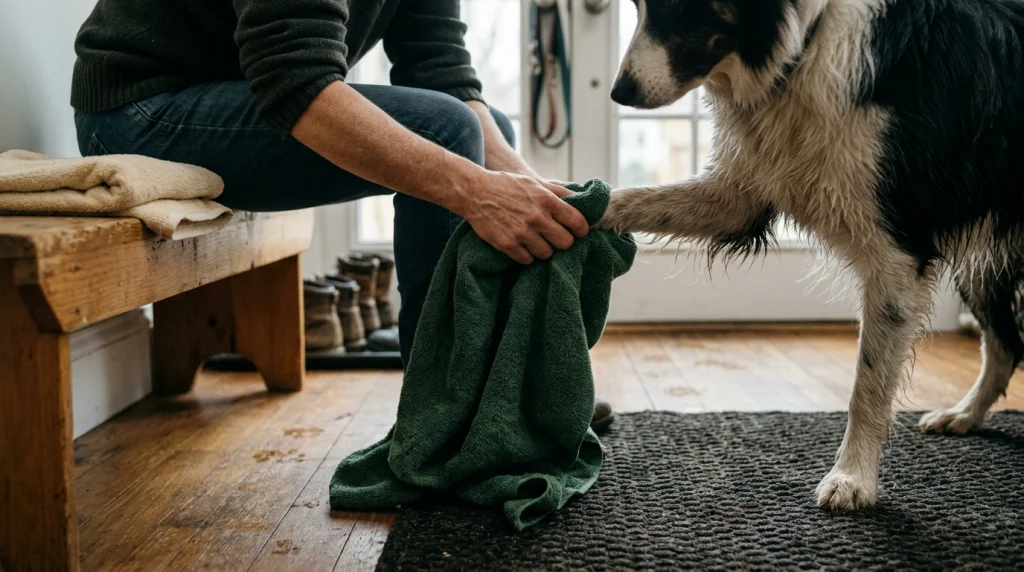
Prepare a dry, stable place for your dog before starting. A secure mat can help your Border Collie stand comfortably while you work, and a towel within reach makes it easier to avoid chasing a wet dog through the house.
- Help your dog stand comfortably. Choose a dry, nonslip surface and let your Border Collie settle. If your dog is nervous about paw handling, work slowly and pause when needed.
- Remove loose dirt first. If the paws carry ordinary mud, grass, or grit, gently wipe them with a damp cloth or rinse with lukewarm water. Do not grind dirt into the skin by rubbing with a dry towel.
- Blot the top of each paw. Fold the towel around the foot and press lightly to absorb water from the fur and skin.
- Dry the underside. Gently lift the paw only as far as your dog is comfortable with. Press the towel against the paw pads and around the edges.
- Check between the toes. Separate the toes gently when your dog allows it, then blot accessible damp areas. Avoid forcing the toes apart or pulling tangled hair.
- Absorb moisture around the nails. Use a small, dry section of the towel to remove water and loose debris around the nails without digging underneath them.
- Repeat with a dry section. If the towel feels saturated, switch to a fresh one. Finish by checking whether the hair around the toes and pads still feels noticeably damp.
- Let your dog walk on a dry surface. Make sure the immediate walking route is also dry before allowing your Border Collie to move around freely.
Do not aim to make the paws bone-dry through vigorous rubbing. The goal is to remove excess water gently and leave the feet comfortably dry, without causing discomfort.
How Do You Dry Between the Toes and Around the Paw Pads?
The spaces between the toes and the hair surrounding the pads deserve extra attention because water can remain trapped there after the outside of the paw appears dry. Border Collies with longer foot hair may need a little more time in these areas than dogs with short hair.
Use a small section of towel
Fold a corner of a clean towel into a narrow shape, then gently blot the accessible spaces between the toes. You do not need to push the fabric deeply into the gaps. Contact with the damp hair and skin is usually enough to absorb surface moisture.
Next, press the towel around the paw pads and along the edges of the foot. Check for trapped grass, small stones, burrs, or clumps of mud while drying, but do not pull at anything firmly embedded in the skin.
Know when to stop
If your Border Collie pulls away, cries, repeatedly licks one paw, or seems uncomfortable when a particular toe is touched, stop and inspect the area gently. Pain may indicate a cut, broken nail, foreign object, or irritated skin rather than ordinary wetness.
For additional guidance on inspecting and cleaning the feet, read the American Kennel Club’s dog paw-care guide, which explains why checking between the toes and drying the feet matter.
What Should You Do If the Paws Are Wet and Muddy?
When a Border Collie comes inside with muddy paws, remove the dirt before concentrating on absorbing the water. A towel alone may spread mud across the pads, between the toes, and around the surrounding hair.
- Inspect the paws. Look for ordinary soil, grit, grass, and visible debris. Be more cautious if the dog has walked through unknown standing water or a potentially contaminated area.
- Rinse when necessary. Use lukewarm water to loosen ordinary mud and dirt. Clean only the affected paws when the rest of the coat does not need washing.
- Remove remaining dirt gently. Use a soft cloth to clean around the pads and toes without scrubbing irritated skin.
- Blot away the water. Press a clean absorbent towel against each paw, then check between the toes and around the nails.
- Inspect the floor. Dry any puddles or wet footprints so your dog does not slip immediately after the cleanup.
If the paws may have contacted chemicals, fuel, pesticides, sewage, or another hazardous substance, ordinary muddy-paw cleanup may not be sufficient. Prevent your dog from licking the area and contact a veterinarian for advice appropriate to the suspected exposure.
How Can You Dry Wet Paws Without Making Your Dog Nervous?
Some Border Collies dislike having their feet held, even when they happily tolerate brushing or general grooming. For these dogs, short, calm drying sessions are often more manageable than restraining all four paws at once.
- Introduce the towel before a rainy walk. Let your dog sniff it and reward calm interaction when the paws are dry.
- Start with one paw. Blot briefly, release the foot, and offer praise or a small reward if appropriate.
- Keep handling gentle. Avoid gripping the toes tightly, bending the joints unnaturally, or pulling the leg toward you.
- Use a stable surface. A secure mat helps prevent the dog from sliding while you work.
- Pause when your dog becomes uncomfortable. Resume only when the dog settles, and seek help if paw handling causes persistent distress.
Never chase a frightened dog around a wet room with a towel. That can increase stress and create a slipping hazard. Make the area safe first, then allow your dog to approach you calmly.
How Do You Keep a Border Collie’s Paws Dry After Rain or Bathing?
Prevention begins with a simple drying station. Keep a clean towel beside the entrance used after walks and another near the bathing area. A washable mat provides a place for your dog to stand while you remove excess moisture.
After rain, dry the paws and check the lower legs for mud. After bathing, remember that water may also remain in the longer hair around the feet. If the rest of the coat is wet, towel-dry the body separately rather than repeatedly using the paw towel on the entire dog.
Wash reusable towels as needed and allow them to dry completely between uses. A damp, dirty towel is less useful for absorbing fresh water and can transfer grime back onto clean paws.
Keep excess hair around the pads appropriately maintained if it traps debris, but do not trim closely between the toes without being able to see the skin clearly. A qualified groomer can help if the hair is difficult to manage safely.
For a related problem, see our guide on preventing Border Collie paws from slipping on wet floors. Drying the paws and keeping the walking surface dry are complementary steps, especially on smooth indoor flooring.
Practical Tip
Keep two absorbent towels available during wet weather. Use the first to remove most of the water and the second for the spaces between the toes and other damp areas that need a final blot.
When Are Wet Paws More Than a Drying Problem?
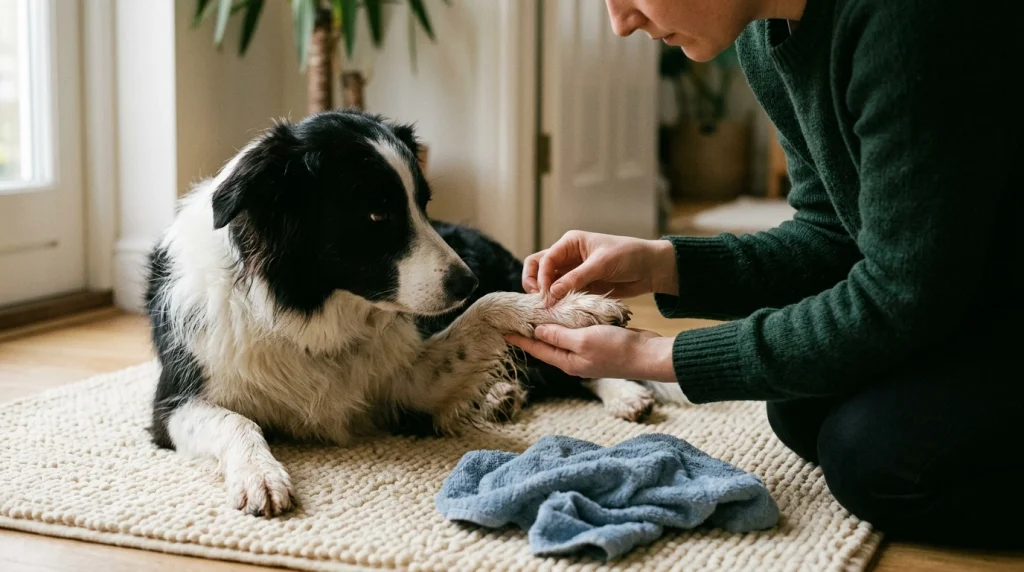
Wet paws after rain or bathing are usually a routine grooming issue. However, persistent moisture accompanied by redness, swelling, a strong unusual odor, repeated licking, or discomfort deserves closer attention.
Check for visible cuts, damaged nails, debris, and irritation without probing painful areas. If your Border Collie limps, refuses to bear weight, or has a deep wound, significant bleeding, or an embedded object, seek veterinary care rather than continuing to handle the paw.
Repeatedly damp skin can become irritated, particularly when dirt remains trapped between the toes. Gentle cleaning and thorough towel-drying help remove surface moisture, but ongoing skin problems may require a veterinarian to identify the cause.
Do not use a hot hair dryer or apply household powders, disinfectants, or human skincare products to the paws unless a veterinarian has specifically advised their use. If towel-drying is insufficient, ask your veterinarian or groomer about a suitable, low-heat drying method for your dog’s coat and comfort.
Related Product
Absorbent Microfiber Dog Drying Towels
A washable microfiber towel can help absorb water from your Border Collie’s paws after walks, rinsing, or bathing, especially when you use a fresh section for each foot.
As an Amazon Associate, we earn from qualifying purchases.
Frequently Asked Questions
1. Is a microfiber towel better than a regular towel for wet dog paws?
Microfiber is a convenient option because it can absorb surface water and be folded for precise drying. A soft, absorbent cotton towel also works well, so choose a clean towel that you can handle comfortably.
2. Should I dry my Border Collie’s paws after every rainy walk?
Yes, gently towel-drying after a wet walk helps remove water, mud, and debris. Check between the toes and around the pads, particularly if your dog has longer hair around its feet.
3. Can I use a hair dryer to dry my dog’s paws?
A dryer may be suitable for some dogs when used carefully, but high heat and strong airflow can cause discomfort or burns. Start with gentle towel-drying and ask a veterinarian or groomer about an appropriate low-heat method if needed.
4. Why do my Border Collie’s paws still feel damp after towel-drying?
Water may remain in the hair between the toes or around the pads, or the towel may have become saturated. Use a fresh, dry section to blot those areas gently and avoid aggressive rubbing.
5. Should I rinse my Border Collie’s paws before drying them?
Rinse them when mud, grit, or other residue needs removing. If the paws are clean and only wet from rain, gently blotting with an absorbent towel is usually sufficient.
6. When should I worry about my Border Collie’s wet paws?
Seek veterinary advice if wet paws are accompanied by persistent redness, swelling, unusual odor, repeated licking, or discomfort. Limping, significant bleeding, deep wounds, or refusal to bear weight warrants prompt assessment.
Conclusion
Absorbing water from your Border Collie’s wet paws does not require complicated equipment. A clean microfiber or cotton towel, gentle blotting, and a careful check between the toes are usually enough to remove excess moisture after an ordinary rainy walk.
Rinse muddy paws before drying, replace saturated towels when necessary, and keep the walking area dry to reduce slipping. Pay attention to discomfort, persistent irritation, or unusual changes rather than assuming every paw problem comes from wet weather. A consistent, gentle routine helps keep your Border Collie’s feet cleaner and more comfortable throughout the year.