
How to Stop Border Collie Paws Slipping on Wet Floors

Quick Answer
To keep your Border Collie’s paws from slipping on wet surfaces, dry the paws and walking area, trim overgrown nails, carefully maintain excess fur around the paw pads, and provide secure, non-slip mats or suitable traction footwear. Prevent running and sharp turns on wet flooring. If your dog also slips on dry ground, limps, or shows weakness or poor coordination, seek veterinary advice rather than assuming the problem is simply poor grip.
Border Collies are energetic, agile dogs that can accelerate, stop, and turn quickly. Unfortunately, wet tiles, polished floors, damp decking, and slick outdoor paths can make those movements harder to control. Even a dog with healthy paws can lose its footing when the surface offers too little grip.
The safest approach combines paw maintenance, better surface traction, and calmer movement in slippery areas. The right solution also depends on whether your dog slips only when the ground is wet or struggles to walk confidently on dry surfaces too.
1. Dry Your Border Collie’s Paws and the Walking Surface
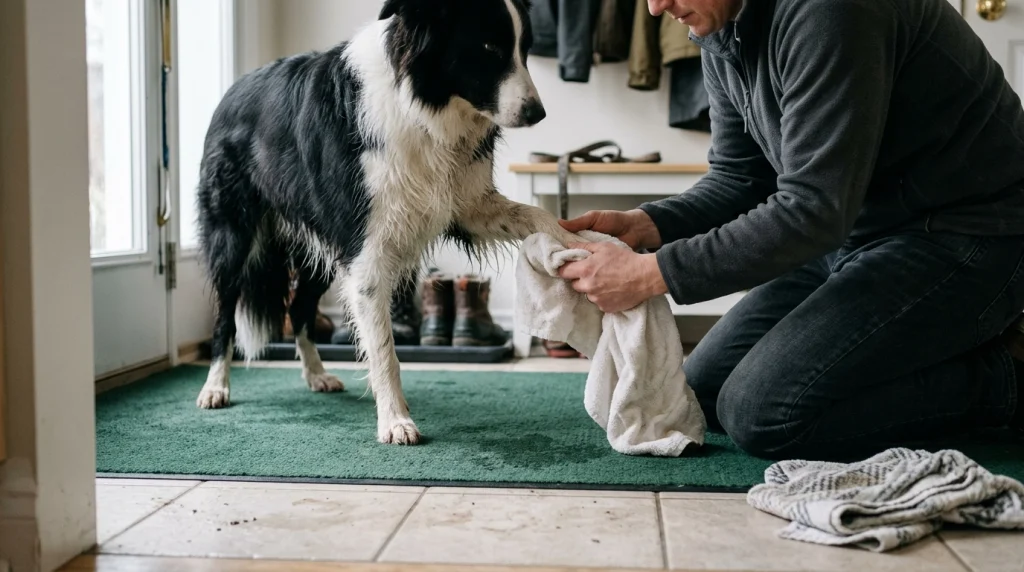
Start by removing excess water from both the paws and the floor. This is the simplest first step when slipping happens after a rainy walk, bath, swim, or trip across a wet patio.
- Blot each paw with an absorbent towel. Gently dry the underside of the paw and between the toes. Avoid vigorous rubbing, which can irritate sensitive skin or tangle longer fur.
- Remove visible dirt and residue. If the paws are muddy or contaminated, rinse them with clean water as appropriate, then dry them thoroughly. Check between the pads for grit or debris.
- Wipe up standing water. Dry bathroom tiles, kitchen spills, entryways, and other areas your dog regularly crosses.
- Wait until the floor is dry. A surface that looks nearly dry may still be slippery, particularly if cleaning solution remains on it.
The American Kennel Club’s guide to cleaning and caring for dog paws recommends thorough drying and checking between the toes for dirt and irritation.
Keep a clean towel near the door and another near the bathing area. This small routine makes it easier to manage wet paws before your Border Collie rushes across smooth flooring.
2. Trim Overgrown Nails and Excess Paw Fur
Long nails and fur that covers the paw pads can interfere with secure footing. Correct grooming will not make every wet surface safe, but it can remove avoidable obstacles to traction.
Keep the nails at a comfortable length
Overgrown nails can alter the way a dog places its toes and distributes weight across the foot. If the nails touch the floor before the pads make stable contact, walking mechanics may be affected.
Check your dog’s nails while it stands naturally. Nails that click consistently on hard flooring, press against the ground, or appear excessively long may need trimming. Use appropriate dog nail clippers or a nail grinder, working gradually and avoiding the sensitive quick inside each nail.
If your Border Collie’s nails are dark, your dog resists paw handling, or you are unsure where to trim, ask a qualified groomer or veterinary professional for help. Avoid cutting too much at once.
Keep fur from covering the paw pads
Border Collies can grow longer hair around their feet. When that hair extends over the gripping surfaces, it may interfere with direct contact between the pads and the ground.
Inspect the underside of each paw and look for hair that forms a fringe over the pads or traps wet debris. If trimming is necessary, use suitable pet grooming clippers carefully. Do not use scissors blindly between the toes, where the skin can be difficult to see.
For guidance on other common causes and floor-related solutions, read our broader guide to why Border Collies slip on wet floors.
3. Create a Secure, Non-Slip Walking Route
Floor modifications are often more reliable than expecting your dog to maintain its grip on a consistently slippery surface. A secure walking route is especially helpful around bathrooms, kitchens, doors, and places where your Border Collie gets up after resting.
- Use non-slip runners: Choose mats with backing suitable for your flooring and place them along frequently used routes.
- Cover turning points: Add traction near doorways, food bowls, and corners where your dog tends to change direction.
- Secure every edge: Loose rugs can bunch up or slide under a dog’s paws, creating another tripping hazard.
- Keep the area underneath dry: Water trapped beneath a mat can make the setup unstable and may damage some flooring materials.
- Check the surface regularly: Clean mats according to their care instructions and replace those that curl, shift, or lose their grip.
For outdoor areas, inspect wet decking, smooth concrete, and steps. If a route remains dangerously slippery when wet, block access until it can be made safer or choose another route.
Test a mat by pressing and shifting it gently before allowing your dog to use it. A product described as non-slip is not automatically secure on every floor or when water collects underneath it.
4. Should Your Border Collie Wear Boots, Socks, or Paw Grips?
Traction accessories may help when you cannot modify the surface, but they are not interchangeable. Fit, the type of sole, moisture, and your dog’s comfort all affect whether an accessory improves stability.
- Dog boots with textured rubber soles: These can protect paws outdoors and may improve grip on some wet paths. Check the manufacturer’s intended use because not every boot is suitable for indoor floors or slippery surfaces.
- Non-slip dog socks: Socks with grip material on the underside may help on some indoor floors. They must fit securely without twisting, bunching, or restricting circulation.
- Nail traction grips: Properly fitted grips attached to the nails can help some dogs gain purchase on smooth flooring. Ask a veterinary professional or experienced provider whether they suit your dog’s nails, gait, and activity.
- Paw wax or balm: These products may protect pads from certain environmental conditions, but ordinary moisturizers are not dependable anti-slip treatments. Some leave a slippery residue.
Introduce any wearable accessory gradually on a dry, safe surface. Watch your dog walk and turn naturally, and remove the accessory if it slips out of place, causes discomfort, or changes the way your dog moves.
Do not leave wet footwear on for extended periods without checking the paws. Trapped moisture, rubbing, and poor fit can irritate the skin. For frequent slipping, discuss suitable traction aids with your veterinarian, especially if your dog has an existing mobility problem.
5. Change How Your Border Collie Moves on Wet Ground
Even well-groomed paws cannot guarantee grip on a slick surface. Fast acceleration, sudden stops, and sharp turns create greater traction demands than slow, controlled walking.
- Slow down at wet entrances. Use a leash if needed to guide your dog calmly through a slippery doorway.
- Move indoor games to safer ground. Avoid chasing, fetch, and high-speed turns on wet tile, polished wood, or damp decking.
- Reward calm walking. Use treats and praise to encourage your dog to cross a safe, secured route at a comfortable pace.
- Do not force a hesitant dog forward. A dog that has slipped may become wary of a particular floor. Give it a stable alternative rather than dragging it across the surface.
After a bath, prepare a secure mat outside the bathing area before you begin. Help your dog step out calmly and dry its paws before it crosses the rest of the bathroom. Our guide to preventing Border Collie slips on wet bathroom floors covers this situation in more detail.
6. Check Whether Slipping Signals a Paw or Mobility Problem
If your Border Collie keeps slipping after you have dried its paws, improved the flooring, and addressed grooming, investigate whether something else is affecting its movement. Slipping alone does not establish a medical diagnosis.
Look at the pattern rather than deliberately making your dog cross an unsafe surface.
- Slips only on wet, smooth flooring: Poor traction is a plausible explanation. Improve the surface and monitor whether walking becomes more secure.
- Licks a paw, limps, or avoids putting weight on one foot: Check for visible debris, damaged nails, cuts, redness, or swelling without probing a painful area.
- Stumbles on dry surfaces too: Pain, weakness, or a coordination problem may be involved and warrants veterinary assessment.
- Suddenly struggles to stand or walk: Seek urgent veterinary care, particularly if the change is accompanied by marked weakness, severe pain, or collapse.
The VCA Animal Hospitals guide to injured foot pads explains why paw wounds deserve attention. Deep cuts, embedded objects, persistent bleeding, or signs of infection should not be managed by repeatedly testing the paw on the floor.
If slipping persists or your dog’s gait changes, arrange a veterinary examination. A short video of naturally occurring movement on a safe, non-slip surface may help the veterinarian understand the problem. Do not delay urgent care to record one.
7. Build a Simple Wet-Weather Paw Routine
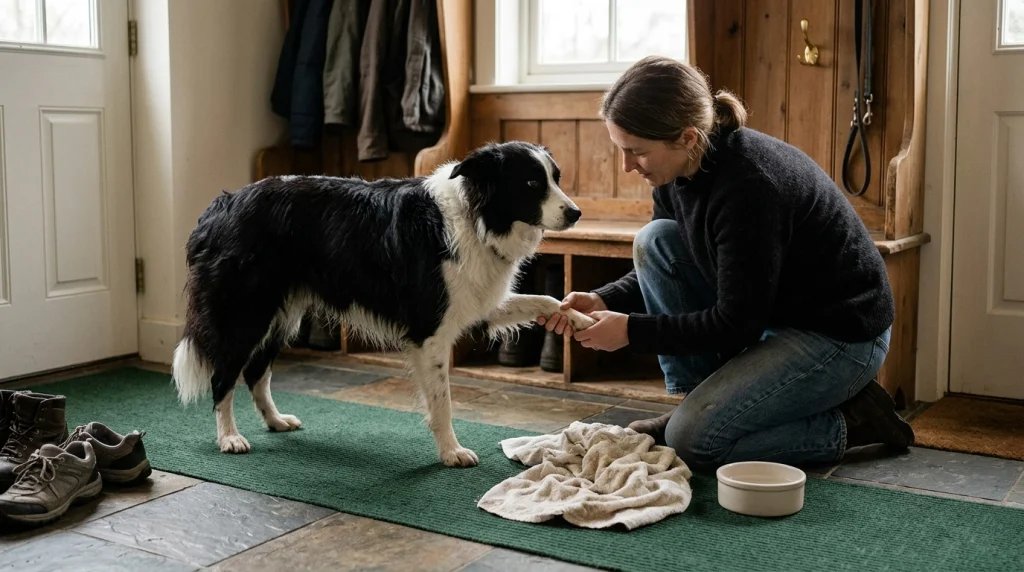
Consistent prevention is easier than reacting after every slip. Use this short routine after rainy walks, bathing, or outdoor play on wet ground.
- Inspect the paws for debris, cuts, irritation, and damaged nails.
- Rinse away mud or contaminants when needed, then dry each paw and the spaces between the toes.
- Check that the indoor entrance and main walking route are dry.
- Confirm that mats remain flat and secure, with no puddles underneath.
- Allow calm movement until your dog reaches a suitable surface for play or exercise.
Keep nail maintenance on a regular schedule based on how quickly your dog’s nails grow and how much they wear naturally. Check paw fur as needed rather than trimming excessively, and seek help if grooming is difficult.
The goal is not to make every surface safe for running. It is to reduce avoidable slipping while protecting your dog’s paws and recognizing when a change in movement needs attention.
Related Product
Dog Boots With Textured Rubber Soles
Suitable boots may protect paws and add grip on certain wet outdoor routes. Check the intended surface, fit, and your dog’s comfort before use.
As an Amazon Associate, we earn from qualifying purchases.
Frequently Asked Questions
Can I stop my Border Collie from slipping without using boots?
Yes. Drying the paws and floor, maintaining suitable nail length, trimming excess hair around the pads, and securing non-slip runners can all help. Boots are optional and should be considered only if they suit the surface and your dog.
Are wet paw pads themselves the reason my dog slips?
Moisture can contribute to slipping on smooth flooring, but it is not the only possible cause. Surface finish, cleaning residue, nail length, excess paw hair, and sudden movement can also affect traction.
Should I trim the hair between my Border Collie’s toes?
Trim only excess hair that covers the paw pads or traps debris, and use appropriate pet clippers carefully. If you cannot see the skin clearly or your dog resists handling, ask an experienced groomer for help.
Do dog socks work better than boots on wet floors?
Neither is universally better. Some non-slip socks suit indoor floors, while boots with appropriate soles may be useful outdoors. Compare the intended surface, fit, stability, and comfort, and supervise your dog during initial use.
Can paw balm improve grip on slippery tiles?
Do not rely on ordinary paw balm to prevent slipping. Some balms leave residue that may make a floor more slippery. Choose products for their intended paw-care purpose and prioritize secure flooring and appropriate traction aids.
When should I take my Border Collie to the vet for slipping?
Arrange a veterinary assessment if slipping continues despite practical changes, occurs on dry surfaces, or accompanies limping, paw dragging, or difficulty rising. Sudden inability to stand or walk, collapse, marked weakness, or severe pain warrants urgent veterinary care.
Conclusion
Keeping your Border Collie’s paws from slipping on wet surfaces starts with dry paws, dry walking areas, suitable nail length, and careful management of excess fur around the pads. Secure runners and appropriate traction accessories can provide additional support, but their effectiveness depends on the surface, fit, and your dog’s comfort.
Reduce fast turns on slippery ground and make wet-weather paw care part of your normal routine. Most importantly, do not assume every fall is caused by the floor. Persistent slipping, limping, weakness, or changes in coordination deserve veterinary attention so an underlying problem is not overlooked.
