
Why Does My Border Collie Slip on Wet Floors?

Quick Answer
Your Border Collie may slip on wet floors because water reduces traction between the paw pads and smooth surfaces such as tile, vinyl, or sealed wood. Long nails, excess fur between the paw pads, and sudden movements can make slipping worse. Start by drying the floor and paws, checking nail length, and providing secure non-slip mats. If slipping also occurs on dry floors or your dog shows pain, weakness, or poor coordination, arrange a veterinary assessment.
Border Collies are agile dogs, but even a healthy, active dog can lose its footing on wet flooring. A quick turn in the kitchen or a rush out of the bathroom may be enough for the paws to slide.
The important question is whether your dog simply lacks traction or has difficulty controlling its movements. Those problems can look similar but require different solutions.
Why Do Wet Floors Make Border Collies Slip?
Wet floors can make your Border Collie’s paws lose their grip. Water between the paw pads and flooring changes how the two surfaces interact, particularly when the floor is already smooth.
Dog paw pads have textured skin that helps provide traction. On a dry, suitable surface, a dog can usually push off, turn, and stop with reasonable control.
When the floor becomes wet, that contact may be less secure. Soap residue, cleaning products, or a polished surface can further reduce friction.
Border Collies often move quickly and change direction sharply. These movements demand more traction than slow, straight-line walking.
For example, a dog walking calmly across damp kitchen tiles might stay upright. The same dog could skid while turning suddenly toward a doorway.
This does not automatically mean anything is wrong with the dog’s legs. However, repeated slipping should not be ignored because falls can cause injuries.
What Makes Your Border Collie’s Paws Lose Traction?
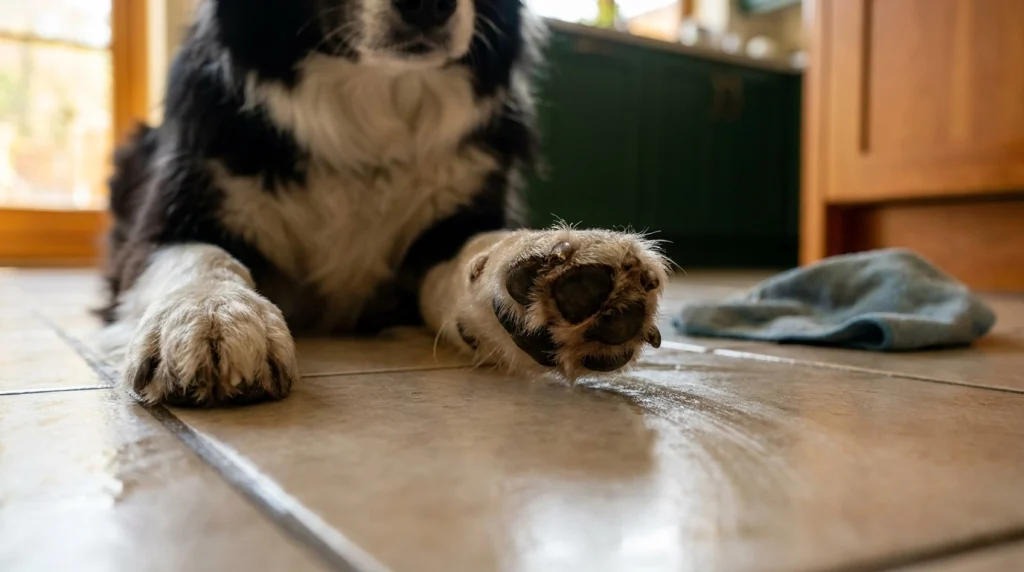
Several factors can make a wet floor harder to navigate. More than one may be contributing at the same time.
1. Long Nails Change Paw Contact
Overgrown nails can interfere with how your dog places its feet. Instead of resting naturally on the paw pads, the toes may be pushed into an awkward position.
This can reduce stable contact with the floor and make a slippery surface harder to manage.
Check your Border Collie’s nails while the dog stands comfortably. Nails that press against the ground or click consistently during normal walking may need attention.
The VCA nail trimming guide explains how nail length affects walking and why trimming must avoid the sensitive quick.
If you need help choosing suitable grooming tools, the guide to Border Collie nail clippers covers practical options.
2. Excess Fur Covers the Paw Pads
Border Collies may develop long hair around and between their paw pads. If that hair extends over the gripping surface, it can interfere with direct pad contact.
Wet hair can also make an already slick surface more difficult to manage.
Gently examine the underside of each paw. The pads should not be hidden beneath a thick layer of fur.
If trimming is needed, ask an experienced groomer to tidy the excess hair carefully. Never cut blindly between the toes or close to the skin.
3. Water and Cleaning Residue Make Floors Slick
A floor can look clean but still have moisture or detergent residue on it. Recently mopped tiles, bathroom floors, and wet entryways are common examples.
A shiny coating or unsuitable cleaning product may also affect traction.
Allow cleaned floors to dry completely before your Border Collie walks across them. Follow the flooring manufacturer’s cleaning instructions and keep your dog away from wet cleaning solutions.
4. Fast Turns and Sudden Stops Increase Slipping
A Border Collie can generate considerable force while running, stopping, or turning. On wet flooring, the paws may not have enough grip to handle that force.
This is especially noticeable when a dog becomes excited, chases a toy indoors, or rushes toward a family member.
Prevent running games on slippery flooring. Give your dog room to move calmly until it reaches a dry, secure surface.
How Can You Tell Whether the Floor or Your Dog Is the Problem?
The simplest clue is where and when the slipping occurs.
If your Border Collie walks normally on dry carpet and outdoor grass but slips on wet tiles, inadequate traction is a plausible explanation.
If the dog also stumbles on dry surfaces, drags a paw, or struggles to stand, the problem may involve pain, weakness, or coordination rather than flooring alone.
| What You Notice | Possible Explanation | Next Step |
|---|---|---|
| Slips only on wet tile | Reduced floor traction | Dry floor and add secure mats |
| Nails click during walking | Possible overgrown nails | Check nail length |
| Slips on wet and dry floors | Traction or mobility difficulty | Arrange a veterinary examination |
| Limping, pain, or paw dragging | Possible injury or medical problem | Seek veterinary advice promptly |
These observations help you decide what to investigate. They cannot diagnose an orthopedic or neurological condition.
How to Stop Your Border Collie Slipping on Wet Floors
Start with simple changes that improve traction without forcing your dog to adapt to an unsafe surface.
- Dry the floor completely. Wipe up spills, wet footprints, and cleaning moisture. Prevent access while the surface dries.
- Dry your dog’s paws. After bathing or outdoor play, use an absorbent towel to remove moisture from each paw, including between the toes.
- Install non-slip runners. Cover common walking routes with stable mats that have a suitable grip backing. Check that edges lie flat.
- Inspect nail length. Arrange careful trimming if the nails are overgrown. Avoid cutting into the quick.
- Check fur around the pads. Have hair that covers the pads carefully trimmed when appropriate.
- Reduce sudden indoor movement. Avoid fetch, chasing, and fast turns near wet floors.
- Monitor the result. See whether your dog moves more securely on dry, textured surfaces. If problems continue, contact your veterinarian.
Make one or two changes at a time so you can understand what helps. There is no need to deliberately make your dog cross a slippery floor to test the result.
Practical Tip
Create a continuous, dry walking route from your Border Collie’s sleeping area to the door. Separate small mats can leave slippery gaps, while loose rugs may slide or bunch under the paws.
Which Indoor Flooring Is Safer for Your Border Collie?
A dry, stable surface with good traction is generally easier for your dog to navigate than a smooth, wet one.
Secure carpet runners and low-profile non-slip mats can provide practical walking areas without replacing the entire floor.
Pay attention to where your dog accelerates, turns, eats, or gets up after resting. Those locations often deserve extra traction.
According to VCA’s home mobility guidance, properly secured rugs and runners can help dogs navigate hard floors. Raised corners and slipping mats should be avoided.
Choose mats suitable for your flooring material. A backing that grips dry tile may not stay secure over pooled water.
Before regular use, check that each mat stays flat and stable under gentle pressure. Keep both the mat and the floor underneath clean and dry.
Why Does Your Border Collie Slip After a Bath?
After bathing, water remains on the paws and in the coat. A Border Collie may step directly from a textured bathtub surface onto smooth bathroom tiles.
That change in traction can cause a slip, especially if the dog jumps, shakes vigorously, or turns suddenly.
Place a secure drying mat outside the tub before the bath begins. Help your dog leave the bathing area calmly and towel-dry the paws before walking across the room.
The guide to preventing bath slips explains how to manage traction inside the bathtub and during entry and exit.
Do not assume a decorative bathroom rug will provide reliable grip. Check the backing, stability, and suitability for the intended surface.
When Could Slipping Be a Sign of a Health Problem?
Slipping deserves closer attention when your Border Collie’s movement changes without a clear flooring explanation.
Joint pain, muscle weakness, paw injuries, and neurological conditions can affect how a dog stands and walks. Smooth flooring may make an existing mobility problem more noticeable.
Watch for changes such as:
- Repeated slipping even on dry, secure surfaces.
- Difficulty rising after resting.
- Limping or avoiding weight on one leg.
- Dragging paws or scuffing the tops of the toes.
- Stiffness, reluctance to jump, or reduced activity.
- Unexpected stumbling or loss of coordination.
Older dogs may develop arthritis or lose strength, while younger dogs can also experience injuries or other medical problems.
The AKC’s guidance on ataxia explains why repeated falls and coordination changes should not automatically be blamed on slippery flooring.
Safety Warning
Seek urgent veterinary care if your Border Collie suddenly cannot stand or walk, collapses, develops marked weakness, or shows severe pain after a fall. Do not make the dog walk repeatedly to check whether the problem improves.
For milder but persistent changes, schedule a veterinary appointment. A short video of your dog’s natural walking pattern on a safe surface may help the veterinarian understand what you noticed.
How Can You Prevent Slipping From Happening Again?
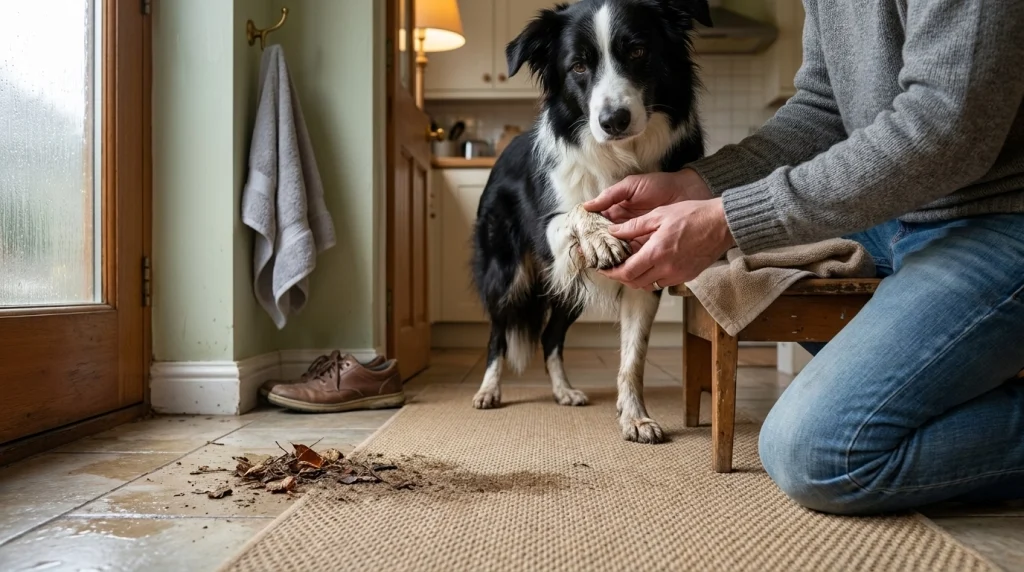
Prevention works best when paw care and floor safety become part of your normal household routine.
Check the nails regularly rather than waiting until they become very long. Inspect the paw pads for cuts, irritation, debris, and excess hair.
Dry wet entryways after rain. Keep towels near the door and ensure your dog has stable footing around the bath, water bowl, and kitchen.
Do not use slippery floor space for high-speed indoor games. Provide exercise on surfaces that are suitable for your dog’s health and activity level.
For dogs with arthritis or other mobility limitations, ask your veterinarian about appropriate activity and rehabilitation rather than attempting strenuous strengthening exercises at home.
Finally, pay attention to changes. A dog that suddenly becomes less confident on familiar floors may be responding to pain, weakness, fear after a previous fall, or a change in traction.
Addressing that change early can help protect your dog from another avoidable fall.
Related Product
Non-Slip Dog Floor Runners
A secure, washable, low-profile runner can provide a more stable walking route across smooth indoor flooring. Choose a backing compatible with your floor and keep the area underneath dry.
As an Amazon Associate, we earn from qualifying purchases.
Frequently Asked Questions
1. Can a Border Collie slip even with short nails?
Yes. Short nails cannot eliminate slippery conditions. Water, smooth floor coatings, sudden turns, and mobility problems can still cause a dog to lose traction.
2. Should I put non-slip socks on my Border Collie?
Non-slip socks may help some dogs, but they must fit correctly and provide real traction on the floor. Loose or rotating socks can make movement less secure. Supervise their use and remove them if they cause discomfort.
3. Why does my Border Collie hesitate to cross the kitchen floor?
Your dog may remember a previous slip or feel insecure on the surface. Pain or mobility changes may also contribute. Provide a secure walking route without forcing the dog across the floor.
4. Can wet paws cause slipping on hardwood floors?
Yes. Moisture can reduce traction on smooth, sealed hardwood. Dry the paws and floor promptly, and avoid leaving standing water that could also damage the flooring.
5. Will paw balm stop my dog from slipping?
Do not rely on ordinary paw balm as an anti-slip treatment. Some products may leave a slippery residue. Use paw-care products only as directed and prioritize proper flooring traction.
6. Can slipping injure a Border Collie’s legs?
Yes. A fall or sudden leg extension may strain muscles or other tissues. If your dog develops pain, limping, swelling, or difficulty walking after a slip, contact a veterinarian.
Final Thoughts
Wet flooring, overgrown nails, excess paw hair, and sudden movements can all contribute to your Border Collie slipping indoors. Drying the paws, improving floor traction, and maintaining safe grooming habits are practical first steps.
If your dog continues slipping despite these changes, especially on dry surfaces, have a veterinarian check for pain or mobility problems. A safer walking surface helps, but it should not hide an underlying health concern.
