
How to Stop a Border Collie Slipping in the Bath

Quick Answer
To stop a Border Collie from slipping in the bath, place a properly fitted non-slip rubber mat on the tub floor, keep the surface free of soap residue, and help your dog enter and exit slowly. Use lukewarm water, gentle handling, and a stable standing position. If your Border Collie panics or struggles to stand even with good traction, stop the bath and investigate the cause before trying again.
A Border Collie can be perfectly comfortable walking across the yard but struggle to keep its feet underneath it on a wet bathtub floor. Once the paws start sliding, the dog may scramble, stiffen, or attempt to jump out.
The solution is not simply holding your dog more tightly. It is making the bathing surface secure enough that your Border Collie can stand naturally without constantly correcting its balance.
What Should You Do Before Your Border Collie Gets Into the Bath?

Start by checking the bathtub itself. A smooth surface that feels reasonably safe when dry may become slippery once water and shampoo reach it.
Before bringing your Border Collie into the bathroom:
- Clean the tub floor. Remove shampoo, conditioner, soap film, and other slippery residue.
- Install a non-slip mat. Choose one that lies flat, grips the actual tub surface, and covers the area where all four paws will stand.
- Check the mat. Press around the corners and edges to confirm it will not slide or curl.
- Prepare the exit. Put an absorbent, non-slip bath mat outside the tub.
- Gather your supplies. Keep shampoo, a rinsing cup or sprayer, and towels within reach.
- Test the water. Use comfortably lukewarm water rather than water that is hot or cold.
Introduce your dog only after the bathing area is ready. Making adjustments while an uncomfortable dog is standing in the tub can create additional movement and stress.
For the complete washing sequence, the site’s Border Collie bathing guide explains brushing, shampooing, rinsing, and drying. Here, the priority is secure footing throughout those steps.
Which Bath Mat Helps Prevent Slipping?
A rubber or silicone non-slip bath mat is usually the most practical starting point. The important feature is not the marketing label but whether it stays securely attached to your specific bathtub.
Look for these characteristics:
- Reliable grip: Suction cups or another secure backing that works with your tub material.
- Enough coverage: Space for your Border Collie to position and reposition all four paws.
- Textured upper surface: A surface that provides traction without sharp or uncomfortable raised edges.
- Drainage: Openings or channels that prevent water from collecting excessively.
- Easy cleaning: A washable design that allows you to remove trapped hair and soap residue.
Many suction-cup mats work best on smooth, compatible bathtub surfaces. Textured or uneven tubs may prevent the suction cups from sealing properly.
Check the manufacturer’s compatibility instructions and physically test the mat before using it with your dog.
Can You Use a Towel Instead?
A towel can provide temporary cushioning and traction, and the American Kennel Club’s dog bathing guidance mentions using a towel or non-slip mat to reduce slipping.
However, a loose towel is not a dependable substitute if it bunches up, slides across the tub, or becomes difficult to keep in position once saturated.
If using a towel temporarily, flatten it carefully and check its stability before your dog enters. If it moves, discontinue using that setup.
Practical Tip
Test the mat both dry and wet before bath time. Press it with your hands from several directions. If it shifts, lifts, or folds, it is not secure enough for a moving dog.
How to Keep Your Border Collie Stable During the Bath
Once the tub has dependable traction, the next goal is to limit sudden movements. You want your Border Collie to maintain a comfortable stance rather than repeatedly shifting its weight.
1. Help Your Dog Enter Slowly
Allow your Border Collie to approach the bathtub calmly. Do not drag the dog toward the tub or encourage a sudden leap onto an unfamiliar surface.
If your dog can step into a low bathing area safely, guide it one step at a time. A taller household bathtub may require controlled assistance from someone who can safely support the dog’s weight.
If lifting is necessary, support both the chest and hindquarters. Never lift a dog by its collar, front legs, or neck.
2. Let All Four Paws Settle
Before turning on the water, give your dog an opportunity to stand naturally on the mat.
Look for a relaxed position with paws comfortably spaced and no repeated scrambling. Avoid positioning your Border Collie with its feet crowded against a bathtub wall.
If the dog continually changes position, check whether the mat is moving or the standing area is too narrow.
3. Introduce Water Gradually
Begin with gentle, controlled water flow rather than directing a powerful spray immediately onto your dog’s body.
A handheld sprayer or rinsing cup allows you to control the water direction. Keep the water comfortably lukewarm and avoid spraying directly into the eyes or ear canals.
Sudden noise or splashing may cause an already uncertain dog to turn or jump unexpectedly.
4. Keep the Tub Floor Free of Excess Shampoo
Work dog-formulated shampoo through the coat without creating unnecessary slippery buildup under the paws.
Rinse the coat thoroughly and direct soapy runoff toward the drain. Do not repeatedly ask your dog to turn while the tub floor is covered in foam.
For a Border Collie’s dense double coat, take the time to rinse through the undercoat rather than washing only the outer hair.
5. Maintain Calm, Gentle Support
Stay close enough to respond if your dog loses balance, but avoid holding it rigidly in place.
If another person is helping, agree on roles before beginning. One person can focus on reassurance and positioning while the other manages the water.
A dog should never be left unattended in the bathtub, even briefly. Any restraint used for grooming requires continuous supervision and must not create a choking or entanglement risk.
Why Is Your Border Collie Still Slipping With a Bath Mat?
If slipping continues after installing a mat, investigate the specific problem before trying to hold the dog more firmly.
The following checks help distinguish an equipment problem from a movement or handling issue.
| What You Notice | What to Check or Change |
|---|---|
| The entire mat slides | Check suction, surface compatibility, and soap residue. |
| Paws slip on the mat itself | Inspect the upper texture and shampoo buildup. |
| Dog scrambles when water starts | Reduce spray intensity and practice gradual water introduction. |
| Dog slips while turning | Increase usable mat coverage and avoid unnecessary repositioning. |
| Dog struggles on dry floors too | Stop and seek veterinary assessment for possible mobility or health problems. |
One commonly missed detail is the difference between a mat sliding against the bathtub and paws sliding across the mat. These are separate problems and may require different solutions.
Likewise, frantic movement can look like poor traction even when the surface is reasonably secure.
What If Your Border Collie Is Afraid of Slipping?
A previous frightening bath can make a dog hesitant to enter the tub again. If your Border Collie braces, trembles, tries to escape, or refuses treats, focus on rebuilding confidence rather than completing the bath immediately.
Practice with the water turned off:
- Invite your dog into the bathroom and reward relaxed behavior.
- Allow the dog to investigate the dry, securely positioned mat.
- Practice approaching or entering the bathing area only at a level the dog accepts.
- Reward calm standing for a brief period, then finish the session.
- Introduce quiet running water separately before attempting a complete bath.
Keep these sessions short. Your dog does not need to progress through every step in a single day.
The AKC’s advice for bath-frightened dogs similarly emphasizes a rubber mat, gradual exposure, and rewards during training.
If your dog becomes more frightened, return to an easier step. Forcing a panicking dog to remain in the tub can make future bathing harder and increase injury risk.
Can Nail Length or Paw Hair Affect Bathtub Grip?
Yes. Overgrown nails and excess hair around the paw pads may contribute to unstable footing, although they are not necessarily the main cause of slipping.
Long nails can change how a dog’s toes contact the ground. Hair extending across the paw pads may also interfere with direct contact between the pads and the bathing surface.
Check your Border Collie’s feet before bath day:
- Inspect nails for excessive length, cracks, or tenderness.
- Look for long hair covering the gripping surfaces of the paw pads.
- Check between the toes for trapped debris.
- Watch for licking, limping, swelling, or painful reactions.
Have nail trimming or paw-pad tidying performed by someone experienced if you are not comfortable doing it safely. Avoid cutting close to the skin or trimming into the paw pads.
Do not assume that trimming nails or paw hair will solve every traction issue. Start with the bathtub surface and your dog’s comfort.
How Do You Prevent Slipping When Your Border Collie Gets Out?
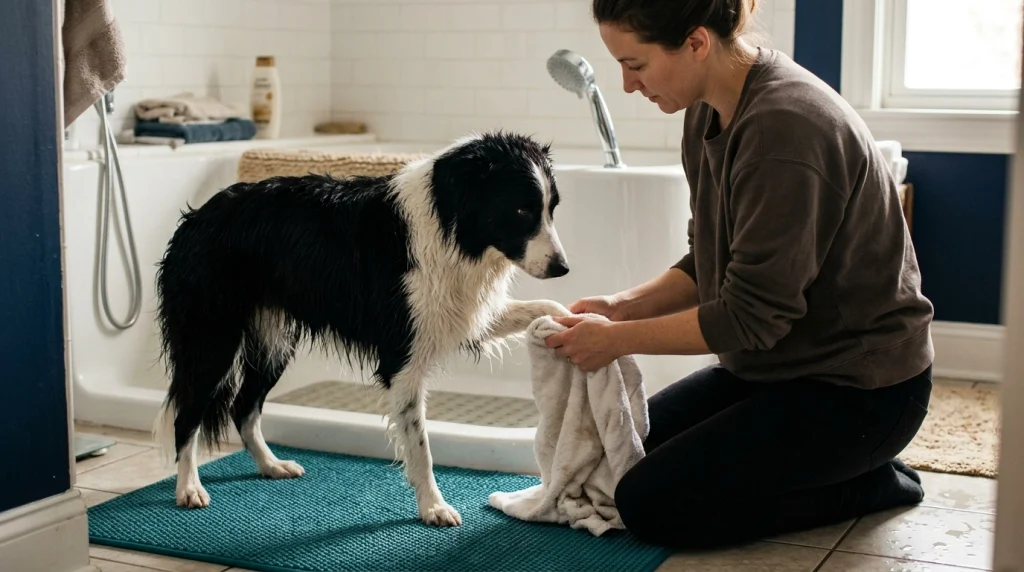
The exit can be just as important as the bath itself. Wet paws and a sudden jump onto tile may create another opportunity to slip.
Before your Border Collie leaves the tub, rinse away remaining shampoo and gently remove excess water from the coat.
Follow this exit routine:
- Turn off the water and let your dog settle.
- Blot the legs and paws with an absorbent towel.
- Confirm that the floor outside the tub has a stable non-slip surface.
- Assist your dog in stepping or being safely lifted out without jumping.
- Dry the paws again before walking onto smooth flooring.
Continue drying the coat after your dog is standing securely. A Border Collie’s undercoat can retain moisture even when the outer fur appears relatively dry.
For more details about cleaning and drying the double coat, see the guide to double-coated Border Collie bathing.
Safety Warning
Stop bathing if your Border Collie repeatedly collapses, cannot stand securely, cries in pain, or develops sudden weakness. Do not assume an underlying balance or mobility problem is simply a slippery bathtub. Contact a veterinarian for appropriate assessment.
Should You Use a Different Bathing Area?
If your bathtub remains difficult to use safely, changing the bathing location may be more effective than adding extra restraints.
A walk-in shower with a suitable non-slip floor can be easier for some dogs because they do not need to climb over a high bathtub wall.
A dedicated dog-washing station may also provide an appropriate bathing surface and easier access. However, elevated stations introduce their own fall risks and require secure equipment and attentive supervision.
Choose a bathing area based on three practical questions: Can your dog enter safely? Can all four paws maintain traction? Can the dog leave without jumping or struggling?
If those conditions cannot be met at home, a professional grooming facility may be a more suitable option.
If you are only removing light surface dirt, a complete bath may not be necessary. The site’s muddy Border Collie cleanup guide discusses when brushing or partial cleaning may be enough.
Related Product
Non-Slip Rubber Bathtub Mat
A textured bath mat designed for secure tub contact can help your Border Collie maintain steadier footing. Check its dimensions and compatibility with your bathtub before choosing one.
As an Amazon Associate, we earn from qualifying purchases.
Frequently Asked Questions
Can I use a regular human bathtub mat for my Border Collie?
Yes, if the mat is securely attached, provides appropriate paw traction, and is large enough for your dog. Check that its texture is comfortable and that it remains stable on your particular tub surface.
Do suction cups work on every type of bathtub?
No. Suction cups may not attach reliably to textured, uneven, or incompatible surfaces. Follow the manufacturer’s instructions and test the mat before letting your dog stand on it.
Should I hold my Border Collie tightly to stop slipping?
No. Gentle support can help, but forceful restraint may increase panic or cause injury. Improve the traction and reduce sudden movement instead. Never leave a restrained dog unattended.
Why does my Border Collie panic even with a non-slip mat?
The dog may be frightened by previous slipping, water noise, handling, or the bathing environment itself. Practice calm, reward-based introductions without running water before attempting another full bath.
Is it safer to bathe my Border Collie in a shower?
A walk-in shower may be easier if it has a secure non-slip surface and allows safe entry and exit. However, a slippery shower floor can be just as hazardous as a bathtub.
When should slipping during bathing concern me?
Seek veterinary advice if your dog slips or struggles to stand on other surfaces, limps, shows pain, develops weakness, or has a sudden change in coordination. These signs should not be attributed to the bathtub alone.
Final Thoughts
The most effective way to stop a Border Collie from slipping in the bath is to provide reliable traction before the dog enters, maintain a calm and controlled washing routine, and prepare a safe exit.
Start with a secure non-slip mat and clean bathtub floor. If your Border Collie continues struggling, check for fear, unsuitable equipment, or possible mobility issues rather than forcing the bath. Good footing and patient handling make bathing safer and more comfortable for both of you.
