
Can You Bathe a Border Collie After Tick Removal? Safe Timing & Care

Quick Answer
Yes, you can usually bathe a Border Collie after a tick has been completely removed, but you don’t need to rush into a bath. First clean and inspect the bite site, make sure it isn’t bleeding or badly irritated, and check whether you’ve recently applied a topical tick treatment. The AKC’s tick-removal guidance recommends prompt removal followed by cleaning of the bite area.
Before starting the bath
- Confirm removal: Check that the tick is gone and avoid digging into the skin for embedded pieces.
- Inspect the bite: Delay the bath if the area is actively bleeding, painful, or severely inflamed.
- Clean gently: Follow appropriate tick-bite cleaning guidance before washing the whole coat.
- Check medications: Recently applied spot-on preventives may have specific no-bathing periods.
- Use dog shampoo: Choose a mild canine shampoo rather than human shampoo or harsh household products.
Simple rule
- If the bite looks calm and no topical treatment limits bathing, a gentle bath can usually be given when your Border Collie is comfortable.
Finding a tick buried in a Border Collie’s thick coat can make you want to wash your dog immediately. I’ve found that the better approach is to deal with the tick and bite site first, then decide whether a full bath is useful.
This guide explains when bathing is reasonable, when it’s better to wait, and how to protect your Border Collie’s skin and double coat afterward.
In This Guide
- Can you bathe a Border Collie immediately after tick removal?
- What should you do immediately after removing the tick?
- When should you wait before bathing?
- How should you bathe a Border Collie after tick removal?
- Does a Border Collie’s double coat change the aftercare?
- What warning signs after a tick bite need a veterinarian?
- How can you reduce future tick problems?
- Frequently asked questions
- What is the safest rule to remember?
Can You Bathe a Border Collie Immediately After Tick Removal?
In many uncomplicated cases, yes. Removing a tick by itself doesn’t create a universal requirement to keep your Border Collie out of the bath for several days.
The important question is whether the bite site and any tick medication make bathing a poor choice at that moment.
Definition: Post-tick-removal bathing means washing your dog after an attached tick has already been physically removed. It is different from using a medicated tick shampoo as the treatment itself.
When a same-day bath may be reasonable
I use a simple three-check approach before putting a Border Collie in the tub.
- The tick has been removed. There’s no attached tick that still needs proper removal.
- The skin looks stable. The spot isn’t actively bleeding, severely swollen, or producing discharge.
- No product instructions prohibit it. A recently applied topical flea-and-tick treatment hasn’t created a required waiting period.
If those checks are satisfied, a routine bath with a mild dog shampoo is usually a practical option. Still, the bath itself isn’t what protects your dog from tick-borne illness.
Prompt tick removal matters more. Bathing also shouldn’t replace inspecting the rest of the body for additional ticks.
When there’s no reason to bathe
If your Border Collie is already clean, you can simply care for the bite site and continue checking the coat. A complete bath isn’t automatically required after finding one tick.
For a muddy dog that just returned from a trail, however, washing may make sense after you’ve finished the tick check.
What Should You Do Immediately After Removing the Tick?
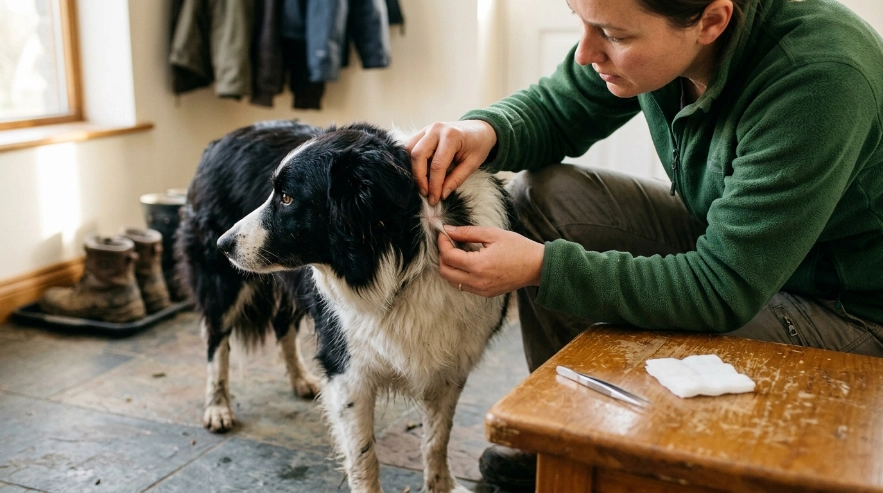
Focus on the small wound before thinking about shampoo. Veterinary guidance consistently emphasizes careful removal and cleaning of the attachment site.
The Merck Veterinary Manual’s tick-removal guidance recommends grasping an attached tick close to the skin and pulling upward with steady pressure.
Follow these steps after removal
- Inspect the tick site. Part the fur so you can see the skin clearly.
- Look for ongoing bleeding. A tiny irritated mark may remain, but active bleeding deserves attention before bathing.
- Clean the area gently. Follow your veterinarian’s preferred method or established veterinary tick-removal guidance.
- Wash your own hands. Avoid crushing or handling the removed tick with bare fingers.
- Check the whole dog. One attached tick can mean others are hidden in the coat.
- Save the tick if appropriate. A veterinarian may find identification useful if your dog later becomes ill.
PetMD also recommends cleaning the bite area after removal and avoiding attempts to dig aggressively into the skin for retained tick parts. You can review its veterinary tick-removal instructions for more detail.
Don’t scrub the bite during the bath
A fresh tick attachment can leave a small red or irritated area. Shampooing aggressively over that spot can make already-sensitive skin more uncomfortable.
When I wash around a recent bite, I treat it like tender skin. Gentle water flow and minimal rubbing are enough.
Vet note: If the bite becomes increasingly red, swollen, painful, warm, or develops discharge, contact your veterinarian rather than repeatedly cleaning or scrubbing it yourself.
When Should You Wait Before Bathing?
Waiting makes sense when the skin needs attention or when bathing could interfere with a flea-and-tick product. These situations matter more than the tick removal itself.
Delay the bath if the skin is badly irritated
Don’t turn a minor wound into a bigger problem through vigorous washing. Give your veterinarian a call if the attachment site looks unusual or your dog appears painful.
- Active bleeding that doesn’t settle
- Marked swelling
- Pus or other discharge
- Significant pain when touched
- Rapidly worsening redness
- Persistent chewing or scratching at the site
Check any topical tick medication first
This is one of the easiest details to overlook. Some topical flea-and-tick treatments have specific bathing instructions because water and shampoo may affect how the product performs.
For example, VCA states that pets receiving topical fluralaner should wait at least three days before bathing. That timing applies to that formulation and shouldn’t be assumed for every tick preventive.
| Situation | Bath decision | What matters most |
|---|---|---|
| Tick physically removed only | Bath when skin is stable and dog is comfortable | Check and clean the bite first |
| Topical fluralaner recently applied | Wait at least 3 days according to VCA guidance | Protect medication effectiveness |
| Another spot-on preventive | Follow that product’s label or veterinary advice | Waiting periods vary by product |
| Inflamed or infected-looking bite | Ask your veterinarian before routine bathing | Skin health comes first |
Section Takeaway: Tick removal alone usually isn’t the main reason to postpone bathing. The condition of the bite and instructions for topical medications should guide your timing.
How Should You Bathe a Border Collie After Tick Removal?
Keep the bath gentle and uncomplicated. Your goal is to remove outdoor dirt without irritating the bite or stripping the coat unnecessarily.
1. Brush and inspect before adding water
Run your hands through the coat and search for small bumps. Pay special attention around the ears, neck, collar area, armpits, groin, feet, and between the toes.
Don’t drag a brush across a suspicious bump. Stop and inspect it first.
2. Use lukewarm water
Choose comfortably warm water rather than hot water. Soak the coat gradually so your Border Collie stays relaxed.
This matters with a dense coat because reaching the skin can take longer than it does with many short-coated dogs.
3. Choose a mild dog shampoo
Use a shampoo formulated for dogs unless your veterinarian recommends something different. Avoid experimenting with human shampoo, essential oils, or harsh flea products on a fresh bite.
The ASPCA’s general dog-care guidance also emphasizes proper grooming, tick checks, and thoroughly rinsing soap from a dog’s coat.
4. Wash around the tick site gently
Don’t scratch the area with your fingernails or scrub it with a stiff brush. Let water flow gently across the surrounding coat.
If the bite appears painful, stop handling it and reassess.
5. Rinse thoroughly
Border Collie coats can hold shampoo close to the skin. Work through the coat carefully until the water runs clean and no slippery residue remains.
6. Dry the coat completely
Press water out with towels instead of rubbing the coat hard. If your dog accepts a dryer, use a comfortable low-heat setting and keep air moving.
Drying also gives you another chance to inspect the skin. I find this second check especially helpful around the neck, ears, and legs.
Section Takeaway: A post-tick bath should be gentle, thorough, and low-stress. Avoid aggressive scrubbing and use the bathing process as another full-body tick inspection.
Does a Border Collie’s Double Coat Change the Aftercare?
Yes, mostly because ticks can be harder to find in a dense Border Collie coat. Both rougher and smoother coats deserve a hands-on skin check rather than a quick visual inspection.
Part the coat down to the skin
Your fingers are often more useful than your eyes at first. Slowly feel for bumps, then separate the hair around anything unusual.
- Check behind and inside the outer ear area.
- Feel underneath the collar.
- Inspect the neck and shoulders.
- Check the armpits and groin.
- Feel between each toe.
- Inspect around the tail and rear legs.
Don’t assume a bath removes attached ticks
Ordinary dog shampoo shouldn’t be treated as a substitute for proper mechanical tick removal. An attached tick needs to be identified and removed correctly.
A bath may help you examine the coat, but your hands still need to check the skin afterward.
Prevent tangles while drying
A wet double coat can become harder to inspect if it dries in tangles. Pat dry, separate the coat gently, and brush when appropriate for your dog’s coat condition.
This makes the next tick check easier too.
What Warning Signs After a Tick Bite Need a Veterinarian?
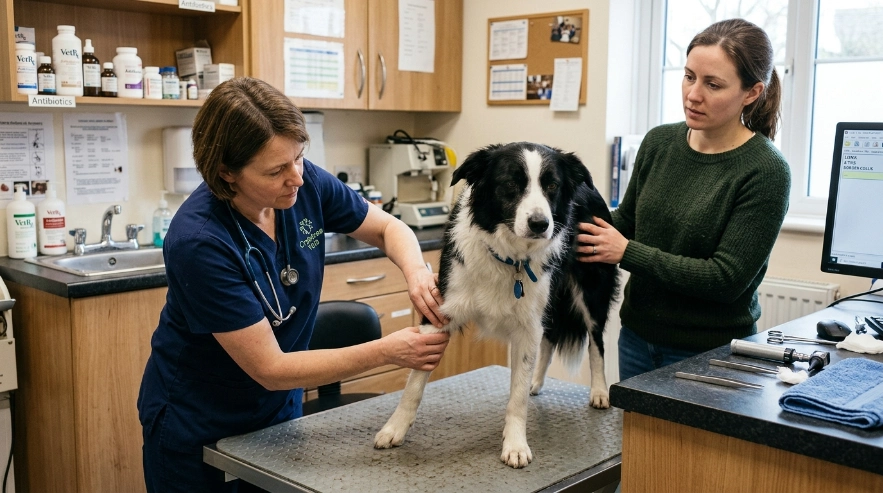
A normal-looking dog doesn’t need to panic you, but monitoring matters. Tick-borne illnesses can cause signs after the original tick is already gone.
Transmission risk and illness vary depending on the tick species, pathogen, geographic area, and attachment time. That’s why prompt removal and ongoing observation are more useful than relying on one fixed number of hours.
Contact your veterinarian if your dog develops concerning changes
- Fever or unusual warmth: Especially when combined with low energy.
- Loss of appetite: A sudden refusal of normal meals deserves attention.
- Lethargy: An energetic Border Collie becoming unusually quiet can be meaningful.
- Lameness: Watch for limping, stiffness, or reluctance to move.
- Swollen joints: New joint discomfort should be discussed with your vet.
- Weakness or poor coordination: Treat neurologic changes as urgent.
- Breathing difficulty: Seek veterinary care promptly.
- Worsening bite site: Increasing redness, swelling, pain, or discharge needs assessment.
The Merck Veterinary Manual notes that ticks should be removed promptly and that bite sites should be monitored for redness or swelling.
Vet note: A bath cannot prevent or treat a tick-borne infection after exposure. Contact your veterinarian if your Border Collie develops illness after a known tick bite.
How Can You Reduce Future Tick Problems?
For an active Border Collie, prevention works better than relying on baths after every outdoor adventure. Herding dogs often spend time in exactly the environments where ticks can be encountered.
Build a two-minute tick check into your routine
I prefer doing the first check before the dog comes fully inside. A second hands-on check later can catch small ticks hidden under the coat.
- Feel around the head and ears.
- Run fingers beneath the collar.
- Check the chest and armpits.
- Inspect the belly and groin.
- Feel down every leg.
- Check paws and toe spaces.
- Finish around the tail.
Use veterinarian-recommended prevention
Your veterinarian can help select an appropriate flea-and-tick preventive based on your dog’s age, health, lifestyle, and local tick risks. Product instructions also tell you whether bathing affects treatment.
As of 2026, there’s no good reason to assume every oral, topical, collar, shampoo, or spray has identical bathing rules. Check the exact product rather than using a universal waiting period.
Keep the environment in mind
Ticks commonly occur around vegetation, brush, wooded edges, and tall grass. Regular coat checks are especially useful after hiking, field work, camping, or off-leash exploration.
A clean dog can still have a tick. Cleanliness and parasite prevention are related parts of care, but they aren’t the same thing.
Section Takeaway: Daily or post-adventure tick checks can catch parasites before bath day. Pair those checks with veterinarian-approved prevention rather than depending on shampoo alone.
Frequently Asked Questions
How long after removing a tick can I bathe my Border Collie?
There isn’t one universal waiting period after physical tick removal. If the bite isn’t actively bleeding or badly irritated and no topical medication requires a delay, a gentle bath can usually be given when your dog is comfortable.
Should I bathe my Border Collie immediately after finding a tick?
No. Remove the attached tick correctly first, clean and inspect the bite, and check the rest of your dog’s body. Bathe afterward only if the dog needs washing and product instructions allow it.
Will dog shampoo kill a tick that is already attached?
Don’t rely on ordinary dog shampoo to remove an attached tick. Physically remove the tick using appropriate tweezers or a tick-removal tool, or ask your veterinarian for help if removal is difficult.
Can I use flea-and-tick shampoo after removing one tick?
Ask your veterinarian or follow the product label before adding a medicated shampoo, especially if your dog already receives another parasite preventive. Combining products without checking their active ingredients isn’t a good routine.
What if part of the tick appears to remain in the skin?
Don’t aggressively dig into your Border Collie’s skin. Excessive probing can create more irritation. If you’re concerned about retained mouthparts or the site becomes swollen or painful, let your veterinarian examine it.
Should I save the tick after removal?
It can be useful to place the tick in a secure container rather than crushing it. If your dog develops symptoms later, your veterinarian may want information about the tick or exposure.
Can a bath prevent Lyme disease after a tick bite?
No. Once a tick has attached, the priority is prompt, correct removal. A normal bath doesn’t reverse pathogen exposure, so monitor your Border Collie and discuss concerning symptoms or local tick risks with your veterinarian.
What Is the Safest Rule to Remember?
Think remove, inspect, clean, check medication, then bathe if needed. That’s safer than automatically putting your Border Collie in the tub the moment you find a tick.
If the bite looks calm and no topical treatment restricts bathing, a gentle bath is generally reasonable. Keep shampoo mild, avoid scrubbing the bite, rinse the double coat thoroughly, and perform another tick check while drying.
Most importantly, continue watching your Border Collie afterward. If the bite worsens or your dog develops fever, unusual tiredness, weakness, lameness, appetite changes, or other concerning signs, contact your veterinarian.
