
Bathe Border Collie Before Vet Visit? What Owners Should Know

Quick Answer
You usually do not need to bathe a Border Collie before a routine vet visit. If your dog has itching, redness, sores, unusual odor, hair loss, ear trouble, or another skin problem, I would avoid bathing unless your veterinarian specifically tells you to do it. If a bath is appropriate, follow safe dog grooming practices and make sure the thick coat is completely rinsed and dried.
Before the appointment
- Routine checkup: A normal bath is usually unnecessary just to make your dog presentable.
- Skin complaint: Skip the bath until you have checked with the veterinary clinic.
- Ear problem: Avoid flushing or deep-cleaning the ears unless your veterinarian instructed you to do so.
- Muddy coat: Brush dried mud or gently spot-clean obvious dirt rather than automatically shampooing the entire dog.
- Medicated products: Follow the veterinarian’s schedule instead of adding an extra bath before the visit.
Best rule
- If the appointment involves your Border Collie’s skin, coat, ears, parasites, or allergies, call the clinic before bathing.
I’ve taken Border Collies into appointments looking freshly brushed, rain-spattered, and once with dried field mud still hiding behind a back leg. The veterinarian has never needed a perfectly groomed dog to perform a useful examination.
What matters is whether grooming could hide the problem you’re bringing your dog in for. This guide explains when bathing helps, when it can wait, and how I prepare a Border Collie for a vet appointment without interfering with the exam.
In This Guide
- Should You Bathe a Border Collie Before a Vet Visit?
- When Should You Avoid Bathing Before the Vet?
- When Is a Bath Before the Vet Okay?
- How Long Before a Vet Visit Should You Bathe a Border Collie?
- How Do You Bathe a Border Collie Safely Before an Appointment?
- Why Might the Vet Want to See the Coat Before You Wash It?
- How Can You Prepare a Border Collie Without Bathing?
- Frequently Asked Questions
- Final Takeaway
Should You Bathe a Border Collie Before a Vet Visit?

No. A healthy Border Collie does not need a special bath just because a veterinary appointment is coming up.
A routine wellness examination is about your dog’s health, not how polished the coat looks. Normal brushing and basic cleanliness are usually enough.
The Border Collie breed information from the American Kennel Club describes both rough and smooth Border Collies as having dense, weather-resistant double coats. That coat is worth treating gently rather than washing unnecessarily.
What counts as bathing before a vet visit?
A bath means thoroughly wetting the coat and using shampoo or another cleansing product. A quick wipe of muddy paws is different.
I often use the least aggressive cleanup that solves the problem:
- Loose dust: Brush it out.
- Dried mud: Let it dry, then brush or comb it away.
- Dirty paws: Rinse or wipe only the paws.
- Small dirty patch: Spot-clean the affected fur.
- Heavily soiled healthy dog: Consider a proper bath if the appointment is routine.
This keeps the dog comfortable without turning appointment preparation into a full grooming session.
Routine exam versus problem-focused exam
The reason for the appointment should guide your decision. A vaccination visit and a skin examination are not the same situation.
| Appointment type | Bath beforehand? | Practical approach |
|---|---|---|
| Routine wellness exam | Usually optional | Brush normally and bathe only if genuinely needed. |
| Vaccination appointment | Usually optional | Keep your normal grooming schedule. |
| Skin, rash, itching, or hair loss | Usually skip until clinic advises | Let the veterinarian see the problem as it normally appears. |
| Ear discharge or odor | Avoid unnecessary ear cleaning | Ask before flushing or applying new products. |
| Open wound or painful lesion | Do not delay care for a bath | Protect the area and seek veterinary instructions. |
| Dermatology referral | Ask the specialist first | Follow that clinic’s exact pre-appointment instructions. |
Section Takeaway: Don’t bathe your Border Collie simply to impress the veterinarian. Match grooming to the reason for the appointment.
When Should You Avoid Bathing Before the Vet?
Avoid an unnecessary bath when the veterinarian needs to evaluate a change in your dog’s skin, coat, ears, or normal odor.
Bathing can change what those areas look or smell like. Shampoo may also temporarily remove flakes, discharge, debris, or surface material that was part of the original problem.
Skip the bath for skin problems
The ASPCA recommends veterinary evaluation for abnormalities such as redness, rashes, sores, bald areas, excessive scratching, and unusual skin changes. Those are good reasons to leave the affected area alone before the exam unless your veterinarian says otherwise.
Examples include:
- Persistent scratching or licking
- Redness or inflamed skin
- Scabs or crusting
- Hot, moist areas
- Unexplained hair loss
- Greasy or unusually flaky skin
- Recurring odor
- Bumps or swelling
- Discharge from a skin lesion
Vet note: If your Border Collie has painful skin, open wounds, spreading redness, pus, significant swelling, or rapidly worsening symptoms, contact your veterinarian rather than trying to fix the problem with a bath.
Be cautious before an allergy or dermatology appointment
Veterinary dermatology clinics can have specific rules about bathing before an examination. Those instructions are not identical at every hospital.
Some specialists ask owners to avoid bathing for several days before an initial skin evaluation. Others may permit a veterinarian-recommended bathing routine, so call the clinic instead of guessing.
Don’t add a medicated shampoo on your own
A medicated shampoo is treatment, not simply grooming. It may contain antibacterial, antifungal, antiparasitic, or other active ingredients.
If your Border Collie is already following a veterinary bathing plan, stick to that schedule. Don’t add a last-minute wash because an appointment is approaching.
Vet note: Never stop prescribed medication or change a medicated bathing schedule before an appointment unless the veterinarian tells you to do so.
When Is a Bath Before the Vet Okay?
A normal bath can be reasonable when your dog is healthy, the appointment is routine, and the coat genuinely needs cleaning.
For example, I would be comfortable bathing a healthy Border Collie who rolled in ordinary mud several days before a wellness check.
A bath may make sense when your dog is simply dirty
Common situations include:
- A muddy coat after normal outdoor activity
- A harmless unpleasant smell from dirt
- Dust after hiking or farm work
- Dried debris caught in the feathering
- Normal grooming that was already due
You still don’t need to make the dog spotless. Veterinarians work with animals all day.
Use spot cleaning when possible
A Border Collie’s coat often looks much cleaner after brushing than owners expect. The outer coat can release dried soil surprisingly well.
Start with a brush and comb. Then clean only the remaining dirty areas if a full bath isn’t necessary.
If something unusual contaminated the coat, don’t treat it like ordinary mud. Contact your veterinarian for instructions when you are unsure whether a substance is safe to rinse or shampoo away.
How Long Before a Vet Visit Should You Bathe a Border Collie?
There is no universal number of hours or days for every veterinary appointment. The safest timing depends on why your Border Collie is being examined.
For a healthy dog going to a routine checkup, simply keep your normal bathing schedule. You don’t need to create a special pre-vet schedule.
For a normal wellness appointment
If a bath is already due, I prefer not to rush it immediately before leaving home. Bathing, drying, brushing, loading the car, and entering a clinic can create one long chain of stimulation.
Giving the dog time to dry completely also matters with a dense double coat.
For skin or ear appointments
Call the veterinary practice before bathing. Dermatology services may have their own pre-exam rules.
Tell the clinic:
- Why your dog is being seen
- When the last bath occurred
- Which shampoo or conditioner you used
- Whether any medicated product was applied
- When symptoms started
- Whether grooming changes the symptoms
That short conversation is more useful than choosing an arbitrary 24-hour, 48-hour, or seven-day rule.
How Do You Bathe a Border Collie Safely Before an Appointment?
If your veterinarian visit is routine and your Border Collie truly needs washing, use a gentle dog-specific bathing routine.
The goal is a clean coat without irritating the skin or leaving shampoo trapped in the dense undercoat.
Brush before you add water
A Border Collie’s double coat includes an outer coat plus a softer insulating undercoat. Water can tighten existing tangles and make them harder to remove.
The AKC’s guidance on grooming double-coated dogs emphasizes routine brushing and combing to remove loose coat and help prevent tangles.
Before bathing:
- Brush through the body with an appropriate brush.
- Check behind the ears and front legs for tangles.
- Comb through the chest, tail, and rear feathering.
- Remove loose undercoat without pulling painfully.
- Stop if you find a sore, lump, wound, or painful skin area that needs veterinary attention.
Use lukewarm water and dog shampoo
Use shampoo formulated for dogs rather than human shampoo. The ASPCA and PetMD both advise choosing pet-appropriate grooming products.
The PetMD dog-bathing guide also emphasizes thoroughly wetting the coat, using a pet-safe shampoo, and rinsing carefully.
Rinse the double coat thoroughly
This is the step I spend the most time on. A Border Collie’s undercoat can hold diluted shampoo long after the outer hair looks clean.
Pay extra attention to:
- Armpits
- Chest
- Belly
- Groin
- Rear feathering
- Base of the tail
- Thick neck fur
Keep rinsing until the coat feels clean and you cannot find slippery product near the skin.
Dry before traveling
Towel the coat carefully instead of aggressively rubbing long feathering into tangles. Give the undercoat enough time to dry.
I also do a gentle final brush once the coat is ready. Then I keep the dog indoors or somewhere clean until we leave.
Section Takeaway: When a bath is appropriate, keep it simple—brush first, use dog-safe shampoo, rinse deeply, and dry the double coat thoroughly.
Why Might the Vet Want to See the Coat Before You Wash It?
A dog’s skin and coat can provide useful information during an examination. That’s especially true when your appointment is about itching, odor, hair loss, or irritation.
The veterinarian may want to see where the problem occurs and how it looks during your dog’s normal daily routine.
Skin changes can matter
The ASPCA lists signs such as redness, scabs, sores, bald spots, excessive scratching, and abnormal coat condition as reasons for veterinary evaluation.
A bath may temporarily change some visible surface features. That’s why I avoid making major grooming changes immediately before a problem-focused visit.
Odor can be worth mentioning
A persistent smell isn’t always a simple cleanliness issue. The ASPCA notes that ears, teeth, skin problems, and other conditions can contribute to odor.
Tell the veterinarian where you notice the smell and when it becomes strongest. Don’t try to cover it with fragrance before the appointment.
Your grooming history is useful information
Write down anything you have recently used on the coat or skin. Product names are better than descriptions such as “the blue shampoo.”
Bring information about:
- Regular shampoo
- Medicated shampoo
- Conditioner or detangler
- Flea and tick products
- Ear cleaners
- Topical medications
- New grooming sprays
- Date of the most recent bath
For broader preventive-care questions, the AVMA pet-care resources are also a useful starting point.
Vet note: Skin and ear problems can have many causes. Home grooming cannot replace an examination when symptoms are persistent, painful, spreading, or repeatedly returning.
How Can You Prepare a Border Collie Without Bathing?
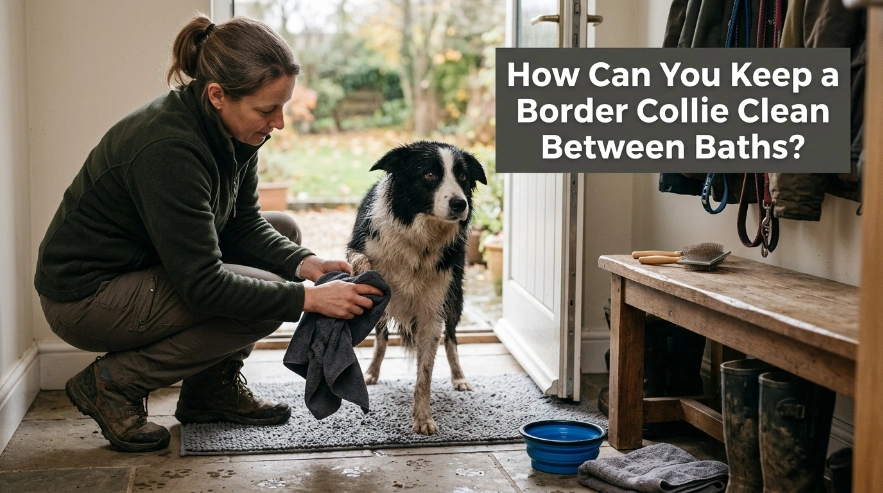
You can make a Border Collie comfortable and clinic-ready without shampooing the entire dog.
In fact, this is how I prepare for most routine appointments.
Use this simple pre-vet routine
- Brush the coat: Remove loose hair and obvious dry debris without scrubbing irritated skin.
- Check the paws: Remove ordinary mud, burrs, or loose material you can handle safely.
- Leave problem areas visible: Don’t cover rashes or sores with cosmetic grooming products.
- Pack medications: Bring the containers or an accurate medication list.
- Take photos: Photograph symptoms that come and go before the appointment.
- Write a short timeline: Record when you first noticed the problem and how it changed.
- Bring your leash and secure collar or harness: Keep arrival controlled and predictable.
Don’t exhaust your Border Collie first
Border Collies are active dogs, but I don’t try to “wear one out” with an intense workout right before a veterinary visit. A normal walk and bathroom break are usually more useful.
The AKC describes Border Collies as energetic, highly engaged working dogs. Keeping the pre-appointment routine familiar can make the transition into the clinic easier.
Tell the clinic if your dog finds handling difficult
Some Border Collies dislike having their paws, ears, tail, or body restrained. Tell the veterinary team before they begin handling sensitive areas.
A clear warning helps the team choose a calmer approach. Don’t hide fear or handling problems because you’re embarrassed.
Section Takeaway: A brush, clean paws, good records, symptom photos, and a calm arrival usually matter more than a freshly shampooed coat.
Frequently Asked Questions
Should I bathe my Border Collie the night before the vet?
You usually don’t need to for a routine appointment. If your Border Collie has a skin, coat, allergy, parasite, or ear problem, contact the clinic before bathing because they may prefer to examine your dog without a recent wash.
Will the vet care if my Border Collie is dirty?
Ordinary dirt or a little dried mud usually isn’t a reason to delay veterinary care. Brush away loose debris or spot-clean the paws if needed, but don’t postpone an important appointment because your dog isn’t freshly groomed.
Can bathing hide a dog’s skin problem?
A bath can temporarily change the appearance of flakes, debris, odor, grease, or irritated surface skin. When the appointment is specifically for a skin problem, ask your veterinary clinic whether they want you to avoid bathing beforehand.
Can I use human shampoo before the vet?
I wouldn’t. Use shampoo designed for dogs when a bath is appropriate. Human shampoos are formulated for human skin, while veterinary and animal-care sources recommend choosing products intended for dogs.
Should I clean my Border Collie’s ears before the appointment?
If you’re visiting because of odor, discharge, redness, scratching, or ear discomfort, avoid deep cleaning unless your veterinarian instructed you to do it. Tell the clinic what ear products you’ve recently used.
Should I bathe my Border Collie before a dermatology appointment?
Ask the dermatology clinic first. Pre-appointment instructions vary, and some specialists want several bath-free days before evaluating a new skin problem while other cases may require an existing veterinarian-directed bathing schedule.
What if my Border Collie rolls in mud on the day of the vet visit?
For ordinary mud, remove what you reasonably can without delaying care. Brush dried mud, wipe dirty paws, or spot-clean the coat. If the substance isn’t ordinary dirt or mud, contact the clinic for specific instructions.
Final Takeaway
For most healthy Border Collies, there is no need to schedule a special bath before a routine vet visit. A normal brush and basic cleanup are enough.
The exception is when the appointment involves the skin, coat, ears, allergies, parasites, wounds, or another condition that grooming could temporarily change. In those cases, I would call the clinic before using shampoo, ear cleaner, or medicated products.
As of 2026, my practical rule remains simple: don’t groom away the problem you’re asking the veterinarian to examine. Keep your Border Collie comfortable, bring a clear symptom history, and let the veterinary team see what’s actually happening.
