

Quick Answer
The best brush for a Border Collie is usually a quality pin brush for routine coat care. Rough-coated Border Collies may also need a slicker brush and metal comb, while an undercoat rake becomes useful during heavy shedding. This approach fits the AKC Border Collie grooming guidance for this dense double-coated breed.
Best tools by grooming job
- Pin brush: Best all-around choice for regular brushing and longer rough-coat areas.
- Slicker brush: Useful for light tangles, loose fur, and feathering when used gently.
- Undercoat rake: Helps remove loose undercoat during heavier seasonal shedding.
- Metal comb: Finds hidden knots after brushing, especially behind ears and around feathering.
- Rubber grooming tool: A practical option for surface hair on some smooth-coated Border Collies.
Simple buying rule
- Start with a comfortable pin brush, then add a second tool only when your dog’s coat actually needs it.
Choosing a brush for a Border Collie looks simple until you meet the breed’s dense double coat. A tool that glides over the surface may leave loose undercoat and small tangles untouched.
I prefer building a small grooming kit around the dog’s actual coat rather than buying every de-shedding gadget available. This 2026 guide covers rough coats, smooth coats, seasonal shedding, tangles, brushing technique, and the features worth paying for.
In This Guide
- What Is the Best Brush for a Border Collie?
- Why Does a Border Collie’s Double Coat Need the Right Brush?
- Which Border Collie Brush Type Is Best for Each Job?
- What Brush Is Best for Rough vs Smooth Border Collies?
- How Often Should You Brush a Border Collie?
- How Do You Brush a Border Collie Correctly?
- What Should You Look for When Buying a Border Collie Brush?
- Frequently Asked Questions
- Final Takeaway
What Is the Best Brush for a Border Collie?
For most Border Collies, a pin brush is the best everyday starting point. Its pins can move through the outer coat while reaching farther into longer hair than a soft bristle brush.
A single tool still cannot handle every coat problem. Seasonal undercoat, feathering, knots, and smooth coats create different grooming jobs.
A Border Collie brush is a grooming tool chosen to work through the breed’s weather-resistant double coat without unnecessarily pulling, cutting, or damaging healthy hair.
For a rough-coated BC, I would build the kit around a pin brush and metal comb. A slicker can then handle small tangles and denser feathering.
For a smooth-coated dog, the routine may be simpler. A pin brush or rubber grooming tool can handle routine loose hair, with an undercoat tool reserved for heavier shedding.
Do you need several brushes?
Usually, two or three well-chosen tools are enough. More equipment does not automatically mean better grooming.
- Routine coat care: Pin brush.
- Tangles and feathering: Gentle slicker brush.
- Heavy loose undercoat: Undercoat rake.
- Final coat check: Metal grooming comb.
The safest brush is also one your dog accepts comfortably. A technically impressive tool is useless if every grooming session becomes a wrestling match.
Why Does a Border Collie’s Double Coat Need the Right Brush?
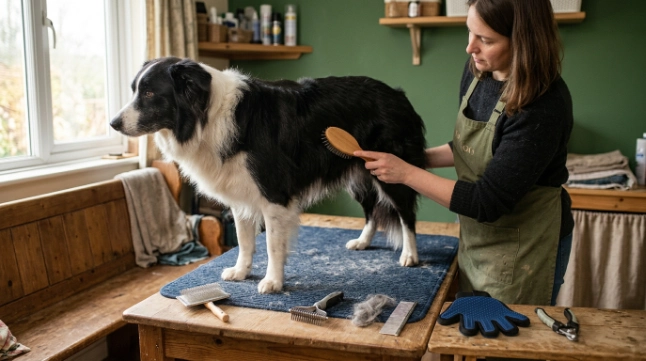
Border Collies have a dense double coat with a protective outer layer and softer undercoat. Both rough and smooth varieties share this basic structure.
The AKC guide to grooming double-coated dogs explains that guard hairs help protect the skin while the undercoat provides insulation. That structure is why surface-only brushing can miss so much hair.
What happens when you use the wrong tool?
A brush with short, weak bristles may skim across the topcoat. The coat can look tidy while loose hair remains underneath.
- Hidden undercoat: Loose fur stays beneath the visible coat.
- Small knots: Feathering behind the ears and legs may start tangling.
- Skin irritation: Excessive pressure can scrape or redden the skin.
- Broken coat: Aggressive cutting-style tools can remove more than loose hair.
- Poor grooming tolerance: Painful pulling makes the dog avoid future sessions.
The goal is not to strip out as much hair as possible. You want to remove loose coat while keeping healthy guard hairs and skin comfortable.
Where does loose hair hide?
I pay extra attention to the neck, chest, rump, rear legs, and tail base. Rough-coated Borders also need careful checks behind the ears and through longer feathering.
Run your fingers through the coat before brushing. Dense patches and small knots are often easier to feel than see.
Which Border Collie Brush Type Is Best for Each Job?
The best Border Collie grooming setup matches each tool to one clear purpose. That prevents unnecessary brushing and makes sessions easier to manage.
| Brush Type | Best Use | Best Coat Situation | Practical Frequency |
|---|---|---|---|
| Pin brush | Routine brushing | Rough or smooth coat | About 1–2 times weekly; more during shedding |
| Slicker brush | Loose fur and light tangles | Rough coat and feathering | As tangles or loose hair appear |
| Undercoat rake | Seasonal loose undercoat | Dense shedding coat | Short sessions during heavy shedding |
| Metal comb | Finding hidden knots | Ears, chest, legs, tail | After a thorough brushing session |
| Rubber grooming tool | Surface hair and massage | Smooth coats | Routine light grooming |
Why I like a pin brush first
A good pin brush is versatile and relatively forgiving. Rounded tips and suitable pin length help it move through a medium double coat without feeling overly aggressive.
It also works well for quick grooming after walks. Grass seeds, dust, and loose outer hair are easier to spot before they become bigger problems.
When is a slicker brush better?
A slicker becomes useful when longer hair starts separating poorly. I use light strokes instead of repeatedly scraping the same patch.
Fine wire pins can catch tangles effectively, so pressure matters. Stop if your dog flinches or the skin becomes pink.
When should you use an undercoat rake?
Use an undercoat rake when soft loose undercoat is clearly building up. It should not become your automatic tool for every grooming session.
During a seasonal coat release, work in short sections. Remove hair that releases easily instead of forcing the rake through resistance.
What Brush Is Best for Rough vs Smooth Border Collies?
Rough and smooth Border Collies need the same basic double-coat care, but longer rough coats demand more detangling. Smooth coats are easier to scan visually yet can still hold plenty of loose undercoat.
Best brushes for a rough-coated Border Collie
- Pin brush: Main routine tool for the body and longer coat.
- Slicker brush: Useful around light tangles and feathering.
- Metal comb: Checks behind ears, chest hair, trousers, and tail.
- Undercoat rake: Helpful during heavier seasonal shedding.
With a rough coat, I never assume the surface tells the whole story. A metal comb can reveal a knot the brush passed over.
Best brushes for a smooth-coated Border Collie
- Pin brush: Useful for regular loose-hair removal.
- Rubber curry or grooming mitt: Collects surface hair and dirt.
- Undercoat rake: Reserved for obvious dense undercoat shedding.
A smooth coat usually has fewer feathering tangles. That does not make it a single-layer coat.
Australian Shepherds and Border Collies can both carry substantial double coats, while a short-coated working dog may require a different tool balance. Choose the brush based on the individual coat in front of you.
How Often Should You Brush a Border Collie?
Most Border Collies benefit from brushing around once or twice each week under normal conditions. During a heavier coat release, daily or near-daily light sessions may be easier than one long weekly session.
Frequency should follow coat condition rather than a rigid calendar. Outdoor activity, coat length, climate, age, and season all change the workload.
The ASPCA’s dog grooming guidance also emphasizes matching brushing technique and frequency to coat type.
A practical weekly schedule
- Normal week: One or two complete brushing sessions.
- Heavy shedding: Five to ten minutes most days if loose hair releases easily.
- After muddy walks: Let the coat dry, remove debris, then brush as needed.
- Before bathing: Remove loose hair and small tangles first.
- After drying: Give the coat a light finishing brush.
Puppies need shorter sessions. Two or three calm minutes can teach more than a forced twenty-minute grooming session.
Use treats, quiet handling, and frequent breaks while introducing brushes. Border Collies learn patterns quickly, including unpleasant ones.
How Do You Brush a Border Collie Correctly?
Brush in small sections and use only enough pressure to move through the coat. You should be grooming hair, not scratching skin.
- Check the coat first: Feel for knots, burrs, sore skin, or damp areas.
- Start at the shoulders: Use calm strokes in the direction the coat lies.
- Work in sections: Move along the back, sides, chest, and hindquarters.
- Separate dense coat: Lift longer hair gently so you can reach loose undercoat.
- Handle feathering slowly: Brush legs, trousers, and tail without pulling.
- Check behind the ears: Fine rough-coat hair can knot here quickly.
- Finish with a comb: A comb should pass comfortably through areas you have completed.
What should you do with a mat?
Do not keep pulling because a brush reaches a stubborn mat. Tight matting can sit close to delicate skin.
The PetMD guide to handling matted coats recommends regular brushing and careful coat penetration to prevent hidden mats.
- Hold loose hair near the base to reduce pulling.
- Work small tangles from the ends inward.
- Use a suitable detangling product when appropriate.
- Stop if the knot sits tightly against skin.
- Ask a professional groomer for help with severe matting.
Vet note: Redness, sores, repeated itching, bald patches, strong odor, or painful skin deserve veterinary attention instead of more aggressive brushing.
Should you brush against the coat?
Most routine passes can follow the direction of hair growth. When checking dense undercoat, gently lift sections rather than aggressively brushing backward.
Comfort gives you the best feedback. If the dog repeatedly turns, flinches, or moves away, inspect your pressure and the coat beneath the brush.
What Should You Look for When Buying a Border Collie Brush?
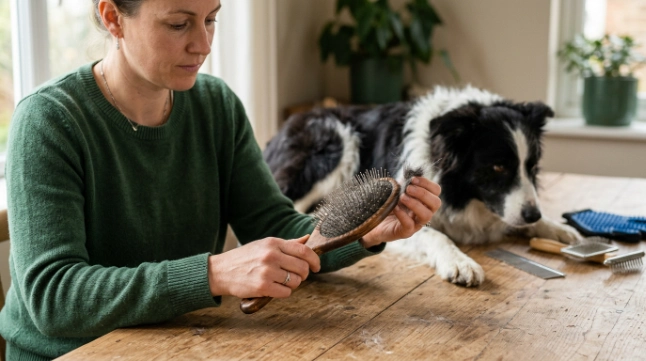
The best brush should match your Border Collie’s coat depth, your hand size, and the grooming task. Comfort and control matter more than flashy marketing language.
1. Pin length that reaches through the coat
Very short pins may glide over a rough coat without reaching deeper hair. Look for enough working length to move through the coat without digging into skin.
2. Rounded or skin-friendly tips
Sharp-feeling pins can make grooming unpleasant. Run the brush lightly across your forearm before using it on your dog.
3. A comfortable handle
A secure handle helps you use lighter pressure. This matters during longer shedding sessions when your grip starts tiring.
4. A brush size that fits the dog
Large heads cover the body quickly, while smaller brushes provide better control around ears, legs, chest hair, and the tail. Many owners find one medium brush easier to manage than an oversized tool.
5. Easy hair removal
Loose undercoat fills brushes quickly. A design that clears easily saves time when your BC is shedding heavily.
6. No unnecessary cutting action
Be cautious with tools designed to cut or strip hair aggressively. Removing healthy coat is different from collecting undercoat that is already loose.
- Best first purchase: Pin brush.
- Best second purchase for rough coats: Metal comb or slicker.
- Best seasonal addition: Undercoat rake.
- Best smooth-coat extra: Rubber curry or grooming mitt.
As of 2026, I still prefer a simple kit used consistently over aggressive tools promising dramatic one-session de-shedding. Good grooming should leave the coat comfortable, clean, and intact.
Frequently Asked Questions
Is a slicker brush good for a Border Collie?
Yes. A slicker brush can work well for loose fur, light tangles, and rough-coat feathering. Use gentle pressure because the fine wire pins can irritate skin when repeatedly dragged across one area.
Is a pin brush or slicker brush better for a Border Collie?
A pin brush is usually the better all-around routine choice. A slicker becomes more useful when you need extra help with tangles, feathering, or loose hair, so many rough-coated Border Collies benefit from having both.
What is the best brush for a shedding Border Collie?
A pin brush handles routine loose hair, while an undercoat rake can help when your Border Collie is releasing large amounts of soft undercoat. Use the rake only while loose undercoat is present and avoid scraping the skin.
Can I use a de-shedding tool on a Border Collie?
You can use an appropriate de-shedding or undercoat tool carefully, but it should remove loose coat without repeatedly cutting healthy hair. Use light pressure, follow the manufacturer’s directions, and stop if the skin becomes irritated.
How do I know when my Border Collie is fully brushed?
Run a metal comb gently through longer areas after brushing. If it moves through without repeatedly catching, and loose undercoat is no longer releasing heavily, the section is usually well groomed.
Do smooth-coated Border Collies need brushing?
Yes. Smooth Border Collies still have double coats and shed loose hair. Their shorter outer coat may need less detangling, but regular brushing helps remove loose fur, debris, and undercoat while giving you a chance to inspect the skin.
Final Takeaway
The best brush for a Border Collie is a pin brush for regular grooming, supported by other tools when the coat demands them. Rough coats often benefit from a slicker and comb, while heavy seasonal shedding may justify an undercoat rake.
- Choose tools for the individual coat.
- Brush once or twice weekly as a starting routine.
- Increase light brushing during heavy shedding.
- Use gentle pressure around sensitive areas.
- Check rough-coat feathering with a metal comb.
- Do not force a brush through tight mats.
- Stop when grooming causes pain or skin irritation.
A small, sensible grooming kit is enough for most Border Collies. Consistent technique will usually do more for the coat than owning a drawer full of brushes.
