

Quick Answer
To blow dry a Border Collie after a bath, towel-blot the coat first, then use a dog dryer or handheld dryer on a cool or low-heat setting. Keep the airflow moving, work through the coat in sections, and never direct air into the eyes or ears. The AKC’s dog-drying guidance emphasizes using airflow rather than strong heat to dry the coat safely.
Quick Drying Steps
- Towel first: Press water from the coat without rubbing or twisting the fur.
- Start cool: Choose no heat or the lowest safe heat setting.
- Begin slowly: Let your Border Collie hear and feel the dryer before using stronger airflow.
- Dry in sections: Separate the dense coat so air reaches the damp undercoat.
- Keep moving: Never hold heated airflow over one patch of skin.
- Check the roots: Finish only when the hair near the skin feels dry rather than cool and clammy.
A freshly bathed Border Collie can look almost dry while the undercoat is still holding plenty of moisture. That dense coat is why I treat drying as a separate part of the bath rather than an afterthought.
This guide covers the safest technique, dryer settings, coat differences, common mistakes, and ways to make the process calmer for your dog.
In This Guide
- Why Should You Blow Dry a Border Collie After a Bath?
- What Should You Do Before Using the Dryer?
- How Do You Blow Dry a Border Collie Step by Step?
- What Dryer Setting Is Safe for a Border Collie?
- Do Rough and Smooth Border Collies Dry Differently?
- How Can You Prevent Tangles, Irritation, and Dryer Fear?
- How Do You Know When a Border Collie Is Completely Dry?
- Frequently Asked Questions
Why Should You Blow Dry a Border Collie After a Bath?
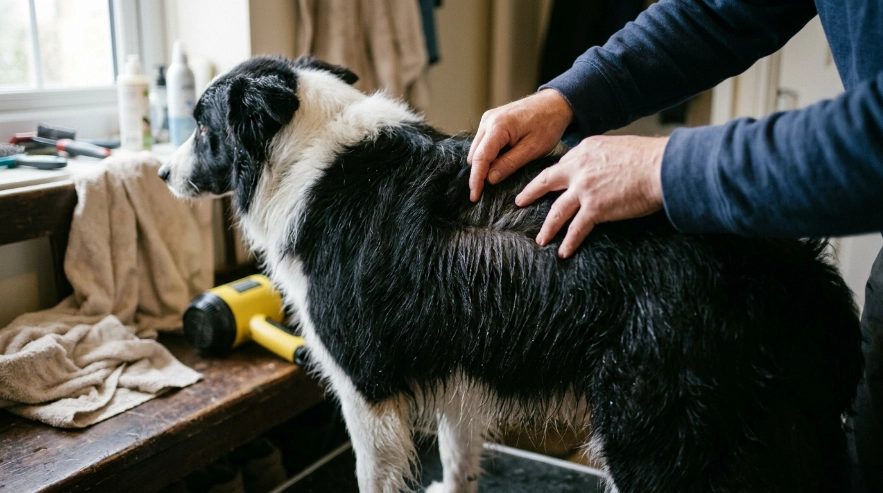
Blow drying helps remove moisture trapped inside a Border Collie’s dense coat. It can also separate loose undercoat and make the finished coat easier to brush.
Definition: A Border Collie’s double coat consists of a protective outer coat and a softer insulating undercoat beneath it.
The American Kennel Club’s Border Collie information describes the breed as an energetic working dog with both rough and smooth coat varieties.
Why the undercoat matters
Water does not always leave both coat layers at the same speed. The surface can feel dry while moisture remains closer to the skin.
- Back and shoulders: These exposed areas often dry first.
- Chest: Dense hair can stay damp longer.
- Armpits: Limited airflow can slow drying.
- Rear legs: Feathering can hold moisture.
- Tail: Thick hair near the base needs extra checking.
- Behind the ears: Fine hair may stay wet and tangle easily.
I never decide a Border Collie is dry just because the back feels fluffy. I part the coat and check the roots in several places.
Is blow drying always necessary?
No. A smooth-coated dog in a warm indoor environment may finish drying naturally after thorough towel drying.
However, a rough-coated Border Collie with heavy feathering can hold much more moisture. Controlled airflow makes drying faster and gives you a chance to inspect the skin.
Cold weather also changes the decision. I would not send a wet Border Collie outdoors simply because the topcoat feels dry.
Section Takeaway: Dry the coat based on what you feel near the skin, not what the surface looks like.
What Should You Do Before Using the Dryer?
Remove as much water as possible with towels before turning on a dryer. Starting with a dripping coat makes the process slower and noisier.
Rinse the coat completely
Drying should never begin while shampoo remains in the coat. Leftover product can sit close to the skin beneath dense fur.
The ASPCA’s dog grooming guidance recommends thorough drying after bathing and advises keeping water and bathing products away from the eyes and ears.
Towel-blot instead of rubbing
Wrap a large absorbent towel around your dog and press gently. Replace it with a dry towel when the first becomes saturated.
Avoid fast back-and-forth rubbing. Friction can tighten small knots in longer Border Collie feathering.
Set up everything before you start
- Absorbent towels: Have at least two available for a soaked adult coat.
- Dryer: A pet dryer is useful, but a handheld dryer can work on a safe low setting.
- Slicker brush: Useful for longer feathering once the coat begins separating.
- Metal comb: Helps check areas behind the ears and around the legs.
- Non-slip surface: Gives the dog secure footing during drying.
- Treats: Helpful for dogs still learning to tolerate dryer noise.
Keep the room comfortable and free from cold drafts. A wet dog can become chilled faster than a dry one.
Section Takeaway: A good drying session starts with complete rinsing, gentle towel work, secure footing, and all tools within reach.
How Do You Blow Dry a Border Collie Step by Step?
Start with low-intensity airflow and work methodically from one part of the body to another. The goal is to move moisture away from the skin without overheating or frightening your dog.
- Blot the coat thoroughly. Press towels against the neck, back, chest, belly, legs, and tail until water is no longer dripping.
- Let your dog inspect the dryer. Keep it off at first if the equipment is unfamiliar.
- Turn the dryer on away from the dog. Begin with the lowest practical airflow and no heat or minimal heat.
- Start at the shoulder or back. These areas are often less sensitive than the face, feet, or rear.
- Keep the nozzle moving. Sweep airflow across the coat instead of concentrating it on one spot.
- Separate the coat in small sections. Use your free hand to expose damp hair closer to the skin.
- Work through thick areas slowly. Give extra attention to the chest, belly, rear legs, tail base, and neck.
- Finish with a coat check. Part the hair in several places and feel for cool or clammy roots.
Which direction should you dry?
For routine home drying, I usually follow the natural direction of coat growth. This keeps longer guard hairs and feathering easier to manage.
If you use a strong pet dryer to move loose undercoat, the hair may lift and separate in different directions. Keep the air controlled around delicate areas.
What about the head and ears?
I avoid blasting air toward the face. Many dogs dislike airflow around their eyes, nose, and ears.
- Use a towel around the head first.
- Keep airflow away from the ear canals.
- Do not blow directly toward the eyes or nose.
- Use your hand to shield sensitive areas when needed.
- Stop if your dog becomes increasingly distressed.
Should you brush while blow drying?
You can brush longer areas once the coat is partly dry and beginning to separate. Never pull a brush through a tight wet tangle.
I prefer short, gentle passes through the chest, trousers, and tail feathering. A metal comb at the end tells me whether hidden knots remain.
Section Takeaway: Work slowly, keep airflow moving, dry to the roots, and protect your Border Collie’s face and ears.
What Dryer Setting Is Safe for a Border Collie?
Cool airflow or low heat is the safest starting point. Strong heat is unnecessary because moving air does most of the drying work.
AKC professional grooming standards advise low heat, avoiding concentrated heated air, and keeping airflow moving. That approach makes sense for home drying too.
| Drying Method | Airflow | Heat | Best Use | Main Caution |
|---|---|---|---|---|
| Towels only | None | None | Removing most surface water | Undercoat may remain damp |
| Handheld hair dryer | Low to moderate | Cool or lowest practical setting | Small areas and cooperative dogs | Heat can concentrate near the skin |
| Pet force dryer | Moderate to strong | Usually little or no added heat | Dense double coats and loose undercoat | Noise and strong airflow may scare beginners |
| Natural air drying | Room air | Room temperature | Finishing a lightly damp coat indoors | Slow for dense rough coats |
How can you check whether the air feels too warm?
Place your free hand near the area you are drying. If the airflow feels uncomfortably hot on your hand, move the dryer away or lower the heat.
Never leave heated airflow fixed on one patch. Constant movement reduces the chance of concentrating heat against the skin.
Is a human hair dryer okay?
A handheld dryer can work if it has a genuinely cool or low setting. Keep it moving and stay alert to the temperature at skin level.
A pet dryer is usually better suited to moving water from a heavy double coat. It relies more on airflow and less on heat.
Do Rough and Smooth Border Collies Dry Differently?
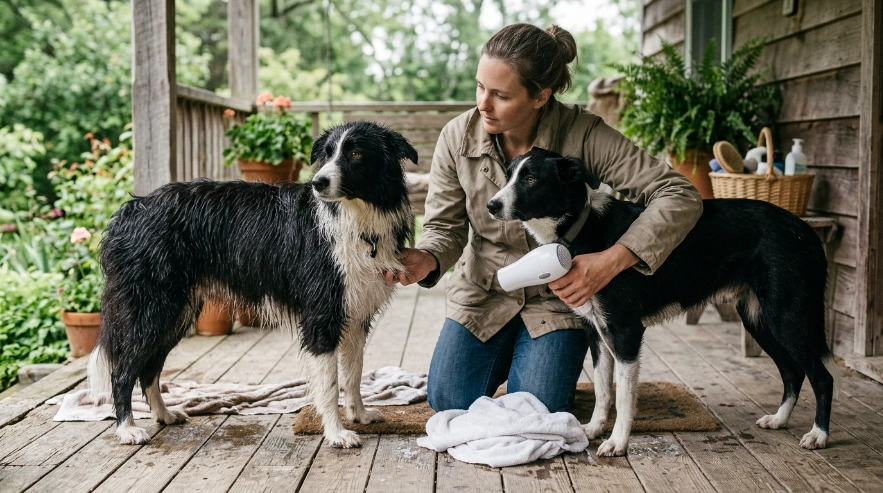
Yes. Both varieties can have an undercoat, but rough-coated Border Collies usually need more attention around their longer feathering.
Rough-coated Border Collies
Longer hair around the chest, tail, belly, and rear legs creates more places for water to stay hidden. These areas also tangle more easily when rubbed.
- Separate long feathering with your fingers.
- Use airflow in the direction of hair growth.
- Check behind the ears for small tangles.
- Dry the tail from the base outward.
- Comb longer areas after they are mostly dry.
Smooth-coated Border Collies
A smooth coat often loses surface water faster. That does not mean you should ignore the undercoat.
Part the hair at the neck, chest, belly, and hindquarters. These spots can still feel damp after the back appears completely dry.
I use the same finish test for both coat types: the roots should feel dry in several locations, not merely fluffy on top.
How Can You Prevent Tangles, Irritation, and Dryer Fear?
Most drying problems come from friction, excessive heat, rushed handling, or introducing loud equipment too quickly. Changing your technique usually makes the process easier.
Prevent tangles while drying
- Blot instead of scrub: Hard towel rubbing can twist wet hairs together.
- Work in sections: Controlled drying prevents you from repeatedly disturbing the same fur.
- Follow coat growth: This is especially useful on long feathering.
- Brush gently: Wait until wet hair has separated before brushing.
- Comb-check: Inspect behind the ears, armpits, chest, trousers, and tail.
Help a Border Collie accept the dryer
Dryer noise can be more difficult than the airflow itself. Introduce the sound gradually instead of switching a powerful dryer on beside a nervous dog.
PetMD’s guidance on introducing dogs to dryers recommends starting with a low setting and pairing the experience with high-value treats.
- Place the switched-off dryer where your dog can see it.
- Reward calm investigation.
- Turn it on several feet away from your dog.
- Reward calm behavior while the sound continues.
- Introduce gentle airflow at the shoulder or back.
- Increase airflow only when your dog remains comfortable.
Do not force a panicking dog to stay beside the dryer. Shaking, frantic escape attempts, snapping, or escalating distress means the session needs to change.
Watch for skin irritation
Part the coat occasionally while drying. Look for redness, bumps, sores, unusual flakes, or areas your dog finds painful.
Repeated scratching after a bath can involve shampoo residue, product sensitivity, allergies, parasites, infection, or another skin problem.
Vet note: Persistent redness, intense itching, sores, hair loss, unusual odor, or painful skin deserves veterinary advice rather than repeated home treatment. The AVMA pet-care resources can also help owners understand when professional veterinary care is appropriate.
Section Takeaway: Keep drying gentle and predictable. A clean coat is not worth creating tangled fur, irritated skin, or lasting fear of grooming.
How Do You Know When a Border Collie Is Completely Dry?
A Border Collie is dry when the hair near the skin feels dry in several dense areas. Do not rely only on the appearance of the topcoat.
Use a five-point coat check
- Neck: Part the thick hair beneath or around the collar area.
- Chest: Push the coat aside until your fingers reach the roots.
- Armpits: Check carefully because these areas receive less airflow.
- Rear legs: Feel beneath longer feathering.
- Tail base: Separate the dense hair and check close to the skin.
Dry roots should feel normal rather than cold and clammy. A cool sensation can sometimes mean moisture is still evaporating beneath the topcoat.
What should you do after blow drying?
Give the coat a final gentle brush once it is dry. This separates hairs, removes loosened undercoat, and helps reveal hidden tangles.
Run a metal comb through longer feathering without forcing it. If the comb catches, separate the knot gently instead of pulling through it.
When should you stop the dryer early?
Stop immediately if your dog appears overheated or severely distressed. Drying can continue later with towels and gentler airflow once the dog is comfortable.
- Heavy or unusual panting
- Excessive drooling
- Repeated attempts to escape
- Sudden weakness
- Extreme agitation
- Skin that feels unusually hot
Vet note: Weakness, breathing difficulty, collapse, or other severe symptoms need prompt veterinary attention rather than continued grooming.
As of 2026, my home routine remains simple: remove most water with towels, use moving cool airflow, and check the undercoat by hand before calling the job finished.
Frequently Asked Questions
Can I use a regular hair dryer on my Border Collie?
Yes, if the dryer has a cool or genuinely low-heat setting. Keep it moving and frequently check the air temperature with your hand because human dryers can produce concentrated heat close to the skin.
Should I use hot air to dry my Border Collie faster?
No. Strong heat is unnecessary and can make drying uncomfortable or unsafe. Air movement is what removes moisture, so cool airflow or the lowest practical heat setting is the better choice.
How long does it take to blow dry a Border Collie?
There is no reliable single drying time. Coat length, undercoat density, dog size, towel drying, dryer power, humidity, and how wet the dog was all affect the process.
Can I let my Border Collie air dry after a bath?
You can let a lightly damp Border Collie finish drying indoors when conditions are comfortable. Rough coats and dense undercoats need closer checking because the surface may dry before moisture deeper in the coat disappears.
Should I brush my Border Collie while blow drying?
Gentle brushing can help once the coat is partly dry and the hairs have begun separating. Avoid dragging a brush through tight wet knots because pulling can be uncomfortable and may worsen tangles.
Why is my Border Collie scared of the blow dryer?
The loud sound, vibration, and unfamiliar airflow can frighten dogs that have not been introduced gradually. Start farther away on a low setting, reward calm behavior, and shorten sessions rather than forcing your dog through escalating fear.
Why does my Border Collie still feel damp after blow drying?
The outer coat may have dried before the undercoat. Part the fur at the neck, chest, armpits, rear legs, and tail base, then continue with moving cool airflow where the roots still feel clammy.
Final takeaway: The safest way to blow dry a Border Collie after a bath is to remove excess water with towels first, use cool or low-heat moving airflow, and work through the coat in sections. Check the roots before finishing, especially on a rough-coated Border Collie.
Keep the experience calm and positive. With a consistent routine, most Border Collies can learn that drying is simply the final step of bath time rather than something to fear.
