
Border Collie Allergy Bath Routine: A Safe Step-by-Step Guide

Quick Answer
A good Border Collie allergy bath routine removes pollen, dust, and other allergens without unnecessarily drying the skin or leaving moisture trapped in the double coat. Use lukewarm water, a dog-safe hypoallergenic or veterinarian-prescribed shampoo, rinse thoroughly, and dry the coat completely. If your dog needs medicated baths, follow your veterinarian’s instructions and the product’s contact-time directions, as explained in VCA’s medicated bathing guidance.
A Simple Allergy-Bath Routine
- Brush first: Remove loose undercoat, tangles, grass seeds, and surface debris before wetting the coat.
- Use lukewarm water: Hot water can make already irritated skin feel more uncomfortable.
- Choose dog shampoo: Use a gentle canine product or the medicated shampoo prescribed for your dog’s condition.
- Rinse completely: Work through the dense coat until no shampoo residue remains against the skin.
- Dry thoroughly: Remove moisture from both the outer coat and soft undercoat instead of leaving the dog damp.
- Watch the skin: Increasing redness, sores, odor, discharge, or relentless itching needs veterinary attention.
When a Border Collie has itchy skin, bathing can become more than a grooming job. The right routine may help wash pollen and other environmental material from that thick coat while keeping sensitive skin comfortable.
The tricky part is balance. Bathing too casually, using the wrong product, or leaving the undercoat damp can turn a helpful bath into another source of irritation.
In This Guide
- What Does a Border Collie Allergy Bath Routine Do?
- How Often Should You Bathe a Border Collie With Allergies?
- What Should You Use for an Allergy Bath?
- How Do You Bathe a Border Collie With Allergies Step by Step?
- How Should You Dry the Double Coat After an Allergy Bath?
- What Should You Do Between Allergy Baths?
- When Does Itching Need Veterinary Attention?
- Border Collie Allergy Bath Routine FAQ
What Does a Border Collie Allergy Bath Routine Do?
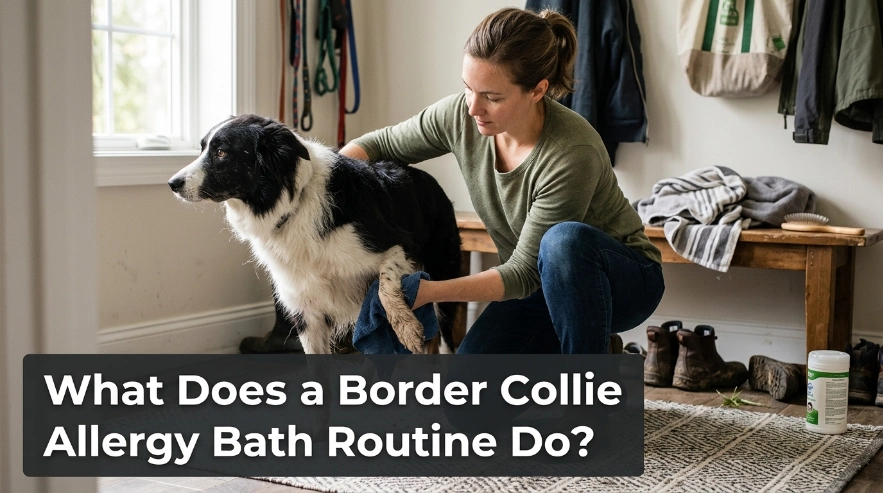
An allergy bath is meant to clean potential triggers from the skin and coat while supporting your dog’s comfort. It doesn’t diagnose the cause of itching or replace allergy treatment.
A Border Collie’s allergy bath routine is a planned bathing process adapted for sensitive or itchy skin. It considers the breed’s dense double coat as well as the dog’s individual skin problem.
Why Border Collies need a thoughtful approach
Border Collies can have either rough or smooth coats, but both varieties have a double coat. You can see the breed’s general coat and grooming characteristics on the American Kennel Club Border Collie profile.
The softer undercoat can hold loose hair, dirt, plant material, and moisture beneath the outer coat. That makes brushing, rinsing, and drying especially important.
- Environmental material: Pollen, grass particles, and dust can settle on the coat after outdoor activity.
- Loose undercoat: Shed hair may make it harder for shampoo and rinse water to reach the skin evenly.
- Moisture: A thick coat can feel dry on top while remaining damp near the skin.
- Sensitive areas: Paws, belly, armpits, ears, and face commonly deserve closer inspection in itchy dogs.
Bathing may reduce material sitting on the coat, but allergies have several possible causes. Environmental allergies, flea allergy, food-related reactions, parasites, and infections can produce overlapping signs.
Vet note: Persistent itching deserves a veterinary diagnosis instead of repeated home treatment based on guesswork.
How Often Should You Bathe a Border Collie With Allergies?
There isn’t one correct allergy-bath schedule for every Border Collie. Frequency should match the dog’s skin condition, allergen exposure, shampoo type, and veterinary plan.
A healthy Border Collie may need ordinary baths only periodically. A dog receiving allergy or medicated skin treatment may temporarily need a different schedule.
Routine bathing and allergy bathing aren’t the same
Think about the reason for the bath before deciding how often to repeat it. Dirt removal, pollen control, and medicated therapy are separate goals.
| Situation | Bath Approach | Important Detail |
|---|---|---|
| Normal coat maintenance | Bathe when dirty or when routine grooming calls for it | Regular brushing often does more day-to-day work than frequent shampooing |
| Heavy pollen or grass exposure | Use targeted rinsing, paw cleaning, or a full bath when appropriate | Focus on feet, belly, legs, and coat areas that contacted vegetation |
| Hypoallergenic shampoo plan | Follow your veterinarian’s recommended frequency | Product choice matters as much as bath frequency |
| Medicated shampoo treatment | Follow the prescription or veterinary schedule exactly | Some medicated shampoos require roughly 5–10 minutes of skin contact, depending on the product and condition |
I prefer to judge the skin between baths instead of following a calendar blindly. If the coat looks clean but the paws become itchy after a grassy walk, targeted cleaning may make more sense than another complete shampoo bath.
On the other hand, a veterinarian treating allergic dermatitis or a secondary infection may intentionally recommend frequent medicated bathing. In that situation, the treatment schedule takes priority over normal grooming advice.
Vet note: Don’t increase medicated-shampoo frequency or contact time on your own. More product or longer exposure isn’t automatically better.
What Should You Use for an Allergy Bath?
Use products formulated for dogs, with the exact shampoo chosen according to your Border Collie’s skin condition. Human shampoo isn’t a good substitute for routine canine skin care.
For mild sensitivity, your veterinarian may recommend a fragrance-free or hypoallergenic dog shampoo. Skin infections or significant inflammation may require a different medicated product.
A simple allergy-bath kit
- Dog-safe shampoo: Hypoallergenic or veterinarian-prescribed, depending on the diagnosis.
- Pin or slicker brush: Use the tool that works safely with your dog’s coat before bathing.
- Comb: Helpful for checking areas behind the ears, legs, tail, and feathering for tangles.
- Non-slip mat: Gives an anxious or itchy dog better footing.
- Several absorbent towels: A dense Border Collie coat can hold more water than expected.
- Handheld sprayer or cup: Helps control water around the face and ears.
Skip heavily fragranced household cleansers, essential-oil mixtures, and improvised human skin products. Irritated canine skin needs fewer variables, not more.
VCA also recommends pet-specific shampoos because dog skin differs from human skin. Their pet bathing guidance emphasizes choosing a suitable pet product and rinsing thoroughly.
What about oatmeal shampoo?
Some soothing dog shampoos contain oatmeal or other moisturizing ingredients. That doesn’t mean every itchy Border Collie should automatically use the same product.
A dog with infection, oily skin, severe inflammation, or another diagnosed condition may need a completely different formula. Match the shampoo to the problem rather than choosing by the word “soothing” on the label.
Vet note: If your Border Collie already has a skin diagnosis, ask your veterinarian before switching shampoos or combining medicated products.
How Do You Bathe a Border Collie With Allergies Step by Step?
Start by brushing the dry coat, then wet your dog with lukewarm water. Apply the recommended shampoo to the skin and coat, follow any required contact time, rinse completely, and dry thoroughly.
Here’s the routine I use as a practical framework.
- Check the skin first. Look at the belly, armpits, paws, groin, tail base, and areas your dog keeps scratching. Note redness, odor, scabs, sores, discharge, or hair loss.
- Brush before adding water. Remove loose fur and carefully work out manageable tangles. Don’t aggressively brush raw or painful skin.
- Set up everything beforehand. Put shampoo, towels, sprayer, and a non-slip surface within reach. This keeps the bath calm and short.
- Use lukewarm water. Wet the coat gradually from the body downward. Avoid blasting water directly into the eyes or ear canals.
- Reach the skin gently. Border Collie fur can keep shampoo on the surface. Part the coat with your fingers and gently work the product through without hard scrubbing.
- Respect contact time. A standard shampoo and a medicated shampoo may have different directions. Follow the label and your veterinarian’s instructions.
- Rinse longer than you think. Move your fingers through the coat as you rinse so water reaches the undercoat and skin.
- Check high-risk areas again. Shampoo can hide around the armpits, groin, belly, tail, and thick neck fur.
- Towel-blot the coat. Press and squeeze gently instead of aggressively rubbing irritated skin.
- Finish drying the undercoat. Keep your dog comfortably warm and make sure dampness isn’t trapped against the skin.
Keep the face simple
A damp cloth is usually easier to control around the face than a shower spray. Keep shampoo and rinse water away from the eyes, nose, mouth, and ear canals.
If the ears are chronically red, smelly, painful, or producing discharge, don’t treat that as an ordinary bath problem. Ear disease often needs separate veterinary examination.
Vet note: Stop if bathing causes obvious pain or exposes raw, bleeding, or severely inflamed skin.
How Should You Dry the Double Coat After an Allergy Bath?
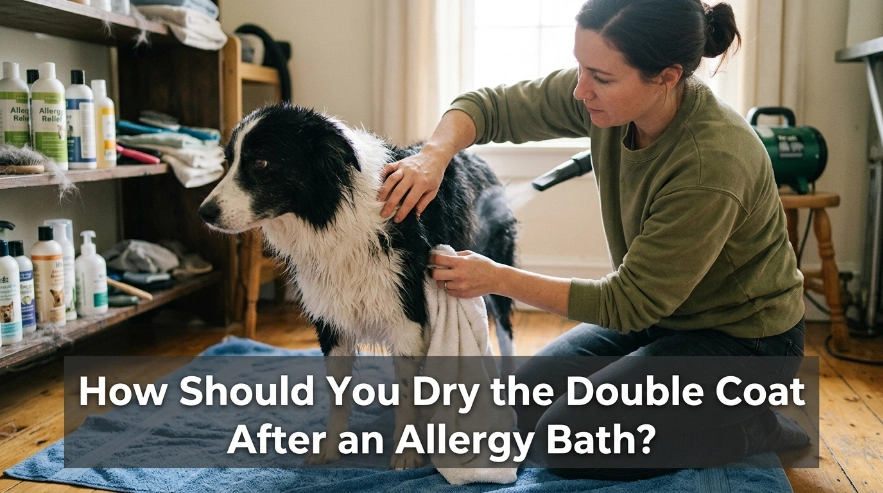
Drying is part of the allergy bath, not an optional finishing step. The outer coat can feel nearly dry while moisture remains deeper in a Border Collie’s undercoat.
Start by letting your dog shake, then blot with absorbent towels. Work in sections instead of rubbing the whole coat rapidly.
- Press the towel: Blot and squeeze water from the coat gently.
- Separate thick fur: Check the neck, chest, rear legs, tail base, and belly with your fingers.
- Use safe airflow: If your dog tolerates a dryer, use a pet-appropriate setup without overheating the skin.
- Check the skin: Feel beneath the coat rather than judging dryness from the top hairs.
- Keep bedding dry: Let your dog finish drying somewhere clean rather than outdoors in pollen, damp grass, or dirt.
Don’t compensate for a thick coat with excessive heat. Sensitive skin can become more uncomfortable when exposed to hot air.
If I can still feel cool damp fur next to the skin, I don’t consider the drying job finished. That small check is especially useful around dense feathering and the neck.
What Should You Do Between Allergy Baths?
You don’t need a full bath after every outdoor exposure. Simple coat and paw care between baths can reduce what your Border Collie carries back inside.
This is especially practical for dogs that spend hours training, hiking, herding, playing fetch, or lying in grass.
Try targeted cleanup after outdoor activity
- Wipe or rinse paws: Pay attention between the toes if grass and pollen are suspected triggers.
- Clean the lower belly: This area can contact grass directly, especially in shorter-coated dogs.
- Brush the coat: Regular brushing removes loose fur and surface debris while helping you inspect the skin.
- Wash bedding: Clean resting surfaces can reduce repeated contact with material brought indoors.
- Track flare patterns: Note whether itching changes after certain walks, seasons, environments, foods, or grooming products.
Regular brushing is already an important part of Border Collie coat maintenance. It becomes even more useful when you’re watching for new redness, flakes, scabs, parasites, or thinning hair.
The ASPCA’s general dog-care guidance also emphasizes brushing and appropriate bathing as part of normal grooming.
Don’t assume every itch is pollen
Bathing may help remove environmental material, but repeated itching can have several explanations. Fleas, mites, bacterial or yeast infection, food reactions, and other skin conditions can resemble environmental allergies.
A simple symptom diary can make the veterinary visit more useful. Write down where your dog itches, when it started, whether it’s seasonal, and what treatments you’ve already tried.
Section Takeaway: Use bathing as one part of allergy management, not as the diagnosis. Between baths, targeted cleaning and careful observation can often reduce unnecessary full-body washing.
When Does Itching Need Veterinary Attention?
See your veterinarian when itching is persistent, worsening, painful, or accompanied by visible skin or ear changes. A bath can’t tell you whether the underlying problem is allergy, infection, parasites, or something else.
Dog skin allergies often cause scratching, licking, chewing, redness, and inflammation. PetMD’s overview of dog skin allergies describes common problem areas including the paws, belly, armpits, and rump.
Signs that deserve a veterinary check
- Constant scratching: Your dog struggles to rest or repeatedly interrupts normal activity to scratch.
- Raw skin: Scratching or chewing has created open areas, bleeding, or painful sores.
- Strong odor: A musty or unpleasant skin or ear smell can accompany secondary problems.
- Discharge: Pus, fluid, or ear discharge needs more than routine grooming.
- Hair loss: Repeated licking, infection, parasites, or inflammation can cause thinning patches.
- Recurring ear trouble: Red ears, head shaking, odor, and repeat infections can occur alongside allergic skin disease.
- Rapid worsening: A sudden major reaction, facial swelling, breathing difficulty, collapse, or other severe signs require urgent veterinary attention.
Secondary bacterial or yeast infections can make an allergic dog itch much more. Those infections may require specific topical or prescription treatment rather than another bottle of general-purpose shampoo.
A veterinarian can also help separate seasonal patterns from flea allergy, food-related disease, contact reactions, and non-allergic skin conditions. That’s important because the correct bath routine depends on the diagnosis.
Vet note: Seek urgent veterinary care for breathing difficulty, collapse, marked facial swelling, or another severe sudden reaction.
Border Collie Allergy Bath Routine FAQ
Can I bathe my Border Collie every week for allergies?
Some dogs with allergic skin disease are bathed frequently as part of a veterinarian-directed plan. Weekly bathing isn’t automatically right for every Border Collie, so base the schedule on the shampoo, skin condition, and your veterinarian’s advice.
Can I use human shampoo on an itchy Border Collie?
For routine allergy care, use shampoo formulated for dogs rather than human shampoo. Dog skin and human skin differ, and an unsuitable cleanser can add irritation when your Border Collie’s skin is already uncomfortable.
Should I brush my Border Collie before or after an allergy bath?
Brush before bathing to remove loose undercoat, debris, and manageable tangles. After the coat is fully dry, a gentle final brush can help separate the fur and reveal any remaining tangles or skin changes.
Does bathing remove pollen from a dog’s coat?
Bathing and targeted rinsing can help wash environmental material such as pollen from the coat and skin. However, bathing doesn’t cure the underlying allergic response, so dogs with significant symptoms may still need veterinary allergy management.
What shampoo is best for a Border Collie with allergies?
There isn’t one best shampoo for every allergic Border Collie. A mild hypoallergenic canine shampoo may suit some dogs, while others need an antimicrobial, antifungal, or other medicated product prescribed for a diagnosed condition.
Why is my Border Collie still itchy after a bath?
The trigger may still be present, or the itching may come from something other than environmental allergens. Shampoo residue, flea allergy, food reactions, mites, bacterial infection, yeast, or another skin condition can also contribute.
Should I rinse my Border Collie’s paws after walks?
Targeted paw cleaning can be useful when outdoor allergens such as grass or pollen appear to trigger symptoms. Dry the feet afterward, especially between the toes, and contact your veterinarian if redness, swelling, odor, sores, or constant licking continues.
Final takeaway: A useful Border Collie allergy bath routine is gentle, purposeful, and adapted to the individual dog. Brush first, use the right canine product, rinse thoroughly, dry the double coat completely, and let persistent skin problems guide you toward veterinary care rather than more frequent guesswork.
