

Quick Answer
The biggest Border Collie bathing mistakes are skipping the pre-bath brush, using water that is too hot, choosing the wrong shampoo, leaving soap in the dense undercoat, spraying the face, rubbing wet fur aggressively, and failing to dry the coat thoroughly. Because Border Collies have a weather-resistant double coat, careful bathing and proper double-coat grooming matter as much as the shampoo itself.
Mistakes to avoid
- Skipping brushing: Water can tighten existing tangles and make them harder to remove.
- Using hot water: Choose comfortably lukewarm water instead.
- Using human shampoo: Stick with a shampoo formulated specifically for dogs.
- Rinsing too quickly: Soap can remain hidden near the skin beneath the dense coat.
- Spraying the face: Wash around the eyes and muzzle with a damp cloth instead.
- Leaving the coat damp: Dry through the outer coat and undercoat before your dog settles down.
A simple rule
- Brush first, use lukewarm water, rinse longer than you think necessary, and dry the coat completely.
Bathing a Border Collie looks simple until that dense coat gets soaked. The outer coat may seem clean while shampoo, tangles, or moisture remain underneath.
This guide focuses on the mistakes that cause the most trouble and shows you a safer routine for 2026. The goal isn’t to bathe more often. It’s to make each bath easier on your dog’s skin, coat, and comfort.
In This Guide
- What Are the Most Common Border Collie Bathing Mistakes?
- Should You Brush a Border Collie Before Bathing?
- What Shampoo and Water Temperature Should You Avoid?
- Why Is Incomplete Rinsing Such a Problem?
- How Should You Protect a Border Collie’s Eyes and Ears?
- Why Does Drying a Border Collie’s Double Coat Matter?
- Can You Bathe a Border Collie Too Often?
- What Is the Safest Border Collie Bath Routine?
- Frequently Asked Questions
What Are the Most Common Border Collie Bathing Mistakes?
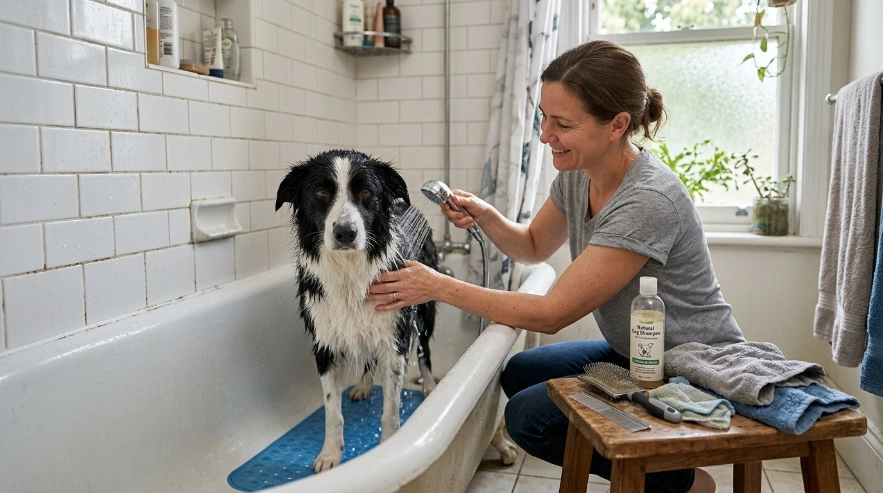
The most common mistakes happen before the shampoo bottle even opens. Poor preparation makes a dense Border Collie coat harder to wash, rinse, and dry.
A Border Collie bathing mistake is any bathing habit that unnecessarily increases tangling, skin irritation, trapped shampoo, retained moisture, or stress during grooming.
Eight mistakes worth avoiding
- Bathing a tangled coat. Existing knots can tighten once they become wet.
- Using water that’s too hot. Comfortable lukewarm water is the safer choice.
- Using products made for people. Choose a shampoo formulated for dogs.
- Pouring too much shampoo onto one spot. Thick product can become difficult to distribute and rinse.
- Scrubbing in circles. Rough rubbing can twist longer coat hairs together.
- Rinsing only the surface. Water needs to reach through the outer coat to the skin.
- Spraying water into the face or ears. Clean these areas separately and gently.
- Stopping the drying process too soon. A dry-looking surface can hide a damp undercoat.
Border Collies can have rough or smooth coats, but both varieties have dense, weather-resistant double coats. The undercoat is why surface-only bathing often fails.
| Bath Stage | Common Mistake | Better Home Target |
|---|---|---|
| Preparation | Wet first, brush later | Spend 5–10 minutes checking for loose hair, burrs, and tangles first |
| Wetting | Hot or forceful water | Use a gentle flow of comfortably lukewarm water |
| Shampoo | Human products or excessive shampoo | Use dog shampoo according to its label |
| Rinsing | Stopping when the surface looks clean | Check the chest, armpits, belly, and thick neck coat again |
| Drying | Leaving the undercoat damp | Towel-blot, then dry through the coat using gentle airflow |
Section Takeaway: A good Border Collie bath begins before the water starts. Preparation, thorough rinsing, and complete drying prevent many of the problems owners blame on shampoo.
Should You Brush a Border Collie Before Bathing?
Yes. Brushing before bathing removes loose coat, exposes hidden tangles, and makes it easier for water to move through the double coat.
The AKC’s Border Collie breed guidance describes both rough and smooth varieties as having dense, weather-resistant double coats. Regular brushing is an important part of maintaining either type.
Check the high-friction areas first
Tangles often develop where coat movement and friction are greatest. Don’t assume a clean-looking back means the entire dog is knot-free.
- Behind the ears
- Under the collar or harness
- Front armpits
- Chest feathering
- Back of the thighs
- Tail and rear feathering
Use a pin brush or slicker gently, then check longer areas with a comb. If the comb stops, don’t force it through.
Work on that knot before soaking the coat. Severe or tight matting is better handled by an experienced groomer.
What Shampoo and Water Temperature Should You Avoid?
Avoid human shampoo and excessively hot water. A mild dog-specific shampoo and lukewarm water are better choices for routine bathing.
Dog skin differs from human skin, so a product made for your own hair isn’t automatically suitable for your Border Collie. PetMD’s dog-bathing guidance recommends pet-safe shampoo and thorough rinsing.
Don’t guess with medicated products
Medicated shampoos may have specific contact times or bathing schedules. Follow the label and your veterinarian’s directions rather than creating your own routine.
More shampoo also doesn’t mean a cleaner dog. Excess product can make the dense coat harder to rinse completely.
Vet note: If your Border Collie has persistent itching, redness, sores, strong skin odor, hair loss, or recurring flakes, ask your veterinarian about the cause before changing shampoos repeatedly.
Why Is Incomplete Rinsing Such a Problem?
Incomplete rinsing can leave shampoo against the skin even when the outer coat looks clean. This is an easy mistake with a thick Border Collie undercoat.
I use one simple checkpoint in this guide: if you think rinsing is finished, inspect the thick areas before turning off the water.
Recheck these areas
- Neck: Dense coat can hold suds near the skin.
- Chest: Feathering may hide remaining product.
- Armpits: These folds are easy to rush.
- Belly: Shampoo can collect along the underside.
- Rear legs: Longer feathering deserves another pass.
Part the fur with your fingers while rinsing. Aim the flow in the direction the hair grows rather than blasting against the coat.
Keep going until the water runs clear and the coat no longer feels slippery or soapy. Don’t rely on appearance alone.
Vet note: Continued redness, itching, or discomfort after a bath deserves veterinary advice, especially when symptoms persist after the coat has been rinsed again.
How Should You Protect a Border Collie’s Eyes and Ears?
Don’t spray your Border Collie’s face directly or deliberately run bath water into the ear canals. Wash the face separately with a soft, damp cloth.
A controlled approach is calmer and more precise. It also gives you better control around the eyes, nose, and mouth.
A safer face-cleaning method
- Wet a soft cloth with clean lukewarm water.
- Wring it out so it isn’t dripping.
- Wipe the muzzle and outer face gently.
- Keep shampoo away from the eyes.
- Wipe only the visible outer ear surface.
Don’t push cotton swabs or other objects down the ear canal. Ear cleaning and whole-body bathing are separate jobs.
Vet note: Head shaking, ear odor, discharge, redness, swelling, or obvious ear pain can signal an ear problem that needs veterinary evaluation.
Why Does Drying a Border Collie’s Double Coat Matter?
A Border Collie’s coat can feel dry on top while remaining damp near the skin. Drying therefore needs to reach through both coat layers.
The AKC’s dog-drying guidance emphasizes proper post-bath drying and discusses tools designed to move moisture out of the coat.
Don’t rub the coat aggressively
Hard towel rubbing twists longer hairs together. Instead, press, blot, and gently squeeze water from the coat.
Start with one or two absorbent towels. Replace the first towel when it becomes saturated instead of continuing to smear water through the coat.
Use airflow carefully
If your dog tolerates a dryer, use a comfortable cool or low-warm setting. Keep the airflow moving instead of concentrating it on one area.
- Work from the shoulders toward the rear.
- Part thick sections with your fingers.
- Check the chest, belly, and rear feathering.
- Keep strong airflow away from the eyes and inside the ears.
- Stop if your dog becomes frightened or overheated.
A towel-only dry may work after a light rinse or with some smooth-coated dogs. Rough-coated Border Collies often need more attention before the undercoat feels dry.
Vet note: If damp skin develops an unusual odor, redness, tenderness, or persistent itching, contact your veterinarian rather than repeatedly washing the area.
Can You Bathe a Border Collie Too Often?
Yes. Bathing more often than your individual dog needs can dry the skin and coat, especially when strong cleansers are used.
There isn’t one perfect calendar for every Border Collie. Lifestyle, coat condition, swimming, mud, allergies, and veterinary treatment can all change the schedule.
The ASPCA’s dog grooming guidance notes that regular brushing helps remove dirt and spread natural coat oils. That means a full shampoo bath isn’t the only way to keep a Border Collie tidy.
Try spot cleaning when appropriate
A muddy paw doesn’t always require a full bath. The same applies to a small dirty patch on the legs or belly.
- Let ordinary clean mud dry, then brush it out.
- Rinse dirty paws with plain water.
- Use a damp cloth on a small dusty area.
- Brush loose dirt from a dry coat.
A full bath makes more sense when the coat is noticeably dirty, oily, strongly odorous, contaminated, or being washed under veterinary instructions.
Vet note: Dogs with allergies, infections, parasites, or medicated-shampoo plans may need a different bathing frequency. Follow your veterinarian’s schedule for those cases.
What Is the Safest Border Collie Bath Routine?
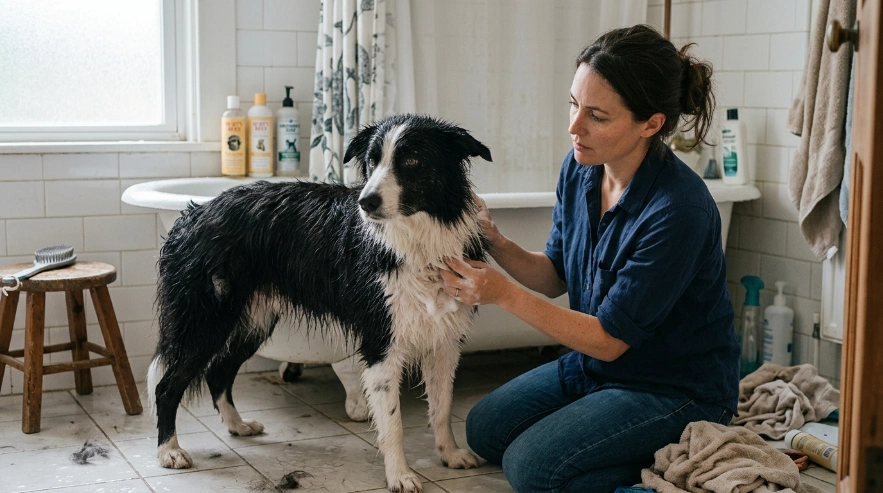
A safe routine is simple: prepare the coat, control the water, use the right product, rinse completely, and dry to the skin. Don’t rush the middle steps.
1. Gather everything before starting
- Dog-specific shampoo
- Pin brush or slicker brush
- Comb
- Two absorbent towels
- Damp face cloth
- Non-slip bath mat
- Dryer if your dog comfortably accepts one
Having supplies within reach prevents you from leaving a wet dog unattended. It also keeps the bath calmer.
2. Brush and inspect the coat
Remove loose fur, grass seeds, small debris, and manageable tangles. Check behind the ears and under the legs carefully.
3. Wet from the neck downward
Use lukewarm water and a gentle stream. Work your fingers through the coat so water reaches the undercoat.
Don’t point the sprayer at the face. Keep direct water away from the ear openings.
4. Apply shampoo carefully
Use the amount and dilution method on the product label. Spread it through the coat instead of dumping a large amount in one location.
Massage in the direction of hair growth. Avoid rough circular scrubbing through feathered areas.
5. Rinse methodically
Rinse from the neck toward the tail, then check the underside. Part the coat so clean water reaches the skin.
Revisit the chest, armpits, belly, and rear legs. These spots are easy to miss.
6. Clean the face separately
Use your damp cloth around the muzzle and outer face. Work slowly near the eyes.
7. Blot instead of rubbing
Let your Border Collie shake first if the area is safe. Then press towels into the coat and gently squeeze out water.
8. Dry the undercoat
Use gentle airflow if your dog accepts it. Move section by section until the coat feels dry close to the skin.
9. Finish with a light brush
Once the coat is dry, a gentle brush helps separate the hair and reveals any small tangle you missed.
Keep the session positive. Several calm grooming experiences are more useful than one technically perfect bath that frightens your dog.
Section Takeaway: The best bath isn’t the fastest one. A calm pre-brush, controlled wash, thorough rinse, and complete dry protect the Border Collie’s double coat from the mistakes that cause most home-grooming trouble.
Frequently Asked Questions
Should I brush my Border Collie before or after a bath?
Brush before the bath to remove loose undercoat, debris, and tangles. Brush again gently after the coat is fully dry if needed. Wetting an already tangled coat can make knots tighter and harder to separate.
Can I use human shampoo on my Border Collie?
Human shampoo isn’t the best routine choice for dogs. Use a mild shampoo made specifically for dogs unless your veterinarian tells you to use something different. Products designed for canine skin make the bathing routine more predictable.
How do I know if shampoo is still in my Border Collie’s coat?
Part the coat and feel near the skin, especially around the chest, neck, armpits, belly, and rear legs. Continue rinsing if the hair feels unusually slippery or you can still see foam. Clear rinse water alone isn’t always enough.
Should I wash my Border Collie’s face with shampoo?
For routine baths, it’s safer to clean the face separately with a soft damp cloth. Avoid spraying water directly at the eyes, nose, or ear canals. If a facial area needs medicated washing, follow your veterinarian’s instructions.
Can I let my Border Collie air-dry after a bath?
Light air-drying may be reasonable after you remove most moisture, depending on the coat and environment. However, a thick undercoat can remain damp long after the surface looks dry. Check close to the skin before considering the drying process finished.
How often should I bathe a Border Collie?
There is no single schedule for every Border Collie. Bathe according to dirt, odor, lifestyle, coat condition, and veterinary needs rather than automatically shampooing every week. Regular brushing and small-area cleaning can reduce unnecessary full baths.
What should I do if my Border Collie becomes itchy after bathing?
First, check whether shampoo may remain in the coat and rinse thoroughly with lukewarm water. If itching continues, or you notice redness, sores, swelling, odor, or hair loss, contact your veterinarian rather than repeatedly trying new shampoos.
The main lesson is simple: treat your Border Collie’s coat as a double coat, not just a layer of visible fur. Brush before bathing, use dog-safe products, rinse down to the skin, protect the face and ears, and finish the drying job completely.
Get those five habits right, and home bath time becomes safer, cleaner, and much easier to manage.
