
Border Collie Cold After Bath: Why It Happens and What to Do

Quick Answer
A Border Collie can feel cold after a bath because wet fur removes body heat faster, especially when the dense undercoat stays damp. Mild shivering that stops after thorough drying and warming is often temporary, but persistent shivering, weakness, pale gums, confusion, or unusual sleepiness can indicate dangerous chilling or hypothermia in dogs.
What to do right away
- Dry the coat: Blot with absorbent towels until you remove as much water as possible.
- Check the undercoat: Feel near the chest, belly, neck, and behind the legs for trapped moisture.
- Move indoors: Keep your Border Collie in a warm, dry room away from fans and drafts.
- Warm gradually: Use dry towels or a blanket rather than intense direct heat.
- Watch behavior: Normal energy returning as the coat dries is reassuring.
- Act on warning signs: Call a veterinarian if shivering continues or your dog becomes weak, stiff, confused, or poorly responsive.
One important check
- Do not judge warmth by the surface coat alone. A Border Collie can look dry while moisture remains close to the skin.
If your Border Collie starts shivering after a bath, the first question is whether your dog is simply chilly or becoming dangerously cold. I have found that the difference usually becomes clearer once you check the undercoat and watch how quickly normal behavior returns.
Border Collies have dense coats that can hide moisture surprisingly well. This guide explains why that happens, how to warm your dog safely, and when a cold dog needs veterinary help.
In This Guide
- Why Is My Border Collie Cold After a Bath?
- Is Shivering After a Bath Normal or Dangerous?
- What Should I Do If My Border Collie Is Cold After a Bath?
- How Do You Dry a Border Collie’s Double Coat Properly?
- Can Bath Water or Room Temperature Make a Border Collie Cold?
- Which Border Collies Get Cold More Easily After Baths?
- How Can I Prevent Chilling After the Next Bath?
- When Should I Call a Vet About a Cold Border Collie?
- Frequently Asked Questions
Why Is My Border Collie Cold After a Bath?
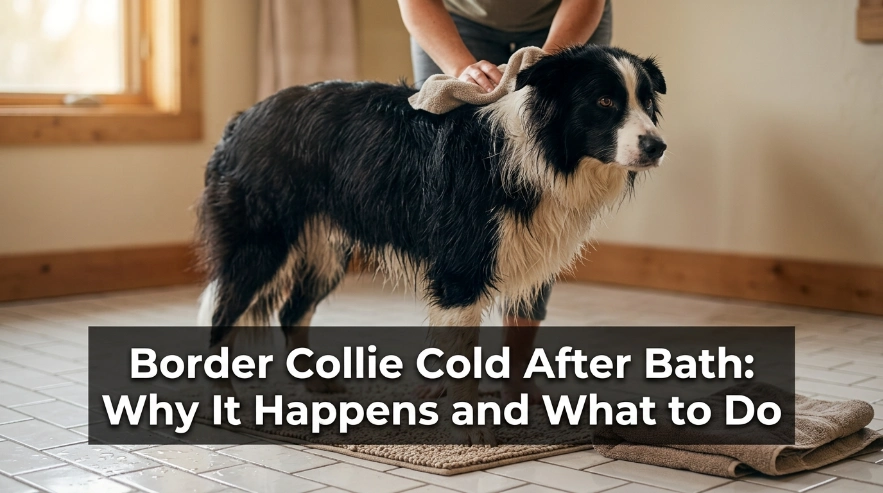
Your Border Collie may become cold because water sitting against the skin increases heat loss. Evaporation continues cooling the body until the coat becomes properly dry.
Definition: A Border Collie being “cold after a bath” usually means the dog is losing heat faster than normal because moisture remains on the skin or inside the coat.
The double coat can hold hidden moisture
Both rough-coated and smooth-coated Border Collies have dense, weather-resistant double coats. The American Kennel Club’s Border Collie information describes both coat types as double-coated.
The outer guard hairs help resist moisture in normal weather. Beneath them sits a softer, insulating undercoat.
That design works well when the coat is functioning normally. A full bath is different because water can penetrate deep enough to soak the insulating layer.
- Surface fur may dry first: The dog can appear almost dry while the undercoat remains damp.
- Evaporation removes heat: Water continues evaporating from deep fur after the bath ends.
- Moving air increases cooling: Fans, air-conditioning, wind, or an open window can make a damp dog chill faster.
- The belly can stay wet: Thinly coated areas may feel colder than the back and shoulders.
Shaking can also remove water
Not every shake means your dog is dangerously cold. Dogs naturally shake their bodies after getting wet to throw water from their coats.
A few vigorous full-body shakes followed by normal behavior are different from continuous fine trembling. Watch the whole dog, not just the movement.
Section Takeaway: A Border Collie’s double coat can trap moisture near the skin long after the top looks dry. Check the undercoat before assuming your dog is warm.
Is Shivering After a Bath Normal or Dangerous?
Brief shivering can occur when a wet Border Collie feels chilly. Shivering becomes more concerning when it continues after drying or appears with changes in movement, gum color, alertness, or responsiveness.
| What You Notice | More Likely Mild Chilling | More Concerning |
|---|---|---|
| Shivering | Decreases as the dog dries and warms | Persistent, severe, or accompanied by weakness |
| Energy | Alert and interested in normal activity | Lethargic, confused, or poorly responsive |
| Walking | Normal coordination | Stiff, weak, stumbling, or unwilling to move |
| Gums | Normal color for your dog | Unusually pale or abnormal color |
| Response to warming | Steady improvement | No improvement or worsening signs |
Body temperature gives you more information
A healthy dog’s normal body temperature is commonly around 100.5°F to 102.5°F. Hypothermia becomes a concern as body temperature falls substantially below normal, with veterinary sources commonly flagging temperatures around 98°F to 99°F.
If you already know how to take your dog’s rectal temperature safely, a reliable pet thermometer can provide useful information. Never wrestle with a frightened or resisting dog just to obtain a reading.
*Vet note: A low temperature combined with weakness, lethargy, pale gums, poor coordination, or reduced responsiveness deserves prompt veterinary attention.*
What Should I Do If My Border Collie Is Cold After a Bath?
Start by getting your dog completely dry and into a comfortable indoor environment. Warm the dog gradually rather than applying intense heat.
- Leave the wet area. Move your Border Collie into a dry, draft-free room.
- Blot instead of rubbing wildly. Press a thick towel into the coat so it pulls moisture from the undercoat.
- Change wet towels. A saturated towel stops absorbing much water and can keep moisture against the body.
- Check hidden damp areas. Feel the belly, chest, armpits, groin, neck, tail base, and behind the ears.
- Use gentle airflow if needed. A pet dryer or hair dryer on a cool or comfortably warm setting can help if your dog tolerates it.
- Offer a dry resting place. Let your dog settle on dry bedding while you monitor behavior.
- Recheck frequently. Shivering should improve as the dog becomes dry and comfortable.
Warm gradually, not aggressively
A cold dog does not need scorching air or a very hot heating device. Excessive heat can burn skin or cause overheating before you realize it.
I prefer towels first, followed by gentle drying and a warm room. With a thick Border Collie coat, patience works better than turning the dryer to maximum heat.
A dry blanket can help once most surface water is gone. Replace it if it becomes damp from the coat.
How Do You Dry a Border Collie’s Double Coat Properly?
Dry a Border Collie in layers rather than focusing only on the visible outer coat. Your goal is to remove moisture from both guard hairs and the undercoat.
Use more than one towel
For my own Border Collies, one towel is rarely enough after a full soak. The first towel handles dripping water, while the next towel reaches moisture left deeper in the coat.
- First pass: Squeeze and blot the back, sides, chest, and tail.
- Second pass: Work through the belly, legs, neck, and thicker ruff.
- Final check: Part the coat with your fingers and feel close to the skin.
Use a dryer carefully
If your Border Collie accepts a dryer, keep the airflow moving instead of concentrating it on one patch of skin. Use a cool or mildly warm setting rather than high heat.
Work in sections and gently separate the coat with your fingers. Stop if your dog becomes frightened, excessively stressed, or uncomfortable.
Brush once the coat is mostly dry
Gentle brushing can help separate the coat and expose remaining damp areas. The ASPCA dog-care resources also emphasize regular grooming as part of maintaining a dog’s coat and general health.
Do not aggressively brush tangled soaking-wet fur. Work carefully, especially around feathering behind the legs, tail, and ears.
Section Takeaway: Dry the coat from the skin outward. A fluffy-looking surface does not guarantee that the insulating undercoat is dry.
Can Bath Water or Room Temperature Make a Border Collie Cold?
Yes. Cold bath water, a chilly room, drafts, and air-conditioning can all increase heat loss while your Border Collie is wet.
Use comfortably lukewarm water
Bath water should feel comfortably lukewarm rather than hot or cold. Extremely cold water can make the experience unpleasant and may increase post-bath chilling.
Very hot water is not a good solution either. It can irritate skin and make bath time uncomfortable.
Think about the room after the bath
A bathroom may feel warm while the shower runs, then cool quickly afterward. Moving a wet dog directly into an air-conditioned hallway can create an abrupt temperature change.
- Close drafty windows: Avoid cold moving air until the coat is dry.
- Turn fans away: Strong airflow increases evaporation and can make a damp dog feel colder.
- Prepare towels first: Do not leave a dripping Border Collie standing while you search for supplies.
- Keep outdoor time short: Avoid sending a freshly bathed dog outside in cold, windy, or wet weather.
As of 2026, the practical advice remains simple: control both moisture and the environment. A comfortable room cannot compensate for a soaking undercoat.
Which Border Collies Get Cold More Easily After Baths?
Any Border Collie can become chilled while wet, but some dogs have less margin for heat loss. Age, health, body condition, coat condition, and environmental temperature all matter.
Puppies
Young puppies deserve extra care because they are smaller and can lose heat faster than healthy adults. Keep bath sessions efficient and have dry towels ready before you start.
Senior Border Collies
Older dogs may have medical conditions or reduced ability to handle temperature stress. They may also move less after a bath, so activity does not help them warm naturally.
Thin or recently clipped dogs
A Border Collie with less body fat or substantially reduced coat coverage has less protection against environmental cold. This can make careful drying more important.
Border Collies are double-coated dogs, so routine shaving is generally not necessary for temperature control. Preserve the coat unless a veterinarian recommends clipping for a medical reason.
Dogs with health problems
Illness, weakness, recent surgery, or other medical problems can change how well a dog regulates body temperature. Treat unusual post-bath coldness more cautiously in these dogs.
*Vet note: If your Border Collie has an ongoing medical condition, ask your veterinarian about safe bathing and drying routines for that individual dog.*
How Can I Prevent Chilling After the Next Bath?
The easiest way to prevent post-bath shivering is to prepare the drying process before getting your Border Collie wet. Do not treat drying as an afterthought.
Use this pre-bath checklist
- Choose the right time: Bathe when your dog can remain indoors until completely dry.
- Prepare several towels: Thick double coats can overwhelm one towel quickly.
- Remove loose hair: Brush beforehand so water and shampoo can move through the coat more evenly.
- Use lukewarm water: Avoid temperature extremes.
- Rinse thoroughly: Remove shampoo from both the outer coat and undercoat.
- Start drying immediately: Do not let your dog remain dripping wet.
- Check the skin level: Part the coat rather than judging dryness by appearance.
Do not let a wet dog “air-dry” in cold weather
Air-drying can work differently depending on temperature, coat density, humidity, and airflow. In a cold environment, leaving the undercoat wet for a long period increases unnecessary chilling.
This matters after winter baths, swimming, or rainy walks. Wet animals lose heat more readily in cold conditions, so dry your Border Collie before extended outdoor exposure.
Keep bath sessions calm
Shaking can also occur when a dog feels nervous or overstimulated. A nonslip surface, gentle handling, and a predictable routine make it easier to separate anxiety-related trembling from genuine cold.
I keep towels within arm’s reach before turning on the water. That small habit prevents the awkward minute when a wet Border Collie is standing around while I search the house.
Section Takeaway: Preparation prevents most post-bath chilling. Have a warm room, multiple towels, and your drying equipment ready before the coat gets wet.
When Should I Call a Vet About a Cold Border Collie?
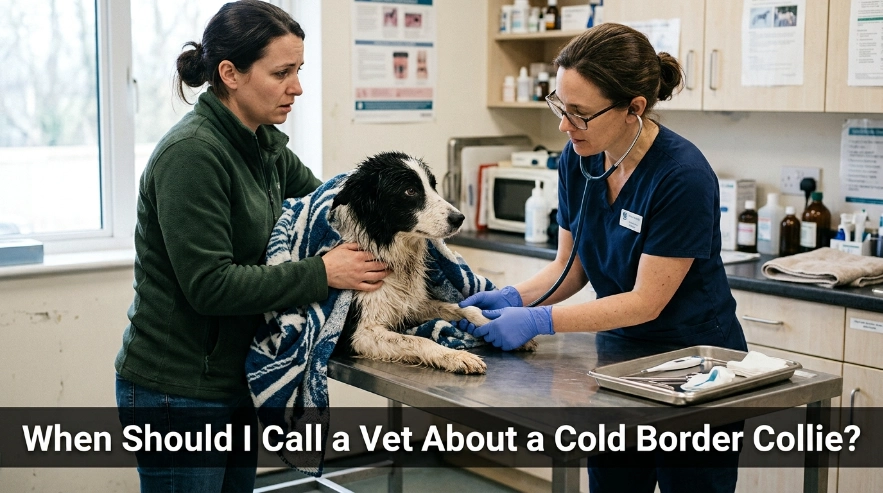
Call your veterinarian if your Border Collie does not improve with drying and gradual warming. Severe shivering or changes in alertness, movement, breathing, or gum color should be taken seriously.
Watch for possible hypothermia signs
- Persistent or severe shivering
- Marked lethargy or unusual sleepiness
- Weakness or difficulty standing
- Stiff or uncoordinated walking
- Pale gums
- Cool ears, legs, feet, or other body surfaces
- Confusion or reduced responsiveness
- Collapse
- Slow or abnormal breathing
Hypothermia can progress from shivering and lethargy to serious cardiovascular and neurological problems. Veterinary guidance on cold-weather safety for dogs also warns that wet animals face greater cold-related risk.
Do not wait for shivering to become extreme
One dangerous misconception is that a dog must keep shivering if it is cold. In severe hypothermia, shivering can eventually decrease or stop as the body loses the ability to compensate.
If your dog is becoming less responsive while remaining cold, that is not improvement. Seek emergency veterinary care.
What if the temperature is below normal?
A temperature around 98°F to 99°F or lower is concerning for hypothermia, especially with compatible symptoms. Contact a veterinarian promptly rather than trying prolonged home treatment.
Transport the dog dry and protected from further heat loss. Follow the veterinary clinic’s instructions about warming during travel.
*Vet note: Hypothermia can become life-threatening. Weakness, collapse, abnormal breathing, confusion, severe lethargy, or a substantially low body temperature require urgent professional care.*
Section Takeaway: Improvement after drying is reassuring; worsening behavior is not. When coldness comes with systemic symptoms, treat it as a medical problem rather than a grooming problem.
Frequently Asked Questions
Why does my Border Collie shake right after a bath?
A Border Collie may shake to throw water from the coat, because the dog feels chilly, or because bath time caused stress. Full-body shaking that stops quickly can be normal, while persistent trembling with weakness, lethargy, or pale gums needs closer attention.
How long should a Border Collie shiver after a bath?
There is no universal safe number of minutes because coat wetness, room temperature, age, and health differ between dogs. Shivering should lessen as your Border Collie becomes thoroughly dry and warm; continued or worsening shivering warrants a veterinary call.
Can a Border Collie get hypothermia from a bath?
It is possible if the dog becomes sufficiently cold, especially when the coat stays wet in a cold or drafty environment. Hypothermia is more serious than simply feeling chilly and can cause lethargy, stiffness, weakness, pale gums, poor coordination, and collapse.
Should I use a hair dryer on my Border Collie?
You can use one if your dog tolerates it, but choose cool or comfortably warm airflow and keep the dryer moving. Avoid high heat against the skin, and stop if the noise or airflow causes significant fear or distress.
Why does my Border Collie still feel damp hours after a bath?
The dense undercoat can retain moisture after the outer guard hairs appear dry. Part the coat and feel close to the skin around the chest, neck, belly, rear legs, and tail base instead of judging dryness from the surface.
Should I put a blanket on my Border Collie after a bath?
A clean, dry blanket can help a mildly chilled dog stay comfortable after most water has been towel-dried. Do not wrap a soaking coat and leave it covered, because the blanket can become wet and trap moisture against the body.
Can I let my Border Collie outside immediately after a bath?
Wait until the coat is thoroughly dry when outdoor conditions are cold, windy, or wet. A damp double coat combined with cold moving air can increase heat loss and make your Border Collie uncomfortable much faster.
Final takeaway: A Border Collie cold after a bath usually needs thorough drying, a warm draft-free room, and close observation. If shivering persists or your dog develops weakness, lethargy, stiffness, pale gums, confusion, abnormal breathing, or poor responsiveness, contact a veterinarian promptly.