
Border Collie Not Drinking Water: What’s Normal, What’s Not, and When to Call the Vet

If your Border Collie is suddenly ignoring the water bowl, the first question is not “How do I make this stop?” It’s “Is this a temporary dip, or a sign something is wrong?”
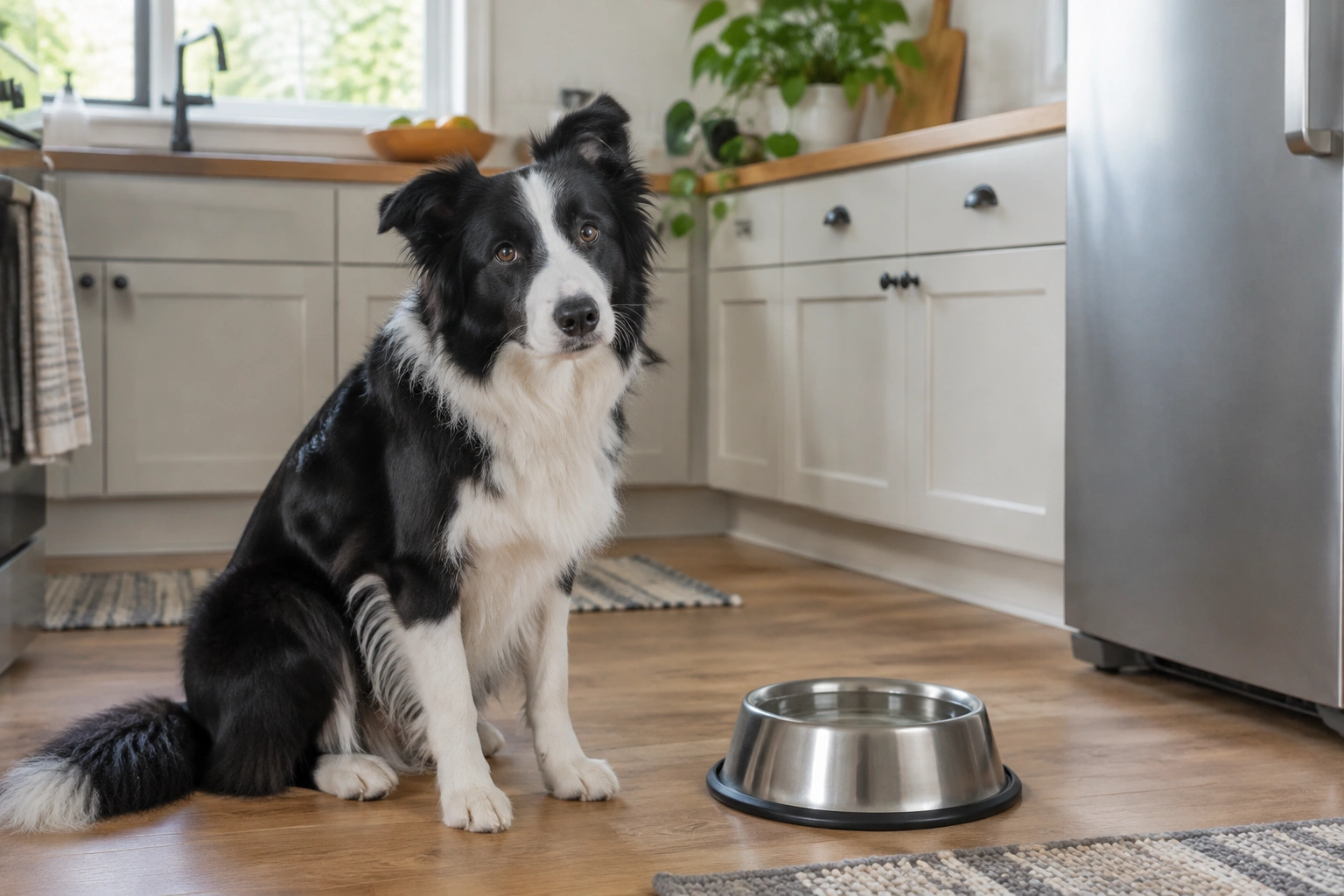
Border Collies are active dogs, so changes in drinking can be easy to miss. A dog that still seems bright, is eating normally, and just drank less after a cool, quiet day may simply need monitoring. A dog that won’t drink and also looks tired, painful, nauseated, or overheated needs a much faster response.
This guide will help you separate normal variation from dehydration risk, then choose the next step with less guesswork.
What not to do with a Border Collie can also help you avoid common mistakes that make problems harder to spot.
Why a Border Collie May Drink Less Water
A Border Collie may drink less for harmless reasons, but reduced drinking can also be one of the first signs of illness. The job is to look at the whole picture, not the bowl alone.
Some common non-emergency reasons include:
- Cooler weather or less activity. A dog that had a low-key day may simply not need as much water.
- Diet changes. Dogs eating wet food often drink less from the bowl because they’re getting more moisture from meals.
- Stress or routine changes. Travel, boarding, visitors, moving house, or a new feeding setup can all suppress normal drinking.
- A bowl issue. Dirty water, a bowl that moves, a bowl in an awkward spot, or a location the dog dislikes can reduce intake.
Medical reasons matter more, especially if the change is abrupt. A Border Collie may avoid water because of:
- Mouth pain or a foreign object
- Dental disease
- Nausea or gastrointestinal illness
- Fever or systemic infection
- Kidney disease or other internal illness
- Pain that makes the dog reluctant to move or lower its head
VEG ER for Pets notes that something stuck in the mouth, such as a splinter, plastic, or rocks, can stop a dog from drinking, and that damaged teeth can make cold water painful. That matters because a dog may approach the bowl but back away, which owners sometimes mistake for pickiness.
What It Means If Your Border Collie Is Eating but Not Drinking
If your Border Collie is eating normally but not drinking, that can still be concerning. Food intake does not guarantee adequate hydration, especially if the dog is eating dry kibble or has been active, warm, or mildly unwell.
Eating but not drinking can happen with:
- Mild dehydration
- Mouth pain or dental problems
- Nausea
- A preference for moisture from food instead of the bowl
- Early illness before other symptoms are obvious
This is important because dehydration can become dangerous before a dog collapses or looks severely ill. A dog may still seem fairly normal while fluid balance is slipping, so “still eating” should not be used as the only reassurance.
If your dog is eating but refusing water, watch for other clues such as reduced urination, dry gums, lethargy, drooling, bad breath, or discomfort around the mouth. If those show up, the issue is more than a simple preference.
How Much Water a Border Collie Should Drink
A practical baseline is about 1 ounce of water per pound of body weight per day. PetMD uses that general guideline, while also noting that water needs vary with health, diet, and activity level.
That means a 30-pound Border Collie may need roughly 30 ounces a day, while a 45-pound dog may need around 45 ounces. This is only a rough estimate, not a diagnostic threshold.
Several things can push the number up or down:
- Dry kibble vs. wet food: Dogs on dry food usually need more water from the bowl. Dogs on wet food may drink less because they’re already getting moisture in meals.
- Exercise: A Border Collie that has been running, herding, hiking, or playing hard will usually need more water than a sedentary dog.
- Heat: Hot weather increases fluid loss through panting.
- Health status: Fever, vomiting, diarrhea, kidney disease, and some endocrine conditions can change thirst.
That’s why the question is not just “Did my dog drink?” but “Did my dog drink enough for its body, diet, and day?”
Normal vs Concerning: A Quick Decision Table
| What you’re seeing | More likely | What to do |
|---|---|---|
| Drinking a bit less, but acting normal, eating well, urinating normally, and recently ate wet food | Possibly normal variation | Monitor for 12–24 hours and track intake |
| Drinking less after cool weather, lower exercise, or a routine change | Possibly temporary | Improve water access and watch closely |
| Eating normally but not drinking, with no other symptoms yet | Could still be early illness, mouth pain, or mild dehydration | Monitor closely at home for a short period; if it continues, call your vet the same day |
| Not drinking and also vomiting, having diarrhea, or seeming lethargic | Medical concern | Contact a vet the same day |
| Not drinking after a hot hike, long play session, or heavy panting | Dehydration risk | Offer water immediately and monitor closely; seek care if symptoms persist |
| Not drinking for about 24 hours | Concerning | Call your veterinarian the same day |
| Not drinking plus collapse, weakness, obvious pain, or disorientation | Emergency | Seek urgent veterinary care |
The key trade-off is simple: a brief dip in drinking can be watched, but once other symptoms appear, waiting becomes the risky choice.
Signs of Dehydration to Check at Home
If your Border Collie is not drinking, check for dehydration signs before deciding to wait.
Useful signs include:
- Dry or tacky gums
- Thick, stringy saliva
- Sunken-looking eyes
- Low energy or weakness
- Loss of appetite
- Panting more than expected
- Reduced urination
- Skin that doesn’t bounce back quickly
Two safe checks can help:
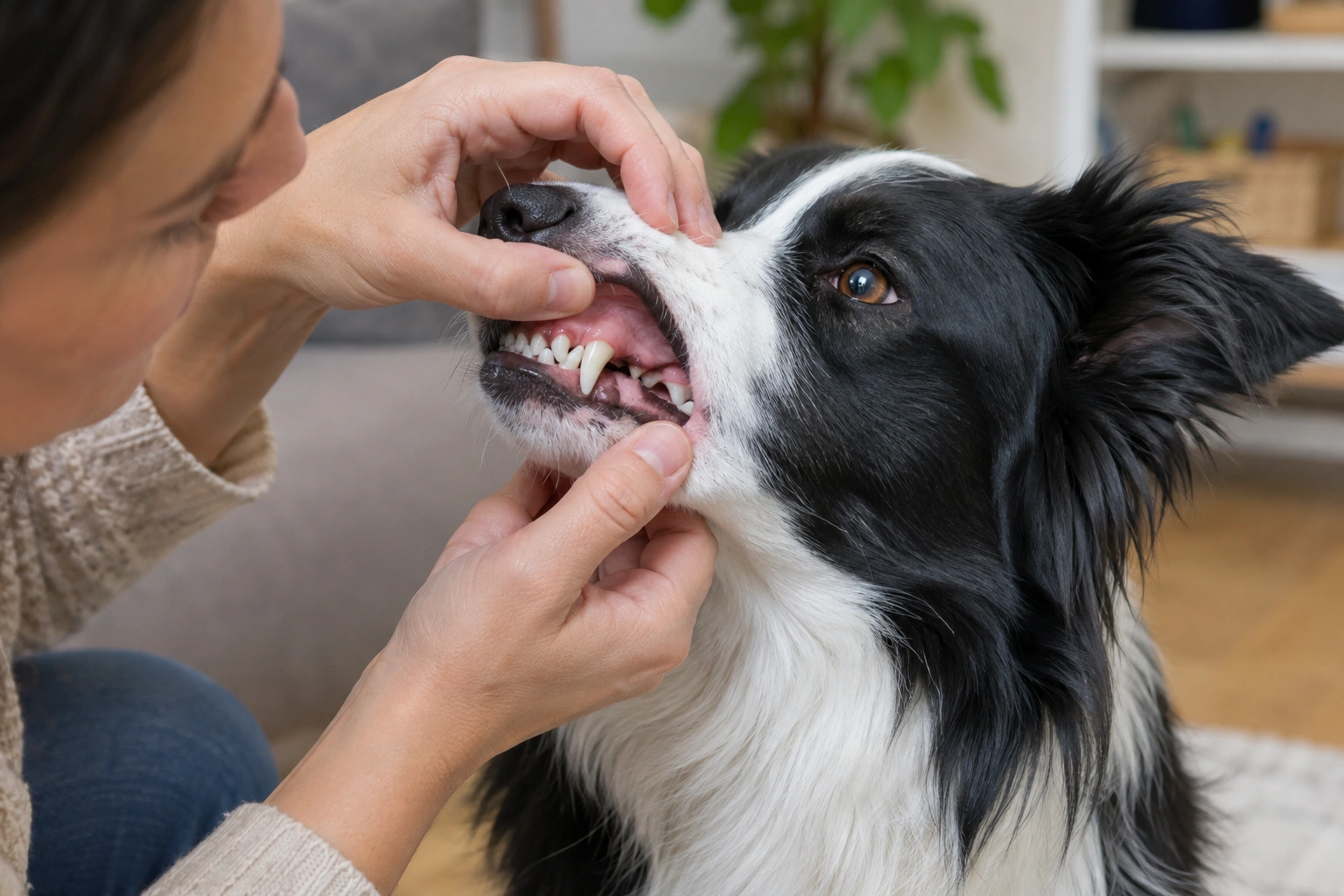
Gum moisture
Lift the lip and feel the gums. Healthy gums should feel moist, not sticky or dry.
Skin tent test
Gently lift a small patch of skin over the shoulders and release it. In a well-hydrated dog, it should settle back quickly. If it stays tented, dehydration is more likely. This test is not perfect, but it’s useful when paired with other signs.
If the dog seems normal otherwise and only one mild sign is present, watch closely. If several signs show up together, don’t treat it as a minor issue.
Common Causes of Reduced Drinking in Border Collies
Border Collies are often active, alert dogs, so changes in drinking can be tied to behavior, environment, or illness. The challenge is distinguishing a temporary habit change from a medical problem.
Diet-related causes
A dog eating wet food may not visit the bowl as often because it’s already getting water through meals. Mills Animal Hospital notes that some dogs get a good portion of hydration from food. That means “not drinking much” is not always the same as “not hydrating enough.”
This is where owners can get fooled: a dog on canned food may look like it’s drinking less, but still be adequately hydrated. The reverse is also true—a kibble-fed dog that suddenly drinks less deserves more attention.
Stress and routine changes
Travel, boarding, a new house, loud guests, or a changed feeding routine can make some dogs drink less. Some dogs are also picky about location or bowl type. A fresh water bowl, a clean bowl, and a quieter location can help some dogs re-engage with drinking.
Exercise and weather
Border Collies are built for activity, so a hot or intense day can raise fluid needs quickly. PetMD notes that a dog exercising a lot on a hot day will likely want more water than the standard amount. If your dog is panting heavily but not drinking, dehydration risk rises fast.
Mouth pain and dental disease
A dog with a sore tooth, gum inflammation, or a mouth injury may want water but avoid the pain of drinking. This is especially important if the dog is eating but hesitating at the bowl, pawing at the mouth, or dropping food.
Nausea or gastrointestinal illness
Dogs that feel nauseated often reduce drinking before other signs become obvious. Vomiting, drooling, lip-licking, and turning away from food or water are clues that nausea may be part of the picture.
Kidney disease or other internal illness
Kidney disease, fever, and other systemic illnesses can alter thirst patterns. Some dogs drink more, not less, with these conditions, but reduced drinking can still happen—especially if the dog feels unwell overall.
What to Do at Home to Encourage Drinking Safely
If your Border Collie is otherwise bright, not vomiting, and not in obvious distress, use a short home trial to encourage drinking. Keep it simple and time-limited.
Step-by-step approach
- Refresh the water and wash the bowl. Stale water or residue can put a dog off.
- Offer water in a second location. Some dogs prefer a quieter or more familiar spot.
- Use a different bowl. Material, depth, and stability can matter more than owners expect.
- Add water to food. This can raise intake without forcing the dog to drink more from the bowl.
- Offer wet food temporarily if your vet says it’s appropriate. This can help if the dog is otherwise eating and you suspect mild under-hydration.
- Let the dog choose the pace. Some dogs drink better when left alone; others prefer a nearby person.
Is broth safe?
Plain low-sodium broth can be acceptable in small amounts if it is free of onion and garlic and does not contain other ingredients that are unsafe for dogs. Avoid broths with:
- Onion
- Garlic
- Excess salt
- Spices or seasoning blends
- Fatty or rich ingredients
If you use broth, keep it simple and use it only as a short-term hydration aid, not a replacement for water.
What not to do
- Don’t force water into the mouth if the dog is weak, nauseated, or resisting.
- Don’t use salty broths or sugary drinks.
- Don’t give broth that contains onion or garlic.
- Don’t assume “he ate dinner, so he’s fine.” Eating can hide low fluid intake, especially if the food has moisture in it.
A helpful rule: if these changes don’t improve drinking within a short window, stop troubleshooting and move to veterinary advice.
How Long Can a Dog Go Without Drinking?
A dog that goes about 24 hours without drinking should be assessed by a veterinarian, especially if there are other symptoms. That threshold becomes more urgent if the dog is hot, has been exercising hard, or is losing fluids through vomiting or diarrhea.
In practical terms, a healthy adult dog may tolerate a short dip in drinking better than a puppy, senior dog, or dog with illness. But the safe approach is not to “wait it out” if the dog’s overall condition is changing.
Use this decision rule:
- Under 24 hours, otherwise normal, no red flags: monitor closely
- Eating but not drinking, with no other symptoms yet: try a short home hydration trial, but call the vet the same day if it continues or worsens
- Near or over 24 hours with no clear reason: call the vet the same day
- Any time with vomiting, diarrhea, lethargy, pain, or collapse: same-day or emergency care
When to Ask Your Veterinarian
Use this simple path:
Monitor at home for a short period if:
- Your Border Collie is acting normal
- Eating is normal
- Urination seems normal
- There are no vomiting, diarrhea, or pain signs
- The drinking dip seems tied to a clear, mild reason like cooler weather or a routine change
Call your veterinarian the same day if:
- Your Border Collie is eating but not drinking
- Drinking has dropped for most of the day with no clear reason
- The dog is still eating but has dry gums, less urination, or low energy
- There is vomiting, diarrhea, mouth sensitivity, or bad breath
- The dog just had heavy exercise or heat exposure and still is not drinking normally
Seek emergency care now if:
- Collapse
- Severe weakness
- Disorientation
- Repeated vomiting
- Bloated abdomen
- Pale or very tacky gums
- Signs of heat stress
- Obvious mouth injury or something stuck in the mouth
If the hesitation continues despite making water appealing, scheduling a veterinary checkup is the next step. Low drinking is often a symptom, not the problem itself.
What a Veterinarian May Check
A vet visit is useful because it can separate simple dehydration from the reason behind it.
Depending on the exam, your veterinarian may:
- Check the mouth for foreign objects, tooth pain, gum disease, or injury
- Assess hydration status and gum moisture
- Ask about diet, activity, travel, heat exposure, vomiting, and stool changes
- Run bloodwork to look for infection, kidney issues, or other internal causes
- Check urine if kidney or urinary problems are suspected
That workup matters because home fixes can help a healthy dog drink, but they won’t solve mouth pain, kidney disease, or gastrointestinal illness.
A Simple 24-Hour Monitoring Method
If your Border Collie seems mostly normal, track drinking for one day instead of guessing.
Write down:
- When fresh water was offered
- Whether the dog drank
- Any meals eaten, especially wet food
- Urination frequency
- Exercise, heat exposure, or travel
- Any vomiting, diarrhea, drooling, or lethargy
This log helps you answer a better question than “Did my dog drink enough?” It tells you whether the pattern is improving, stable, or getting worse.
For a dog that is active, eating dry food, and spending time outdoors, a small change in intake may be explainable. For a dog that is quiet, nauseated, or painful, the log will usually show a clear reason to call the vet sooner.
FAQ
Is it normal for a Border Collie to drink less some days?
Yes, sometimes. Cooler weather, less exercise, wet food, stress, or a changed routine can all reduce drinking for a short time. The key is whether your dog is still acting normal, urinating normally, and improving within a short monitoring window.
Can I give my Border Collie broth to help with hydration?
Yes, in small amounts, plain low-sodium broth can be acceptable if it does not contain onion, garlic, heavy seasoning, or excess salt. Broths with onion or garlic are unsafe for dogs.
My Border Collie is eating but not drinking. Should I wait?
Not for long. Eating but not drinking can still be an early sign of dehydration, mouth pain, nausea, or another illness. If it continues, call your veterinarian the same day.
What is the most important dehydration sign to watch for?
Dry or tacky gums, reduced urination, lethargy, and weakness are all important. Dehydration can become dangerous before a dog collapses, so don’t wait for severe signs before acting.
Final Takeaway
A Border Collie not drinking water is sometimes a short-lived issue tied to diet, stress, weather, or routine. But it can also be the first visible sign of pain, dehydration, or illness. The safest approach is to compare drinking against the whole picture: appetite, energy, urination, heat exposure, and any vomiting or diarrhea.
If your dog is otherwise normal, you can try simple hydration fixes and watch closely for a short period. If the refusal lasts about 24 hours, if your dog is eating but not drinking, or if anything else looks wrong, get veterinary advice without delay.
