
Border Collie Sensitive Stomach Food: What to Feed and How to Choose It

Border Collies are active, intelligent dogs, but a sensitive stomach can make feeding them feel oddly complicated. One day they are fine; the next, you are dealing with loose stool, vomiting, gas, or a dog who turns away from a meal that used to work. The goal is not to chase every trendy ingredient. It is to narrow down what your dog actually tolerates, then build a diet that is easy to digest, nutritionally complete, and practical to feed every day.
A useful place to begin is this: “sensitive stomach” is not a diagnosis. It is a description of symptoms. A dog may react to a sudden food change, a specific ingredient, a rich treat, stress, parasites, or a medical problem that has nothing to do with diet. That is why the best food choice depends on the pattern you are seeing, not just the label on the bag.
For many Border Collies, the safest first move is a simpler, highly digestible diet with a single main protein and a moderate fat level. That approach gives the gut less work to do and makes it easier to spot whether one ingredient is causing trouble.
Quick Decision Guide: Which Food Type Should You Try First?
If you are not sure where to start, use this simple order of options:
- Choose a sensitive-stomach formula first if your dog has mild, recurring digestive upset but no clear history of reacting to a specific ingredient.
- Choose a limited-ingredient diet if you suspect food is the issue and you want fewer ingredients to troubleshoot.
- Choose a novel-protein diet if your Border Collie has already eaten and tolerated common proteins like chicken or beef for a long time, but still has repeated symptoms.
- Choose a bland temporary meal if the stomach is actively upset right now and you need a short-term reset while symptoms settle.
- Choose a veterinary elimination diet if symptoms are frequent, severe, or keep returning, or if your veterinarian suspects a true food allergy and wants a controlled trial.
A simple rule: the more serious or repetitive the symptoms, the more you should move from “trial-and-error” feeding toward a structured veterinary plan.
Food Allergy vs Food Intolerance vs General Stomach Sensitivity
These terms are often used interchangeably, but they are not the same thing.
Food allergy usually involves the immune system. Signs can include chronic itching, ear problems, skin flare-ups, vomiting, diarrhea, or a mix of skin and gut symptoms. A dog may react even to a food it has eaten for a long time.
Food intolerance is not an immune reaction. It is more of a digestive mismatch. Common clues include gas, soft stool, diarrhea, or vomiting after a specific ingredient or rich meal. The dog may tolerate small amounts but struggle with larger portions or certain recipes.
General stomach sensitivity is broader. It may mean the dog does poorly with fat, sudden changes, too many ingredients, stress, or certain processing styles, even if there is no true allergy.
Why this matters: if your veterinarian suspects a food allergy, they may recommend an elimination diet. That is a controlled way to isolate the trigger by feeding one carefully selected diet and avoiding all other foods and treats for a set period. Randomly swapping between “sensitive” foods usually does not give a clear answer.
Signs of a Sensitive Stomach in Border Collies
Digestive sensitivity usually shows up as a pattern, not a one-off bad day. Common signs include soft stool, diarrhea, vomiting, excess gas, stomach gurgling, frequent licking of lips, and occasional refusal to eat. Some dogs also seem uncomfortable after meals, pace, or ask to go outside soon after eating.
The detail that matters is timing. If symptoms show up after a new food, a new treat, or a sudden switch in protein, that points toward diet-related upset. If the problem comes and goes with no obvious food change, the cause may be less straightforward.
Border Collies can also be hard to read because they often keep going even when they feel off. A dog that still wants to run, play, and train may still have digestive discomfort. That is why stool quality, appetite, and vomiting frequency matter more than energy level alone.
If your dog has repeated episodes, keep a simple log for a week or two: what they ate, when symptoms happened, and whether anything changed that day. That record is often more useful than guessing.
Common Causes of Digestive Upset
The most common feeding mistake is changing food too quickly. Sudden food changes can trigger loose stools, vomiting, or gut discomfort in sensitive dogs, and a slower transition is usually safer. In practice, some dogs need more than a week to adjust.
Other common triggers include:
- Rich treats or table scraps
- High-fat foods
- Too many new ingredients at once
- Dairy or fatty meat trimmings
- Repeated switching between proteins
- Stress around travel, boarding, or routine changes
- Underlying issues such as parasites or inflammatory disease
A sensitive stomach is not always a food problem. That matters because owners sometimes keep swapping foods when the real issue is medical. If symptoms are frequent, severe, or worsening, food changes alone are not the answer.

One practical rule: if the dog reacts every time you change foods, the transition process may be the problem. If the dog reacts even on a stable diet, look beyond the bag.
Practical Label-Reading Checklist
When you compare foods, do not stop at the front-of-bag claims. Check the ingredient panel and guaranteed analysis for these items:
- Multiple protein sources: a short, clearly named protein list is easier to troubleshoot than a recipe with several meats
- Rich fats or greasy add-ins: high fat can be hard on sensitive stomachs
- Dairy ingredients: milk, cheese, whey, or similar ingredients can be triggers for some dogs
- Unnecessary add-ins: lots of fruits, vegetables, herbs, or trendy extras can make the diet harder to evaluate
- Highly processed protein meals or vague animal ingredients: clearer sourcing is easier to monitor
- Heavy fiber blends: helpful for some dogs, but too much can worsen stool quality in others
- Treat-like extras: flavor coatings, sauces, and calorie-dense toppers can undo an otherwise simple diet
If your goal is to identify triggers, simpler is usually better.
Best Digestible Protein Sources
When choosing a border collie sensitive stomach food, the protein source often matters more than the marketing language on the front of the package. A good starting point is a formula with one clearly named protein and a short ingredient list.
The best first protein to try depends on what your dog has already eaten and tolerated.
- If your Border Collie has done well on chicken in the past, chicken may still be a reasonable first option in a simpler formula.
- If the dog has eaten chicken for a long time and still has recurring symptoms, it may be worth moving away from chicken rather than assuming it is harmless.
- If your dog has already had chicken and beef in multiple foods, a different single protein such as turkey, fish, lamb, duck, rabbit, or venison may be a better next step.
- If your dog has only eaten one protein for years, a novel protein can be a useful way to reduce repeated exposure.
There is no universal “best” protein. The goal is to choose the one most likely to be tolerated based on your dog’s history.
A single-protein diet can help because it reduces the number of variables. If symptoms improve, you have a cleaner signal. If they do not, you can move to the next likely trigger without wondering whether five different proteins were involved.
Border Collies are active dogs, so the protein should also be easy to digest rather than just “high protein” on paper. The point is not to maximize protein percentage. It is to choose a formula your dog can actually absorb without upsetting the gut.
For a dog with mild, recurring stomach sensitivity, look for:
- One named animal protein
- Moderate fat, not rich or greasy
- A familiar carbohydrate source if your dog tolerates grains
- No long list of extra add-ins
- Clear AAFCO nutritional adequacy statement
If you want a broader feeding baseline for the breed, see our guide to the best food for a Border Collie.
Limited-Ingredient and Novel-Protein Diets
Limited-ingredient diets can be useful when you are trying to identify a trigger. Fewer ingredients mean fewer possible culprits. That is especially helpful if your dog has reacted to multiple foods or if you suspect an intolerance rather than a one-time upset stomach.
Novel-protein diets use proteins the dog has not eaten often before, such as duck, venison, rabbit, or fish. The idea is simple: if the immune system has not been exposed to the ingredient much, it may be less likely to react. That said, “novel” does not automatically mean gentle, and some dogs still react to unfamiliar proteins.
Here is the practical decision point:
- Sensitive-stomach formula: best for mild ongoing digestive upset when you do not yet have a strong reason to suspect a specific trigger
- Limited-ingredient diet: best when you want to narrow the ingredient list and identify a likely food issue
- Novel-protein diet: best when common proteins seem suspicious or have already been used repeatedly without success
- Veterinary elimination diet: best when symptoms are persistent, complex, or strongly suggest a true food allergy
The best use case for a limited-ingredient or novel-protein diet is a dog with repeat reactions to common ingredients. If your Border Collie has already failed several chicken- or beef-based foods, a simplified novel-protein formula is often more logical than switching to another standard recipe with a long ingredient list.
If you try this route, change only one major variable at a time. Switching protein, fat level, fiber source, and format all at once makes it harder to know what helped.
Grain-Inclusive vs Grain-Free Considerations
This is where a lot of owners get pushed toward the wrong decision. Grain-free is not automatically better for a sensitive stomach. Some dogs do fine on grain-free diets, but many do just as well or better on grain-inclusive formulas with rice, oats, or barley.
For Border Collies, a grain-inclusive diet can be a smart first option if the dog tolerates grains. Rice and oats are often used in gentler formulas because they are easy to digest for many dogs. The AKC also notes that cooked chicken and boiled rice can be a short-term bland meal for stomach upset, which tells you something important: grains are not the enemy of a sensitive gut.
Grain-free diets may make sense if your dog clearly reacts to specific grains or if the formula is otherwise better suited to the dog’s digestion. But grain-free alone does not solve food sensitivity, and it should not be treated as a cure-all.
A practical decision rule:
- Choose grain-inclusive first if your dog has no history of reacting to grains.
- Consider grain-free only if grains seem to be a problem or the formula is otherwise a better match.
- Do not assume grain-free means more digestible.
If you are comparing labels, focus on the full recipe, not just the absence of grain.
Dry Food, Wet Food, and Fresh Food Options
Kibble is convenient, usually more affordable, and easy to portion consistently. Wet food can be more palatable and may help dogs that stop eating when their stomach feels off. Fresh or gently cooked diets can be appealing for owners who want fewer heavily processed ingredients.
For a Border Collie with recurring GI issues, the best format is usually the one that matches both digestion and daily routine. Use these criteria:
- Choose dry food if your dog does well with a simple, moderate-fat recipe and you need consistency and easy portion control.
- Choose wet food if appetite is low, chewing is an issue, or you need a more tempting option during a mild flare-up.
- Choose fresh or gently cooked food if your dog seems to do better with simpler ingredient lists and you can verify the diet is complete and balanced.
- Avoid rich or mixed-format feeding if you are still trying to identify triggers, because toppers and rotation can blur the picture.
Each format has trade-offs.
Dry food
– Pros: easy storage, consistent calories, usually cheaper
– Cons: some formulas are harder for sensitive dogs to tolerate, especially if they are rich or heavily processed
Wet food
– Pros: often more tempting for picky eaters, useful during short-term appetite dips
– Cons: more expensive, less convenient, can be richer than expected
Fresh or gently cooked food
– Pros: often uses simple ingredients and lower-temperature cooking; some dogs do well on it
– Cons: cost, storage, and the need to confirm it is complete and balanced
The key question is not “which format is best?” It is “which format can I feed consistently without causing flare-ups?” Consistency usually beats novelty.
How to Switch Foods Without Upsetting the Stomach
For a Border Collie with a sensitive stomach, a slow transition is usually the safest approach. A 7–10 day change is often presented as the minimum, and sensitive dogs may need longer.
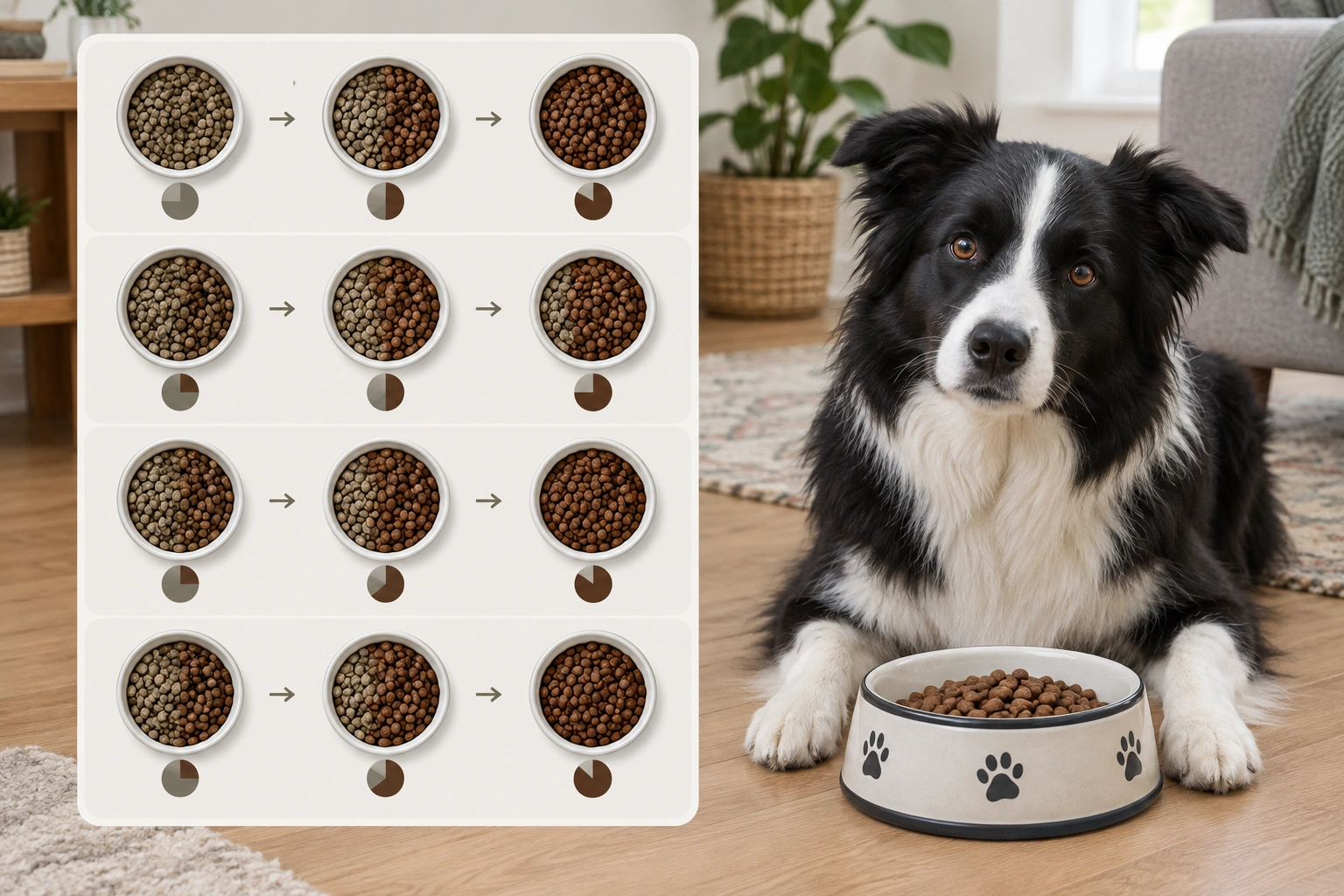
A practical schedule looks like this:
- Days 1–3: 75% old food, 25% new food
- Days 4–6: 50% old food, 50% new food
- Days 7–9: 25% old food, 75% new food
- Day 10+: 100% new food if stool stays normal
If your dog has a history of reacting badly to food changes, stretch each step longer. The goal is not speed. The goal is a clean transition with as little digestive drama as possible.
One more point: keep treats, chews, and table scraps steady during the switch. Owners often blame the new kibble when the real problem is the jerky, cheese, or rich training treats added at the same time.
For a dog already dealing with diarrhea or vomiting, bland short-term feeding may help settle the stomach. The AKC notes that cooked chicken and boiled rice, without seasoning or fat, can calm an upset stomach or diarrhea. That is a short-term tool, not a forever diet.
Probiotics, Fiber, and Gut Support
Some dogs with sensitive stomachs benefit from extra gut support, but these additions should be chosen carefully. Probiotics may help some dogs with stool quality or recovery after a food change, though they are not a fix for every cause of digestive upset.
Fiber can also help, especially when stool is soft. Pumpkin is often used in small amounts because it adds soluble fiber, which may help firm stool in some dogs. Too much fiber, though, can make stools bulky or reduce calorie density in an active Border Collie.
Prebiotic fibers are another useful feature in some formulas because they feed beneficial gut bacteria. That is one reason some sensitive-stomach diets include ingredients like beet pulp, chicory root, or other fiber sources.
Use these additions as support, not as a substitute for choosing the right core diet. If a food keeps causing vomiting or repeated diarrhea, probiotics will not override the problem.
A good rule of thumb:
- Probiotics may help with mild stool changes, food transitions, or short-term digestive stress
- Fiber may help when stools are soft but your dog otherwise seems stable
- Use caution or ask your veterinarian first if your dog is vomiting repeatedly, has severe diarrhea, or seems painful, because those signs may point to a medical issue rather than a simple gut imbalance
When to Ask Your Veterinarian
If your Border Collie has ongoing digestive upset, do not assume the answer is just another food switch. A vet visit makes sense when:
- Vomiting or diarrhea lasts more than a day or two
- There is blood in stool or vomit
- Your dog seems weak, painful, or dehydrated
- Appetite drops sharply
- Weight loss is happening
- Symptoms keep returning despite a stable diet
- Your dog is a puppy, senior, or has another medical condition
This is where the “sensitive stomach” label can be misleading. A food intolerance, food allergy, parasite, infection, or inflammatory GI disease can look similar at home. If symptoms are frequent, your veterinarian may recommend a structured elimination diet rather than random food trials.
A true elimination diet is more controlled than simply buying a “limited ingredient” bag. It usually means feeding one carefully selected diet and avoiding all other foods long enough to see whether symptoms improve. If you suspect a food allergy, that is the kind of plan that gives you real answers.
When in doubt, choose the boring option that is nutritionally complete and easy to keep consistent. That is usually better than a flashy formula that sounds healthy but keeps upsetting your dog.
FAQ
Is chicken and rice good for a Border Collie with an upset stomach?
Yes, as a short-term bland meal, cooked chicken and boiled rice can help settle some dogs. Keep it plain, with no seasoning, butter, or fat. It is not meant to replace a complete diet long term.
Should I feed grain-free food to a Border Collie with a sensitive stomach?
Not automatically. Some dogs do fine on grain-free food, but many do just as well or better on grain-inclusive recipes. Choose based on what your dog tolerates, not on the label trend.
What protein should I try first?
Start with the protein your dog has already tolerated well if you are looking for the simplest option. If your dog has had repeated problems on that protein, try a different single protein rather than adding more ingredients.
What protein is easiest for Border Collies to digest?
There is no single best protein for every Border Collie. Many dogs do well with simple, clearly named proteins such as chicken, turkey, or fish, but the right choice depends on what your dog has already tolerated or reacted to.
Can I use homemade food for sensitive stomachs?
Sometimes, yes, but it must be nutritionally complete if it is a regular diet. The AKC notes that homemade diets can work for dogs with sensitive stomachs if they meet all nutritional needs. That usually means using a vet-formulated recipe.
How long should I try a new food before deciding it works?
Give a careful transition at least 7–10 days, and longer if your dog is very sensitive. Judge the food by stool quality, vomiting, gas, appetite, and comfort over time, not by one good or bad meal.
What if my Border Collie keeps having diarrhea?
Repeated diarrhea deserves a veterinary check. Food may be part of the problem, but parasites, infection, inflammation, and other medical issues can look similar at home.
Should I avoid chicken, beef, dairy, or wheat?
Not every dog reacts to these ingredients, but they are common suspects in many dogs with food sensitivity. If your Border Collie keeps flaring on standard diets, those ingredients are reasonable places to evaluate first.
Can probiotics help?
They can help some dogs, especially during food transitions or mild stool issues. They are supportive, not curative, and they work best when the base diet is already a good fit.
Where can I read more about general Border Collie feeding?
If you want the bigger picture on daily nutrition, see our guide to Border Collie food amounts by weight for practical portion planning.
