
Can Border Collies Eat Blueberries? A Practical Feeding Guide for Owners

Yes — Border Collies can eat blueberries, and plain blueberries are generally safe in moderation. They can be a useful little treat, especially for active dogs that enjoy training rewards. The catch is the same one that applies to most dog treats: the dose matters, the form matters, and your dog’s health history matters.
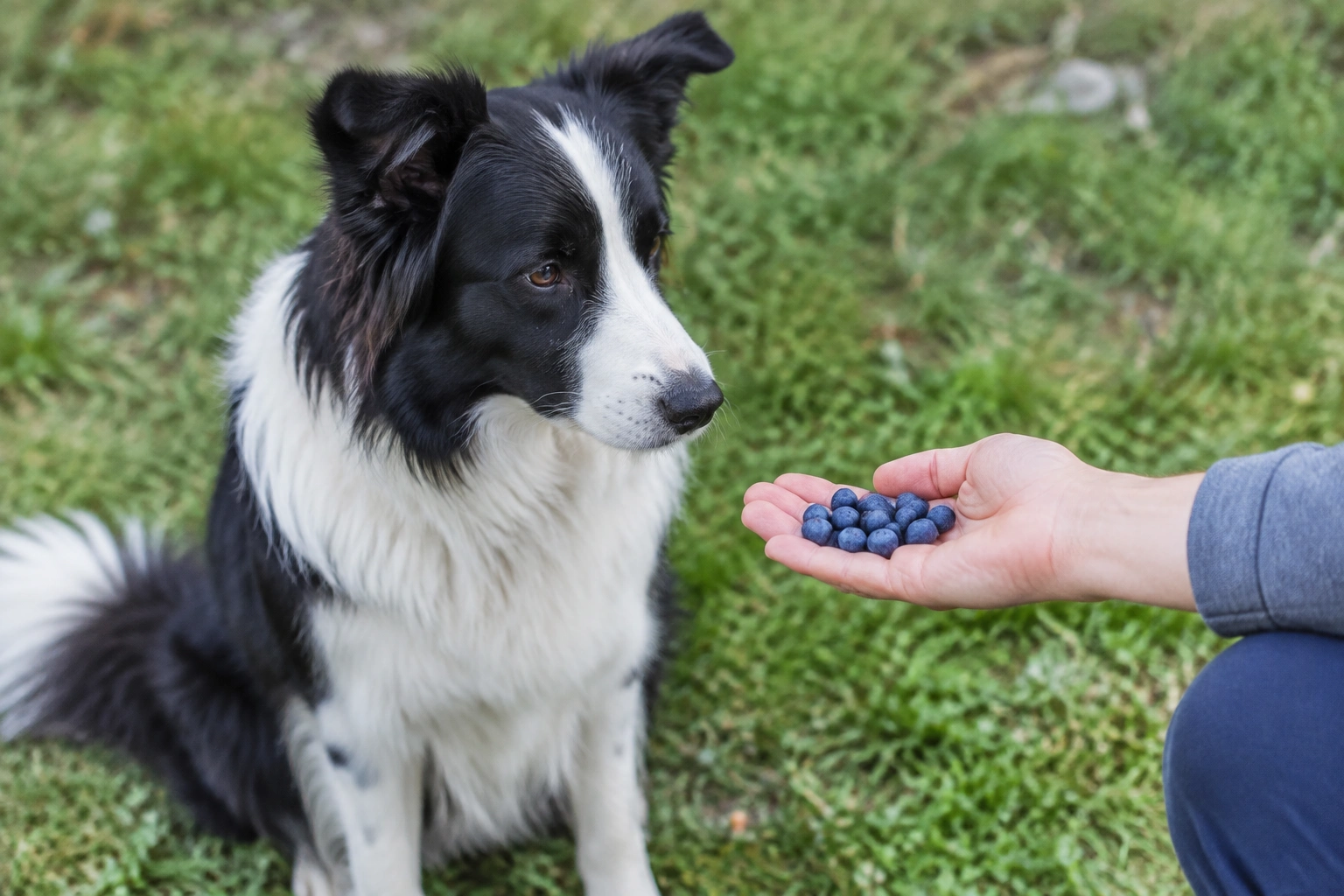
If you want the short version, think of blueberries as a “small bonus,” not a regular food group. A few fresh berries are usually fine for a healthy adult Border Collie, but that’s a general guideline rather than a breed-specific rule. A bowlful is not. And if your dog has diabetes, a sensitive stomach, or a habit of inhaling snacks without chewing, you’ll want to be more careful.
Blueberries are also a better choice than many processed treats because they’re low in calories and contain fiber and antioxidants. That doesn’t make them magic. It does make them a sensible option when you want something simple, plain, and easy to portion.
Why Blueberries Can Work as a Treat for Border Collies
Blueberries earn their place because they offer a lot of “treat value” in a small package. They’re low in calories, and they bring along fiber, vitamin C, and plant compounds called phytochemicals. For a Border Collie, that means you can give a few pieces without turning a snack into a major calorie event.
That matters more than it sounds. Border Collies are often highly food-motivated, and owners sometimes lean on treats during training sessions. A treat that is small, easy to carry, and not especially calorie-dense is useful. Blueberries fit that role better than biscuits, cheese, or fatty table scraps.
They can also be a nice way to add variety. Some dogs get bored with the same training reward every day. A few blueberries can break that pattern without much risk, as long as the overall diet stays balanced.
For a quick comparison, blueberries are usually a better “light snack” than many human foods, but they are not automatically better than every dog-safe vegetable. Carrot pieces, for example, may be easier to portion and lower in sugar. If you want a simple alternative, carrots for Border Collies are worth considering too.
How Many Blueberries Can a Border Collie Have?
There isn’t one official Border Collie-specific blueberry limit from veterinary organizations, so the safest way to think about it is by portion and total treat intake. A practical serving for a healthy adult Border Collie is usually small, and it should stay well below the point where fruit starts adding up as a meaningful part of the day’s calories.
As a general guide:
- Toy/smaller adult Border Collie: about 3 to 5 blueberries at a time
- Average adult Border Collie: about 5 to 10 blueberries at a time
- Larger or very active adult Border Collie: up to about 10 to 15 blueberries at a time
For most healthy adults, I’d treat 15 blueberries in a day as a practical upper limit, and less is usually better. If you use blueberries for training, that maximum should include everything given that day, not just one reward session.
A helpful rule: if blueberries are a treat, keep them to a tiny part of the day’s food. For many Border Collies, that means a few berries during training or as an occasional snack, rather than a daily pile in the bowl.
Here’s a simple starting point:
- First time: 1 to 2 blueberries
- Small snack for a healthy adult Border Collie: about 5 to 10 blueberries
- Training use: several berries spread across a short session, not all at once
That range is intentionally conservative. Border Collies vary a lot in size, metabolism, and activity level. A lean, very active dog may tolerate a little more than a less active dog, but treat calories still add up.
A few fresh berries are a sensible starting point for most healthy adults, but that should be treated as a general guideline, not a firm breed-specific threshold. The same caution applies to any size-based advice you may see from general pet nutrition sources.
Hill’s recommends starting with just one or two blueberries the first time and watching for a reaction, which is a sensible approach for any dog. They also provide size-based general guidance for dogs, including 1–2 berries for toy dogs under 10 pounds and 2–5 berries for small dogs 10–20 pounds. Border Collies are usually larger than that, but the principle still holds: begin small and adjust carefully. You can read their guidance on safe blueberry feeding for dogs.
A practical decision rule
Use this before you feed them:
- Healthy adult, normal stomach, plain fresh berries: okay in small amounts
- Fast eater or gulping dog: feed fewer at a time, or mash lightly
- Puppy, senior, or sensitive stomach: start with 1 berry and wait
- Dog with diabetes, obesity, or chronic GI issues: ask your vet first
That rule keeps the decision simple without pretending every Border Collie should get the same amount.
How Often Can Border Collies Eat Blueberries?
Blueberries can be given more than once in a while, but “safe” does not mean “limitless.” For most Border Collies, they make the most sense as an occasional snack or training reward rather than an everyday staple.
If you use them daily, keep the amount very small. A few berries as part of training can fit into a healthy routine, but daily blueberries should stay in the “tiny amount” category. A practical frequency is a few times per week, or daily only in very small amounts when you’re using them as training rewards.
The treat should stay a minor part of the diet, not a habit that starts replacing balanced food. A good way to judge frequency is the 90/10 idea: about 90% of your dog’s calories should come from a complete diet, and treats should stay around 10% or less. Blueberries fit that model nicely because they’re small and low in calories, but only if you keep the portion modest.
There’s also a practical training issue. Border Collies often work fast. If you use blueberries as rewards, give them in small bursts rather than handing over a whole pile after a session. That keeps the reward useful without encouraging overfeeding.
Fresh, Frozen, or Dried: Which Form Is Safest?
The form you choose changes the risk.
| Form | Main advantage | Main caution |
|---|---|---|
| Fresh blueberries | Lowest fuss, plain, easy to portion | Can still be a choking issue for dogs that gulp |
| Frozen blueberries | Convenient and dogs often enjoy the texture | Hard berries can be awkward for small mouths or fast eaters |
| Dried blueberries | Shelf-stable and easy to store | More concentrated, easier to overfeed, and often sweetened |
Fresh blueberries are usually the simplest choice. They’re easy to wash and serve, and they don’t come with extra ingredients.
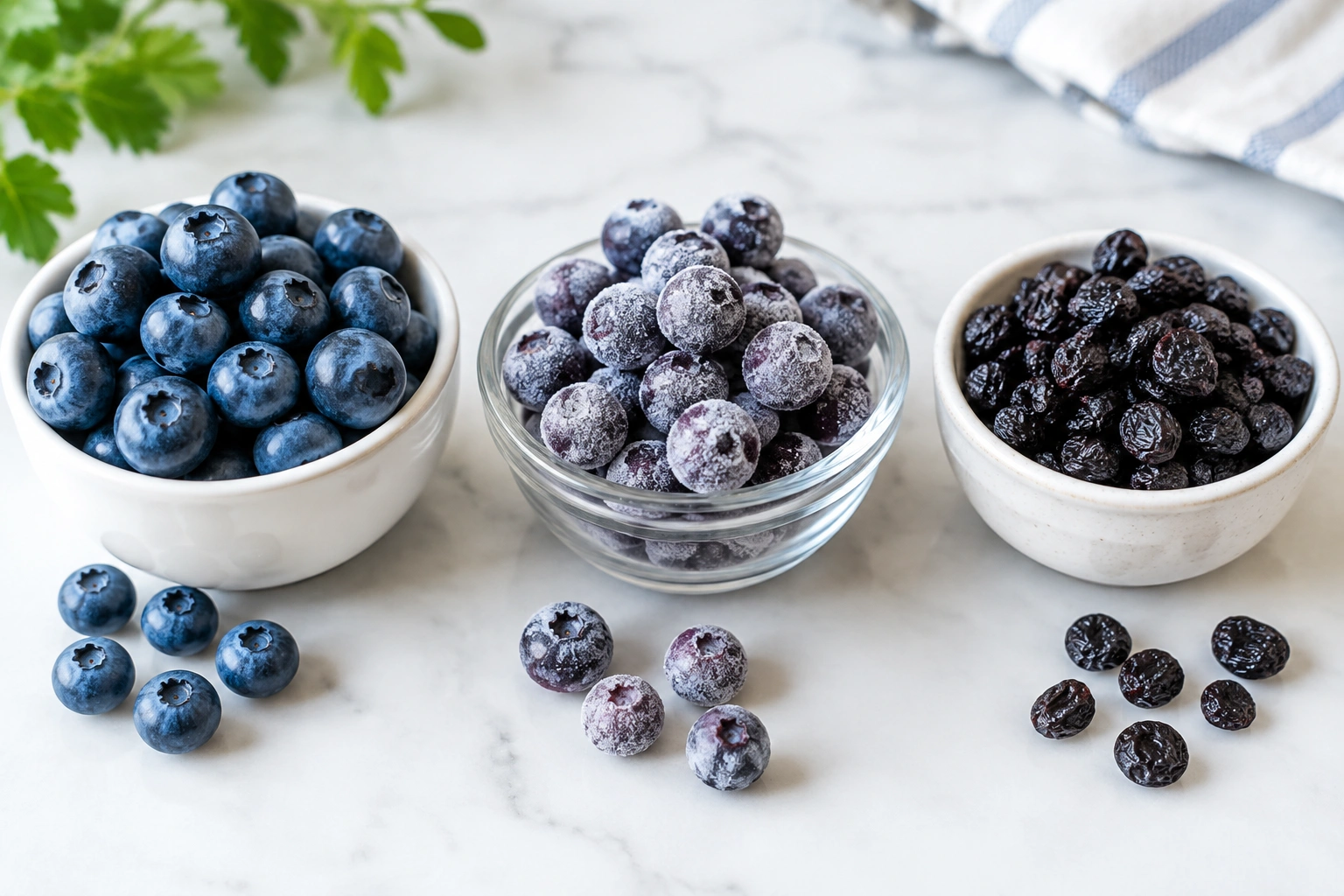
Frozen blueberries can be fine for some dogs, but they are not automatically safer. A frozen berry is harder and can be more awkward for a dog that tries to swallow food quickly. For a Border Collie that gulps treats, partially thawed berries or a different treat shape may be smarter.
Dried blueberries are the form I’d be most cautious about. Drying concentrates the fruit, so it becomes easy to give more sugar and calories than you intended. If you use them at all, they should be unsweetened and given only occasionally in very small amounts. In most cases, fresh or frozen plain blueberries are the better choice.
How to Serve Blueberries Safely
The safest serving is plain, washed, and unseasoned.
Use this checklist:
-
Wash the berries first.
This removes dirt and residue. -
Serve them plain.
No sugar, no syrup, no seasoning, no yogurt coating. -
Keep the portion small.
Especially the first time. -
Watch how your dog eats.
If your Border Collie gulps, feed one at a time or use a safer treat shape. -
Adjust for age and health.
Puppies and dogs with digestive issues need more caution.
If your dog is the type to inhale food without chewing, blueberries can become a mild choking risk simply because they’re round and small. That doesn’t mean they’re dangerous in the way grapes are dangerous; it means you should feed them with common sense. For some dogs, squashing the berry slightly or offering it alongside a few larger treats is enough to reduce the risk.
When Blueberries May Not Be a Good Choice
Blueberries are not the right treat for every Border Collie.
Puppies
Puppies can eat blueberries in moderation if they’re prepared appropriately and offered in age-appropriate portions, but that is exactly why I’d keep the amount tiny. A practical puppy starting point is 1 blueberry at a time, and not every day unless your puppy tolerates it well. A puppy’s digestive system is less predictable than an adult dog’s, and training treats can add up quickly. If your puppy is very young or has a sensitive stomach, ask your vet before making blueberries a regular reward.
Dogs with diabetes or weight concerns
Blueberries are relatively low in calories, but they still contain sugar. That matters if your Border Collie has diabetes, is overweight, or needs tight calorie control. In those cases, even “healthy” treats should be cleared with your veterinarian.
Dogs with sensitive stomachs
Some dogs do fine with fruit. Others get loose stool or gas from even a small amount. If your Border Collie has a history of digestive upset, introduce blueberries slowly and stop if you see a pattern of problems.
Dogs with suspected food allergies
True fruit allergies are uncommon, but they do happen. If you notice itching, vomiting, diarrhea, facial swelling, or repeated stomach trouble after blueberries, stop feeding them and contact your vet.
What Happens If Your Border Collie Eats Too Many Blueberries?
Most of the time, the problem is digestive upset rather than anything severe. Too many blueberries can lead to loose stool, gas, or vomiting, especially if your dog isn’t used to them.
Watch for:
- diarrhea or very soft stool
- vomiting
- belly discomfort
- reduced appetite
- repeated swallowing, coughing, or gagging if a berry was inhaled
If your dog only ate a few extra berries, observation is usually enough. Offer water and keep the next meal normal unless your vet advises otherwise.
If your Border Collie ate a very large amount, or if symptoms are persistent, call your veterinarian. And if there is coughing, trouble breathing, or repeated gagging, treat that as urgent because choking is a different problem from simple stomach upset.
Blueberry-Flavored Products and Human Snacks: What to Avoid
This is where many owners get into trouble. Plain blueberries are one thing. Blueberry muffins, sweetened dried blueberries, yogurt-covered snacks, and flavored human foods are another.
Avoid anything with:
- xylitol
- chocolate
- raisins or grapes
- excess sugar
- artificial sweeteners
- high-fat coatings or fillings
The fruit itself may be fine, but the product around it may not be. A muffin is not a dog snack. A blueberry yogurt cup is not a dog snack. Even if the label looks harmless, the ingredient list can hide problems.
Blueberry-flavored dog treats, however, may be fine if they are specifically formulated for dogs and do not contain unsafe ingredients. The issue is usually human snack products, not every item with blueberry flavoring. When in doubt, check the ingredient list and treat label carefully.
Purina notes that blueberries are not like grapes and do not pose the same risk to dogs, which is an important distinction. The berry is fine; the processed product may not be. You can see that distinction explained in Purina’s blueberry guide for dogs.
Blueberries vs Other Dog-Safe Fruits and Treats
Blueberries are a solid option, but they’re not automatically the best option for every dog.
Compared with apples
Apple slices can be easier to portion and may feel more substantial as a treat. Blueberries are smaller and often better for quick training rewards. Apples bring more chewing, blueberries bring convenience.
Compared with carrots
Carrots are often a better choice if you want something crunchy, low in sugar, and easy to control. Blueberries are better when you want a softer, more fruit-like reward. If your Border Collie does better with a crisp snack, carrots may win.
Compared with commercial treats
Blueberries usually beat many packaged treats on simplicity. There’s no long ingredient list, no preservatives, and no mystery coating. Commercial treats can still be useful, especially when you need something with a consistent size or texture, but fruit is often the cleaner choice when the dog tolerates it well.
If you want a broader fruit comparison, the American Kennel Club also notes that blueberries are a healthy snack for both large and small dogs and that they’re low in calories and contain vitamin C, fiber, and phytochemicals. Their overview on whether dogs can eat blueberries is a useful reference point.
When to Ask Your Veterinarian
Ask your vet before feeding blueberries if your Border Collie:
- has diabetes
- is overweight and on a weight-loss plan
- has chronic diarrhea, vomiting, or a sensitive stomach
- is a very young puppy
- has a known or suspected food allergy
- swallowed a large amount and now seems unwell
That conversation is especially worth having if you plan to use blueberries often during training. A veterinarian can help you decide whether fruit fits your dog’s calorie budget or whether a different low-calorie reward would be better.
Quick Answer: Are Blueberries a Good Treat for Border Collies?
Yes, for most healthy Border Collies, plain blueberries are a safe treat when fed in moderation. A few fresh berries are usually the sweet spot: useful, simple, and easy to control. The main mistakes are overfeeding, choosing processed blueberry snacks, and assuming “healthy” means unlimited.
If you keep the portion small, avoid added sugar, and adjust for your dog’s age and health, blueberries can be a sensible part of your Border Collie’s treat routine.
FAQ
Can Border Collies eat blueberries every day?
Yes, but only in very small amounts and only if your dog tolerates them well. Daily use is best kept to a few berries at most, especially for training rewards.
How many blueberries can a Border Collie have in a day?
For most healthy adults, about 5 to 15 blueberries total is a practical range, depending on size and activity level. A sensible daily maximum is about 15 berries, and less is usually better.
Are frozen blueberries safe for Border Collies?
Often yes, but they can be harder and more awkward for dogs that gulp food. Slightly thawed berries may be easier for some dogs.
Can Border Collie puppies eat blueberries?
Yes, in moderation, but keep the serving tiny — start with 1 berry — and check with your vet if your puppy has a sensitive stomach.
Are dried blueberries okay?
They’re best limited or avoided because they’re more concentrated and are sometimes sweetened. If you use them, choose unsweetened dried blueberries and keep the amount very small.
What should I do if my Border Collie ate too many blueberries?
Monitor for vomiting, loose stool, or discomfort. Call your vet if symptoms are strong, persistent, or if choking is a concern.
