
How to Create a Non-Slip Bathing Area for a Border Collie

Quick Answer
Create a non-slip bathing area for your Border Collie by placing a securely fitted, textured rubber mat inside the tub or shower and another absorbent, non-slip mat at the exit. Clean away soap residue, prepare lukewarm water and towels, and ensure your dog can enter, stand, and leave without slipping or jumping. Introduce the setup gradually, and stop if your dog becomes frightened or cannot maintain a stable stance.
A Border Collie may be agile on grass and confident during outdoor activities but feel unsteady on a smooth, wet bathtub floor. Water, shampoo, and sudden movements can reduce traction, while the unfamiliar sound of running water may make an already nervous dog try to escape.
The safest bathing area addresses the entire process: approaching the bath, standing during washing, stepping out, and walking across the bathroom afterward. A suitable mat is a useful starting point, but the surrounding floor, drainage, handling method, and your dog’s comfort matter too.
1. Choose a Bathing Location With Enough Space
Choose a bathtub, walk-in shower, or other washable area where your Border Collie can stand naturally without being crowded. The dog should have enough room to adjust its position without repeatedly hitting the walls or stepping onto an unprotected edge.
A bathtub can contain splashes, but its height may make entry and exit difficult for an older, injured, or reluctant dog. A walk-in shower may offer easier access, provided its floor has reliable traction and water drains without creating puddles.
If neither option provides secure footing, consider a low-level bathing setup with a stable, washable surface. Outdoor bathing is another possibility in suitable weather, but wet grass, smooth concrete, and sloping ground can also be slippery.
Before deciding, check three things:
- Access: Can your dog enter and leave without a risky jump or difficult lift?
- Stability: Can all four paws rest on a secure surface while your dog stands comfortably?
- Working space: Can you reach the dog’s body, rinse it, and handle towels without leaning awkwardly or losing control?
For additional preparation and bathing guidance, see this guide to making bath time safer for a Border Collie.
2. Select a Non-Slip Mat That Stays in Place When Wet
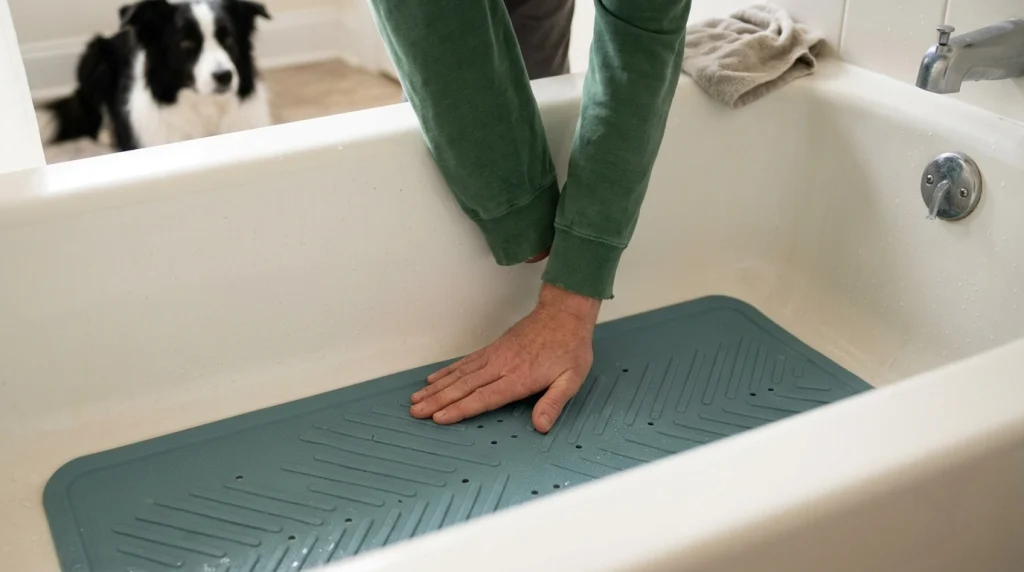
A properly fitted, textured bath mat helps your Border Collie maintain its footing on a smooth surface. Look for a washable mat designed for wet environments, with a nonslip underside or secure attachment system compatible with the actual tub or shower floor.
Do not choose a mat based on its appearance alone. A soft bath rug that feels grippy to a person may slide under a dog’s weight, and a mat that works on a flat floor may not sit securely on a curved bathtub base.
Check these features before using a mat:
- Secure grip: The mat should stay put when pressed and when your dog shifts its weight.
- Suitable coverage: It should cover the main standing area without leaving large slippery patches where your dog is likely to step.
- Flat edges: Corners should not curl upward or create places for claws to catch.
- Drainage: Water should be able to escape rather than pooling beneath the mat.
- Easy cleaning: Hair and soap residue should be removable, and the mat should dry thoroughly between baths.
Install the mat according to its instructions. If it uses suction cups, press them onto a clean, compatible surface and check that they hold. Suction cups can lose their grip when dirty, worn, or used on an unsuitable texture.
Before bringing your dog into the bath, press around the mat’s edges and move it gently by hand. If it shifts, bunches, or lifts, reposition it or choose a better-fitting alternative.
3. Make the Exit Just as Safe as the Bath
Your Border Collie needs secure footing after washing, when its coat and paws are wet. Place a second nonslip, absorbent mat on the floor where the dog will step out, and extend the safe walking route toward the drying area if the bathroom floor is smooth.
Keep the exit path clear of shampoo bottles, laundry baskets, loose towels, and electrical cords. Remove standing water and slippery cleaning residue before the bath begins.
If your dog uses a tub, do not encourage it to leap over the edge. A stable, appropriately designed ramp or low-entry arrangement may help a dog that struggles with climbing, provided it cannot slide or tip. Never improvise an unstable platform or force a dog to use a ramp it fears.
For more ideas about preventing slips beyond the bathing surface, read this guide on stopping a Border Collie from slipping on a wet bathroom floor.
4. Prepare the Water, Supplies, and Surrounding Floor
Set up everything before your dog enters. Searching for a towel or reaching across the bathroom while your Border Collie stands on a wet surface can interrupt supervision and create unnecessary movement.
Keep these items within easy reach:
- Dog-specific shampoo appropriate for your dog’s skin and coat.
- A cup or gentle, low-pressure rinsing device.
- A washcloth for cleaning the face carefully.
- Several clean towels for absorbing water.
- A brush or comb for pre-bath grooming.
- Small treats for rewarding calm behavior, if your dog can safely enjoy them.
- A hair catcher for the drain, provided it does not obstruct drainage or create a tripping hazard.
Use comfortably lukewarm water rather than hot or very cold water. Test it before directing it toward your dog, and start with a gentle flow instead of a forceful spray that could startle the animal.
Brush the coat before wetting it to remove loose hair and identify tangles. If your Border Collie has tight mats, painful skin, or areas that cannot be brushed comfortably, address those issues before attempting a full bath.
5. Introduce Your Border Collie to the Bathing Area Gradually
A secure mat works best when your dog is comfortable standing on it. If your Border Collie associates the bathtub with slipping, loud water, or being restrained, simply placing a new mat inside may not solve the problem.
Build familiarity through short sessions before the next full bath:
- Explore the dry area. Let your dog approach and investigate the bathing space without running water. Reward calm behavior and allow the dog to move away.
- Practise standing on the mat. Invite your dog onto the secure surface and reward a relaxed stance. Do not pull it into position.
- Introduce water sounds. Run the water briefly at a distance, then turn it off. Gradually reduce the distance as your dog remains comfortable.
- Try a brief rinse. Once your dog tolerates the setup, wet the paws or lower body gently and reward cooperation.
- Increase the routine gradually. Add washing and rinsing in short stages instead of insisting on a complete bath immediately.
Watch for lip licking, repeated yawning, a tucked tail, freezing, crouching, or attempts to escape. These behaviors can indicate stress, although no single sign proves what your dog is feeling. Pause, reduce the challenge, or end the session if distress continues.
Tip
Practise entering the dry bathing area and standing on the mat on a day when your dog does not need a bath. This lets you reward calm behavior without adding the pressure of washing, rinsing, and drying.
6. Follow a Safe Washing and Drying Routine
Once the area is ready and your dog is comfortable, keep the routine calm and predictable. Stay beside your Border Collie throughout the bath, and never leave it unattended on a raised or wet surface.
- Help your dog get into position. Use a safe entry route and check that the mat remains flat beneath all four paws.
- Wet the coat gradually. Start around the body and work carefully, avoiding direct sprays toward the eyes, nose, and ear canals.
- Apply dog-safe shampoo. Follow the product label and use gentle movements rather than aggressive scrubbing.
- Rinse thoroughly. Work through the dense coat, including the chest, underarms, belly, legs, and areas beneath the tail. Remove all shampoo residue.
- Guide your dog out slowly. Turn off the water, check the exit mat, and help your dog step onto the prepared surface without jumping.
- Dry with towels first. Press towels against the coat to absorb water rather than rubbing vigorously.
- Check the undercoat. Border Collies commonly have a double coat, so a dry-looking outer layer does not necessarily mean the coat underneath is dry. If needed and tolerated, use a pet-safe dryer on a cool or low setting, keeping airflow moving and monitoring your dog’s comfort.
Veterinary guidance from Virginia Tech’s Veterinary Teaching Hospital bathing guide emphasizes gentle washing, thorough rinsing, and complete drying. These steps matter because leftover shampoo can irritate skin and trapped moisture can contribute to skin problems in susceptible dogs.
Keep the drying area nonslip, too. A wet Border Collie may shake vigorously after leaving the bath, so give it room to move without encountering loose rugs, hard obstacles, or slippery patches.
7. Fix Common Problems Before the Next Bath
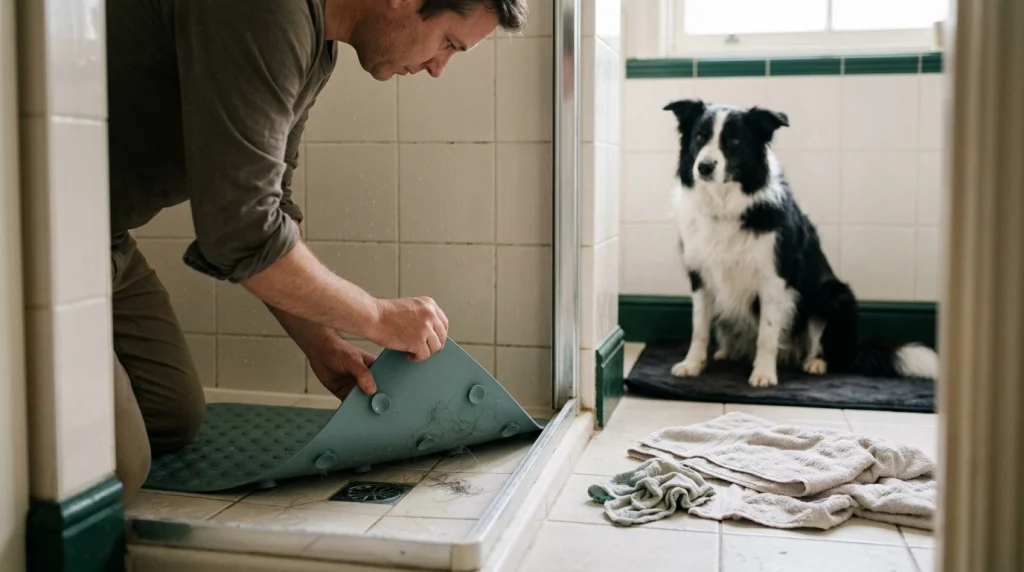
If the bathing area still feels unsafe, identify the specific failure instead of adding more equipment at random.
- The mat slides: Clean the tub and mat underside, check compatibility, and replace a worn or poorly fitting mat.
- Water pools around the paws: Clear the drain and reposition the mat if it obstructs water flow. Stop bathing if the standing area becomes unstable.
- Your dog scrambles or tries to jump out: Pause the water, maintain a safe position, and help your dog exit when you can do so safely. Rebuild confidence through shorter sessions.
- Your dog slips outside the tub: Dry the floor, secure the exit mat, and provide a nonslip route to the drying area.
- Your dog remains unsteady on dry surfaces: Do not assume the problem is simply fear of bathing. Pain, weakness, or a mobility issue may need veterinary assessment.
Avoid holding your dog down or tightening a restraint to compensate for poor footing. A frightened dog can struggle harder, increasing the chance of a fall or injury. If safe handling is not possible, postpone the bath and seek appropriate help.
Stop and contact your veterinarian if your dog shows pain, sudden weakness, persistent difficulty standing, or new reluctance to walk. If skin is inflamed, open sores are present, or touching the coat causes discomfort, seek veterinary advice before bathing unless a veterinarian has specifically prescribed a bathing treatment.
Related Product
Related Product
Textured Non-Slip Dog Bath Mat
A washable, securely gripping mat designed for wet surfaces can help your Border Collie stand more confidently during bathing. Check its dimensions, drainage, and compatibility with your tub before use.
As an Amazon Associate, we earn from qualifying purchases.
Frequently Asked Questions
Can I use a regular towel instead of a non-slip bath mat?
A towel may provide temporary traction if it lies flat and remains securely in place, but it can bunch up or move when a dog shifts its weight. A properly fitted, wet-area mat designed to resist slipping is generally a more dependable choice.
Should the non-slip mat cover the entire bathtub floor?
It should cover the main standing area where your Border Collie places its paws, without curling or obstructing the drain. Check the dog’s stance and the mat’s stability before bathing rather than relying on coverage alone.
Is a walk-in shower safer than a bathtub for a Border Collie?
It can be easier for a dog that struggles to climb, but only if the shower floor provides secure traction and drains properly. Choose the setup your dog can enter, stand in, and leave safely.
How can I bathe a Border Collie that is afraid of water?
Introduce the dry bathing area, mat, water sounds, and brief rinses in separate stages. Reward calm behavior and stop if your dog becomes distressed rather than forcing it to complete the bath.
How do I keep my Border Collie’s coat from staying damp after bathing?
Blot the coat with clean towels and check beneath the outer coat, especially around dense areas. If your dog tolerates it, use a pet-safe dryer on a cool or low setting while keeping the airflow moving and checking that the skin does not become hot.
What should I do if my Border Collie keeps slipping despite using a mat?
Stop the bath and check for soap residue, a loose mat, standing water, and an unsafe exit route. If slipping or difficulty standing continues even on dry, nonslip surfaces, arrange a veterinary assessment to check for pain, weakness, or mobility problems.
Conclusion
Creating a non-slip bathing area for your Border Collie means making every stage of the bath secure, from entering the tub to walking away after drying. Start with a stable, appropriately sized mat, keep the exit route dry and grippy, prepare your supplies, and introduce water gradually.
Pay attention to how your dog stands and responds rather than assuming a mat alone will solve every problem. If your Border Collie becomes frightened, cannot maintain its balance, or shows signs of pain, stop and address the cause before trying again. A safe, calm bathing routine is more valuable than finishing a bath at any cost.
