
Does Cherry Eye Go Away on Its Own in Dogs?

If you’ve spotted a red, round lump in the corner of your dog’s eye, the short answer is this: cherry eye can look like it improves on its own, but true self-resolution is uncommon and recurrence is common. In practical terms, that means the swelling can shrink or disappear for a while, then come back again. The underlying problem usually remains unless a veterinarian treats it.
For Border Collie owners, that matters because prompt veterinary care can help protect comfort and long-term eye health, depending on the diagnosis and treatment. Cherry eye is not just a cosmetic issue. The gland involved helps support tear production, and leaving it untreated can be a veterinary concern for chronic irritation and dry eye.
What cherry eye actually is
Cherry eye happens when the gland of the third eyelid slips out of its normal position. That gland is part of the dog’s tear system, so this is more than a temporary bit of redness.
The classic sign is a pink or red bulge near the inner corner of the eye. It often looks smooth and rounded, almost like a small cherry tucked into the eye margin. Dogs may have it in one eye or both.
The key thing to understand is why it appears. The gland is being held in place by small connective tissues. When those tissues weaken, the gland can prolapse. So even if the lump looks smaller one day, the underlying looseness is still there.
That’s why a “better-looking” eye is not the same as a cured eye.
When it looks better but is not actually cured
Cherry eye can be confusing because it may seem to come and go. A dog might wake up with a visible red lump, then later in the day it looks less obvious. Owners often assume the problem has healed.
Usually, that’s not what is happening.
What often changes is the amount of swelling or how far the gland is protruding at that moment. The gland can slip back into the pocket temporarily, then pop out again after rubbing, play, sleep, or simple movement. That pattern is one reason the condition is frustrating: it can look mild right before it becomes more persistent.
A useful way to think about it is this:
- Temporary improvement = the lump is less visible for now
- True resolution = the gland stays in the correct position and the problem does not return
With cherry eye, the first can happen. The second usually requires veterinary treatment.
Is cherry eye an emergency or can it wait?
Cherry eye is usually not a midnight emergency, but it does deserve prompt veterinary attention. The decision comes down to what else is happening with the eye.
Use this practical framework:
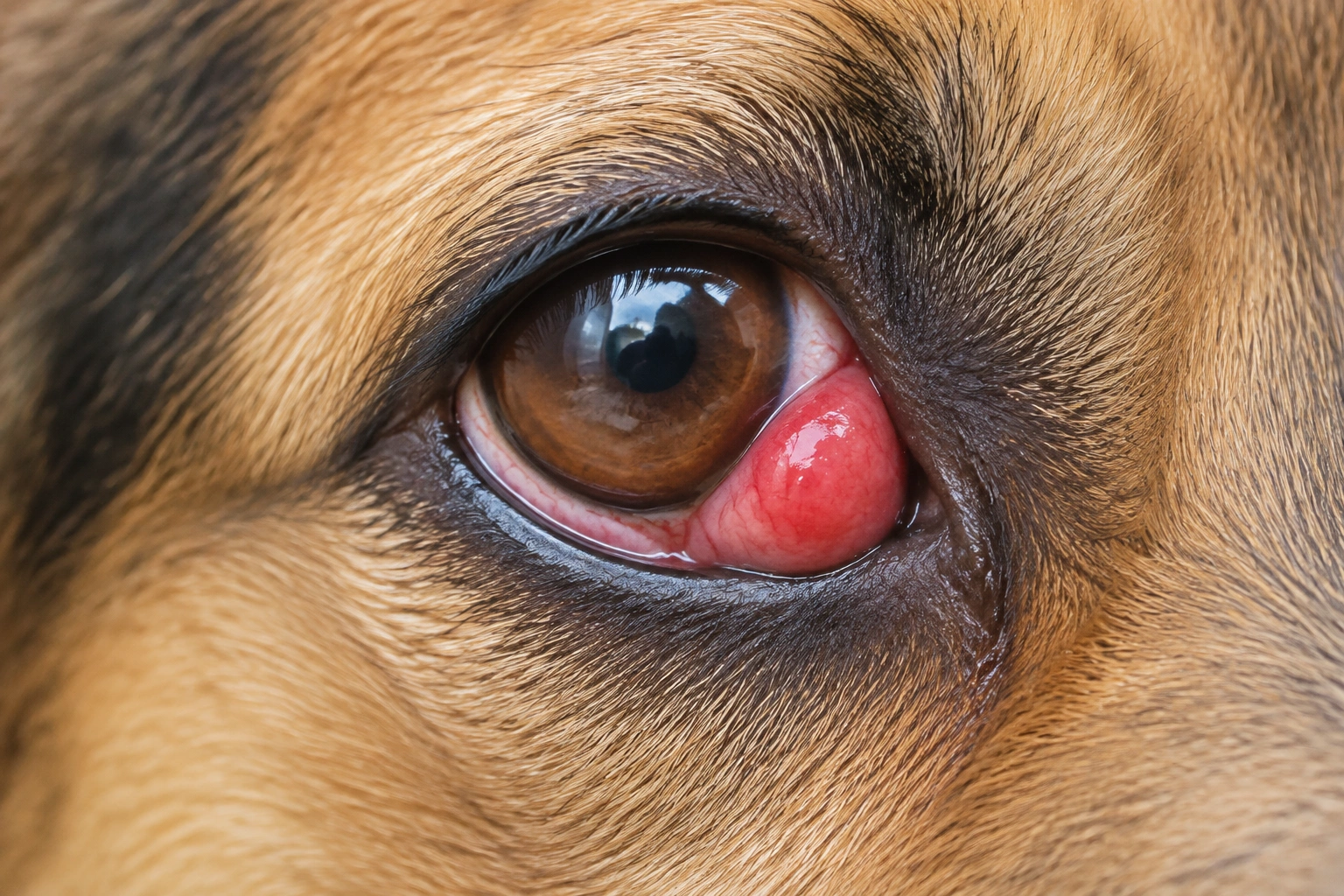
Book a vet visit soon if:
- the red lump is still visible
- the eye is red or irritated
- your dog is rubbing or pawing at the eye
- the dog is squinting, blinking more, or keeping the eye partly closed
- there is discharge
- the lump has appeared before and returned
Treat it as more urgent if:
- your dog seems painful
- the eye is very swollen
- there is thick discharge
- the cornea looks cloudy or damaged
- your dog is suddenly acting uncomfortable around light or touch
The reason urgency matters is simple: irritation can turn into self-trauma. A dog that keeps rubbing the eye can make the problem worse, and that can lead to infection or corneal injury. A very painful, suddenly red eye may also point to a different eye condition that needs urgent care.
If you want a broader reference point for eye problems that can mimic one another, this guide to dog conjunctivitis from VCA Hospitals is useful because red eye is not always the same problem.
What a veterinarian checks to confirm cherry eye
A vet does more than look at the red lump and label it. That matters because other conditions can resemble cherry eye. Cornell notes that a problem called scrolled cartilage can look similar and may only be distinguished during an exam.
A proper exam helps answer three practical questions:
- Is it actually cherry eye?
- Is the cornea irritated or injured?
- Is there another eye condition that needs different treatment?
That distinction is important because home care that seems harmless for cherry eye could be the wrong move for something else. In plain language, a few different eye problems can look similar at first, so even if the lump seems to improve, a vet exam is still needed to make sure it is not something else.
A vet may also check tear production and look for signs of inflammation, discharge, or secondary damage. If the eye is painful or the dog is squinting, that’s a stronger sign not to wait.
Treatment options: medical management versus surgery
Here’s the honest trade-off: medical care can help with comfort, but surgery is usually the permanent fix.
Some dogs may receive eye drops or other supportive treatment to reduce irritation before or after surgery. PDSA notes that most cases are curable, even if it takes more than one procedure or a specialist eye hospital.
But the important distinction is this:
- Medical management can calm inflammation and make the dog more comfortable
- Surgery repositions and secures the gland so it stays where it belongs
Modern veterinary care generally aims to preserve the gland, not remove it, because that gland contributes to tear production. That approach helps protect the eye long term.
For Border Collie owners, the practical takeaway is straightforward: if you’re hoping the lump will just vanish for good, that is not the outcome to plan around. The better plan is to get the eye assessed and follow the vet’s recommendation early.
What happens if cherry eye is left untreated
Leaving cherry eye alone may seem harmless if your dog is still eating, playing, and acting normal. The risk is that the eye issue keeps smoldering in the background.
The main concerns are:
- recurrent prolapse: the gland keeps popping in and out
- ongoing irritation: the eye stays inflamed or uncomfortable
- self-rubbing: the dog can injure the eye surface
- dry eye risk: reduced tear support can become a long-term issue
Bluebell Vets notes that cherry eye can be associated with long-term dry eye and discomfort if it is left untreated, and PetMD also warns that delaying treatment can put a dog at risk for complications such as dry eye.
That’s why “it doesn’t seem that bad” is not a reliable reason to wait. Eye problems can progress quietly.
What you can safely do at home while waiting for a vet
Home care should be limited to preventing irritation, not trying to fix the gland yourself.
Safe steps
- Stop your dog from rubbing the eye if possible
- Keep the face clean and dry
- Use an e-collar if your dog keeps pawing at the eye
- Book the vet appointment as soon as you can
What not to do
- Do not push the gland back in without veterinary guidance
- Do not use human eye drops unless a vet tells you to
- Do not try random home remedies
- Do not assume the lump disappearing means the problem is solved
If the eye looks normal for a day or two, the condition can still return. A temporary improvement is not a cure.
If your dog is also showing other red-eye signs, this Border Collie Hub guide to dog pink eye can help you compare symptoms while you wait for the vet.
Border Collies and other breeds: how predisposition changes the odds
Cherry eye is seen more often in some breeds than others. The exact risk for Border Collies is not as famous as in breeds like Bulldogs or Cocker Spaniels, and Border Collies are not among the highest-risk breeds. Even so, any suspected cherry eye still warrants the same veterinary evaluation.
Why breed context matters:
- it changes your suspicion level when you see a red lump
- it lowers the threshold for a vet visit
- it helps you take recurrence seriously instead of assuming it’s “just irritation”
If your dog has had cherry eye once before, recurrence becomes even more important to watch for. A second episode is not a reason to wait and see longer; it’s usually a reason to act faster.
Quick comparison: cherry eye vs. a problem that may settle on its own
| Situation | What it may mean | Best next step |
|---|---|---|
| Red lump stays visible or returns | Likely cherry eye | Vet visit soon |
| Lump seems smaller but comes back later | Temporary reduction, not cure | Book veterinary exam |
| Red eye with discharge but no lump | Could be conjunctivitis or another eye issue | Vet exam needed |
| Dog squints, rubs, or seems painful | Possible irritation or corneal damage | Prompt care |
| Lump disappears and never returns after vet treatment | True resolution is more likely | Follow vet instructions |
The biggest mistake is assuming “less visible” equals “fixed.” In eye problems, that assumption can cost time.
When to book the vet now
Use this decision rule:
Book promptly if the red swelling is still there, has returned, or is paired with squinting, discharge, rubbing, or pain.
Same-day care becomes more important if:
– your dog is clearly uncomfortable
– the eye looks injured
– the swelling is worsening
– your dog keeps pawing at it
– the eye is cloudy or the dog seems vision-impaired
If the lump is present but your dog is otherwise calm, you still should not ignore it. Cherry eye rarely goes away for good without treatment, and the earlier a vet evaluates it, the easier it is to protect the eye.
The practical bottom line for owners
Cherry eye can look like it improves on its own, but that improvement is usually temporary. The gland may slip back in and out, yet the underlying weakness remains. That’s why the condition commonly comes back unless a veterinarian treats it.
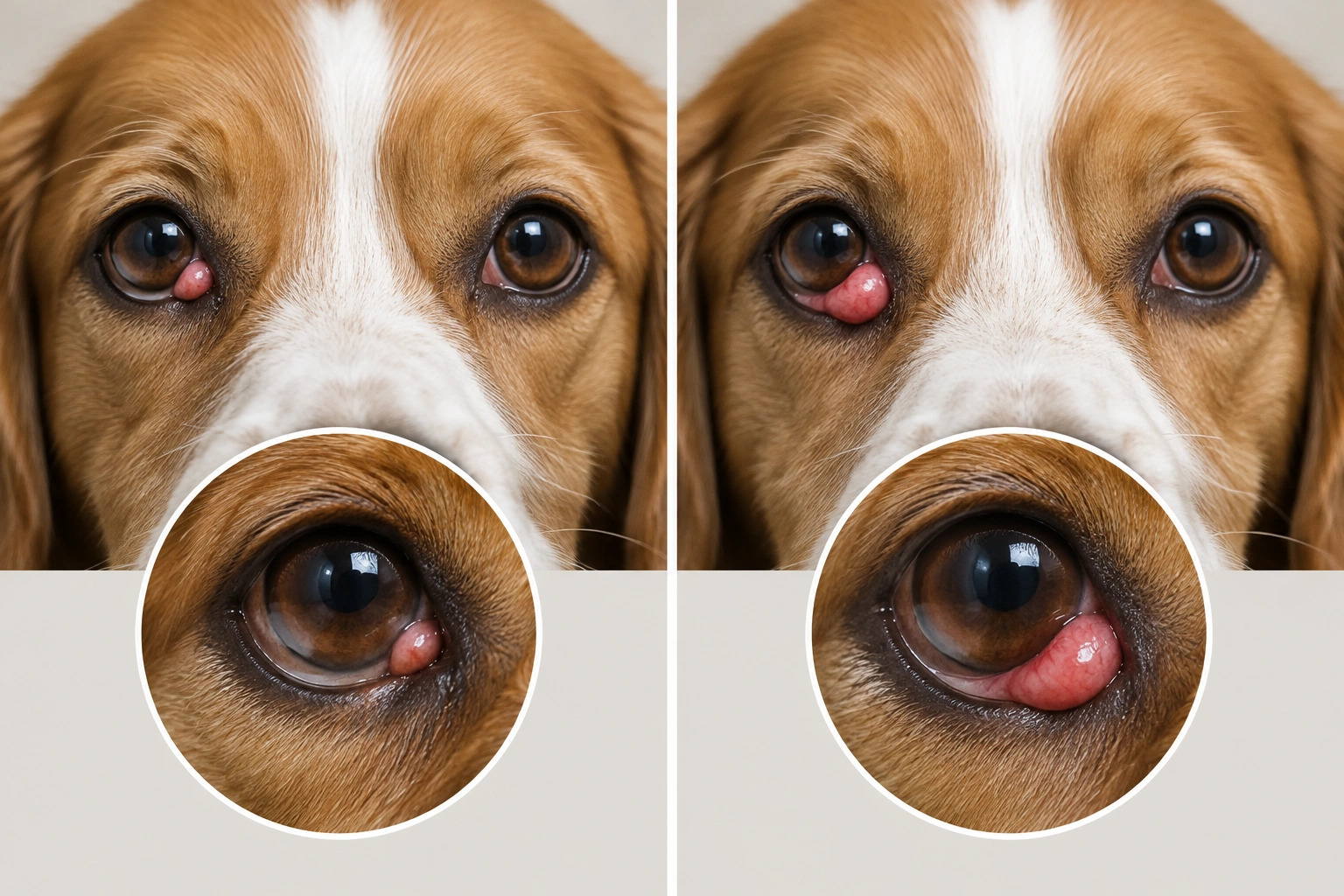
For Border Collie owners, the safest move is not to watch it for weeks and hope. It is to arrange a veterinary exam, protect the eye from rubbing, and follow the treatment plan your vet recommends. That gives your dog the best chance of keeping the gland, preserving tear function, and avoiding a problem that keeps returning.
Frequently Asked Questions
Can cherry eye go away on its own?
Usually, no. It may look better for a while, but true self-resolution is uncommon and the gland often prolapses again.
Is cherry eye painful?
It is often more irritating than sharply painful at first, but dogs can become painful if they rub the eye or if the surface becomes injured.
Does cherry eye always need surgery?
Surgery is the usual permanent fix. Vets may use other treatment to reduce inflammation or support comfort, but those steps alone typically do not solve the underlying problem.
Can I push the gland back in at home?
Not without veterinary guidance. Forcing it can cause more irritation or damage.
What if the lump disappears and then comes back?
That is a strong sign the problem was reduced temporarily, not cured. A vet exam is still the right next step.
Can cherry eye lead to bigger problems?
Yes. Delaying treatment can increase the risk of chronic irritation and dry eye, and rubbing can injure the eye surface.
Is cherry eye common in Border Collies?
It is not the breed most people think of first, but Border Collies can still develop eye problems, so any red lump near the third eyelid should be checked.
How quickly should I see a vet?
Soon, especially if the eye is red, squinting, painful, or producing discharge. If the lump is still visible, don’t wait for it to “sort itself out.”
