
Does Neutering Help with Marking in Dogs? What Owners Should Expect

If your dog is marking indoors or on walks, neutering may help — but it is not a guaranteed fix.
That is the practical answer. In some dogs, especially intact males with hormone-driven marking, neutering reduces the behavior noticeably. In others, the habit continues because the real driver is stress, routine, territorial pressure, or simple learned repetition. The best results usually come when neutering is paired with management and training, not used as the only solution.
For Border Collie owners, that distinction matters. This breed is often sensitive, observant, and quick to form habits around repeated triggers. If your dog has learned that certain spots, smells, or situations are worth marking, surgery alone may lower the urge but still leave the pattern intact.
Here is the useful rule of thumb: neutering is more likely to reduce marking than to erase it. If the behavior has been going on for a long time, or if it happens mainly around visitors, new furniture, windows, or conflict with other animals, expect to do more than just schedule surgery.
Quick Answer: Will Neutering Stop Marking in Dogs?
Sometimes, but not reliably.
Veterinary guidance consistently says neutering can reduce marking, yet it is not a guaranteed cure. Published percentages vary widely across sources, and they are not directly comparable because they may reflect different populations, definitions of marking, ages, or study methods. The most useful takeaway is that neutering often helps some dogs a lot, helps others only a little, and does not fully stop marking in every case.
The most useful way to think about it is this:
- If hormones are a major driver, neutering may help a lot.
- If the dog has already rehearsed the habit, neutering may help only partly.
- If stress or territory is the trigger, you will probably need behavior work too.
- If the dog is urinating for medical reasons, neutering will not solve the problem.
That last point is where owners get tripped up most often. A dog that marks is not the same as a dog that has urinary accidents, and a dog that suddenly starts peeing indoors should be checked by a veterinarian before anyone assumes it is behavioral.
What Marking Is — and How It Differs from House Soiling or Urinary Accidents
True marking is usually a small amount of urine deposited on a vertical or prominent surface, often after sniffing. The dog is not trying to empty the bladder. The goal is communication: “this spot matters.”
House soiling looks different. That is usually a fuller bladder release, often on floors, beds, or in places the dog uses because it has not fully learned where to go. Medical urination can also look different again: sudden accidents, frequent urination, straining, discomfort, or changes in thirst.
A simple decision test helps:
- Small amount on a wall, furniture leg, door frame, or window area → likely marking.
- Large puddle on the floor or bed → more likely house-training failure or medical urination.
- New accidents in a previously reliable dog → medical issue until proven otherwise.
This matters because neutering only targets one piece of the problem. If the issue is incomplete house training, anxiety-related urination, or illness, surgery may do little.
Why Dogs Mark: Hormones, Stress, Territory, Habit, and Triggered Reinforcement
Marking is not caused by one thing.
Hormones
Testosterone can make marking more likely, especially in intact males. Hormone influence is one reason neutering can help. But hormones are not the whole story, which is why neutering does not always end the behavior.
Stress and environmental change
Some dogs mark when their world feels unstable. A move to a new home, a new dog in the house, visitors, schedule changes, or even increased noise can trigger marking. Border Collies can be especially sensitive to environmental shifts and may respond to tension by “claiming” space.
Territory and social pressure
Dogs often mark where they smell other animals, especially near entry points, windows, or shared paths. The Humane Society of Missouri notes that virtually any vertical object a dog sniffs may become a target, and that new or novel odors can attract marking.
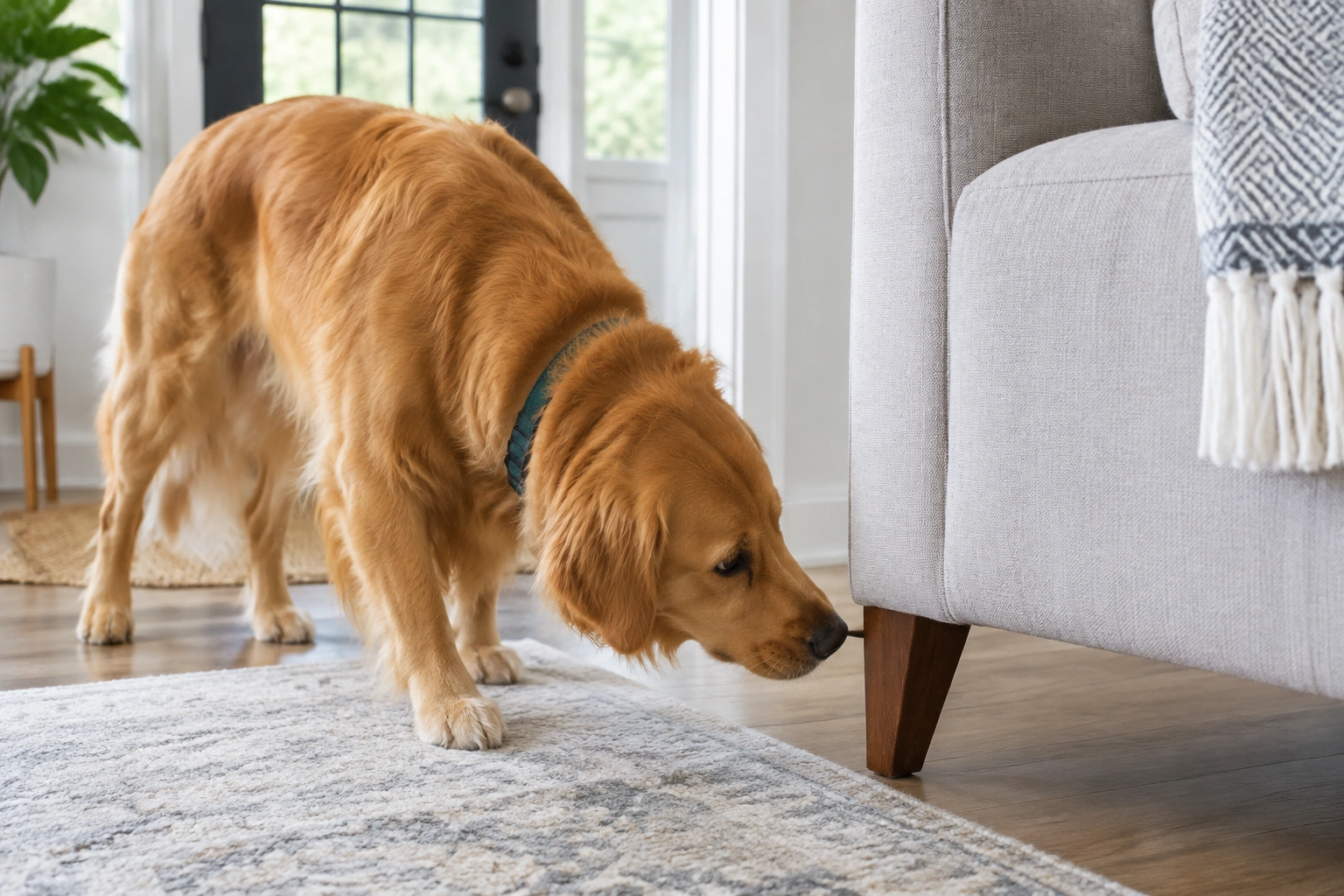
Habit and reinforcement
This is the part many owners underestimate. If a dog marks the same area repeatedly and the odor is never fully removed, the spot itself becomes a cue. The dog returns, smells the residue, and the habit gets stronger. That is why a behavior that began as hormone-driven can become a learned routine.
So the real question is not just “Does neutering help?” It is “What is driving the marking in this dog, in this place, right now?”
How Neutering Affects Marking Behavior in Practice
Neutering lowers testosterone, and that can reduce the urge to mark in dogs whose behavior is partly hormone-driven. In practice, that often means fewer incidents, less intensity, or less persistence around familiar triggers.
But the effect is not uniform. Some dogs improve a lot. Some improve a little. Some change very little because the habit has already been established, the dog is older, or the behavior is being reinforced by stress and context.
VIN Veterinary Partner reports that urine-marking is among the behaviors most consistently altered after neutering, with significant reduction or elimination in 50–60% of male dogs in the studies it cites. Other sources report different rates, but the important word is reduce, not guarantee.
Think of neutering as turning down the volume, not pressing the off switch.
That is why training still matters. If the dog has already learned to mark the guest room, the front door, or the couch leg, the behavior can continue even when the hormonal pressure drops.
Neutering Versus Training Alone: Which Helps More?
This is not really an either-or choice.
- Neutering helps most when hormones are part of the picture.
- Training and management help most when the dog has a habit, a trigger pattern, or access to repeated opportunities.
If you only neuter, you may reduce the urge but leave the routine intact. If you only train but leave a strong hormone drive in place, you may be fighting uphill.
The best practical plan is usually both:
1. Reduce the biological drive if your vet recommends neutering.
2. Prevent rehearsal of the marking behavior.
3. Clean thoroughly so the dog is not drawn back to the same location.
That combination is much more realistic than expecting one intervention to do everything.
When Neutering Is More Likely to Help
Age, timing, sex, and behavior history all matter.
Puppies and young dogs
Earlier neutering may help more when marking has not yet become a well-established habit. In general, behavior tends to be easier to influence before it becomes rehearsed, which is one reason earlier neutering is often discussed as a better window for marking-related concerns.
That does not mean every puppy should be neutered immediately for behavior reasons. It means timing matters if marking is your main concern.
Adolescents
This is a common turning point. A young dog that starts marking around sexual maturity may respond better than an older dog with a long history of repetition. If the dog is intact and the behavior is new, neutering is more likely to help than if the pattern has been happening for months.
Adult dogs
Adults can still improve after neutering, but established habits are harder to break. If the dog has been marking the same areas for a long time, expect to pair surgery with a behavior plan.
Female dogs
Female dogs can also mark. The behavior is less often discussed, but it happens. Humane Society of Missouri notes that neutering is also recommended for female dogs that mark during estrus. If a female dog marks around heat cycles, hormonal influence is likely part of the picture.
Male Versus Female Dogs: Does It Work Differently?
In general, neutering is more often discussed as a marking solution for males because testosterone is a stronger obvious driver. But female dogs are not exempt from marking, and spaying can help when marking is linked to the heat cycle or hormonal fluctuation.
The practical difference is this:
- Male dogs: neutering is more likely to reduce hormone-driven marking.
- Female dogs: spaying may help if marking is tied to estrus or hormonal changes, but the behavior can still be influenced by stress, territory, or habit.
So if you own a female Border Collie that marks, do not dismiss the behavior as “not a neutering issue.” It may still be relevant.
How Long It Takes to See Change After Neutering
Not immediately.
Owners often expect a quick flip in behavior after surgery, but hormone-related behavior does not vanish overnight. The body needs time to adjust, and the dog also needs time to stop rehearsing the habit.
A realistic expectation is weeks, not days. Some dogs show improvement fairly quickly. Others need more time. If the behavior has been reinforced for months, the habit may outlast the hormone change.
Practical timeline: what owners can expect
- Immediate post-op to the first few days: your dog may be resting, sore, or less active, so you may not see a meaningful behavior change yet.
- 2–6 weeks: this is a more realistic window for early improvement if hormones were a major factor.
- Longer term, if marking persists: the behavior is more likely to be a learned habit, stress response, or trigger-based pattern, and it may need a structured training and management plan.
This is where patience matters. If your dog is still marking a week or two after surgery, that does not mean neutering failed. It may simply mean the behavior pattern is still in place.
The Oregon Humane Society makes this point clearly: long-standing marking habits can be difficult to change and take time and patience.
Why Marking Can Continue After Neutering
When marking continues, it usually means one or more of these is happening:
The habit is already learned
Repeated marking creates a routine. The dog returns to the same spots because those spots have become meaningful.
The odor is still there
Standard cleaning often leaves behind scent cues dogs can detect. If the dog can still smell the old mark, the location stays “active” in his mind.
The trigger is still present
Visitors, other pets, outdoor animals near windows, or tension between household dogs can keep the behavior going even after neutering.
The dog is stressed
Some dogs mark when they feel insecure. Border Collies, in particular, can respond to household tension, lack of structure, or sudden change by becoming more vigilant and reactive.
The problem was never hormonal enough to begin with
If testosterone was only a small part of the issue, neutering may only slightly reduce the behavior.
That is why a “neutered but still marking” dog is not unusual. It usually means the case needs more behavioral management, not that the owner did something wrong.
What to Do Alongside Neutering to Reduce Marking
This is where owners can make the biggest practical difference.
Clean marked areas with an enzyme-based product
Regular household cleaners often do not fully remove urine scent. Use an enzyme-based pet urine cleaner and follow the instructions carefully. If the smell remains to your dog, the spot remains a target.
Block access to problem areas
If your dog repeatedly marks the same corner, chair, or doorframe, prevent access while you reset the habit. Baby gates, closed doors, or temporary furniture rearrangement can stop rehearsal.
Supervise more closely during high-risk times
Many dogs mark after waking, after visitors arrive, near windows, or when the house is busy. Watch more closely during those moments so you can interrupt the setup before the dog marks.
Reinforce the behavior you want
Take the dog outside on a predictable schedule and reward appropriate elimination. That is not the same as rewarding marking; it is teaching the dog that outdoor toileting is the reliable option.
Reduce trigger exposure where possible
If the dog marks near windows because of outdoor dogs, limit visual access temporarily. If the dog marks when guests arrive, manage greeting routines so the dog is not left to patrol the house.
Use a belly band if needed
For male dogs, a belly band can protect the home while you work on the behavior. It is not a training tool by itself, but it can prevent repeated indoor marking from becoming more entrenched.
The key trade-off is simple: management is inconvenient, but repeated incidents are worse. Every successful mark makes the habit stronger.
When Marking May Be a Medical Problem Instead
Do not assume every indoor urination issue is behavioral.
A veterinary exam is especially important if you see:
– sudden onset of accidents,
– straining or signs of pain,
– blood in the urine,
– frequent small urinations,
– increased thirst,
– urinating in unusual places without the typical sniff-and-mark pattern,
– a dog that was previously reliable and has changed abruptly.
Those signs can point to urinary tract disease, bladder irritation, pain, or other medical issues. Neutering will not fix those problems.
If the pattern changed quickly, check health first. Behavior work comes after that.
When to See a Veterinarian or Certified Trainer
See your veterinarian if:
– the behavior started suddenly,
– your dog seems uncomfortable when urinating,
– the dog is drinking more than usual,
– the marking looks more like a medical accident than a deliberate small spray,
– you are not sure whether it is marking or house soiling.
See a certified trainer or canine behavior professional if:
– the dog keeps marking after neutering,
– the behavior is linked to anxiety, visitors, or other dogs,
– the same spots keep getting targeted,
– you need a structured plan for supervision and prevention,
– the dog is sensitive or easily stressed and punishment makes things worse.
For many Border Collies, a careful behavior plan works better than a blunt correction approach. These dogs notice patterns fast, and they often respond better to clear management and calm consistency than to confrontation.
If you want a broader neutering timeline context, our guide on how long neutering surgery takes can help you plan the practical side of the procedure. And if you are trying to understand the recovery day itself, this neutering timeline guide breaks down the clinic process step by step.
For general veterinary guidance on marking, VCA Animal Hospitals offers a clear overview, and the ASPCA also notes that neutering is not a quick fix for every behavior problem.
FAQ
Does neutering stop marking in dogs completely?
Not always. Neutering often reduces marking, but the result depends on age, habit strength, stress, and whether the behavior is truly hormone-driven.
Is neutering more effective if done earlier?
Usually yes, especially if marking has not become a long-established habit. Earlier intervention tends to work better than waiting until the dog has been practicing the behavior for a long time.
How long after neutering should I wait to see improvement?
Many owners should think in terms of weeks, not days. Some dogs improve within a few weeks, while others need longer if the behavior is well established.
How do I tell marking from a urinary accident?
Marking is usually a small amount of urine on a vertical surface. Accidents are more often larger puddles on the floor, and a dog that suddenly starts urinating indoors should be checked by a veterinarian.
Bottom Line
Does neutering help with marking in dogs? Often, yes — but usually as part of a bigger plan.
It is most useful when hormones are genuinely driving the behavior, especially in younger intact dogs. It is less reliable when marking is already a rehearsed habit, when stress is the trigger, or when the dog is marking because of a medical problem. If you want the best chance of success, combine neutering with cleanup, access control, supervision, and a clear routine.
That is the practical approach: reduce the biological pressure, remove the scent cues, and stop the dog from practicing the habit again and again.
