

Quick Answer
Yes, you can use dry shampoo on a Border Collie between regular baths. Choose a dog-specific, pH-balanced formula, apply it lightly, and brush the double coat well afterward, following safe waterless dog-cleaning guidance.
How to use it safely
- Brush first: Remove loose undercoat, dust, grass, and small tangles before applying shampoo.
- Use dog formulas: Don’t substitute human dry shampoo, perfume, or regular hair products.
- Apply lightly: Work a small amount through the coat instead of soaking the fur.
- Avoid the face: Keep products away from the eyes, mouth, nose, and inner ears.
- Brush again: Remove residue before your Border Collie begins licking the coat.
- Watch the skin: Stop if you notice itching, redness, dandruff, or increased licking.
When a real bath is better
- Use water and dog shampoo for heavy mud, greasy dirt, sticky substances, or anything that must be completely removed from the coat.
Border Collies seem gifted at finding mud five minutes after I’ve cleaned them. I’ve used waterless grooming between baths most often after dusty walks, training sessions, and damp-weather adventures.
Dry shampoo can help, but this breed’s coat changes how I use it. Both rough- and smooth-coated Border Collies have a protective double coat, so residue can hide underneath the surface fur.
In This Guide
- Is Dry Shampoo Safe for a Border Collie?
- Why Does a Border Collie’s Double Coat Matter?
- What Type of Dry Shampoo Is Best?
- How Do You Use Dry Shampoo on a Border Collie?
- How Often Can You Use Dry Shampoo?
- Can Dry Shampoo Replace a Regular Bath?
- What Should You Avoid in Dry Shampoo?
- When Is Odor or Greasy Fur a Health Concern?
- Frequently Asked Questions
- Final Takeaway
Is Dry Shampoo Safe for a Border Collie?
Dry shampoo is generally suitable for a healthy Border Collie when it’s formulated specifically for dogs. I treat it as a grooming aid between baths rather than a replacement for washing.
Definition: A dog’s dry shampoo is a waterless grooming product designed to absorb oils, loosen light dirt, or reduce odor without a full rinse.
You’ll commonly see sprays, foams, powders, and leave-in liquids. The best choice depends on your Border Collie’s coat, skin sensitivity, and the mess you’re trying to clean.
When dry shampoo makes sense
- After dusty walks: It can freshen a coat carrying light surface dust.
- Between baths: It helps when the dog smells slightly stale but isn’t genuinely dirty.
- After indoor training: A small application can freshen the chest or ruff after active sessions.
- During cold weather: Waterless cleaning can be convenient when a full bath and complete drying are difficult.
- Before visitors or travel: It’s handy for quick coat maintenance when bathing isn’t practical.
The important word is light. Dry shampoo isn’t designed to remove thick mud, chemicals, oily contamination, or substances your dog shouldn’t lick.
The ASPCA’s dog grooming guidance also recommends choosing products made specifically for pets. That is the standard I follow at home.
Section Takeaway: Dry shampoo is useful for light cleaning and odor control, but a dog-specific formula and thorough brushing are essential.
Why Does a Border Collie’s Double Coat Matter?
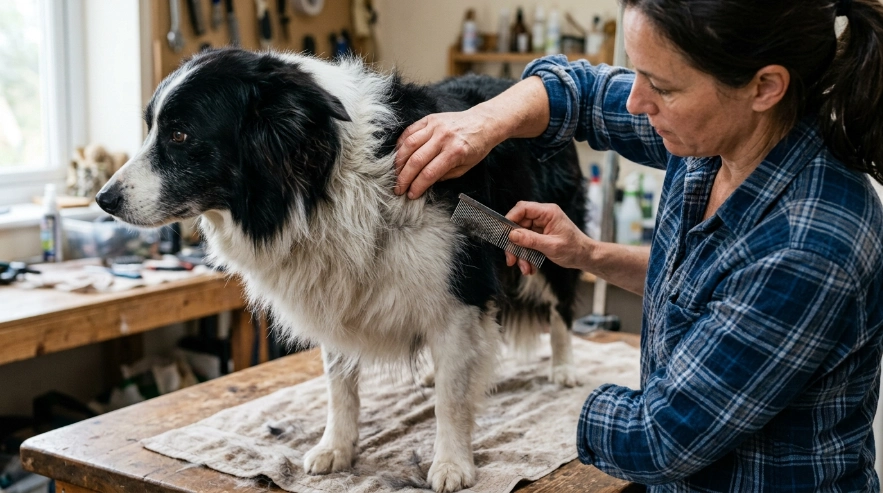
A Border Collie has a dense double coat rather than one simple layer of hair. That coat includes a softer undercoat beneath protective outer hairs.
The breed comes in rough and smooth coat varieties. Both still need regular grooming, as described in the AKC’s Border Collie grooming overview.
Rough-coated Border Collies
Rough coats have longer feathering around areas such as the chest, legs, belly, and tail. Powder and heavy sprays can disappear into this longer hair.
I spend more time brushing a rough coat after waterless shampoo. I pay particular attention behind the ears, under the collar, and around the feathering.
Smooth-coated Border Collies
Smooth Border Collies have shorter outer hair, which makes surface application easier. However, the undercoat can still hold loose hair and product.
Don’t assume short hair means residue doesn’t matter. Brush down to the undercoat without scraping the skin.
Shedding season changes the routine
Border Collies can shed heavily as the undercoat changes. During those periods, brushing becomes more useful than repeatedly covering loose hair with dry shampoo.
- Brush out loose undercoat first.
- Use only enough dry shampoo for the dirty area.
- Massage lightly through the hair.
- Brush thoroughly after the recommended contact time.
- Check the skin while the coat is separated.
I’ve found that applying more product rarely makes a Border Collie cleaner. It usually creates more work because the dense coat holds whatever you put into it.
Section Takeaway: Treat the Border Collie’s undercoat as part of the cleaning job. Apply less product and spend more time brushing it out.
What Type of Dry Shampoo Is Best for a Border Collie?
I prefer a dog-specific, pH-balanced formula with a mild scent or no added fragrance. The application format matters almost as much as the ingredient list.
| Type | Control | Residue Risk | Best Border Collie Use |
|---|---|---|---|
| Foam | High | Low to moderate | Targeted cleaning on rough or smooth coats |
| Pump spray | Moderate | Moderate | Quick freshening across larger coat areas |
| Powder | Moderate | Higher if overapplied | Absorbing light surface oil when brushed out carefully |
| Leave-in liquid | High | Varies by formula | Small dirty areas or dogs uncomfortable with sprays |
What I look for on the label
- Made for dogs: The packaging should clearly identify canine use.
- pH-balanced: Dog skin isn’t the same as human skin.
- Clear directions: The label should explain application and whether brushing is required.
- Low fragrance: Strong perfume isn’t necessary for a clean dog.
- Simple application: Products that are easy to distribute are easier to remove evenly.
The AKC’s guidance on choosing dog shampoo also stresses using formulas suited to canine skin and coat. Border Collies benefit from products that work through a double coat without harsh cleansing.
How Do You Use Dry Shampoo on a Border Collie?
Start with brushing, use a small amount, and remove the remaining product afterward. That simple order has worked best for every waterless clean I’ve done.
- Inspect the coat. Look for mats, burrs, wounds, redness, ticks, or sticky contaminants before applying anything.
- Brush thoroughly. Remove loose hair and surface dirt using a suitable brush and comb.
- Read the product label. Different foams, powders, and sprays have different contact instructions.
- Apply to the body. Start with a small amount and keep the product away from the face.
- Work through the coat. Use your fingers to distribute it gently without scratching the skin.
- Wait as directed. Give the product its recommended contact time instead of immediately adding more.
- Brush the coat again. Remove loosened dirt, loose hair, and excess product.
- Finish with a towel. A clean towel can lift remaining surface residue.
- Check the skin. Separate the fur in several places and look for irritation.
How I handle the face
I don’t spray a Border Collie’s face directly. For a small dirty patch, I put an appropriate pet-safe product on my hand or cloth first if its directions allow that method.
Keep shampoo away from the eyes, nostrils, mouth, and ear canals. A damp cloth is often all the face needs.
Turn grooming into training
Border Collies notice patterns quickly. I use short grooming sessions with calm handling, a familiar mat, and rewards for standing still.
- Let the dog sniff the bottle before starting.
- Reward calm standing.
- Introduce spraying away from the dog first.
- Keep early sessions short.
- Stop before your dog becomes frustrated.
That preparation matters with sensitive dogs. A Border Collie that trusts the routine is far easier to inspect and groom later.
Section Takeaway: Brush before and after dry shampoo, use small amounts, and keep the experience calm enough that grooming remains cooperative.
How Often Can You Use Dry Shampoo?
Dry shampoo should be an occasional between-bath tool rather than an everyday grooming product. The AKC suggests limiting waterless shampoo use to about once weekly to reduce product buildup.
I often use it less frequently. If brushing and a damp towel solve the problem, I skip the shampoo.
Signs you’re using too much
- Powdery or sticky residue remains near the skin.
- The coat looks dull instead of fresh.
- Your Border Collie scratches more after grooming.
- Dandruff or flaky skin appears.
- Your dog keeps licking treated areas.
- The coat develops an odd smell beneath the fragrance.
More frequent cleaning isn’t always better. The natural oils in a dog’s skin and coat serve useful protective functions.
The veterinarian-authored VCA coat-care guidance notes that bathing needs vary with coat, lifestyle, age, and health. I apply the same individual approach to waterless grooming.
Vet note: If your Border Collie needs constant shampooing because of odor, oiliness, itching, or flaky skin, ask your veterinarian what is causing the problem.
Can Dry Shampoo Replace a Regular Bath?
No. Dry shampoo freshens a coat, while a proper bath can physically rinse away dirt and unwanted material.
| Situation | Dry Shampoo | Water Bath |
|---|---|---|
| Light doggy odor | Good option | Usually unnecessary |
| Dusty coat | Often useful | Optional |
| Heavy mud | Not enough | Better choice |
| Sticky or greasy substance | Not recommended as the main clean | Usually needed |
| Possible harmful contaminant | Don’t rely on it | Seek veterinary guidance when appropriate |
One of my simple rules is to look beneath the topcoat. If the dirt reaches the skin or undercoat, I consider whether rinsing will do a better job.
After a full bath, dry the dense coat thoroughly. Moisture trapped near the skin can create discomfort and make mats harder to manage.
What Should You Avoid in Dry Shampoo?
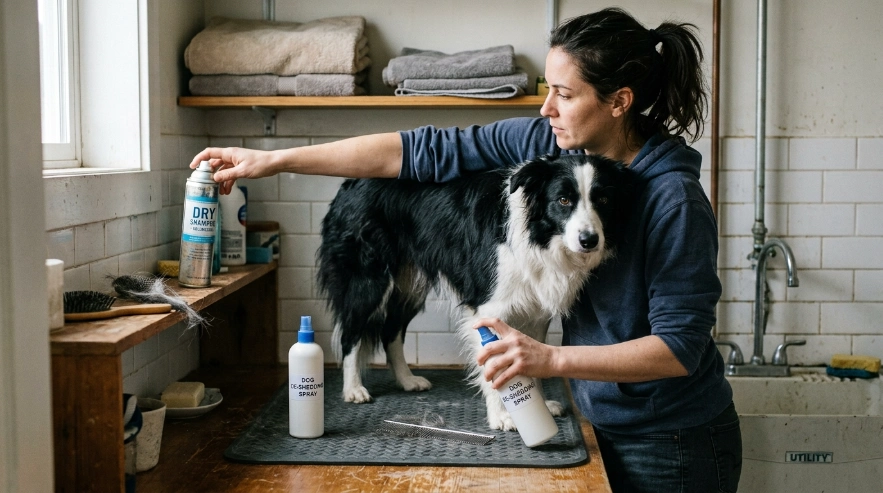
The easiest mistake is reaching for a human product because it’s already in the bathroom. I don’t use human dry shampoo on my Border Collies.
Avoid products intended for people
Human hair products aren’t formulated around canine skin or normal licking behavior. Dog-specific grooming products are the safer default.
Avoid overwhelming fragrance
A clean Border Collie doesn’t need to smell like perfume. Strong scent can also hide an odor that deserves closer investigation.
Don’t experiment with medicated products
Medicated shampoos serve specific skin problems. I wouldn’t choose an antibacterial, antifungal, or therapeutic product without knowing what condition I’m treating.
Vet note: Persistent itching, redness, sores, hair loss, or skin odor deserves veterinary assessment rather than repeated cosmetic shampooing.
Don’t apply more because the coat is thick
A double coat can make owners think they need twice as much product. In practice, excess product is simply harder to remove.
Part the fur with your fingers and distribute a small amount where it’s needed. Then brush the entire treated area.
When Is Odor or Greasy Fur a Health Concern?
A mild outdoor smell after exercise is normal. Persistent odor accompanied by skin changes is different.
Dry shampoo can temporarily cover smells without addressing their cause. That’s why I inspect the skin whenever a familiar dog’s odor suddenly changes.
Call your vet if you notice
- Persistent or unusually strong skin odor.
- Red, hot, or inflamed areas.
- Constant scratching or chewing.
- Hair loss or thinning patches.
- Greasy skin that quickly returns after cleaning.
- Crusts, sores, discharge, or bleeding.
- Repeated ear odor or head shaking.
Allergies, parasites, infections, and other skin conditions can change how the coat smells or feels. A grooming product can’t tell you which cause is responsible.
As of 2026, my rule remains simple: grooming is useful for spotting changes, not diagnosing them. If the skin itself looks abnormal, I stop experimenting with products.
Vet note: Your own veterinarian can examine the skin and recommend a cleansing or medicated product suited to your dog’s specific condition.
Frequently Asked Questions
Can I use human dry shampoo on my Border Collie?
No, I recommend using only dry shampoo labeled for dogs. Human products are designed for human hair and skin, and they may contain fragrances or other ingredients inappropriate for regular canine use.
Is dry shampoo good for a rough-coated Border Collie?
Yes, but use it sparingly. A rough Border Collie’s longer outer coat and dense undercoat can trap powder or liquid, so thorough brushing after application matters.
Can I use dry shampoo on a smooth Border Collie?
Yes. Smooth Border Collies still have double coats, so brush before application and check that no residue remains beneath the shorter outer hair.
How often should I dry shampoo my Border Collie?
Use it only when needed rather than on a fixed daily schedule. Once weekly is a sensible upper limit for routine waterless shampooing unless your veterinarian or the product directions advise differently.
Can dry shampoo remove mud?
It may help with light, dried surface dirt after brushing. Thick mud that reaches the undercoat is better handled with water and a suitable dog shampoo.
Should I use dry shampoo on an itchy Border Collie?
Not until you know why the dog is itchy. New or persistent itching may involve allergies, parasites, infection, irritation, or another skin problem that needs veterinary attention.
Should I brush before or after dry shampoo?
Do both. Brushing first removes dirt and loose undercoat, while brushing afterward helps distribute and remove remaining dry shampoo.
Final Takeaway
Dry shampoo can be a useful part of Border Collie grooming when you treat it as a quick freshener, not a substitute for proper coat care. Choose a dog-specific formula and use less than you think you need.
For my own Border Collies, brushing still does most of the work. Dry shampoo simply fills the gap when the coat needs a little help between baths.
Keep an eye on the skin while you groom, especially during heavy shedding. If odor, itching, redness, or grease keeps returning, put the shampoo away and speak with your veterinarian.
