
Can Bathing Improve a Border Collie Coat? Benefits, Limits, and Best Routine

Quick Answer
Yes, bathing can improve a Border Collie’s coat by removing dirt, excess oil, odors, loose hair, pollen, and debris. The biggest improvement comes when bathing is combined with proper brushing, complete rinsing, and thorough drying, which is why I treat a Border Collie shedding bath routine as a complete grooming process rather than just a shampoo-and-rinse job.
What bathing can improve
- Cleanliness: Washing removes mud, dust, pollen, and oily buildup from the coat.
- Coat feel: A properly rinsed and dried coat often feels softer and less heavy.
- Loose fur: Bathing can release dead undercoat that was already ready to shed.
- Freshness: Appropriate dog shampoo can reduce normal dirt-related odor.
- Appearance: Removing debris can make healthy guard hairs look cleaner and more defined.
What bathing cannot fix by itself
- Bathing alone cannot correct poor nutrition, chronic skin disease, unexplained bald patches, severe matting, or coat changes caused by an underlying health problem.
If your Border Collie looks dull, dusty, greasy, or fluffy with loose undercoat, a good bath can make a noticeable difference. I’ve also learned that the wash itself is only half the job with this breed.
The Border Collie has a dense double coat, whether you have a rough-coated dog or a smooth-coated one. In this 2026 guide, I’ll explain what bathing can improve, what it cannot fix, and how to get better coat results without over-washing.
In This Guide
- What Does Bathing Actually Do to a Border Collie’s Coat?
- Can Bathing Make a Border Collie’s Coat Softer and Shinier?
- Why Does the Border Collie’s Double Coat Change How You Bathe?
- What Bath Routine Improves a Border Collie’s Coat Most?
- How Often Should You Bathe a Border Collie for a Healthy Coat?
- When Will Bathing Not Improve a Border Collie’s Coat?
- Does Bathing Affect Rough and Smooth Border Collie Coats Differently?
- Frequently Asked Questions
- Final Takeaway
What Does Bathing Actually Do to a Border Collie’s Coat?
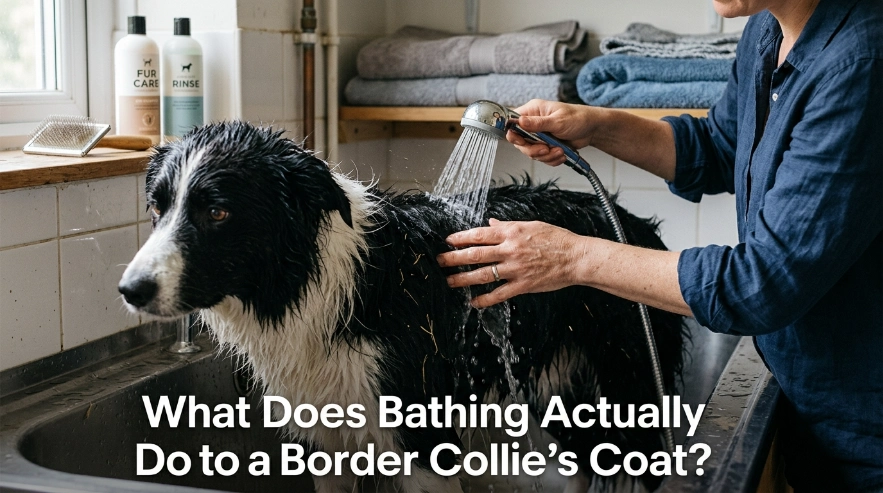
Bathing mainly improves a Border Collie’s coat by cleaning what is already there. Water and dog-safe shampoo remove dirt, environmental debris, excess surface oil, and loose hair.
That distinction matters. A bath can reveal a healthy-looking coat, but it does not manufacture a healthy coat from the outside.
Definition: A Border Collie’s double coat is made of a softer insulating undercoat beneath a tougher outer layer of guard hairs. Both rough and smooth Border Collies have this basic coat structure.
The American Kennel Club’s Border Collie breed guidance describes both coat varieties as dense, weather-resistant double coats. That structure is one reason grooming matters so much.
Bathing removes buildup
Border Collies are active working and herding dogs. Grass dust, dry soil, pollen, mud, and outdoor odors can work surprisingly deep into the coat.
A thorough wash lifts much of that material away. Once dry, the coat may look brighter because the individual hairs are cleaner.
Bathing releases loose undercoat
Owners sometimes think a bath suddenly caused their dog to shed. In many cases, water, shampooing, rinsing, towel drying, and airflow simply release hairs that were already loose.
If you’re dealing with that problem, my guide to whether bathing reduces Border Collie shedding explains why the effect is noticeable but temporary.
- Before bathing: Loose undercoat may remain trapped between healthy hairs.
- During rinsing: Water helps free some already-detached hair.
- During drying: Airflow separates more loose coat.
- After drying: Gentle brushing removes what remains.
That can make the finished coat feel lighter and cleaner. It also explains the alarming pile of fur you may see around the tub.
Section Takeaway: Bathing improves a Border Collie’s coat mostly by removing dirt, buildup, odor, and already-loose fur. It works best as part of a broader grooming routine.
Can Bathing Make a Border Collie’s Coat Softer and Shinier?
Yes, a correctly performed bath can make a healthy Border Collie’s coat look cleaner, softer, and more defined. The improvement should come from removing buildup rather than coating the hair with heavy products.
Why clean fur can look shinier
Dirt and excess oil can make individual guard hairs look dull or clumped. Once those materials are washed away, the natural texture becomes easier to see.
Proper brushing also helps separate the coat. That gives rough-coated Border Collies the clean, feathered appearance many owners want.
Why rinsing matters as much as shampooing
Shampoo residue can produce the opposite result. A poorly rinsed coat may feel sticky, heavy, greasy, or strangely stiff after drying.
I spend more time rinsing dense chest, neck, rear, and tail areas than most first-time owners expect. The water needs to reach through the outer coat and leave again without product remaining underneath.
Bathing is not the same as conditioning coat health
Healthy hair depends on more than shampoo. Overall nutrition, skin health, genetics, parasite control, grooming, and general veterinary care all matter.
The AVMA pet-care resources are useful when coat changes appear alongside other health concerns. Persistent skin or hair changes deserve more attention than another bath.
| Coat-Care Method | Main Benefit | Practical Starting Point |
|---|---|---|
| Brushing | Removes debris, loose fur, and tangles | AKC recommends brushing Border Collies about once or twice weekly, and more during shedding |
| Bathing | Removes dirt, odor, pollen, and oily buildup | PetMD describes monthly bathing as one possible routine, adjusted when the dog becomes dirty |
| Thorough drying | Prevents moisture remaining trapped in dense fur | After every full bath |
| Veterinary treatment | Addresses diagnosed skin or coat problems | Use the schedule and products prescribed for the individual dog |
Vet note: A dull coat accompanied by bald patches, sores, redness, intense itching, or a major change in hair quality should be discussed with your veterinarian.
Why Does the Border Collie’s Double Coat Change How You Bathe?
A Border Collie’s double coat can hold water, shampoo, loose hair, and debris beneath the visible surface. That makes thorough wetting, rinsing, and drying more important than using extra shampoo.
The same general principle applies to other double-coated herding breeds such as the Australian Shepherd. Coat length may change the workload, but dense undercoat still needs attention.
The outer coat and undercoat do different jobs
- Guard hairs: The tougher outer hairs help protect the body from weather and physical debris.
- Undercoat: The softer inner layer provides insulation and contributes heavily to seasonal shedding.
- Feathering: Rough Border Collies have longer hair around areas such as the chest, legs, belly, and tail.
The AKC’s double-coat grooming guidance recommends regular brushing and warns against excessive bathing. Repeated unnecessary washing can dry the skin and coat.
Water must reach beneath the surface
A rough Border Collie can look soaked while parts of the undercoat remain nearly dry. I use my fingers to separate thick sections while wetting and rinsing.
Do the same around the neck, shoulders, rear feathering, and tail. Those spots can hold product longer.
Don’t shave the coat to make bathing easier
A healthy double coat should not be shaved simply to reduce grooming or shedding. Removing the protective outer coat does not switch off the normal hair-growth cycle.
Severe matting or a medical procedure is different. Those cases are better handled with a veterinarian or qualified groomer.
What Bath Routine Improves a Border Collie’s Coat Most?
The best routine starts before your dog enters the tub. Brush first, wash gently, rinse completely, dry the undercoat, and brush again once the coat is dry.
- Brush before wetting. Remove loose coat, small tangles, burrs, grass, and dry debris.
- Use lukewarm water. Wet gradually while separating dense fur with your fingers.
- Use dog-specific shampoo. Apply enough to clean the coat without drowning it in product.
- Massage gently. Use your fingertips instead of scratching the skin with your nails.
- Protect the face and ears. Avoid spraying directly into the eyes, nose, or ear canals.
- Rinse thoroughly. Keep rinsing until the coat no longer feels slippery from shampoo.
- Blot with towels. Press moisture from the fur rather than twisting or aggressively rubbing it.
- Dry the undercoat. Check near the skin instead of judging dryness from the topcoat alone.
- Brush when fully dry. Remove loose hair released by washing and drying.
What if the dog is covered in mud?
Heavy mud changes the job because large amounts of dirt need to come out before you can judge the coat. My guide to bathing a Border Collie after mud covers that cleanup process in detail.
For dried surface mud, brushing some dirt out before bathing can reduce the mess. Thick wet mud usually needs more direct rinsing.
Drying can make or break the result
A coat that stays damp underneath may look flat or feel unpleasant even after careful washing. It can also take much longer to dry than its surface suggests.
Check the practical ranges in my Border Collie drying-time guide rather than assuming the dog is finished once the back feels dry.
If you use a dryer, keep the air comfortable and moving. The step-by-step Border Collie blow-drying guide explains how I approach dense undercoat without concentrating excessive heat on the skin.
Section Takeaway: The best-looking post-bath coat comes from preparation, complete rinsing, thorough drying, and a final light brush. Shampoo choice alone cannot compensate for skipped steps.
How Often Should You Bathe a Border Collie for a Healthy Coat?
There isn’t one bathing schedule that fits every Border Collie. Coat condition, outdoor activity, mud, odor, skin health, and veterinary needs matter more than an arbitrary calendar.
PetMD’s Border Collie care guidance describes regular bathing and brushing as part of coat care. AKC guidance likewise emphasizes routine brushing for both rough and smooth coats.
Use the coat as your guide
A clean indoor dog may not need another full bath simply because several weeks have passed. A farm dog that rolled in something unpleasant may need one much sooner.
- Noticeable dirt: Bathing may be reasonable when brushing cannot remove it.
- Persistent normal dog odor: A bath can help when the source is ordinary coat buildup.
- Mud or environmental debris: Clean the dog when leaving it in the coat is impractical.
- Heavy shedding: Brush first; use a bath as an occasional aid, not the main shedding solution.
- Skin treatment: Follow the schedule your veterinarian gives you.
More bathing is not automatically better
Owners sometimes chase softness by washing every time the coat feels imperfect. That can become counterproductive if frequent bathing dries the skin or causes repeated product exposure.
Regular brushing is usually the better first move when the coat is clean but full of loose hair. The Border Collie’s coat benefits from consistency more than constant washing.
When Will Bathing Not Improve a Border Collie’s Coat?
Bathing cannot solve every dull, thin, greasy, itchy, or patchy coat. When the underlying problem is medical or nutritional, repeated washing may hide the issue temporarily without fixing it.
Watch for signs beyond ordinary dirt
- Bald spots: Patchy hair loss is different from normal loose undercoat.
- Red skin: Persistent inflammation deserves veterinary attention.
- Sores or crusts: Avoid repeatedly shampooing damaged skin without professional advice.
- Strong abnormal odor: An unusual smell can point to a skin or ear problem rather than ordinary dirt.
- Constant scratching: Persistent itching may involve allergies, parasites, infection, or another cause.
- Sudden coat change: Rapid thinning or texture changes deserve a closer look.
The ASPCA pet-care resources provide broader dog-care guidance, but your own veterinarian is the right person to assess a specific skin or coat problem.
Be careful with sensitive skin
A dog that becomes flaky, red, or itchy after bathing may need a different product or bathing schedule. Rewashing with another random shampoo can make troubleshooting harder.
For dogs already prone to irritation, follow the more cautious approach in my guide to bathing a Border Collie with sensitive skin.
Vet note: Seek veterinary advice when coat changes are sudden, painful, intensely itchy, patchy, associated with sores, or accompanied by other changes in your dog’s health.
Does Bathing Affect Rough and Smooth Border Collie Coats Differently?
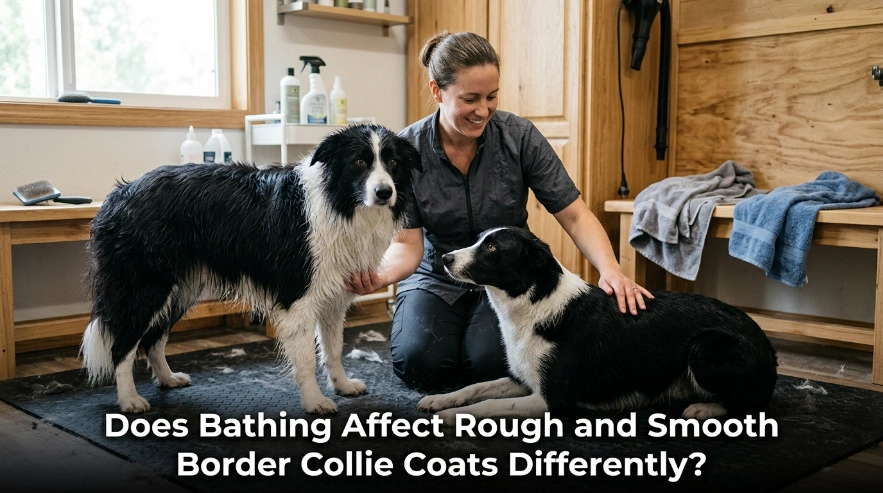
The basic bathing method is the same because both varieties are double-coated. Rough-coated Border Collies usually require more work around longer feathering and areas prone to tangles.
| Bathing Factor | Rough Coat | Smooth Coat |
|---|---|---|
| Double coat | Yes | Yes |
| Visible coat length | Longer with feathering | Shorter and closer to the body |
| Pre-bath priority | Check tangles behind ears, chest, tail, and feathering | Remove loose undercoat and surface debris |
| Drying challenge | Long feathering can hold more water | Surface dries faster, but undercoat still needs checking |
| Post-bath focus | Prevent tangles while removing loosened coat | Remove released short undercoat thoroughly |
I’ve found that rough-coated dogs make grooming problems easier to see because long wet feathering looks obviously tangled. Smooth coats can be deceptive because the top may look finished while dense undercoat still holds moisture.
Don’t rush either coat type. Run your fingers through the fur near the skin before deciding the job is complete.
Frequently Asked Questions
Does bathing improve a Border Collie’s coat?
Yes. Bathing can improve cleanliness, smell, softness, and appearance by removing dirt, excess oil, loose fur, pollen, and debris. The best result comes from brushing before bathing, rinsing completely, drying the dense undercoat, and brushing again afterward.
Will bathing make my Border Collie’s coat shiny?
A bath can make a healthy coat look brighter by removing dirt and buildup that dull the individual hairs. Shampoo cannot create long-term coat health by itself, so nutrition, skin health, routine grooming, and veterinary care still matter.
Why is my Border Collie’s coat greasy after a bath?
A greasy post-bath coat can happen when shampoo or conditioner remains trapped in dense fur. Rinse while separating the coat with your fingers, paying extra attention to the chest, neck, belly, tail base, and rear feathering.
Should I brush my Border Collie before or after bathing?
Usually both. Brush thoroughly before the bath to remove loose hair and tangles, then use a lighter brushing session after the coat is completely dry to collect hair released during washing and drying.
Can I bathe my Border Collie every week?
Routine weekly bathing is not necessary for every healthy Border Collie. Base the schedule on dirt, odor, lifestyle, skin condition, and veterinary advice instead of assuming more frequent washing will automatically create a healthier coat.
Does bathing stop Border Collie shedding?
No. A bath can release dead hairs already sitting within the double coat, so shedding may temporarily look heavier or become easier to remove. It does not stop the normal hair-growth and shedding cycle.
When should coat problems be checked by a veterinarian?
Contact your veterinarian when coat changes involve bald patches, sores, persistent redness, strong unusual odor, significant itching, pain, or sudden unexplained hair loss. Those signs go beyond the ordinary dirt and loose fur that routine bathing can address.
Final Takeaway
Bathing can improve a Border Collie’s coat, but the real benefit comes from doing the entire grooming process correctly. A bath removes dirt, odors, loose fur, environmental debris, and excess surface buildup.
For the best result, brush before washing, use a gentle dog-specific shampoo, rinse the double coat completely, and dry all the way to the undercoat. Finish with a light brush once the fur is dry.
Don’t chase a healthy coat with more shampoo. Consistent brushing, sensible bathing, good general care, and veterinary attention when something looks abnormal will do far more for your Border Collie over the long term.
