
How to Dry a Border Collie Quickly After a Bath

Quick Answer
To dry a wet Border Collie quickly after a bath, let your dog shake off excess water, press an absorbent towel into the coat, replace saturated towels, and finish with a dog dryer using gentle, cool airflow if your dog tolerates it. Check the dense undercoat near the skin, especially around the chest, belly, armpits, legs, and tail, before letting your dog rest in a comfortable indoor space.
The fastest way to dry a Border Collie is to remove as much water as possible with towels before using airflow. This two-stage approach reduces the amount of moisture a dryer must remove and helps you work through the breed’s dense double coat without relying on excessive heat.
Rough-coated Border Collies may need extra attention around their chest, legs, and tail because of their longer feathering. Smooth-coated dogs may be easier to towel dry, but their shorter outer hair does not mean the undercoat is automatically dry.
What Is the Fastest Safe Way to Dry a Border Collie?
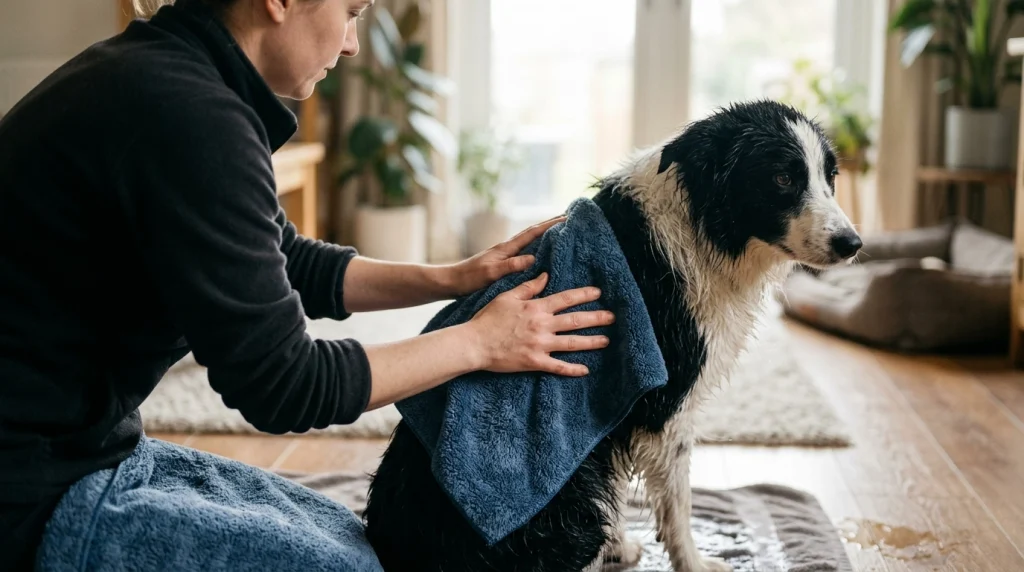
The most efficient routine is to let your dog shake, blot the coat with absorbent towels, and use a suitable dog dryer to move moisture out of thick areas. Prepare your towels and drying area before starting so you do not waste time searching for supplies while your dog is wet.
- Prepare the space. Choose a warm, comfortable indoor area with a non-slip floor. Put two or more dry towels within reach and keep the dryer ready if you plan to use one.
- Let your dog shake. After the final rinse, step back and allow a natural full-body shake. This removes loose surface water before towel drying begins.
- Press water out with a towel. Blot the back, sides, chest, belly, and legs. Gently squeeze longer sections of feathering through the towel rather than scrubbing them back and forth.
- Replace the wet towel. Switch to a dry one when the first becomes saturated. A fresh towel can absorb more water than one already holding moisture.
- Finish with controlled airflow. If your dog is comfortable with the noise and sensation, use a dog dryer on a low setting, keeping the nozzle moving and away from the face and ears.
- Check the roots. Part the coat and feel near the skin in several areas. Continue gentle drying wherever the undercoat remains damp.
This sequence is more useful than simply rubbing harder or turning up the heat. The American Kennel Club’s guide to drying dogs also recommends gentle towel pressing rather than vigorous rubbing and describes dog dryers as a practical option for thicker coats.
How Can You Remove More Water Before Using a Dryer?
Effective towel drying makes the rest of the job faster. Focus on absorbing water from the coat rather than trying to make every section completely dry with a towel alone.
Use absorbent towels in rotation
Microfiber dog towels can be useful because they are designed to absorb moisture and are easy to handle around a wet dog. An ordinary clean bath towel can also work, provided you replace it when it becomes too wet to absorb efficiently.
Keep one towel for the main body and another for the legs, belly, and tail. This gives you a dry surface for areas that often retain water without repeatedly spreading moisture around the coat.
Blot the coat instead of rubbing it
Press the towel against the fur, hold it briefly, and lift it away. On longer feathering, gently squeeze a small section between the towel layers without twisting the hair.
Fast back-and-forth rubbing can tangle the longer hairs, particularly behind the ears and around the legs and tail. Removing water carefully can save time later because you will have fewer knots to work through.
Prioritize the areas that hold moisture
Start with the back and sides, then move to thicker or less exposed areas. Give additional attention to:
- Chest and neck: Separate the coat gently to reach deeper hair.
- Armpits and lower belly: Blot carefully where the coat lies close to the body.
- Leg feathering: Press the towel into the longer hair without pulling.
- Tail and hindquarters: Squeeze excess water from the feathering gently.
- Behind the ears: Towel dry the surrounding hair carefully without rubbing the ear opening.
Do not assume that the areas with the wettest appearance are the only ones that need attention. The back may look soaked while a thick patch under the chest remains damp after the surface dries.
How Do You Use a Dog Dryer to Speed Up the Process?
A dog dryer can shorten the drying process when towel drying has removed most of the water. For a dense double coat, airflow helps move moisture out of the hair more effectively than relying on a towel alone.
Choose a dryer intended for dogs when possible. Many grooming dryers are designed to move air through the coat rather than depend on hot air, which reduces the risk of overheating sensitive skin.
- Start with a low setting. Let your Border Collie hear the dryer from a distance before directing air at the coat. Reward calm behavior and pause if your dog becomes frightened.
- Begin on a comfortable area. Start along the back or side rather than the face, paws, or other sensitive areas.
- Keep the nozzle moving. Work in short passes instead of directing concentrated airflow at one patch of skin.
- Separate the coat gently. Use your free hand to part the fur so air can reach deeper hair. Never pull or force a comb through wet tangles.
- Recheck each section. Feel near the skin after drying the surface. Move to another section once the current area is dry.
A dog dryer may be too noisy or intense for a sensitive dog. If your Border Collie tries to escape, trembles, or shows persistent distress, switch back to gentle towel drying and let your dog settle before deciding whether to try again.
Warning
Do not use high heat to compensate for poor towel drying, and never hold hot airflow close to your dog’s skin. Avoid blowing air directly into the eyes or ear canals, and stop if your dog appears overheated or distressed.
Can You Use a Human Hair Dryer on a Border Collie?
A human hair dryer is not the preferred tool for drying a Border Collie. Many household dryers produce concentrated heat that can irritate or burn a dog’s skin, especially when held close to the body or kept in one place.
A dog-specific dryer is generally the better choice for finishing a thick coat. If you have no suitable dog dryer, use absorbent towels and allow the remaining moisture to evaporate indoors rather than taking risks with excessive heat.
If a human dryer is considered at all, use only genuinely cool airflow, keep it well away from the skin, move it continuously, and stop if the dog is uncomfortable. Do not assume that a low fan-speed setting also means low heat.
How Long Does It Take to Dry a Border Collie?
There is no fixed drying time for every Border Collie. Coat length, undercoat density, how thoroughly the dog was soaked, towel absorbency, room conditions, and tolerance for a dryer all affect the time required.
A smooth-coated dog that has been towel dried thoroughly may need less finishing time than a rough-coated Border Collie with heavy feathering. A thick seasonal undercoat can also make drying slower than expected.
Rather than setting a strict deadline, use the coat itself as your guide. If the surface is dry but the roots feel cool and damp, continue with gentle airflow or further towel blotting. It is better to spend a little longer drying thoroughly than to stop early because the topcoat looks fluffy.
How Can You Tell Whether the Undercoat Is Still Wet?
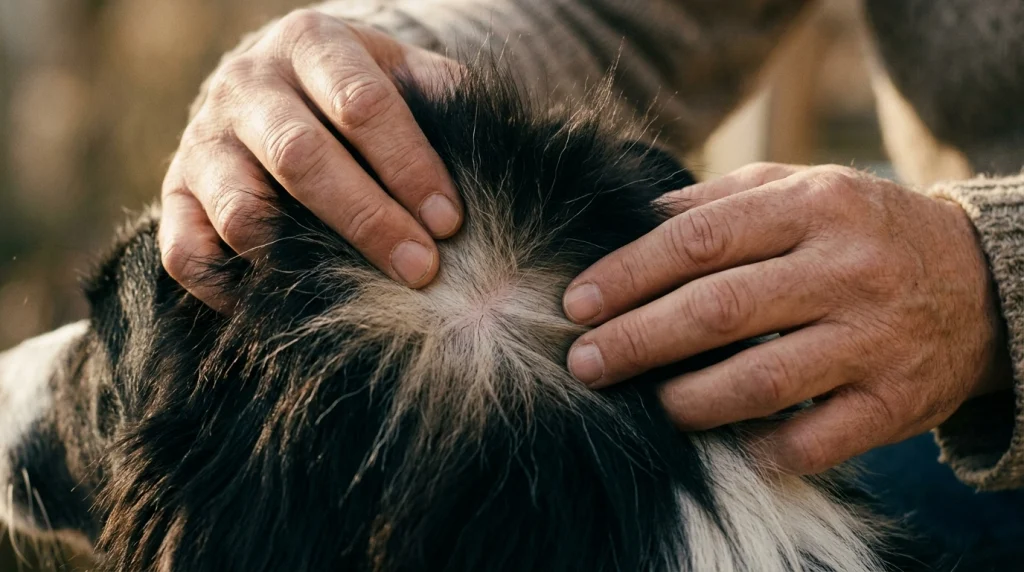
Part the hair with your fingers and feel close to the skin in several locations. A dry-looking topcoat can conceal damp hair underneath, so checking only the back is not enough.
Inspect the chest, armpits, lower belly, inner legs, tail base, and the longer hair behind the ears. Pay particular attention to feathering that clumps together or feels cool and clammy at the roots.
After drying, gently brush the coat if it is free of tangles and dry enough to handle comfortably. A comb can help identify remaining knots, but never yank it through a snag; separate the hairs gently instead.
The AKC’s Border Collie breed guide identifies both rough and smooth coat types as dense double coats. That is why a surface check alone can be misleading, even for a short-coated Border Collie.
What Should You Do If Your Border Collie Hates Drying?
Do not force a long drying session if your dog is frightened by towels or a dryer. Use short, calm sessions, begin with the least sensitive areas, and reward relaxed behavior with praise or treats.
- Let your dog sniff and investigate the switched-off dryer before turning it on.
- Introduce the sound from a distance and gradually move closer only while your dog remains comfortable.
- Keep sessions brief and take breaks rather than trying to finish everything at once.
- Use towels to remove as much moisture as possible if the dryer remains frightening.
If your dog is still substantially wet and cannot tolerate home drying, a professional groomer can help complete the process safely. Seek veterinary advice if you notice persistent skin redness, soreness, unusual odor, or itching rather than trying to solve those symptoms by repeated washing.
Can a Border Collie Air Dry After a Bath?
Yes, air drying can finish a coat that has already been towel dried well, provided your dog remains in a comfortable indoor environment. It is less reliable as the only method after a full bath because a dense undercoat may stay damp after the outer hair feels dry.
Keep your dog away from cold drafts and wet bedding while the coat finishes drying. Check the roots again rather than relying on how much time has passed, and use gentle airflow if your dog tolerates it.
For more detailed coat-care guidance, see our existing guide on how to dry a Border Collie after bathing. It covers the broader drying process, while this guide focuses on reducing drying time safely.
Related Product
Absorbent Microfiber Dog Towels
A dedicated absorbent dog towel can help remove excess water before you finish drying your Border Collie’s dense coat.
As an Amazon Associate, we earn from qualifying purchases.
Frequently Asked Questions
Can I wrap my Border Collie in a towel after a bath?
Yes. You can briefly wrap your dog in a clean, absorbent towel to soak up surface water, provided the towel is not tight and your dog is comfortable. Replace it when it becomes saturated, then continue blotting the coat.
Should I brush my Border Collie while the coat is wet?
Avoid forceful brushing or pulling through wet tangles. Remove excess water first, then gently work through the coat when it is suitable for brushing, paying attention to feathering that may knot easily.
Is a microfiber towel better than a regular towel for drying a dog?
A microfiber dog towel is a useful option because it is designed to absorb moisture and is easy to handle. A clean regular bath towel can also work well if you press rather than rub and change it when it becomes wet.
Can I let my Border Collie sleep while still damp?
It is better to remove as much moisture as possible before your dog settles for a long rest. Check the undercoat near the skin and keep the bedding clean and dry; do not assume the coat is dry just because the surface feels soft.
What if my Border Collie starts panting during blow drying?
Stop the dryer and assess your dog’s comfort. Panting can occur with stress or heat, so move to a comfortable area and allow your dog to settle. If panting is severe, persistent, or accompanied by weakness, breathing difficulty, or collapse, seek urgent veterinary care.
Do rough-coated Border Collies take longer to dry than smooth-coated ones?
They often need more drying work because their longer feathering can retain water, but actual drying time varies with undercoat density and how wet the dog became. Both coat types have a dense double coat, so check near the skin regardless of coat length.
Conclusion
To dry a wet Border Collie quickly, focus on removing water efficiently rather than using more heat. Let your dog shake, press the coat with absorbent towels, replace wet towels promptly, and use a dog dryer with gentle airflow if your dog is comfortable with it.
Always check the undercoat close to the skin, particularly around the chest, belly, armpits, legs, and tail. If your dog dislikes the dryer, work in short sessions and use towels to make steady progress. A comfortable dog and a thoroughly dry coat matter more than finishing in a set number of minutes.