
Self-Service Dog Wash for a Border Collie: Complete Guide

Quick Answer
A self-service dog wash can work extremely well for a Border Collie because the raised tub, handheld sprayer, and dryer make a dense double coat easier to clean than a normal bathtub. The key is protecting the undercoat, rinsing thoroughly, and drying all the way through rather than only drying the surface. The AKC’s double-coat grooming guidance also emphasizes regular brushing and careful coat maintenance.
Quick self-service wash steps
- 1. Brush first: Remove loose undercoat, burrs, and small tangles before getting the coat wet.
- 2. Use lukewarm water: Soak the coat slowly until water reaches the dense undercoat.
- 3. Choose dog shampoo: Use a mild canine product rather than human shampoo or random cleaners.
- 4. Rinse deeply: Keep rinsing until the undercoat no longer feels slippery or soapy.
- 5. Towel first: Press moisture from the coat instead of aggressively rubbing it into tangles.
- 6. Dry the undercoat: Use the dryer on a comfortable setting while keeping air away from eyes and ears.
Before you start
- Skip the wash and contact your vet if your Border Collie has raw skin, open wounds, unusual discharge, or a painful-looking rash.
I’ve washed Border Collies in home tubs, outdoor setups, professional grooming rooms, and coin-operated dog wash bays. For a muddy working collie, a good self-service station is often the easiest option.
The equipment helps, but technique matters more. A Border Collie’s double coat can hide soap, moisture, sand, and loose undercoat long after the outside looks clean.
In This Guide
- Is a Self-Service Dog Wash Good for a Border Collie?
- What Should You Bring to a Self-Service Dog Wash?
- How Do You Wash a Border Collie at a Self-Service Station?
- How Do You Dry a Border Collie’s Double Coat?
- How Do You Keep a Border Collie Calm at the Dog Wash?
- What Self-Service Dog Wash Mistakes Should You Avoid?
- Self-Service Wash vs Home Bath vs Professional Groomer
- When Should You Skip the Dog Wash?
- Frequently Asked Questions
Is a Self-Service Dog Wash Good for a Border Collie?
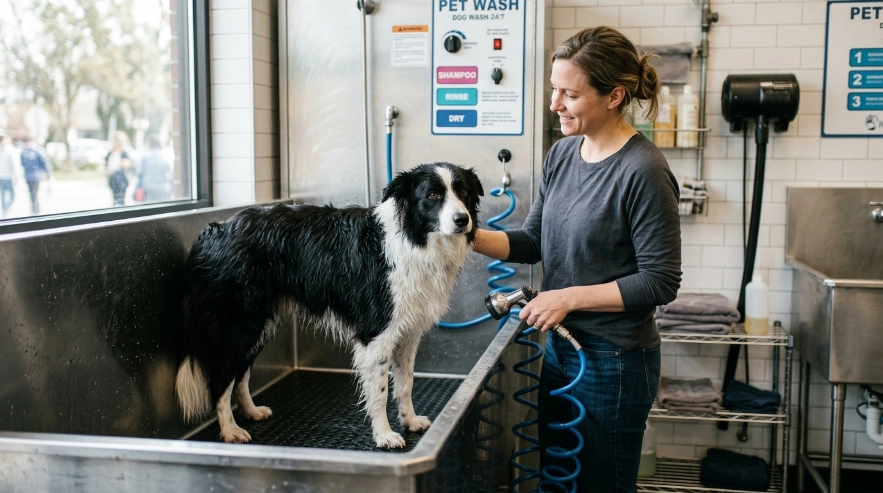
Yes. A self-service dog wash is usually a practical choice for a healthy Border Collie, especially after muddy hikes, farm work, beach trips, or heavy shedding.
Definition: A self-service dog wash is a grooming station where you wash and dry your own dog using a raised tub, sprayer, shampoo system, towels, and often a forced-air dryer.
Border Collies have a double coat. The softer undercoat sits beneath protective outer hairs, sometimes called guard hairs.
Both rough-coated and smooth-coated Border Collies have this basic double-coat structure. Rough coats simply make trapped moisture and loose hair easier to overlook.
Why the setup suits Border Collies
- Raised tub: You don’t need to bend over a household bathtub while controlling an athletic dog.
- Handheld sprayer: It reaches the chest, belly, feathering, and thick rear coat more easily.
- Good drainage: Mud and shedding undercoat leave the tub instead of clogging your bathroom.
- Forced-air dryer: Air can separate the coat and push water from the undercoat.
- Less cleanup: The famous post-bath Border Collie shake happens somewhere other than your bathroom.
As of 2026, mainstream grooming guidance still favors brushing double-coated dogs regularly rather than shaving their coat for convenience. Border Collies are specifically recognized as medium double-coated dogs.
That matters at a self-wash station. Your goal is to clean and dry the existing coat, not strip away the protective structure.
What Should You Bring to a Self-Service Dog Wash?
Bring a few familiar tools even when the facility supplies shampoo and towels. The right preparation can make the visit much faster.
My Border Collie wash kit
- Slicker brush: Useful for loose hair and light tangles.
- Metal comb: Helps check whether feathering and behind-ear areas are truly tangle-free.
- High-value treats: Useful for rewarding calm behavior around the tub and dryer.
- Non-slip leash: Use the facility restraint correctly, but keep your normal leash available.
- Extra towel: One towel disappears quickly into a Border Collie’s undercoat.
- Your own shampoo: Bring it if your dog has a product that you already know works well.
Brush before leaving home if possible. Wetting a compact tangle can tighten it and make later brushing uncomfortable.
The ASPCA’s dog grooming guidance also recommends brushing before bathing and using products made for pets.
Check the station before bringing your dog inside
- Make sure the tub floor isn’t dangerously slippery.
- Check how the restraint attaches and adjusts.
- Test the water temperature with your hand.
- Learn the dryer controls before turning it toward your dog.
- Find the emergency shutoff or pause control.
A noisy unfamiliar bay can overwhelm a sensitive dog. Knowing the equipment first lets you focus on your Border Collie instead of reading instructions mid-bath.
How Do You Wash a Border Collie at a Self-Service Station?
Wash a Border Collie slowly from the neck down, work water through the double coat, shampoo gently, and rinse much longer than you think necessary. Keep direct spray away from the face and ear canals.
1. Settle your dog before starting
Give your Border Collie a minute to investigate the tub. Reward four paws on the surface and calm standing.
Don’t immediately start the loudest equipment. Herding breeds often notice movement and sound changes faster than we expect.
2. Wet the coat completely
Use lukewarm water. Start around the shoulders rather than spraying the face.
- Work from neck toward tail.
- Wet the chest and belly carefully.
- Soak the feathering on the legs.
- Pay extra attention to the dense trousers around the rear legs.
- Keep the sprayer away from eyes, nose, and ear openings.
A rough-coated Border Collie can look soaked while the undercoat remains nearly dry. Part the hair with your fingers and check near the skin.
3. Apply dog shampoo
Use shampoo formulated for dogs. Human shampoo isn’t my choice because canine skin and coat needs differ from ours.
The AKC’s shampoo guidance notes that double-coated breeds such as Border Collies need shampoo that can reach through the outer coat toward the undercoat and skin.
- Massage rather than aggressively scrub.
- Work shampoo through the chest and shoulders.
- Clean the belly without flooding sensitive areas.
- Wash muddy paws and lower legs thoroughly.
- Use a damp cloth on the face instead of spraying it.
4. Rinse longer than you shampooed
This is the step I see owners rush most often. Dense undercoat can hold diluted shampoo even when runoff looks clear.
With my own Border Collies, I check the hips, chest, armpits, and rear feathering by hand. If the coat still feels slick, I keep rinsing.
- Rinse from the highest point downward.
- Separate thick hair with your fingers.
- Check the belly and inner legs.
- Run your hand through the coat for slippery residue.
Section Takeaway: A self-service wash works best when you spend less effort scrubbing and more effort soaking, rinsing, and checking the undercoat.
How Do You Dry a Border Collie’s Double Coat?
Dry the coat in stages: remove excess water by hand, towel-press the coat, then use comfortable airflow to move moisture from the undercoat. Don’t assume a dry-looking topcoat means the dog is dry underneath.
Start with towels
Let your dog shake before toweling if the station allows it. That single shake can remove a surprising amount of water.
Press and squeeze the towel into thick areas. Avoid frantic back-and-forth rubbing because it can create tangles in longer feathering.
Introduce the dryer gradually
Forced-air dryers are useful for Border Collies, but the sound can worry inexperienced dogs. Start farther away and use the lowest practical intensity.
- Begin at the shoulder or side.
- Keep airflow moving rather than holding it on one spot.
- Work in the direction that lets you see moisture leaving the coat.
- Reduce pressure around sensitive areas.
- Never blast air directly into the eyes, nose, or ears.
Watch the hair near the skin. When water droplets stop appearing and the undercoat feels airy rather than cold and damp, you’re getting close.
Brush after most moisture is gone
A gentle final brush separates the coat and catches loosened undercoat. Don’t yank through resistance.
PetMD describes Border Collies as regular shedders with medium-length double coats that benefit from routine brushing and bathing. You can review its Border Collie care overview for broader breed-care context.
Section Takeaway: The dryer isn’t just for making the outer hair fluffy. Your real target is moisture hiding beneath the Border Collie’s topcoat.
How Do You Keep a Border Collie Calm at the Dog Wash?
Keep the first visit short, predictable, and reward-based. A nervous Border Collie doesn’t need to “push through” a frightening grooming session.
Border Collies were developed to notice subtle movement and respond quickly to their environment. That sensitivity is useful in herding but can make dryers, metal tubs, and sudden sprays intense.
Break the experience into small wins
- Enter calmly: Reward your dog for walking into the wash area.
- Explore the tub: Let them stand in it before water starts.
- Introduce water: Begin with a gentle stream on a shoulder or leg.
- Pause often: Give treats while the equipment is quiet.
- Introduce the dryer: Turn it on away from the dog before bringing airflow closer.
Five calm minutes can teach more than thirty minutes of restraint and struggle. Training carries over to future grooming visits.
Know when stress is becoming too much
Watch body language rather than waiting for barking or snapping. A worried Border Collie may freeze first.
- Repeated attempts to escape
- Trembling
- Persistent tucked tail
- Refusing normally irresistible treats
- Hard staring or freezing
- Frantic panting unrelated to heat
If your dog escalates, stop and reset. A professional groomer experienced with fearful dogs may be safer for severe anxiety.
What Self-Service Dog Wash Mistakes Should You Avoid?
The biggest mistakes are washing tangled fur, using unsuitable products, rushing the rinse, frightening the dog with the dryer, and leaving the undercoat damp. All five are avoidable.
Don’t wash over tight mats
Small tangles behind the ears, under the collar, and around the rear feathering can tighten after washing. Check these areas before the bath.
Don’t use human shampoo
Use a dog-specific product unless your veterinarian has prescribed something else. “Natural” on a bottle doesn’t automatically mean appropriate for every dog.
Don’t shave the double coat just to reduce drying time
Border Collies, Australian Shepherds, and many Kelpies have protective double coats. Routine shaving isn’t a shortcut I recommend for ordinary bathing or shedding.
Removing healthy coat structure can interfere with how the coat normally protects the skin. Severe matting or medical clipping should be handled with professional guidance.
Don’t ignore the rinse
Shampoo residue can hide beneath dense hair. Rinse until both the water and the feel of the coat tell you the soap is gone.
Don’t blast the face with a dryer
A dryer nozzle can feel intense even when the air isn’t hot. Keep it moving and protect sensitive areas.
Don’t put a wet dog straight into cold weather
Dry the coat properly before leaving during chilly conditions. A thick coat can remain wet near the skin longer than it appears.
Self-Service Wash vs Home Bath vs Professional Groomer
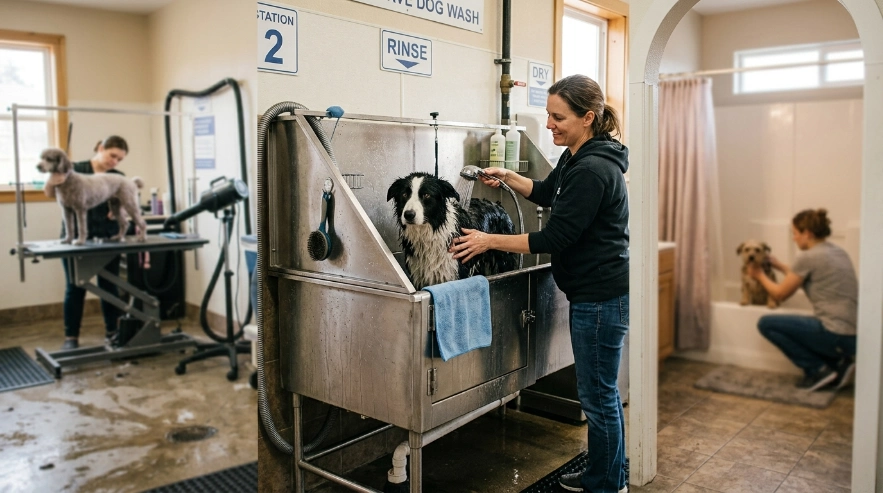
A self-service wash usually offers the best balance when your Border Collie is healthy, manageable, and simply dirty. Home bathing costs less, while a professional groomer is better for difficult coats or handling problems.
| Option | Approx. Owner Time | Double-Coat Equipment | Best For | Main Drawback |
|---|---|---|---|---|
| Self-service wash | About 30–60 minutes for many routine washes | Usually good if a strong sprayer and dryer are provided | Mud, odor, seasonal shedding, active dogs | Noise and unfamiliar equipment |
| Home bath | Often 45–90 minutes including cleanup | Depends on your sprayer and drying setup | Calm dogs and light dirt | Hair, water, and cleanup stay in your home |
| Professional groomer | Minimal hands-on owner time | Typically the most complete setup | Heavy undercoat, matting, nail care, difficult handling | Higher cost and appointment scheduling |
The time ranges above are practical planning estimates, not fixed service times. Coat length, shedding level, behavior, and the station’s equipment can change the session considerably.
When I choose self-service
I like a wash bay after wet trail walks or when a Border Collie is carrying half the countryside in their trousers. The high tub alone saves my back.
I choose professional help when mats are close to the skin or the dog can’t safely tolerate normal handling. That isn’t a failure.
Section Takeaway: Choose the setup based on coat condition and behavior, not just price. A routine dirty coat is ideal for self-service; a damaged or severely tangled coat needs more expertise.
When Should You Skip the Dog Wash?
Skip a routine self-service wash if you find open wounds, painful skin, significant inflammation, unusual odor from the ears, or widespread sores. Bathing isn’t a substitute for diagnosis.
Vet note: If your Border Collie has persistent itching, hair loss, raw skin, discharge, or a painful rash, contact your own veterinarian before choosing shampoos or medicated products.
Red flags to check before bathing
- Bleeding or open cuts
- Moist, painful skin lesions
- Sudden patches of hair loss
- Strong ear odor or discharge
- Repeated head shaking
- Severe scratching or chewing
- Swelling or obvious pain
The AVMA’s pet-owner resources are useful for general veterinary information, but your dog’s own veterinarian should guide treatment when symptoms are present.
When a professional groomer makes more sense
A groomer is often the better choice for dense matting, a packed seasonal undercoat, or a coat you can’t comb through safely. Don’t cut tight mats with household scissors near the skin.
Professional help can also be useful before a major shedding season. A skilled groomer can remove loose coat without turning the session into a wrestling match.
Frequently Asked Questions
Can I take a Border Collie to a self-service dog wash?
Yes. Most healthy, reasonably comfortable Border Collies can use a self-service dog wash safely. Brush first, use canine shampoo, rinse the dense double coat thoroughly, and dry the undercoat rather than stopping when the outer hair looks dry.
How often should I wash my Border Collie?
There isn’t one schedule for every Border Collie. Bathe when the dog is dirty, smelly, or needs cleaning after outdoor activity, while avoiding unnecessary over-bathing that can dry the skin and coat.
Should I brush my Border Collie before or after the bath?
Do both when needed. Brush before bathing to remove loose undercoat and tangles, then gently brush again after the coat is mostly dry to separate hair and remove loosened shedding fur.
Can I use the shampoo supplied at a self-service dog wash?
Usually, if it’s clearly labeled for dogs and your Border Collie has normal skin. Bring your own known shampoo if your dog has sensitive skin, allergies, or a product recommended by your veterinarian.
Can I use a high-velocity dryer on a Border Collie?
Yes, with sensible handling. Start at a low or comfortable setting, keep the nozzle moving, and never direct strong airflow into the eyes, nose, or ears. Introduce the sound gradually to nervous dogs.
Do smooth-coated Border Collies need different washing?
The basic process is the same because smooth Border Collies still have a double coat. They usually have less feathering to detangle and dry, but you should still rinse through the undercoat and check for trapped moisture.
Should I shave my Border Collie before using a dog wash?
No. A normal healthy Border Collie’s double coat doesn’t need shaving for bathing or summer convenience. If the coat is severely matted or a medical procedure requires clipping, ask a professional groomer or veterinarian for guidance.
A self-service dog wash can be one of the easiest ways to clean an active Border Collie without turning your bathroom into a swamp. Brush before you go, keep the experience calm, rinse deeply, and give the double coat enough drying time.
Once your dog learns the routine, the whole process gets easier. I aim for a clean coat and a relaxed dog rather than racing the wash-bay timer.
