
How Often Should Dogs Get Their Teeth Cleaned? A Practical Guide for Owners

If you want the shortest honest answer: many dogs are examined yearly, but professional cleanings are not on a universal annual rule. The right timing depends on your dog’s risk level, dental history, and what the veterinarian sees on exam.
Some dogs do well with routine veterinary dental checks and cleanings on a fairly regular cadence, while others need them sooner because plaque and tartar build up faster, their gums are inflamed, or they already have a history of periodontal disease.
For Border Collie owners, that individualized approach matters. Many Border Collies stay active and healthy for years, but oral health can still quietly slip if you rely on “he seems fine” as your only check. Dogs often keep eating even when dental disease is present.
A practical rule: use your dog’s mouth, age, breed, history, and home care habits to decide the interval, not a calendar alone. Annual cleanings are common for some dogs, but they are not a universal requirement and they are not always enough for higher-risk dogs.
How Often Dogs Should Get Their Teeth Cleaned
For many dogs, veterinarians often recommend regular professional dental cleanings based on risk, not a fixed one-size-fits-all timeline. A healthy young dog with clean teeth, good home brushing, and no history of dental disease may go longer between cleanings than a small senior dog with tartar and inflamed gums.
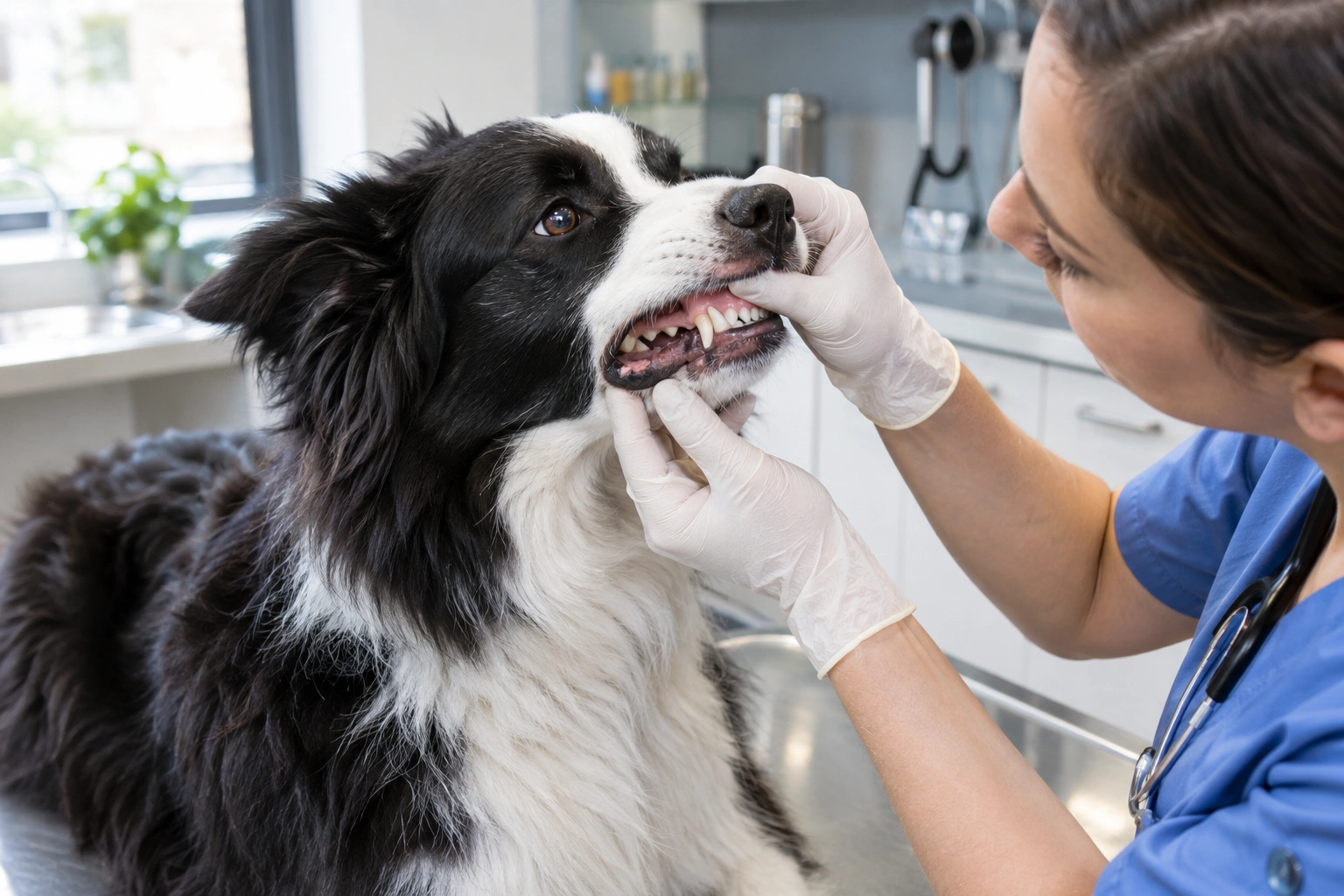
A practical rule of thumb is:
- Lower-risk dogs: may go longer between cleanings, especially if home brushing is consistent and the vet sees little tartar or gingivitis.
- Average-risk dogs: often need routine follow-up and cleanings at intervals your veterinarian sets after checking tartar, gum health, and prior dental history.
- Higher-risk dogs: may need earlier rechecks or more frequent cleanings if tartar returns quickly, gingivitis is present, or periodontal disease has already started.
That said, once dental disease starts, the schedule usually tightens. A dog that has already had periodontal disease, extractions, or repeated tartar buildup often needs closer follow-up because the mouth tends to return to the same pattern unless prevention improves.
Here’s the practical way to think about it:
- Lower-risk dogs: may need professional cleanings less often, especially if home brushing is consistent.
- Average-risk dogs: often land somewhere around routine veterinary dental checks with cleanings as advised by the vet.
- Higher-risk dogs: may need cleanings more often because disease progresses faster or returns sooner.
If you want a simple decision rule, use this: if your dog’s mouth is staying clean between annual wellness visits, you may be able to wait longer; if you’re seeing tartar, bad breath, or gum redness, the interval is probably too long.
A Quick Guide by Risk Profile
| Risk profile | What you may notice at home | Typical practical approach |
|---|---|---|
| Young dog with healthy gums and daily brushing | Little tartar, mild or no bad breath | Dental checks at regular wellness visits; cleanings only when your vet sees buildup or early disease |
| Adult dog with inconsistent brushing | Some plaque, occasional bad breath | More frequent monitoring; professional cleaning when tartar or gum inflammation appears |
| Small breed dog | Tartar near the gumline, crowding, retained plaque | Often needs closer dental follow-up because small mouths can trap debris more easily |
| Senior dog | More tartar, worn teeth, possible chewing changes | Dental exam sooner rather than later; cleaning schedule often shortens with age and wear |
| Dog with prior periodontal disease | Bad breath returns quickly, red gums, possible loose teeth | Shorter interval and more active prevention; vet may recommend closer rechecks |
| Dog with excellent home care | Clean teeth, healthy gums, minimal odor | May be able to extend time between cleanings, depending on the vet’s exam |
What Determines the Right Cleaning Schedule
The right interval depends on how fast plaque turns into tartar and how quickly gum inflammation appears in that individual dog. Several factors matter.
Age
Puppies and young dogs can have healthy mouths, but that doesn’t mean they are “done” with dental care. Adult teeth need monitoring once they come in, and older dogs often need more attention because wear, crowding, and prior disease become more common over time.
Breed and size
Small breeds often need closer dental monitoring than larger dogs because their teeth are packed into a smaller space, which can make plaque and tartar management harder. That does not mean every small dog needs the same schedule, but it does mean the vet may recommend earlier or more frequent cleanings.
Border Collies are not among the classic high-risk toy breeds, but that does not make them low-maintenance automatically. A Border Collie with a dry mouth, poor chewing habits, or weak brushing routine can still develop dental disease.
Dental history
A dog that has already had periodontal disease is not starting from zero. Once the gums and supporting structures around the teeth have been damaged, the mouth may need more frequent professional attention to stay stable.
Home care habits
Daily brushing can slow plaque buildup better than occasional brushing. That matters because plaque is the film that becomes tartar if it is left on the teeth. The better the home routine, the less pressure there is on professional cleanings to do all the work.
Diet and dental products
Some dental diets, chews, and water additives can support oral hygiene, but they work best as part of a broader plan. They should not be treated as a replacement for brushing or veterinary cleanings.
If you want a reputable starting point for product selection, look for the VOHC seal and review guidance from your veterinarian. The American Veterinary Medical Association also has useful general guidance on preventive pet care, and the ASPCA provides practical pet health information for owners who want to build better daily habits.
Signs Your Dog Needs a Dental Cleaning Sooner
Do not wait for a routine visit if your dog is showing signs of oral discomfort or disease. The earlier you act, the more likely you are to catch problems before they become painful or expensive.
Watch for these signs:
- bad breath that does not go away
- yellow or brown tartar near the gumline
- red, swollen, or bleeding gums
- drooling more than usual
- pawing at the mouth
- chewing on one side
- dropping food
- reluctance to eat hard food or chew toys
- loose teeth
- facial swelling
- obvious pain when the mouth is touched
A dog can still eat while having significant dental disease, so normal appetite does not rule out a problem. If you see a combination of bad breath, tartar, and gum redness, that is a strong reason to book a dental exam rather than waiting.
If your dog is also having trouble chewing, a dental issue may be affecting comfort enough to change behavior. That kind of pain can show up as grumpiness, slower eating, or avoiding toys they used to enjoy.
For broader care planning, our guide on how often dogs get shots is a useful companion piece because it uses the same risk-based logic many vets apply across preventive health.
At-Home Dental Care vs Professional Veterinary Cleaning
These are not the same thing, and the difference matters.
At-home dental care is prevention. Brushing removes plaque before it hardens, and that slows the cycle that leads to tartar and inflamed gums. Dental chews and VOHC-approved products can help support that effort.
Professional veterinary cleaning is treatment and assessment. It removes hardened tartar, lets the vet examine the entire mouth, and usually includes cleaning below the gumline where disease often starts.
The trade-off is straightforward:
- Home care is cheaper, easier to do regularly, and helps delay disease.
- Professional cleaning is more thorough and can address problems home care cannot reach.
If you only do one thing at home, make it brushing. Even a few minutes of consistent brushing several times a week is more useful than an occasional deep clean with a chew toy and good intentions.
What Happens During a Professional Dog Dental Cleaning
A true veterinary dental cleaning is more than a quick surface scrape.
A typical visit usually includes:
-
Pre-anesthetic exam and screening
Your vet checks overall health and decides whether anesthesia is appropriate.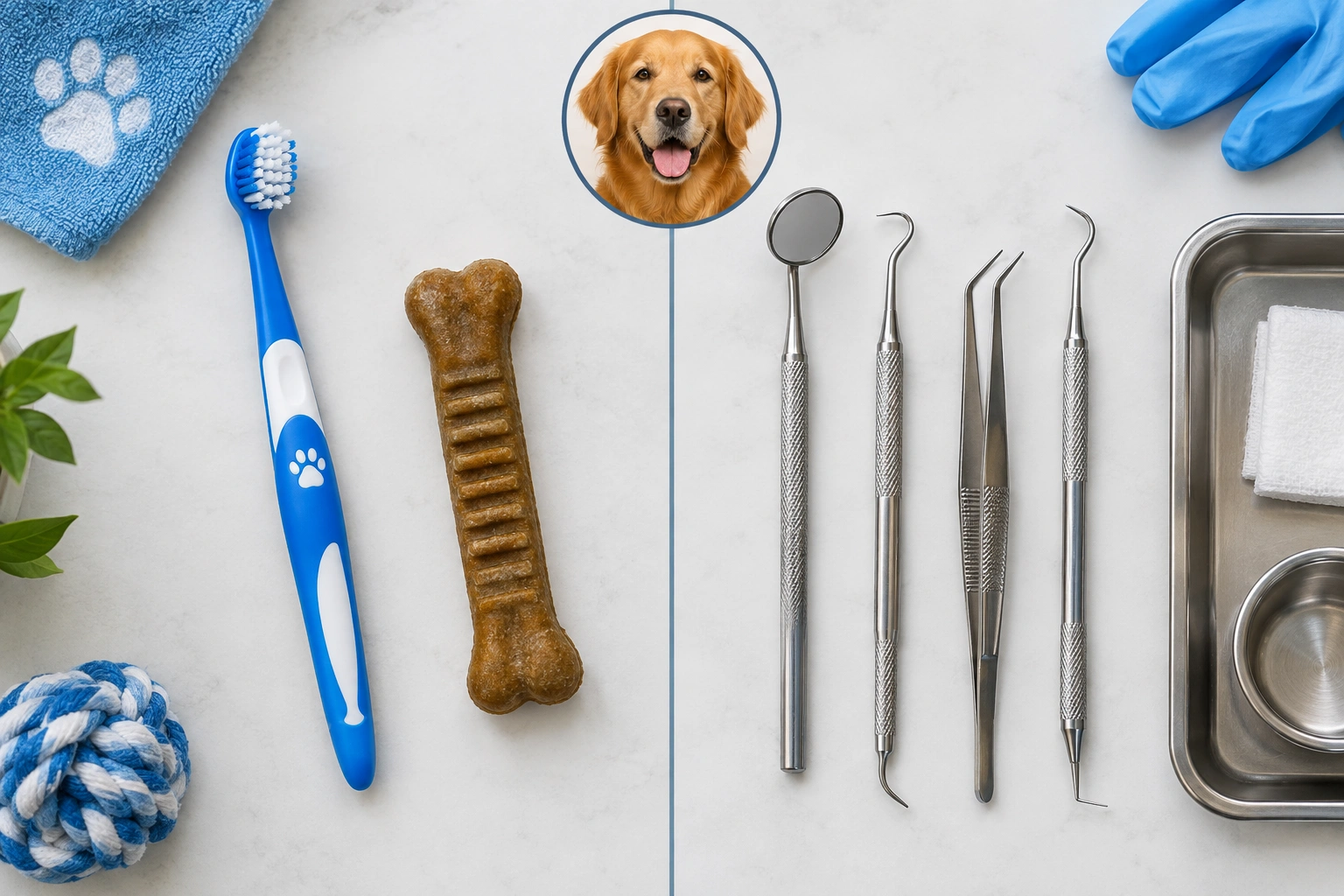
Brushing helps, but it cannot replace a full veterinary dental cleaning. -
Oral examination
The mouth is assessed for tartar, gum disease, loose teeth, fractures, and painful areas. -
Dental charting
The veterinarian or dental team records the condition of each tooth and surrounding tissue so they can track tartar, gum disease, pocketing, loose teeth, and other findings. -
Scaling
Plaque and tartar are removed from the tooth surfaces. -
Polishing
The teeth are polished to smooth the enamel and help slow future plaque buildup. -
Dental X-rays
These matter because a lot of disease hides below the gumline. A tooth can look acceptable above the surface while the root or surrounding bone is already compromised. -
Treatment if needed
If the vet finds advanced disease, extractions or other treatment may be recommended.
Dental X-rays are one of the biggest reasons veterinary cleanings are different from cosmetic or non-anesthetic cleaning. Without them, you can miss problems that are already causing pain.
Anesthesia, Safety, and Non-Anesthetic Cleaning Trade-Offs
Many owners worry about anesthesia, and that concern is understandable. The reason veterinarians commonly recommend anesthesia for dental cleanings is simple: it allows a thorough exam, proper scaling, polishing, and dental X-rays while keeping the dog still and safe.
That said, anesthesia is not a casual decision. A good veterinary clinic will usually review your dog’s health history and may recommend pre-anesthetic screening, especially for older dogs or dogs with medical conditions.
Non-anesthetic cleanings may remove some visible surface buildup, but they do not replace a full veterinary dental cleaning. They usually cannot provide the same level of cleaning below the gumline, and they do not allow for the same oral examination or X-rays.
So the trade-off is:
- Anesthesia-based cleaning: more thorough, more diagnostic, better for real dental disease
- Non-anesthetic cleaning: less invasive on the surface, but limited and not equivalent
If your dog has tartar, gum inflammation, or pain, a non-anesthetic approach is usually not the right substitute.
How Age, Breed, and Health Change the Answer
The older and more medically complicated the dog, the more individualized the plan needs to be.
A young Border Collie with clean teeth and solid brushing habits may not need frequent professional cleanings. If the vet sees healthy gums and minimal buildup, the interval may be longer.
A small senior dog with tartar and red gums is a different story. That dog may need a cleaning sooner, then closer follow-up afterward because disease tends to recur faster.
A dog with prior periodontal disease often needs more active monitoring than a dog with a healthy mouth. Once the supporting structures around the teeth are damaged, the mouth is more vulnerable to repeat problems.
Underlying health issues also matter. Dogs with certain medical conditions may need extra planning before anesthesia or dental treatment. That’s a conversation for your veterinarian, not something to guess at home.
How Preventive Care Can Reduce Cleaning Frequency
Prevention does not eliminate the need for professional cleanings, but it can reduce how quickly plaque and tartar build up.
The most useful home strategies are:
- Daily brushing
- VOHC-approved dental chews or diets
- Consistent mouth checks
- Early veterinary attention when breath changes or gums look red
The reason these help is mechanical: they reduce plaque before it hardens into tartar. Once tartar is present, brushing alone usually will not remove it.
For Border Collies, consistency is often the real challenge. These dogs learn routines quickly, which is helpful, but they also get bored when care feels random. A short, predictable tooth-brushing habit after a walk or evening meal is usually easier to maintain than an occasional long session.
If your dog already accepts handling, build on that. If not, introduce brushing gradually and pair it with something positive so the mouth routine becomes normal rather than a fight.
What Dog Dental Cleanings Usually Cost
Cost varies widely because several things affect the final bill:
- anesthesia
- dental X-rays
- bloodwork or pre-anesthetic screening
- the amount of tartar and gum disease
- whether extractions are needed
- your clinic’s pricing and location
In practice, a routine dog dental cleaning in the U.S. often falls in the several-hundred-dollar range, and it can be higher when X-rays, bloodwork, or extractions are needed. A more involved dental procedure can cost significantly more than a basic cleaning.
A simple cleaning is usually less expensive than a cleaning that turns into treatment for advanced periodontal disease. That is one reason prevention matters financially as well as medically.
If you are budgeting, ask the clinic what is included in the estimate. A low headline price may not include X-rays or bloodwork, while a higher quote may cover more of the actual dental work.
When to Book a Dental Exam Instead of Waiting
Book a veterinary dental exam sooner if:
- your dog has persistent bad breath
- you see tartar near the gumline
- gums look red or bleed easily
- chewing seems uncomfortable
- your dog drops food or favors one side of the mouth
- a tooth looks loose or damaged
- the face is swollen
- your dog suddenly avoids toys or hard food
If the mouth looks normal but your dog has had dental disease before, still ask your vet whether the schedule should be shorter. History matters.
A routine wellness visit is fine when your dog is acting normal and the mouth looks healthy. A dental exam is the better choice when symptoms are present or the risk profile has changed.
When to See a Veterinarian or Certified Trainer
For dental concerns, the right professional is usually your veterinarian. If you notice pain, swelling, bleeding gums, loose teeth, or a sudden change in eating, do not wait for the next routine appointment.
If your dog resists brushing, handling, or mouth checks, a certified trainer can help you build tolerance step by step. That is especially useful for Border Collies, who often respond well to structured, low-pressure training. Better cooperation at home makes brushing and vet exams much easier.
Final Takeaway
The best answer to how often dogs should get their teeth cleaned is not a fixed number. It is a schedule built from what your veterinarian sees on exam, including tartar buildup, gingivitis, periodontal pocketing, loose teeth, and your dog’s prior dental history. A healthy dog with strong brushing habits may go longer between cleanings, while a senior, small-breed dog, or dog with prior dental disease may need closer follow-up. Watch the mouth, not just the calendar.