
How to Apply Ear Drops for Dogs Safely at Home

If your vet has prescribed ear medication, the goal is simple: get the drops into the ear canal, keep the dog calm enough to complete the dose, and avoid making the ear more irritated than it already is. The tricky part is that a dog’s ear can be painful, narrow, and slippery, and many owners accidentally place the medication in the wrong spot or stop too soon.
This guide walks you through the process in a practical way, with clear decision points for when home treatment is appropriate and when the ear needs a vet exam first. For nervous, active, or sensitive dogs, the handling approach matters almost as much as the medication itself.
When Ear Drops Are Appropriate — and When to Stop and Call the Vet
Ear drops are usually meant for a specific diagnosis, such as otitis externa, and they should be used only when your veterinarian has told you the ear is safe to treat at home. That matters because not every ear problem should be handled the same way. A painful, swollen ear, a dog with balance trouble, or an ear with bleeding or heavy discharge may need a veterinary recheck before anything goes in the canal.
Use caution if the ear seems extremely painful, if the dog cries when you touch it, or if you suspect the eardrum could be damaged. Possible warning signs include a sudden head tilt, loss of balance, stumbling, rapid eye movements, severe pain, or a dog that will not let you approach the ear at all. Some ear medications are not appropriate when the eardrum may be ruptured, so this is not a “try and see” situation. If your dog has a foul odor, pus-like discharge, worsening swelling, or any vestibular signs such as spinning, falling over, or marked disorientation, call your veterinarian before giving another dose.
A useful rule: if the vet already examined the ear and prescribed drops, you can usually follow that plan at home. If the ear looks dramatically worse than when the medication was prescribed, pause and ask for guidance.
Quick decision guide
| Situation | What to do | What not to do |
|---|---|---|
| Vet prescribed drops and the ear is mildly irritated | Follow the label and your vet’s directions | Don’t change the dose or stop early |
| Ear is very painful, bleeding, or swollen | Call the vet first | Don’t force drops into the ear |
| Dog has balance issues or a sudden head tilt | Seek veterinary advice promptly | Don’t assume it is a routine ear infection |
| Vet said to clean the ear first | Clean exactly as instructed | Don’t use cotton swabs deep in the canal |
| Only one ear was diagnosed | Treat only the ear your vet specified | Don’t automatically medicate both ears |
If you want a broader reference on ear health symptoms, VCA’s overview of ear infections in dogs is a helpful starting point.
Read the Prescription Label Before You Start
Before you touch the bottle, read the label closely. This is where many mistakes happen. Ear medications are not interchangeable, and the schedule may be specific to the product and the condition being treated.
Check four things:
-
The exact medication name
Make sure you are using the product your veterinarian prescribed, not an old bottle or a similar-looking ear cleaner. -
How often to apply it
Some products are given once daily, others twice daily, and the timing can matter. -
How long to continue treatment
Even if the ear looks better after a few days, many ear infections need the full course. Stopping early can leave the problem simmering. -
Which ear or ears to treat
If only one ear was diagnosed, follow that instruction. Treating both ears “just in case” can expose a healthy ear to medication it does not need.
If the label and your vet’s instructions do not match what you remember from the appointment, use the written instructions or call the clinic. That small pause is better than guessing.
What to Prepare Before Giving the Drops
A smooth ear-drop session usually depends on setup, not force. Gather everything before you bring the dog over so you are not fumbling with the bottle while the dog gets more anxious.
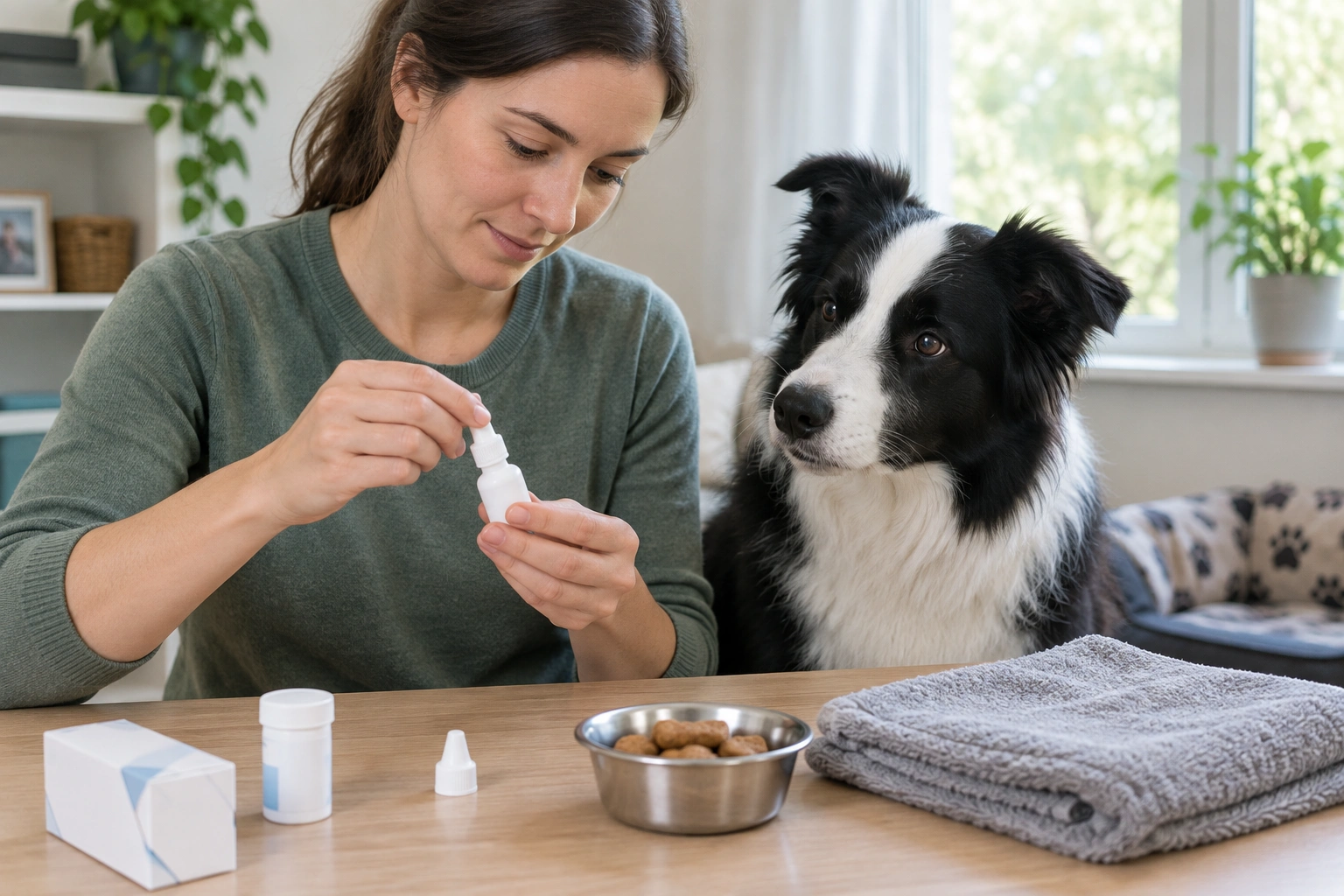
Have these ready:
- the prescribed ear drops
- treats your dog actually wants
- a towel, if your dog tends to wriggle
- a helper, if your dog is large or difficult to steady
- a vet-approved ear cleaner, only if your vet told you to use one
- an Elizabethan collar, if your dog tends to scratch or rub after treatment
Keep the bottle clean and avoid touching the dropper tip to the ear, fur, or skin. That helps reduce contamination and keeps the medication from becoming less effective.
If the medication has been stored in a cool place, let it come to room temperature before use if the label or your vet says that is acceptable. Cold liquid can startle some dogs and make the ear feel more uncomfortable. If the label says to shake the bottle, do so before use; otherwise, do not assume it needs shaking.
How to Calm and Safely Position a Nervous Dog
The goal is not to “win” a restraint battle. The goal is to make the dog stable enough that the medication can go in cleanly and quickly.
For a small or anxious dog, a towel wrap can help keep the body steady without squeezing the head. For a larger dog, a second person is often the difference between a smooth dose and a wrestling match. One person can support the chest and body while the other lifts the ear flap and applies the drops. For larger or more resistant dogs, a helper can hold the chest and hindquarters while the handler controls the head gently and keeps the ear accessible.
If your dog is already tense, move slowly and speak normally. Long, dramatic reassurance often excites the dog more than it settles them. A calm, matter-of-fact approach works better: position, lift, dose, massage, reward.
If the dog keeps pulling away, think in terms of better control, not stronger force. A firmer but gentle hold is usually safer than repeated grabbing. If the dog resists during application, pause briefly and try again once the dog is calmer if the situation still feels safe; if the dog is becoming more distressed, stop the session and call your vet for handling advice before the next dose. When a dog is painful or reactive, a muzzle may be appropriate in some cases, but only if it can be used safely and without making the dog panic.
Step-by-Step: How to Apply Ear Drops Into the Ear Canal
This is the core of the process.
-
Hold the bottle ready first
Take the cap off and have the bottle in your dominant hand so you are not juggling once the ear is lifted. -
Lift the ear flap upright
Raise the ear flap so the ear canal is exposed. You are trying to create a clearer path into the canal, not just wet the outside of the ear. -
Aim the tip toward the ear canal opening
Place the drops into the canal entrance, not onto the fur or outer ear. The medication needs to reach the canal to do its job. If you are unsure, think of aiming just inside the opening where the canal begins, not at the broad outer ear flap.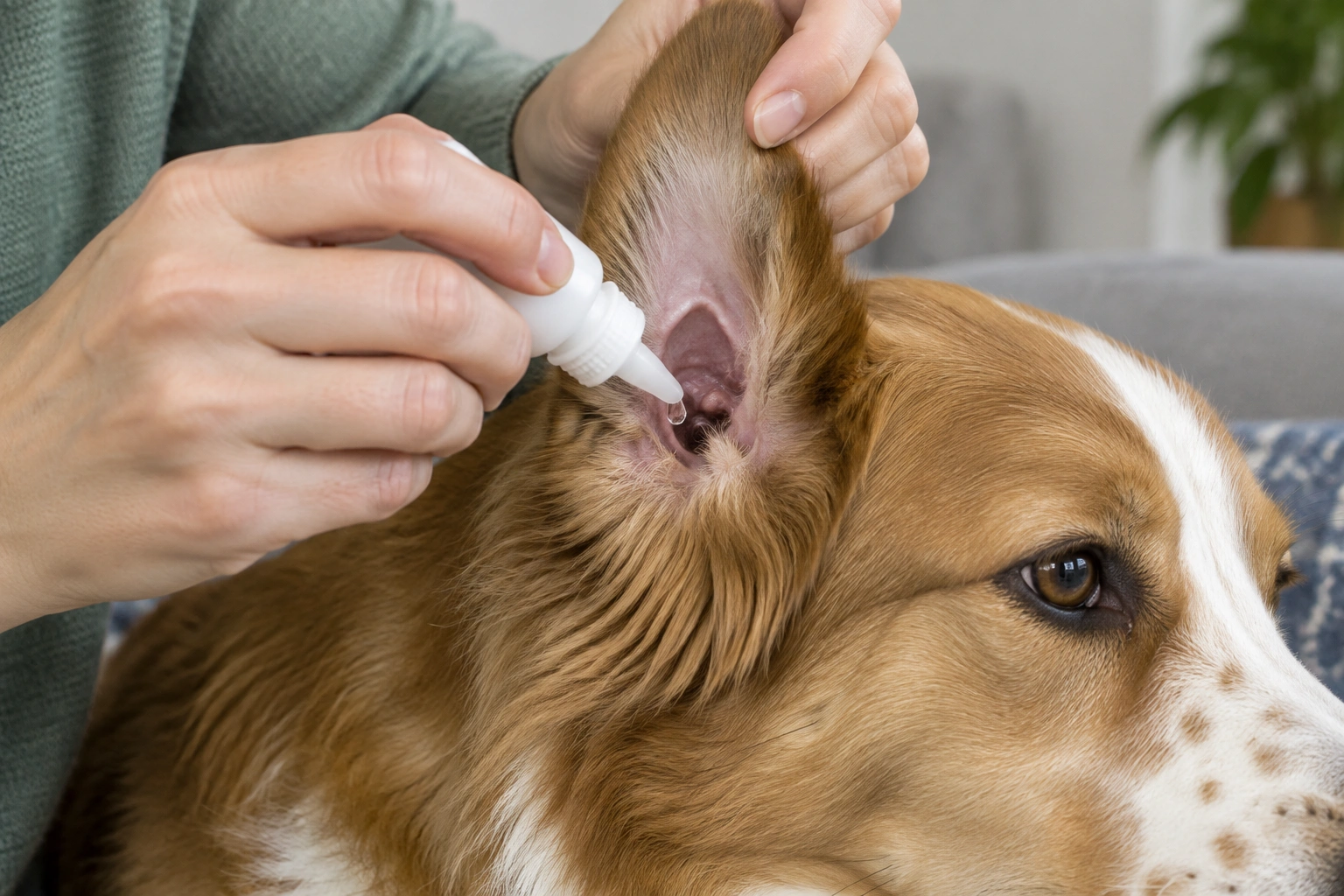
Lift the ear flap upright and aim into the canal opening. -
Apply the prescribed amount
Use the amount your veterinarian or label instructs. Do not guess, and do not assume more medicine means faster improvement. -
Avoid touching the ear with the dropper tip
Keep the bottle tip clean. If it touches the ear, fur, or skin, contamination becomes more likely. -
Release the ear flap
Let the ear fall back naturally after the drops are in.
A common mistake is aiming at the visible outer ear and thinking the liquid will “run in.” In reality, much of it stays where it lands unless you place it into the canal opening.
How to Massage the Ear After Applying the Drops
After the drops are in, gently massage the base of the ear for about 20 to 30 seconds, or for the amount of time your vet or product label recommends. This helps spread the medication deeper into the canal before the dog shakes it out.
You are not kneading the ear hard. Think of it as a soft, circular rub at the base where the ear meets the head. Gentle means light pressure, enough to move the skin slightly but not enough to make the dog flinch or pull away. If the ear is very painful, keep the pressure very light or stop and call the vet before the next dose.
After the massage, keep the dog still for a few seconds before letting them shake or run off. That brief pause gives the medication a better chance to spread.
The reason this matters is simple: the medication works where it lands. If it pools at the opening and the dog immediately shakes, less of it reaches the inflamed tissue.
How to Keep the Dog From Shaking the Drops Out
Most dogs will shake their heads after ear drops. You cannot always stop that completely, but you can reduce how quickly it happens.
A practical sequence is: apply the drops, massage briefly, then keep the dog calm for a moment before releasing them to move around. That short pause gives the medication a better chance to spread.
Afterward, reward calm behavior. A treat right after treatment can make the next dose easier because the dog starts to associate the routine with something predictable and positive.
If your dog keeps rubbing the ear on furniture or scratching it after treatment, an Elizabethan collar may be useful for a short period. Some dogs need time to adjust to it, but it can protect the ear while the medication settles in.
Should You Clean the Ear Before Using Drops?
Sometimes yes, sometimes no. This is one of the biggest trade-offs in ear care.
Cleaning can help remove debris so medication reaches the canal more effectively. But cleaning can also irritate a painful ear, especially if the ear is inflamed or if the cleaning method is too aggressive. That is why the safest rule is to clean only when your veterinarian specifically recommends it and tells you what product to use.
Do not use cotton swabs deep in the ear canal. They can push material farther in or irritate the ear. If your vet approved an ear cleaner, follow their instructions closely and keep the process gentle.
Cleaning versus skipping cleaning
- Clean first if your veterinarian told you to and showed you how.
- Skip cleaning if the ear is too painful, very swollen, or your vet did not recommend it.
- Do not clean aggressively to “get a better result.” That often backfires.
For a general overview of dog ear care and when ear symptoms need veterinary attention, the ASPCA’s pet health resources are useful background reading.
One Ear or Both Ears?
This is another place where owners often overcorrect. If only one ear was diagnosed, that does not automatically mean the other ear needs the same medication.
Treat the ear or ears your veterinarian specified. Some conditions affect both ears, but many do not. Using medication in an ear that was not part of the diagnosis can create unnecessary irritation or mask a separate problem.
If your dog keeps pawing at the untreated ear or it starts to smell different, do not assume the infection “moved.” Call the vet and ask whether the second ear needs an exam.
What to Expect After Treatment: Improvement vs. Worsening
Some improvement signs are subtle at first. You may notice less head shaking, less scratching, or a drop in odor and discharge over time. The ear may still look a bit irritated early in treatment, especially if the infection was advanced.
What you should not see is a steady worsening. If the ear becomes more swollen, more painful, or more foul-smelling, or if your dog starts acting off-balance, that is a sign to call the vet rather than just continue blindly.
A useful benchmark: if you are following the instructions exactly and there is no meaningful improvement after the timeframe your vet expected, the ear likely needs a recheck. The medication may be wrong for the problem, the ear may need cleaning, or the condition may be more complicated than it first appeared.
Common Mistakes That Make Ear Drops Less Effective
A few errors show up again and again:
-
Touching the dropper tip to the ear
This can contaminate the bottle. -
Aiming at the outer ear instead of the canal
The medication may not reach the inflamed tissue. -
Stopping early because the ear looks better
Symptoms can improve before the underlying problem is fully resolved. -
Using leftover or human ear products
Those are not automatically safe for dogs and may be the wrong treatment entirely. -
Treating a very painful ear without veterinary guidance
Pain can signal a more serious issue, including one where certain drops are not appropriate. -
Skipping doses or changing the schedule
Inconsistent treatment makes it harder for the medication to work as intended.
The big idea is this: ear drops are only as good as the diagnosis, the dose, and the delivery into the canal.
When to See a Veterinarian or Certified Trainer
If the ear is severely painful, bleeding, very swollen, foul-smelling, or associated with balance problems, contact your veterinarian before continuing treatment. The same goes for any sudden worsening after you start the drops.
You should also call if:
- the dog will not let you touch the ear without intense distress
- discharge or odor persists despite treatment
- the ear seems more inflamed after several doses
- you are unsure whether the medication is being applied correctly
- the label instructions and your memory of the appointment do not match
A certified trainer can also help if the dog has developed strong fear around ear handling. That is especially useful for sensitive dogs that have learned to resist medical care, because future ear treatments are much easier when the dog can tolerate brief, calm handling.
Frequently Asked Questions
Can I use human ear drops on my dog?
Not unless your veterinarian specifically told you to. Human and dog ear products are not interchangeable.
How many drops should I use?
Use the exact amount on the prescription label or your veterinarian’s instructions. Different products require different doses.
What if my dog shakes right after I apply the drops?
A brief head shake is common. Massage the ear base first, then keep the dog calm for a moment before releasing them.
Should both ears be treated if only one looks infected?
Only if your vet told you to treat both. Otherwise, follow the diagnosis exactly.
Can I clean the ear first?
Only if your veterinarian recommended it. Cleaning can help in some cases, but it can also irritate a painful ear.
What if my dog cries when I touch the ear?
Stop and call your veterinarian. Significant pain can mean the ear needs to be examined before more medication is used.
If you want to read more about related eye and face-area symptoms that can overlap with ear discomfort, see our guide to dog eye irritation and pink eye symptoms.
