
How to Apply Ear Drops to a Dog Safely and Correctly

If your vet has prescribed ear drops, the goal is simple: get the medication into the ear canal, keep the dog calm enough to tolerate it, and avoid making the ear more irritated than it already is. The part that trips most owners up is not the medicine itself — it’s the handling. A nervous dog, a sore ear, and a dropper bottle in one hand can turn a small task into a wrestling match.
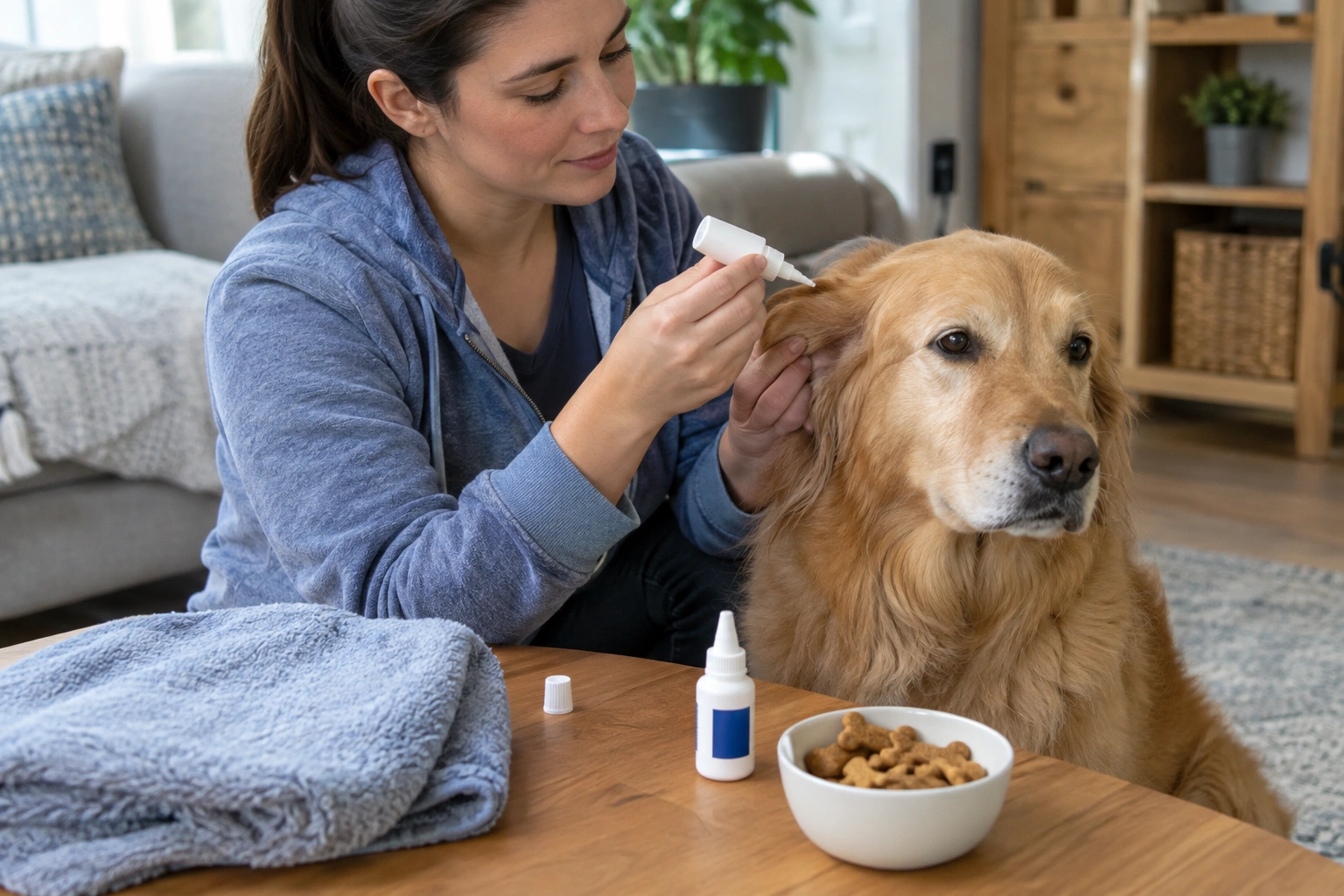
When the setup is smooth, the dog has fewer chances to panic, and you have fewer chances to miss the ear canal or contaminate the bottle. That matters because ear problems can worsen quickly if treatment is inconsistent or if the ear is already too inflamed for home care.
When Ear Drops Are Safe to Use at Home
Prescribed ear drops are generally meant to be used at home only when your veterinarian has already examined the ear and told you to treat it. That distinction matters. Ear symptoms can come from infection, allergy, foreign material, mites, a ruptured eardrum, or another problem that needs a different approach.
A good rule is this: if the ear is mildly uncomfortable but your dog can still be handled without major distress, home treatment may be reasonable when it has been prescribed. If the ear is extremely painful, very swollen, bleeding, foul-smelling with heavy discharge, or your dog cries out when you touch it, stop and call the vet before putting anything in the ear. Do the same if you suspect a ruptured eardrum or see signs that can point to it, such as sudden severe pain, a head tilt, loss of balance, stumbling, or unusual eye movements. Those signs can mean the ear needs a recheck first.
If you are unsure whether the ear is safe to treat, do not guess. Call the veterinarian before dosing. For general background on ear infections and why they can become painful, the VCA overview of ear infections in dogs is a useful reference point.
Read the Prescription Label Before You Start
Before the bottle comes out, read the label end to end. You need four things clear:
- which ear to treat
- how many drops to use
- how often to use them
- how long to continue
That sounds obvious, but it is where many mistakes start. Some prescriptions treat both ears even if only one looks bad. Others treat only one ear, because the vet saw a problem on one side and not the other. If you assume both ears need medication, you may over-treat. If you assume only the visible ear needs treatment, you may miss part of the prescription.
If the label is unclear, do not estimate. Call the clinic and ask for the exact dose and which ear or ears to treat.
Also check whether the vet told you to clean the ear first. Some ears should be cleaned before the medication goes in; others should not be disturbed more than necessary. If the label or discharge instructions do not make that clear, call and ask. Do not substitute human ear products or leftover medication from a previous problem. The wrong product can irritate the ear or mask a more serious issue.
Gather Supplies and Set Up a Low-Stress Treatment Space
You will move more confidently if everything is within reach before you touch the dog. Gather:
- the ear drops
- treats
- a towel or blanket if you need one
- gauze or a cotton ball, if your vet told you to use it
- a helper, if the dog is likely to wriggle
Choose a quiet spot with good footing. A bathroom, laundry room, or kitchen corner often works better than a slick hallway or a busy living room. The goal is not to “win” against the dog. The goal is to make the process short, predictable, and safe.
If your dog is already anxious, do not wait until the last minute. Have the bottle open only when needed, and keep the session brisk. The longer you hover, the more time your dog has to decide this is a game or a threat.
How to Hold and Calm a Squirmy or Nervous Dog
There are two practical options: gentle restraint by one person, or a helper plus a second set of hands. If the dog is small, a towel wrap may help keep the body still while leaving the head accessible. If the dog is larger or more worried, a helper is often safer than trying to manage everything alone.
Use the least restraint that still keeps everyone safe. Speak normally, not in a high, excited voice. Keep your movements slow and predictable.
A beginner-friendly approach is:
- Small or medium dog: sit on the floor or on a stable chair, tuck the dog against your body, and use one arm to steady the chest while the other hand handles the ear.
- Very squirmy dog: ask a helper to hold the body gently from the side or behind, with one hand under the chest and the other controlling the shoulders.
- Fearful dog: use a towel wrap around the body only if it helps reduce flailing and still leaves the head accessible; do not wrap so tightly that the dog panics or overheats.
- If the dog escalates: pause, let the dog settle for a minute, and try again only if the dog can be handled safely.
If your dog starts to escalate — stiffening, growling, snapping, or thrashing — stop and reassess. Forcing the issue can teach the dog that ear care is something to fear. If you cannot safely hold the dog without a struggle, stop and call the veterinarian for the next step rather than pushing through.
Step-by-Step: How to Put Ear Drops Into the Ear Canal
This is the part most owners want in plain language.
-
Hold the bottle ready, but don’t touch the ear yet.
If the medication label says to shake the bottle, do that first. -
Position your dog so the ear is accessible.
A standing or sitting dog is often easier to manage than a dog flat on its side. -
Lift the ear flap.
Gently raise the ear flap so you can see the opening of the ear canal. You are aiming for the canal, not just the fur or the outer ear. -
Aim the bottle at the canal opening.
Hold the tip just above the opening and angle it toward the ear canal. Do not insert the tip into the canal, and do not push it against the ear. Keeping the tip out of the ear helps avoid pain and contamination. -
Keep the dropper tip clean.
Do not let the tip touch the ear, skin, hair, or your fingers. Contaminating the bottle can spread germs back into the medication. -
Place the prescribed number of drops into the ear canal.
Follow the label exactly. If the vet gave a range, use the exact amount the veterinarian or clinic staff told you to use for that ear and that product. If the range is still unclear, call before you dose. Do not guess because the ear “looks better” or “looks worse.”
Aim the drops into the ear canal, not the outer ear. -
If the dog jerks mid-application, stop and reset.
If the dog pulls away while you are dosing, pause, keep the bottle away from the ear, let the dog settle, and then continue only if you can still clearly see the ear canal opening. If you are unsure whether the dose went in, call the clinic before repeating it. -
Release the ear flap and massage the base of the ear.
This helps spread the medication deeper into the canal. -
Let the dog shake.
Some head shaking is normal after ear drops. That does not automatically mean the dose failed.
If your vet prescribed drops for both ears, repeat the process on the second side. If only one ear looks affected but the prescription says both ears, treat both ears. If the prescription says one ear only, do not use the medication in the other ear unless the veterinarian tells you to.
Massage, Release, and Let the Medication Spread
After the drops are in, massage the base of the ear for a short period so the medication can move through the canal. If your vet gave a specific instruction, follow it. If not, use a brief, gentle massage rather than a rough rub.
A common mistake is to stop too soon because the dog shakes its head. Shaking is expected. The medication should still have a chance to spread through the ear canal before the dog shakes. If a little excess ends up on the outer ear, wipe only the outside with gauze or a cotton ball if needed.
Should You Clean the Ear Before Dosing?
Use this simple rule:
- If your veterinarian told you to clean the ear first, clean it with the prescribed ear cleaner and then dose.
- If the veterinarian did not tell you to clean it, do not clean it before dosing.
- If no cleaner was prescribed, do not use a random product. Call the clinic and ask what to use.
Here is the practical trade-off:
- Cleaning before dosing can help medication reach the canal better if wax or debris is blocking it.
- Not cleaning may be safer if the ear is painful or fragile and the vet wants the medication applied with minimal handling.
- Cleaning after dosing is generally not something to improvise unless the vet has told you exactly how and when to do it.
If you were sent home with a cleaner, use that cleaner and nothing else. Do not use alcohol, hydrogen peroxide, essential oils, or homemade mixtures.
What to Expect After Treatment: Normal Reactions vs Warning Signs
A little head shaking after the drops is common. Mild temporary discomfort can also happen, especially if the ear is already irritated. What should worry you is a clear worsening pattern.
Watch for:
- increased redness
- swelling that looks worse after treatment
- stronger odor
- thicker or more bloody discharge
- repeated yelping
- new aggression when the ear is touched
- a head tilt
- balance problems, stumbling, or seeming disoriented
- the dog acting more painful, not less, over time
If the ear seems more irritated after each dose, that is not something to ignore. It may mean the medication is not the right match, the ear is too inflamed, or the eardrum could be a concern. In those cases, call the vet rather than trying to push through.
For readers who want a broader picture of contagious eye and face-area symptoms versus ear issues, this related guide on dog eye discharge and pink eye signs can help you tell symptoms apart.
Troubleshooting: If Your Dog Resists, Yelps, or Shakes the Drops Out
If your dog shakes its head immediately after dosing, do not panic. Some loss is normal. What matters is whether the medication was actually placed into the canal and whether the dog tolerated the process.
If your dog yelps when you touch the ear, stop. Yelping suggests pain, and pain is a reason to reassess rather than force the dose. If the dog becomes snappy or tries to bite, do not continue alone. That is a safety issue for both of you.
If the dog is highly stressed, try a calmer reset:
- pause for a minute
- let the dog settle
- have a helper hold the body gently
- shorten the handling time on the next attempt
If the dog is too fearful or squirmy to handle safely after one or two careful tries, stop and reschedule or call the clinic for advice. Repeated wrestling usually makes the next dose harder, not easier.
If most of the medication comes back out immediately, do not automatically repeat the dose. If you are not sure how much actually entered the ear canal, call the veterinarian or clinic before redosing. A small amount on the outer ear is not the same as a missed dose.
Common Mistakes That Make Ear Drops Less Effective
The biggest avoidable errors are usually simple:
- skipping the label and guessing the dose
- treating the wrong ear
- touching the dropper tip to the ear
- cleaning the ear when you were not told to
- stopping early because the dog shook
- using human ear drops or leftover medication
- continuing treatment when the ear is clearly getting worse
These mistakes matter because ear treatment is often about consistency, not force. A correct dose given calmly is better than a rushed dose repeated badly.
When to See a Veterinarian or Certified Trainer
This is a veterinary issue first, but handling problems sometimes need behavior support too. Contact your veterinarian if:
- the ear is too painful to handle
- the ear is bleeding, very swollen, or suspected of having a ruptured eardrum
- the dog yelps or becomes aggressive during treatment
- symptoms worsen instead of improving
- you miss doses and are unsure how to get back on schedule
- the medication seems to be coming out immediately every time
- you were not told whether to clean the ear or which ear to treat
If the dog’s fear of ear handling is becoming a long-term problem, a certified trainer can help with cooperative care and handling tolerance. That is not a substitute for medical treatment, but it can make future ear care much easier.
For a general dog-care reference on safe handling and owner education, the American Kennel Club has helpful dog-health resources, and the ASPCA offers practical guidance on recognizing when a pet needs veterinary attention.
A Simple Routine That Works
If you want the shortest reliable version, use this sequence: confirm the label, set up your supplies, restrain the dog calmly, place the drops into the ear canal, massage the base of the ear, and watch for worsening pain or irritation. That routine is boring on purpose. With ear medication, boring is good.
The owner who does this well is not the one who wrestles hardest. It is the one who prepares well, follows the prescription exactly, and knows when to stop and call the vet.
FAQ
Can I use ear drops in both ears if only one looks bad?
Only if the prescription says both ears should be treated. Do not assume.
What if my dog shakes right after I give the drops?
Some shaking is normal. If the drops were placed into the canal and the ear was massaged briefly, the dose may still have done its job.
Should I clean the ear first?
Only if your veterinarian specifically told you to clean it and gave you the right cleaner or method.
Can I use leftover ear drops from a previous problem?
No. Use only the medication prescribed for this ear problem.
What if my dog yelps when I touch the ear?
Stop and call the veterinarian. Pain can mean the ear is too inflamed or needs a recheck before more treatment.
