
How to Get Rid of a Yeast Infection in Dogs: A Practical Guide for Owners

A yeast infection in a dog is usually not a mysterious problem. It is often a sign that something else is allowing yeast to overgrow — moisture, allergies, skin folds, ear anatomy, or chronic irritation. That matters because the fastest way to help your dog is not just to “kill the yeast,” but to identify where it is happening and what is feeding it.
For Border Collie owners, this can show up as a dog that keeps licking paws after wet walks, shakes its head after swimming, or develops greasy, itchy skin that smells musty. The good news is that many yeast infections respond well when they are treated correctly. The catch is that the wrong home treatment, or treating only the smell and itch, can drag the problem out for weeks.
What to do today: a quick decision path
- Monitor at home briefly if the problem is mild, your dog is otherwise comfortable, and the issue is limited to a small area that is not raw, painful, or rapidly worsening.
- Book a vet visit soon if this is the first episode, the odor and itch are not improving, or the problem keeps coming back.
- See a vet now if your dog has painful ears, severe swelling, discharge, open sores, fever, lethargy, or fast-spreading redness or moisture.
What a Yeast Infection in Dogs Actually Is
The yeast most often involved in dogs is Malassezia, a yeast that normally lives on the skin in small numbers. It becomes a problem when the skin environment changes and the yeast multiplies too much. So this is usually an overgrowth, not a “caught it from somewhere” infection in the way people often think about germs.
That is why yeast infections are often secondary. In plain language: something else usually comes first, and yeast takes advantage of the situation. Common triggers include allergies, moisture trapped in the ears or skin folds, skin oiliness, and irritation from licking or scratching.
This is also why yeast issues tend to recur. If the underlying trigger stays in place, the yeast can come back even after a short course of treatment.
Signs Your Dog May Have a Yeast Infection
The most useful clue is often the smell. Many owners describe a yeasty, musty, or slightly sweet odor. That odor is suggestive, but it is not proof on its own. A dog can smell bad for other reasons too, especially if bacteria are also involved.
Look for these signs:
- Itching that seems focused on one area
- Greasy or oily skin
- Redness
- Dark debris in the ears
- Paw licking or chewing
- Head shaking
- Thickened or irritated skin in chronic cases
Where the signs appear matters. A dog with itchy ears and dark wax is a different problem from a dog licking between the toes or one with damp, inflamed skin folds.
Signs that are less specific
Some symptoms overlap with allergies, bacterial skin infections, ear mites, and hot spots. Redness, scratching, and odor can occur in all of them. That is why a “looks like yeast” guess is useful, but not enough when the problem is persistent, painful, or spreading.
Yeast Infection vs. Bacterial Infection, Ear Mites, Allergies, and Hot Spots
This comparison is where many owners save time and frustration. Yeast is common, but it is not the only possibility.
| Problem | Common clues | What makes it different |
|---|---|---|
| Yeast infection | Musty odor, greasy skin, itching, paw licking, dark ear debris | Often happens in moist areas and may recur if the trigger remains |
| Bacterial skin infection | Pustules, crusts, painful skin, discharge | Can look more inflamed or “infected” and may need antibiotics as well as antifungals |
| Ear mites | Strong head shaking, dark debris, intense ear itchiness | More common in puppies and often very contagious; needs a different treatment approach |
| Allergies | Itching in multiple places, recurring ear or paw problems | Yeast may be a result of the allergy, not the root cause |
| Hot spots | Sudden raw, wet, painful patches | Usually more acute and moist than a typical yeast overgrowth |
A practical rule: if the skin is wet, raw, and rapidly worsening, or if the ears are very painful, don’t assume it is “just yeast.” That is the moment to get a veterinarian involved.
For a broader look at eye and skin symptom overlap in dogs, you may also find this guide on dog eye irritation useful when symptoms seem to be spreading beyond the skin.
Where Yeast Infections Commonly Show Up: Ears, Paws, Skin, and Skin Folds
Ears
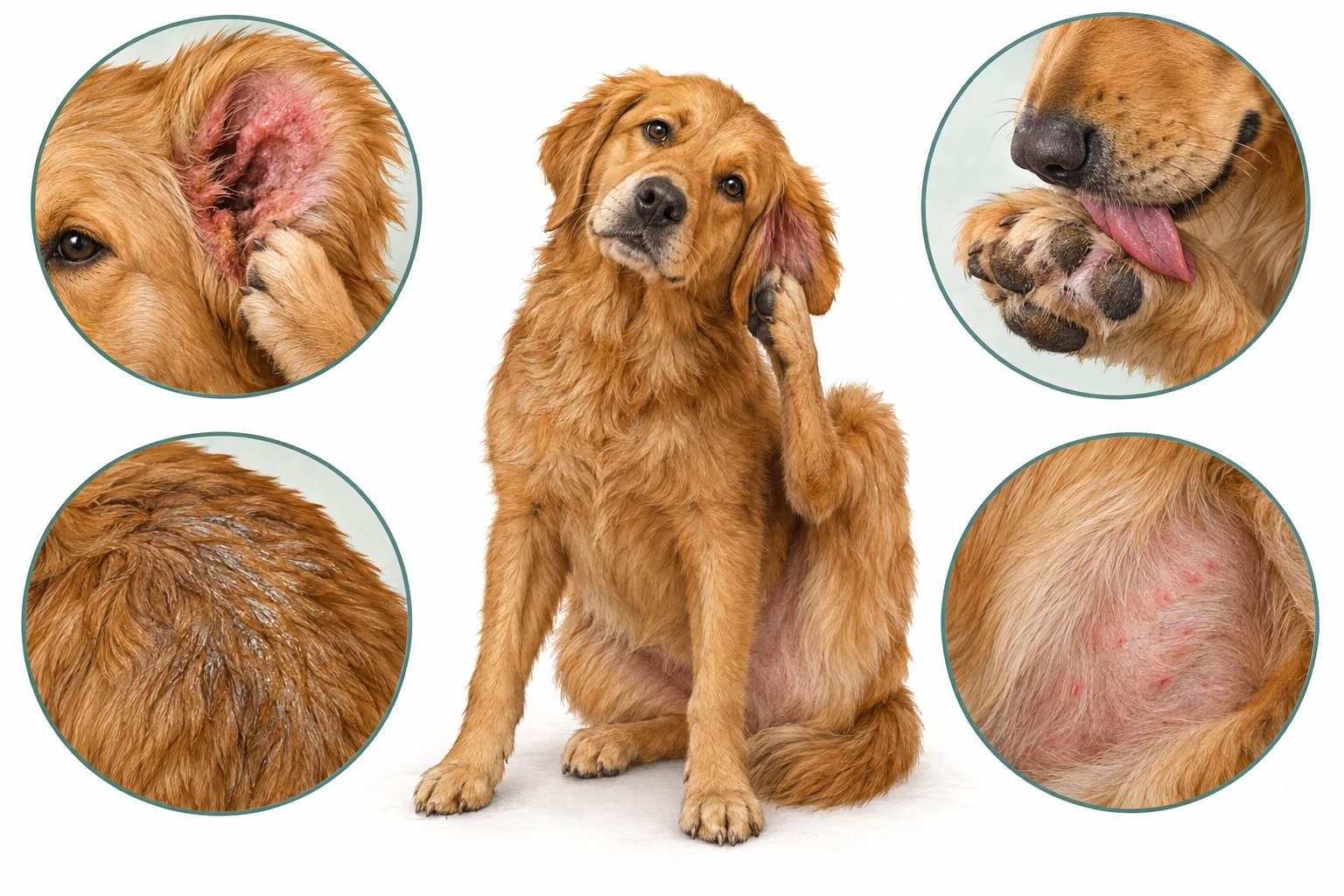
Ear yeast infections often cause head shaking, scratching at the ears, and dark waxy debris. The ear may smell sour, musty, or yeasty. If your dog is painful when you touch the ear, or if the ear canal looks swollen, that needs a vet exam before you put anything deeper into the ear.
Paws
Paw yeast usually shows up as constant licking, redness between the toes, and a smell that seems to come from the feet. Dogs may lick more after damp walks, grass exposure, or muddy outings. The paws can look stained from saliva if the problem has been going on a while.
Skin
On the body, yeast often appears as greasy, red, itchy skin, especially in warm areas where air circulation is poor. You may see the belly, armpits, neck, or groin affected.
Skin folds
Dogs with tight folds can trap moisture and create a good environment for yeast. That includes facial folds, armpit folds, or folds near the vulva. The skin may look damp, irritated, and smell stronger than the rest of the coat.
What Causes Yeast Infections to Keep Coming Back
If yeast keeps returning, the real problem is usually not the yeast itself. It is the setting that allows it to grow.
Common drivers include:
- Allergies, especially skin allergies
- Moisture from swimming, rain, or poor drying
- Ear structure, which can trap wax and moisture
- Skin folds that stay damp
- Obesity, when it creates deeper folds
- Chronic licking or scratching
- Diapers, clothing, or harnesses that rub and trap heat or moisture
In some cases, anatomic issues may need more than cleaning and medication. Depending on the dog, a veterinarian may discuss longer-term management for structural factors such as skin folds or a hooded vulva, and weight loss may help when excess body condition is contributing. That is not the first step for most dogs, but it becomes relevant when infections keep returning despite good care.
Can You Treat a Dog Yeast Infection at Home?
Sometimes, but only if the problem is mild, localized, and clearly improving with sensible care.
Home care may be reasonable when:
- The dog is otherwise bright and comfortable
- The problem is limited to a small area
- There is no severe pain, swelling, or discharge
- You can follow a vet-recommended topical plan
Home care is not the right move when:
- The ears are painful or very swollen
- The dog is constantly shaking its head
- The skin is raw, open, or spreading quickly
- The infection keeps coming back
- You are not sure whether it is yeast, bacteria, mites, or something else
A practical rule of thumb: brief home monitoring is okay only when the problem is mild and stable. If there is pain, drainage, swelling, or no improvement within a short window, book the vet visit rather than trying to manage it on your own.
The biggest trade-off is simple: home care can be convenient and effective for mild cases, but delaying a vet visit can turn a manageable issue into a longer, more expensive one.
Safe At-Home Support: Cleaning, Drying, and Vet-Approved Topical Care
The safest at-home support is boring, consistent, and specific.
Keep the area clean and dry
Moisture is fuel for yeast. After baths, rain, swimming, or muddy walks, dry the affected area carefully. For paws, that means drying between the toes, not just the top of the foot. For skin folds, it means gently removing trapped moisture rather than scrubbing hard.
Use medicated products only as directed
Small Door Veterinary notes that medicated antifungal shampoo can help control a yeast infection, and that dogs may be washed every 3 to 5 days for 2 to 12 weeks, or as directed by a veterinarian. That range tells you something important: treatment is often measured in weeks, not days.
VCA Animal Hospitals notes that medicated shampoos are a vital part of treating yeast dermatitis in dogs. In greasy or oily cases, a vet may first recommend a degreasing shampoo containing selenium sulfide or benzoyl peroxide, followed by an antifungal shampoo with ingredients such as chlorhexidine, miconazole, or ketoconazole.
A useful decision point: if the skin is oily, a degreasing step may help the antifungal work better. If the skin is already dry and irritated, over-washing can make things worse. That is why product choice should match the skin condition, not just the diagnosis.
Use wipes, creams, or ear cleaners when appropriate
For small, localized areas, Small Door Veterinary notes that an antifungal cream may be used according to its instructions. PetMD also notes that paw yeast infections are often treated with medicated antifungal wipes, topical mousses with antifungal and anti-inflammatory ingredients, and oral medications when needed.
Ear cleaning can also be part of management, but only if the ear canal is not too painful or swollen. If your dog resists ear handling, that is a sign to slow down and let a vet examine the ear first.
What to avoid at home
Do not assume human products are safe for dogs. Avoid:
- Human antifungal or steroid creams unless your vet specifically says to use them
- Essential oils
- Alcohol
- Hydrogen peroxide
- Random antibiotic ointments
- Vinegar on raw, cracked, or inflamed skin
These can sting, irritate, be toxic if licked, or hide the real problem without treating it. If you are unsure whether a product is safe for a dog’s ears or skin, ask your veterinarian first.
About apple cider vinegar
You may see advice suggesting apple cider vinegar mixed with water. Some sources recommend a 1:1 dilution, but I would treat that cautiously. Vinegar can sting irritated skin, and it is not a substitute for proper diagnosis or antifungal treatment. If the skin is raw, cracked, or inflamed, skip DIY acidic remedies and ask your vet what is safe.
Veterinary Diagnosis and Treatment Options
A veterinarian can confirm whether yeast is actually the problem and check for bacteria, mites, or allergies at the same time. In many cases, this starts with skin cytology or an ear swab, which lets the vet look for yeast organisms under the microscope and see whether bacteria are also present. If infections keep coming back, the vet may also look for an underlying allergy or another trigger that is making the skin vulnerable.
Treatment may include:
- Topical antifungal shampoos, wipes, mousses, or creams
- Ear-specific treatment if the infection is in the ear canal
- Oral antifungal medication for severe or stubborn cases
- Antibiotics if there is a bacterial infection alongside the yeast
dvm360 reports that topical formulations like shampoos, gels, and lotions can be very effective because the organism is located in the outer skin layer. It also notes that the WAVD consensus guidelines suggest 2% chlorhexidine and 2% miconazole shampoo used twice a week as one commonly cited topical protocol.
That does not mean every dog needs the same product. It means topical treatment is often central, but the exact plan should match the location, severity, and whether bacteria are part of the picture. Shampoos, wipes, ear medications, and oral drugs are not interchangeable, and your vet may choose one or combine several depending on where the yeast is and how severe the inflammation is.
For reference, VCA Animal Hospitals’ yeast dermatitis guidance is a solid place to understand why vets often combine topical therapy with skin management rather than relying on one product alone.
How Long Treatment Usually Takes and What Improvement Should Look Like
Mild cases may start to improve within a few days once the right treatment begins, but full control often takes longer. Small Door Veterinary’s treatment window of 2 to 12 weeks is a good reminder that the skin may need time to settle, especially if the infection has been going on for a while.
What improvement should look like:
- Less scratching or paw licking
- Reduced odor
- Less redness
- Less waxy debris in the ears
- Skin that feels less greasy and inflamed
The important caution is this: feeling better is not the same as being cured. Stopping early is one of the easiest ways to trigger a rebound.
When a Yeast Infection Needs Prompt or Urgent Veterinary Care
See a veterinarian promptly if your dog has any of the following:
- Pain
- Severe swelling
- Head shaking that won’t stop
- Discharge from the ear
- Open sores or raw skin
- Lethargy
- Fever
- Rapidly worsening redness or moisture
These signs suggest the problem may be more than a simple yeast overgrowth. They can point to a deeper ear infection, bacterial involvement, or significant inflammation that needs proper treatment.
How to Prevent Recurrence and Manage Chronic Yeast Problems
Long-term prevention is mostly about reducing the conditions yeast loves.
Focus on these habits:
- Dry paws and skin folds after wet exposure
- Keep up with grooming so moisture does not sit in the coat
- Address allergies with your vet instead of just treating flare-ups
- Recheck recurrent ear problems rather than repeating the same treatment forever
- Adjust gear that traps heat or moisture, such as tight clothing, diapers, or rubbing harnesses
- Watch body condition, since extra weight can deepen skin folds
PetMD makes an important point here: successful treatment often requires identifying and managing the underlying cause as well as the infection itself. That is the part many owners miss. If the trigger stays active, the yeast will keep finding a way back.
Common Mistakes That Make Yeast Infections Worse
A few mistakes come up again and again:
- Using human creams or random home remedies
- Cleaning too aggressively and irritating the skin or ears
- Stopping treatment as soon as the odor improves
- Treating only the visible patch and ignoring the underlying trigger
- Assuming every itchy ear is yeast
- Waiting too long when the dog is painful or the skin is getting worse
The pattern is predictable: the quicker you identify the location and the cause, the easier the case usually is to control.
When to See a Veterinarian or Certified Trainer
For a yeast infection, a veterinarian is the professional you need. A certified trainer is not the right resource for diagnosis or treatment, although a trainer may help later if scratching, licking, or discomfort has created stress-related habits.
Book a vet visit sooner rather than later if this is the first episode, if symptoms are severe, or if the problem keeps returning. Recurrent yeast is often a clue that the dog needs a deeper look at allergies, skin health, or anatomy.
FAQs
Can a dog yeast infection go away on its own?
Sometimes mild irritation settles briefly, but true yeast overgrowth usually needs treatment and a plan to reduce the trigger. Waiting it out often lets it spread.
What is the best shampoo for dog yeast infections?
Veterinary guidance commonly points to medicated antifungal shampoos. VCA notes that chlorhexidine, miconazole, or ketoconazole are commonly used, and some greasy cases may need a degreasing shampoo first. The best choice depends on where the yeast is and how inflamed the skin is.
How do I know if it’s yeast or ear mites?
Ear mites often cause intense itchiness and dark debris, especially in younger dogs, but the only reliable way to tell is a veterinary exam. If the ear is painful or swollen, don’t guess.
Why does my dog keep getting yeast infections?
Recurring yeast usually means the root issue is still there — allergies, moisture, skin folds, ear anatomy, or chronic irritation.
Should I use apple cider vinegar on my dog?
I would be careful with that. Vinegar can irritate inflamed skin, and it should not replace proper treatment. Ask your vet before trying it.
Do yeast infections in dogs need antibiotics?
Not usually for yeast alone. Antibiotics may be needed if there is also a bacterial infection.
How long should I keep treating it?
Follow your vet’s plan, even if the odor improves early. Small Door Veterinary notes treatment may run for 2 to 12 weeks, depending on the case.
Can Border Collies get yeast infections often?
Any dog can. Border Collies are not especially known for it, but active dogs that swim, run in wet grass, or develop allergies can still struggle with recurring skin or ear issues.
Is a yeast infection dangerous?
Usually it is not an emergency, but it can become painful, chronic, and complicated if ignored. Severe swelling, discharge, fever, or lethargy should be treated promptly.
